Retrieval-Augmented Generation (RAG) for Maintenance Knowledge Management

Connect with Industry Experts, Share Solutions, and Grow Together!

Join Discussion Forum
rag-retrieval-augmented-generation-maintenance-knowledge-management

Every industrial facility has a knowledge problem. OEM manuals buried in filing cabinets. Repair histories scattered across paper work orders. SOPs living in three different folders on two different servers. When a technician faces a failing compressor at 2 AM, the answer exists somewhere — but finding it takes longer than fixing it. Retrieval-Augmented Generation changes that equation entirely — start a free trial to see how OxMaint surfaces maintenance knowledge instantly, or book a demo and we will walk through your specific document ecosystem.

Transform Your Maintenance Knowledge Today
Surface Any SOP, Manual, or Repair History in Seconds
  • Real-time AI search across all maintenance documentation
  • Instant OEM manual retrieval at point of repair
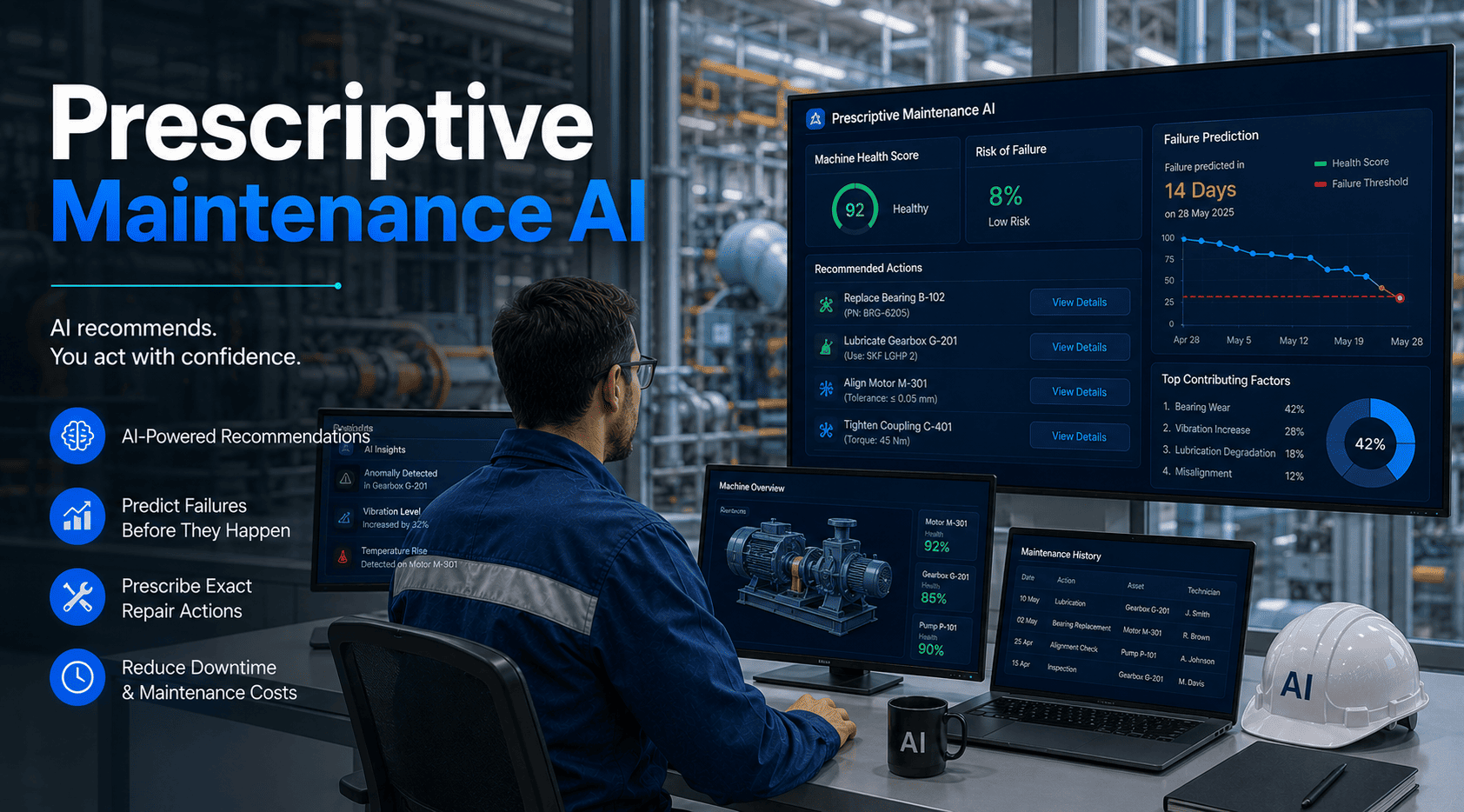
  • 5–10 year CapEx forecasting powered by asset intelligence
No heavy implementation required · Live in days, not months · Works across multi-site portfolios
Start Free Trial Book a Demo
Used by operations teams managing 10,000+ assets
42%
of technician time lost searching for documentation
McKinsey Global Institute
$50B+
annual cost of unplanned downtime in US manufacturing alone
Aberdeen Research
73%
of maintenance errors trace back to wrong or missing documentation
Plant Engineering Survey
3.5×
faster mean time to repair when technicians access correct docs instantly
GE Digital Study

The Technology That Turns Your Documentation Into an On-Demand Expert

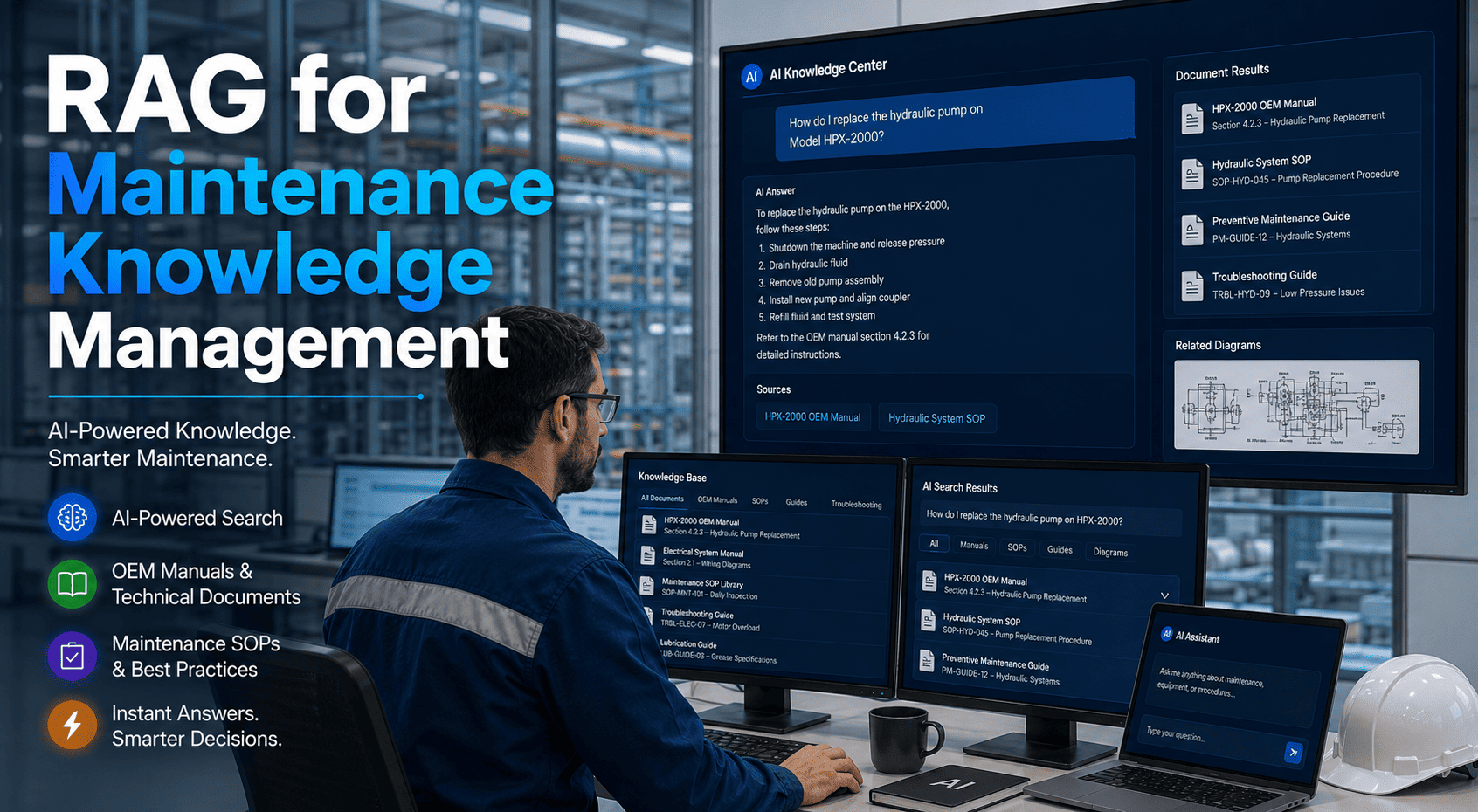
Retrieval-Augmented Generation (RAG) is an AI architecture that combines large language model reasoning with real-time retrieval from your own document corpus. Unlike generic AI trained on public internet data, a RAG system searches your specific OEM manuals, historical work orders, SOPs, and maintenance logs — then generates a precise, contextual answer grounded in your actual documentation. The result is an AI that knows your assets, not just assets in general.

In maintenance operations, this matters enormously. A technician troubleshooting a Siemens 1LE1 motor does not need a generic answer about motors — they need the specific torque spec for that frame size, the OEM-recommended bearing replacement interval for their duty cycle, and the repair history from the last three work orders on that specific asset. RAG delivers all three in a single query.

OxMaint's AI platform applies RAG architecture across your entire maintenance knowledge base — connecting asset records, PM schedules, work order histories, and uploaded documentation into a unified intelligence layer that any technician can query from a mobile device. Teams that deploy RAG-powered CMMS see measurable results in the first 30 days — start a free trial to see the difference, or book a demo to explore your documentation architecture.

Most facilities lose 20–40% of maintenance budget because technicians repeat work that was already documented, diagnosed, and solved — somewhere in the system.

Eight Pillars of RAG-Powered Maintenance Knowledge

01
Document Ingestion Pipeline
OEM PDFs, scanned work orders, and SOPs are parsed, chunked, and embedded into a searchable vector index — making every document queryable by semantic meaning, not just keywords.
02
Semantic Vector Search
Queries match documents by meaning — a technician asking "why is my pump vibrating at high frequency" retrieves relevant bearing failure procedures even if they never used those words.
03
Asset-Scoped Retrieval
Searches are filtered by the querying asset's make, model, site, and maintenance history — eliminating irrelevant results and surfacing asset-specific answers at the point of need.
04
Work Order History Integration
Every closed work order becomes searchable knowledge. Past diagnoses, parts used, and technician notes are indexed and retrieved as context when similar symptoms reappear on the same or similar assets.
05
SOP Version Control
The RAG index always retrieves the current version of each SOP, with automatic deprecation of superseded procedures. Technicians get the right instruction, not a three-year-old revision.
06
Multi-Modal Document Support
Technical diagrams, wiring schematics, and inspection photographs are indexed alongside text — enabling visual retrieval for complex procedures where a diagram is worth a thousand words.
07
Failure Pattern Recognition
RAG retrieval across historical work orders identifies recurring failure signatures — flagging assets with repeated similar symptoms and surfacing the repair approach that has historically resolved them fastest.
08
Mobile-First Knowledge Access
The full RAG knowledge layer is accessible on mobile from the shop floor, production line, or remote site — giving every technician the same knowledge depth as the most experienced engineer on staff.

Six Reasons Maintenance Knowledge Fails at the Point of Need

Documentation Fragmentation
OEM manuals on SharePoint, repair logs in CMMS, SOPs in email threads, and tribal knowledge in one technician's head. When that technician retires, the knowledge walks out with them. Organizations with fragmented documentation report 38% longer MTTR on complex failures.
Knowledge Search Time
Technicians spend an average of 42 minutes per shift searching for documentation. At scale across a 50-person maintenance team, that is 35,000 hours of knowledge search per year — time that could be spent repairing, preventing, and improving. Start a free trial to recapture that time.
Skill Gap Acceleration
The average maintenance workforce is aging — and retirements are accelerating. When experienced engineers leave, they take decades of undocumented knowledge. Without a RAG-powered knowledge system, this institutional memory evaporates permanently, leaving junior technicians to relearn costly lessons from scratch.
Outdated Procedure Versions
73% of maintenance errors involve following an incorrect procedure — often an outdated version that was never formally retired. When version control lives in a shared drive with no enforcement mechanism, technicians cannot tell current from deprecated. This is a compliance risk in GMP environments and a safety risk everywhere.
Repeated Failure Patterns
The same bearing failure on the same pump family. The same VFD fault code misdiagnosed every six months. Without a searchable repair history, technicians rediscover solutions that were already documented. Every repeated diagnosis is a solvable problem masquerading as an unavoidable one. Book a demo to see how OxMaint breaks this cycle.
Multi-Site Knowledge Silos
A best-practice repair procedure developed at Site A never reaches Site B. An equipment modification that solved a chronic problem at one facility remains unknown to five others managing the same asset class. Multi-site organizations with siloed maintenance knowledge spend 25–35% more on reactive repairs than those with centralized, searchable knowledge systems.

Six Ways OxMaint RAG Transforms Maintenance Knowledge

Unified Knowledge Graph
OxMaint builds a connected knowledge graph linking every asset to its OEM documentation, work order history, inspection records, and SOPs — creating a single queryable intelligence layer across your entire portfolio.
Instant OEM Manual Retrieval
Upload any OEM manual once. OxMaint indexes it to the specific asset record. Every technician on every site retrieves the relevant section in under 10 seconds — no file browsing, no shared drive navigation, no waiting for email.
AI-Powered Fault Diagnosis
Technicians describe symptoms in plain language. OxMaint's RAG engine retrieves the three most relevant historical repair records, the OEM troubleshooting procedure, and the recommended parts list — delivering a complete diagnostic brief at point of need.
SOP Enforcement at Scale
Current procedure versions are enforced at the work order level. Technicians cannot open a task without accessing the live SOP. Superseded versions are automatically retired. GMP compliance evidence is generated automatically for every completed procedure.
Cross-Site Knowledge Sharing
A repair breakthrough at Site A is instantly available across the entire portfolio. OxMaint's knowledge graph treats all sites as one searchable corpus — so every technician benefits from every solved problem, regardless of which site solved it first.
Knowledge Capture from Closures
Every closed work order enriches the knowledge graph. Technician notes, parts used, root cause, and resolution time are automatically indexed. Institutional knowledge is captured as work happens — not lost when experienced personnel leave.
The knowledge to prevent your next failure is already inside your organization. The problem is that no one can find it fast enough.

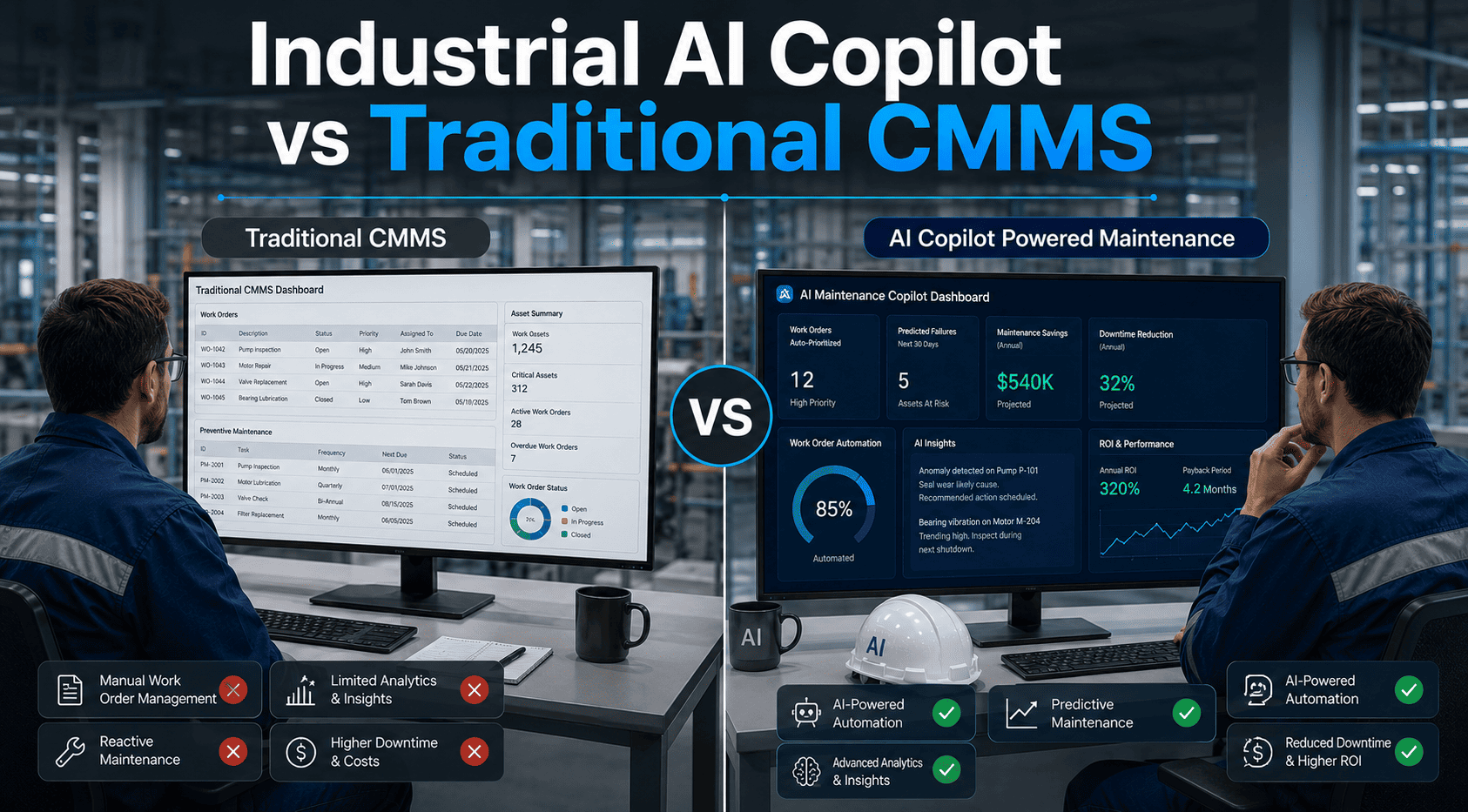
Traditional Document Management vs RAG-Powered Knowledge

Capability Before: Traditional CMMS After: OxMaint RAG
OEM Manual Access Shared drive folder — find the right file yourself Instant retrieval linked to specific asset record
Repair History Search Work order list — filter manually by date or asset Semantic search — "similar failures on this pump type"
SOP Version Control Multiple versions in shared drive — no enforcement Single current version enforced at work order level
Fault Diagnosis Support Technician knowledge only — ask a senior colleague AI brief: history, OEM procedure, recommended parts
Cross-Site Learning Manual sharing — email, meetings, or not at all Automatic — every repair enriches the shared graph
Knowledge Retention Walks out with retiring technicians Captured at every work order closure — permanent
Mobile Access Laptop required — back to the office first Full knowledge layer on any mobile device, any site
Search Speed 20–45 minutes average to locate correct document Under 10 seconds — contextual, asset-specific answer

What RAG-Powered Maintenance Knowledge Delivers

60%
Reduction in MTTR
When technicians access correct documentation instantly, mean time to repair drops by 60% on complex multi-system failures
35K
Hours Recaptured Annually
A 50-person maintenance team recaptures 35,000 hours per year previously lost to documentation search — redirected to preventive and predictive work
40%
Lower Repeat Failure Rate
Facilities using searchable repair history and pattern detection see 40% fewer repeat failures on the same asset classes within 12 months of deployment
10×
ROI on Knowledge Investment
Organizations that invest in structured maintenance knowledge management report 10× return versus unstructured documentation approaches, per US Dept. of Energy benchmarks

Teams switching to OxMaint's RAG-powered knowledge platform see measurable reductions in MTTR, repeat failures, and documentation search time — start a free trial to experience the shift, or book a demo to see it on your own asset data.

RAG for Maintenance Knowledge: Frequently Asked Questions

How does RAG differ from a standard CMMS document library?
A standard CMMS document library is a file storage system — you find documents by browsing folders or searching filenames. RAG is a semantic intelligence layer — you describe what you need in plain language and the system retrieves the relevant content from across all connected documents, work order histories, and asset records simultaneously. The difference is between finding a file and getting an answer. OxMaint's RAG architecture retrieves context from multiple sources and synthesizes a response specific to the asset and situation in question.
What documentation formats does OxMaint's RAG system support?
OxMaint ingests PDF documents (including scanned PDFs with OCR), structured work order data, inspection records, maintenance logs, and text-based SOPs. OEM manuals in PDF format are the primary use case — upload once, indexed to the specific asset record, retrievable by any technician from any site. For facilities with legacy paper records, structured data entry into OxMaint work orders builds the searchable knowledge base over time as work is completed and documented.
How does OxMaint handle knowledge accuracy — can RAG return wrong information?
OxMaint's RAG system is retrieval-grounded — it surfaces content from documents you have uploaded and work orders your team has completed, not fabricated answers. Every retrieved result is linked to its source document or work order, enabling technicians to verify the context. For safety-critical procedures, OxMaint enforces SOP version control — only current, approved procedure versions are surfaced in response to work order queries, eliminating the risk of acting on a superseded document.
How quickly can OxMaint's knowledge system be deployed and populated?
OxMaint is designed for rapid deployment — most facilities have their core asset registry, PM schedules, and document uploads live within the first week. The knowledge base builds progressively as work orders are completed and closed — every technician note, every repair resolution, and every inspection finding adds to the searchable corpus. Facilities with existing digital work order histories can import them to immediately populate the RAG knowledge graph with years of accumulated repair intelligence. There is no heavy implementation required and no months-long onboarding process.
OxMaint AI Knowledge Platform

Stop Losing Knowledge Every Time a Technician Leaves

Turn every repair, every manual, and every inspection into a permanent, searchable asset that makes your entire team smarter — instantly.

  • Real-time AI search across all maintenance documentation
  • Predictive failure alerts from historical pattern recognition
  • 5–10 year CapEx forecasting powered by asset intelligence
See measurable results in the first 30 days · Limited onboarding slots available this quarter
By Jack Edwards

Experience
Oxmaint's
Power

Take a personalized tour with our product expert to see how OXmaint can help you streamline your maintenance operations and minimize downtime.

Book a Tour

Share This Story, Choose Your Platform!

Connect all your field staff and maintenance teams in real time.

Report, track and coordinate repairs. Awesome for asset, equipment & asset repair management.

Schedule a demo or start your free trial right away.

iphone

Get Oxmaint App
Most Affordable Maintenance Management Software

Download Our App