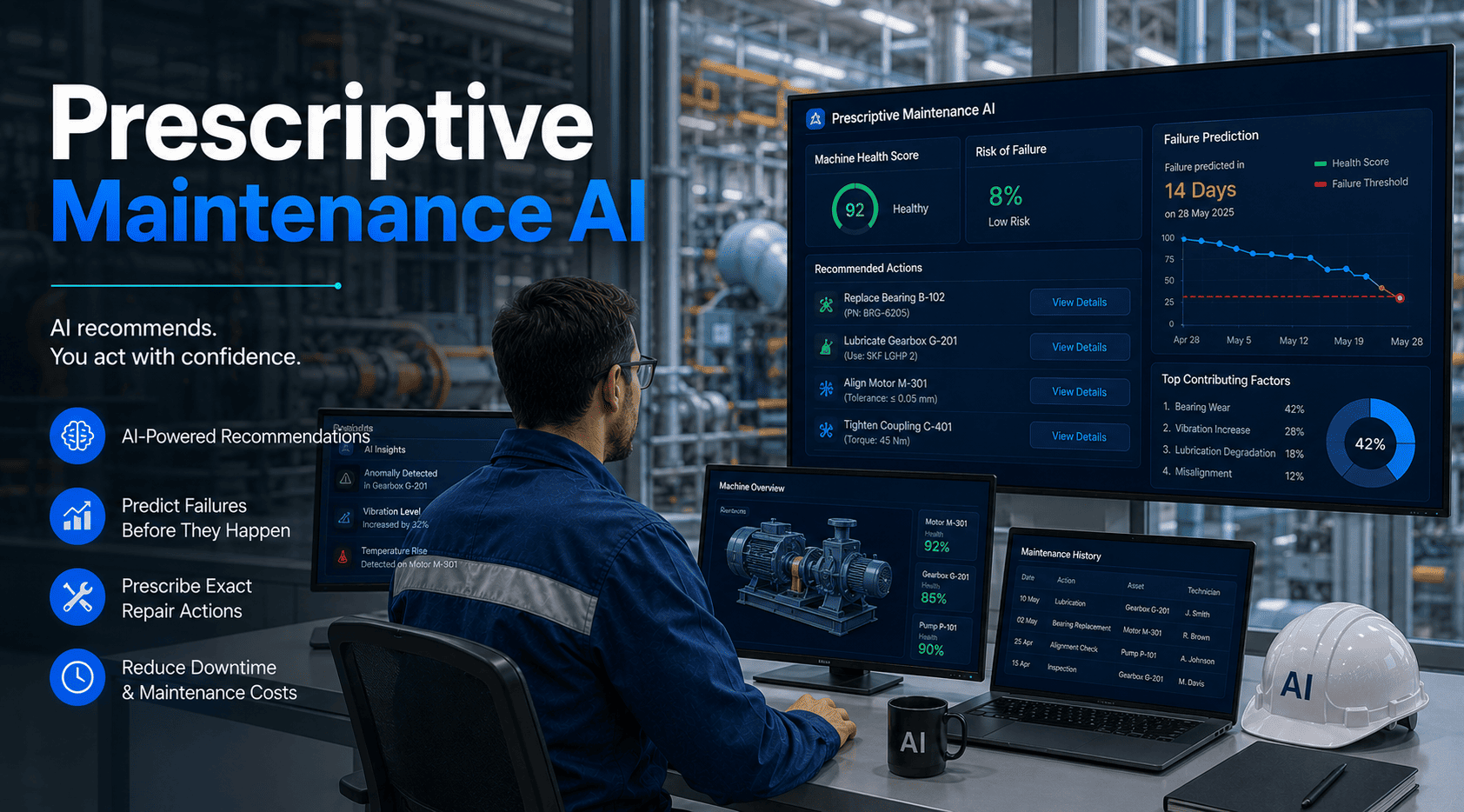
Large language models are no longer confined to customer service chatbots and document summarizers — they are being embedded directly into industrial maintenance workflows, where they diagnose fault codes in natural language, generate standard operating procedures from raw inspection data, answer technician questions about specific equipment in the middle of a repair, and query maintenance databases without a single line of SQL. For maintenance operations managers dealing with the knowledge transfer crisis of retiring senior technicians and increasingly complex asset portfolios, industrial LLMs are not a future concept — they are a present operational necessity — start a free trial to see how OxMaint's LLM-powered maintenance assistant works on your actual asset data, or book a demo and watch the system diagnose a fault scenario from your own equipment history.
LLMs Are Now Diagnosing Faults, Writing SOPs, and Answering Technician Questions in Real Time
The knowledge that used to live in the heads of your most experienced engineers is now accessible to every technician in your facility — through natural language queries powered by industrial large language models.
What Industrial LLM Applications Actually Mean for Maintenance
An industrial LLM application in maintenance is a large language model fine-tuned or retrieval-augmented with domain-specific knowledge — equipment manuals, historical fault records, repair logs, inspection checklists, and regulatory documentation — that allows maintenance personnel to interact with complex technical systems using natural language rather than database queries, form submissions, or document searches.
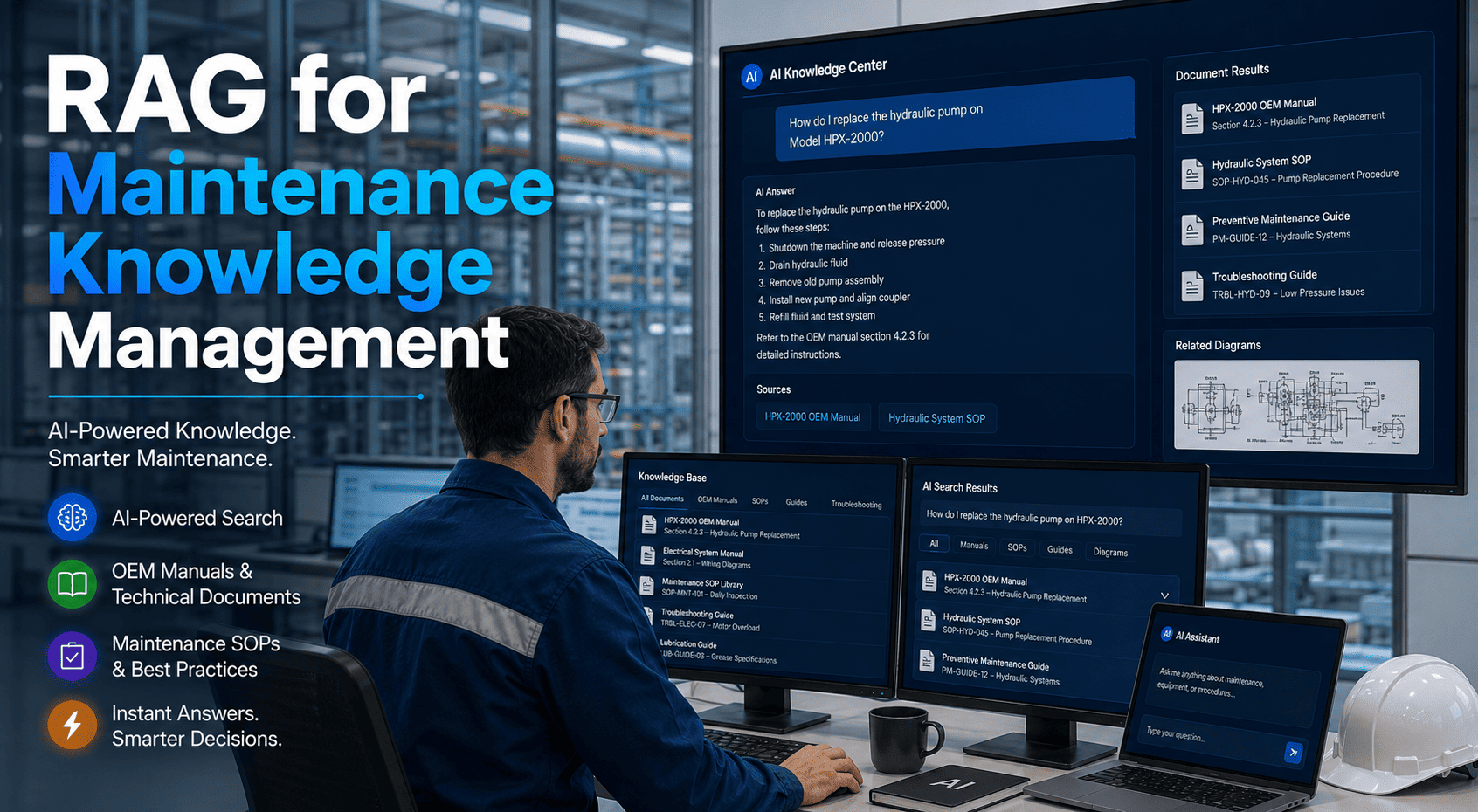
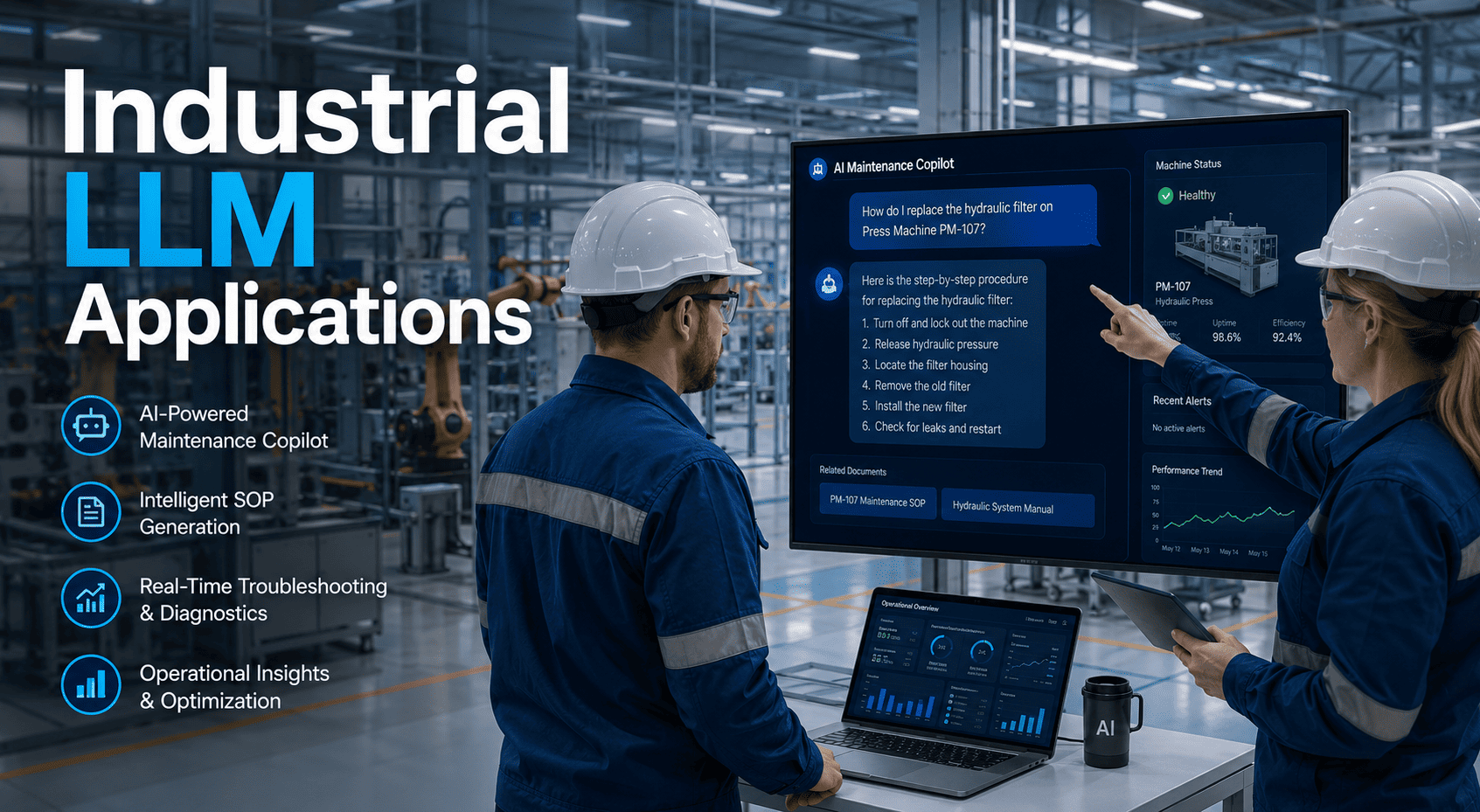
The practical difference is profound. Instead of a technician spending 40 minutes searching a 600-page equipment manual for a specific error code, they ask the system: "What does error code E-4721 mean on the Grundfos CR pump and what are the first three diagnostic steps?" The LLM pulls from the integrated manual, cross-references the asset's maintenance history, and returns a structured answer with context-specific guidance in under 10 seconds.
Beyond fault diagnosis, industrial LLMs are generating first-draft SOPs from completed work orders, translating complex regulatory requirements into actionable maintenance procedures, and enabling non-technical managers to query asset performance data in plain English without database expertise. Start a free trial to deploy OxMaint's industrial knowledge assistant across your maintenance operation today.
8 Industrial LLM Applications Transforming Maintenance Operations
The LLM interprets sensor fault codes, error messages, and alarm sequences in natural language, cross-referencing equipment manuals and historical repair records to generate context-aware diagnostic guidance.
Completed corrective work orders become draft standard operating procedures automatically. The LLM extracts the successful repair sequence and formats it into a structured, reviewable SOP for future reference.
Field technicians query the system mid-repair on mobile devices. Questions like "What torque spec for the bearing housing on this pump model?" return immediate, accurate answers from integrated documentation.
Maintenance managers ask questions in plain English: "Which assets at Site 2 have overdue PMs and high criticality scores?" The LLM translates intent into CMMS queries without requiring SQL or filter expertise.
Complex OSHA, ISO, or GMP regulations are translated into specific maintenance procedures by the LLM — bridging the gap between legal requirements and daily operational checklists for your specific asset types.
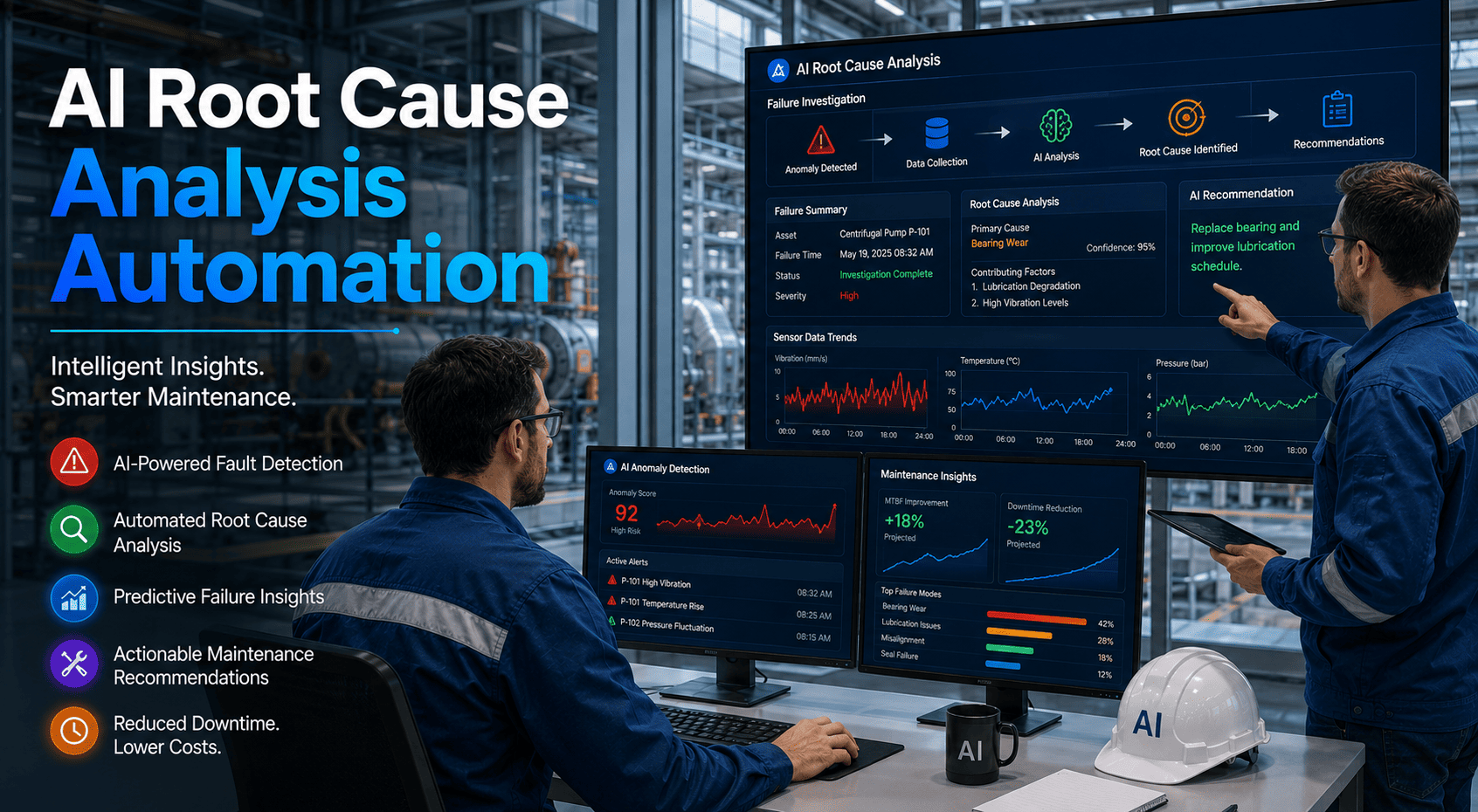
After a failure event, the LLM analyzes the asset's complete maintenance history, sensor trends, and work order records to generate a structured root cause hypothesis — reducing RCA investigation time by up to 60%.
Institutional knowledge from retiring technicians is captured through structured LLM-facilitated interviews and stored in the maintenance knowledge base — retrievable by any technician on any future repair involving similar assets.
In multi-national facilities, the LLM serves technicians in their native language while maintaining a single unified knowledge base — eliminating translation errors in technical documentation that cause maintenance mistakes.
Why Maintenance Operations Are Losing the Knowledge War Without LLMs
The industrial knowledge crisis is not theoretical — it is measurable in extended MTTR, repeated failures on the same assets, and dangerous errors made by technicians who could not find the right procedure in time. Book a demo to see how OxMaint's LLM addresses these specific knowledge gaps in your operation.
Senior technicians retire or leave, taking decades of undocumented fault diagnosis expertise. Younger technicians repeat the same diagnostic mistakes the veterans learned to avoid 20 years ago.
Finding the right procedure in a 400-page manual, across 12 different document versions, in the middle of an active repair costs 30–60 minutes per incident — multiplied across hundreds of work orders per month.
Without a system that serves the correct procedure at the moment of need, technicians improvise or rely on memory — creating inconsistent repair quality and a compliance audit trail that looks like guesswork.
Most CMMS databases contain years of maintenance history that no one can query effectively. The data exists, but extracting patterns requires database expertise that most maintenance managers do not have.
How OxMaint Embeds LLM Intelligence Across Your Maintenance Workflow
OxMaint's LLM is retrieval-augmented with your actual asset documentation — equipment manuals, historical work orders, inspection records, and regulatory checklists — so every answer is grounded in your specific assets, not generic training data.
Field technicians access the LLM assistant directly from the OxMaint mobile app during active repairs. Query the knowledge base, pull up relevant historical repairs on the same asset, or request step-by-step diagnostic guidance in real time.
When a corrective work order is closed in OxMaint, the LLM analyzes the completed task steps and automatically drafts a structured SOP for supervisor review — capturing successful repair sequences before they are forgotten.
Ask OxMaint for maintenance performance summaries, asset reliability trends, or overdue work order reports in plain English. The LLM translates natural language queries into structured data reports without any database expertise required.
Get your custom maintenance knowledge plan
See how OxMaint's industrial LLM captures your institutional knowledge and makes it available to every technician — before your most experienced people retire.
- Fault diagnosis from your actual equipment history and manuals
- Automatic SOP generation from completed work orders
- Natural language CMMS queries for non-technical managers
Works across multi-site portfolios · Live in days, not months · No heavy implementation required
Used by operations teams managing 10,000+ assets · See measurable results in 30 days
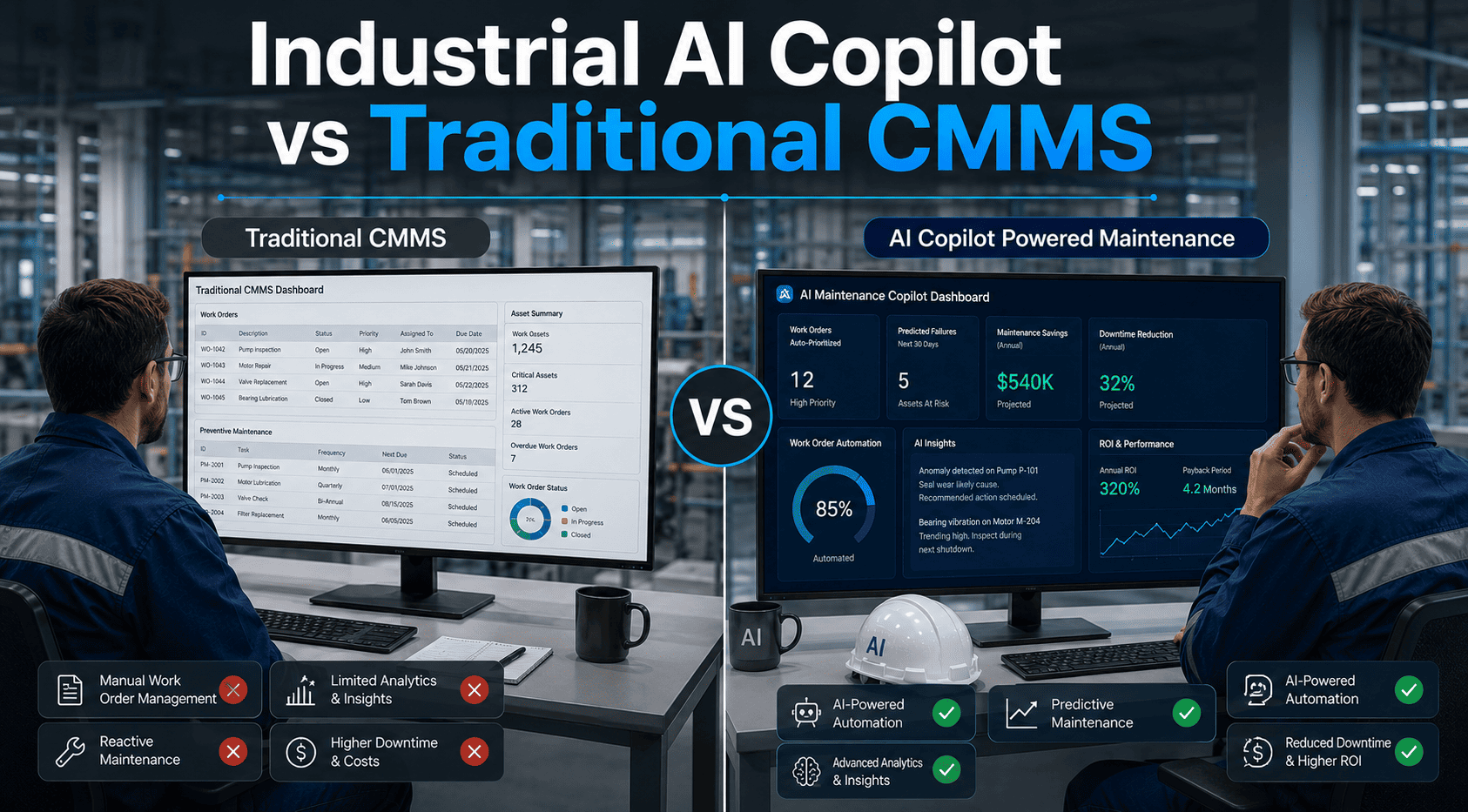
Traditional Documentation Search vs Industrial LLM: The Full Comparison
| Scenario | Without Industrial LLM | With OxMaint LLM Assistant |
|---|---|---|
| Fault Code Lookup | 30–60 min manual search across multiple manual versions; often ends with a phone call to the senior technician | Under 10 seconds; LLM returns context-specific diagnosis with asset history cross-reference |
| SOP Creation | Never happens in practice; repair knowledge stays undocumented until the technician leaves | Auto-drafted from completed work order data; supervisor reviews and publishes in minutes |
| Maintenance Reporting | Requires IT or database admin to pull reports; takes days; often too late to act on findings | Plain English query returns structured report in seconds; managers self-serve without technical help |
| New Technician Onboarding | Weeks of shadowing experienced staff; steep learning curve on complex assets; risk of early errors | LLM assistant provides senior-level guidance from day one; onboarding time reduces by 40% |
| Knowledge Retention | Leaves with the technician; institutional knowledge lost permanently on retirement | Captured in knowledge base; retrievable forever; updated with every completed work order |
| Root Cause Analysis | Manual review of maintenance history; takes hours; often inconclusive without senior expertise | LLM analyzes full asset history and generates structured RCA hypothesis in minutes |
Measurable Results From Industrial LLM Deployment in Maintenance
LLM-assisted diagnosis reduces mean time to resolve fault events by 35% versus manual documentation search — directly reducing unplanned downtime duration per incident.
New technicians with LLM access reach full productivity 40% faster than those relying on traditional documentation and manual mentoring alone.
Facilities using in-context LLM procedure delivery report 78% higher SOP adherence rates compared to facilities relying on printed manuals and shared network folders.
LLM-powered root cause analysis reduces investigation time from an average of 8 hours to under 3 hours — enabling faster corrective action and shorter failure recurrence cycles.
The combined effect of faster diagnosis, better SOP compliance, and reduced knowledge gaps translates directly into lower maintenance cost per asset per year. Start a free trial to quantify the impact on your own operation, or book a demo to see OxMaint's LLM assistant working with your actual equipment documentation.
What Maintenance Managers Ask Before Deploying Industrial LLMs
How does OxMaint's LLM ensure answers are grounded in our actual equipment manuals rather than generic training data?
Can technicians with limited digital literacy use the LLM assistant effectively on mobile devices in the field?
How do we capture knowledge from retiring technicians before they leave using OxMaint's LLM tools?
How does OxMaint handle situations where the LLM's answer could affect safety-critical maintenance decisions?
Stop Letting Institutional Knowledge Walk Out the Door
OxMaint's industrial LLM captures your maintenance knowledge, delivers it to technicians at the moment of need, and makes every person on your team as capable as your most experienced engineer.
- Fault diagnosis grounded in your actual equipment manuals
- Automatic SOP generation from completed work orders
- Natural language CMMS queries for every management level
Used by operations teams managing 10,000+ assets · See measurable results in first 30 days · Live in days, not months