Your CMMS records what happened. An AI copilot tells you what to do next. That single distinction separates the maintenance operations running on legacy systems from those compressing downtime, extending asset life, and forecasting CapEx with confidence. In 2026, the question is no longer whether AI belongs in maintenance software — it is whether your current platform is holding your operation back — start a free trial to experience the difference, or book a demo and we will run the numbers on your specific asset portfolio.
- Real-time asset visibility across every site
- Predictive failure alerts — not reactive work orders
- 5–10 year CapEx forecasting powered by condition data
Traditional CMMS Was Built to Record. AI Copilots Are Built to Decide.
A traditional CMMS is a structured database with a workflow layer on top. It stores work orders, PM schedules, asset records, and inventory. It generates reports from data you enter. It reminds you of scheduled tasks. It is, fundamentally, a sophisticated filing system — and it requires a human to interpret every piece of information it contains and decide what to do with it.
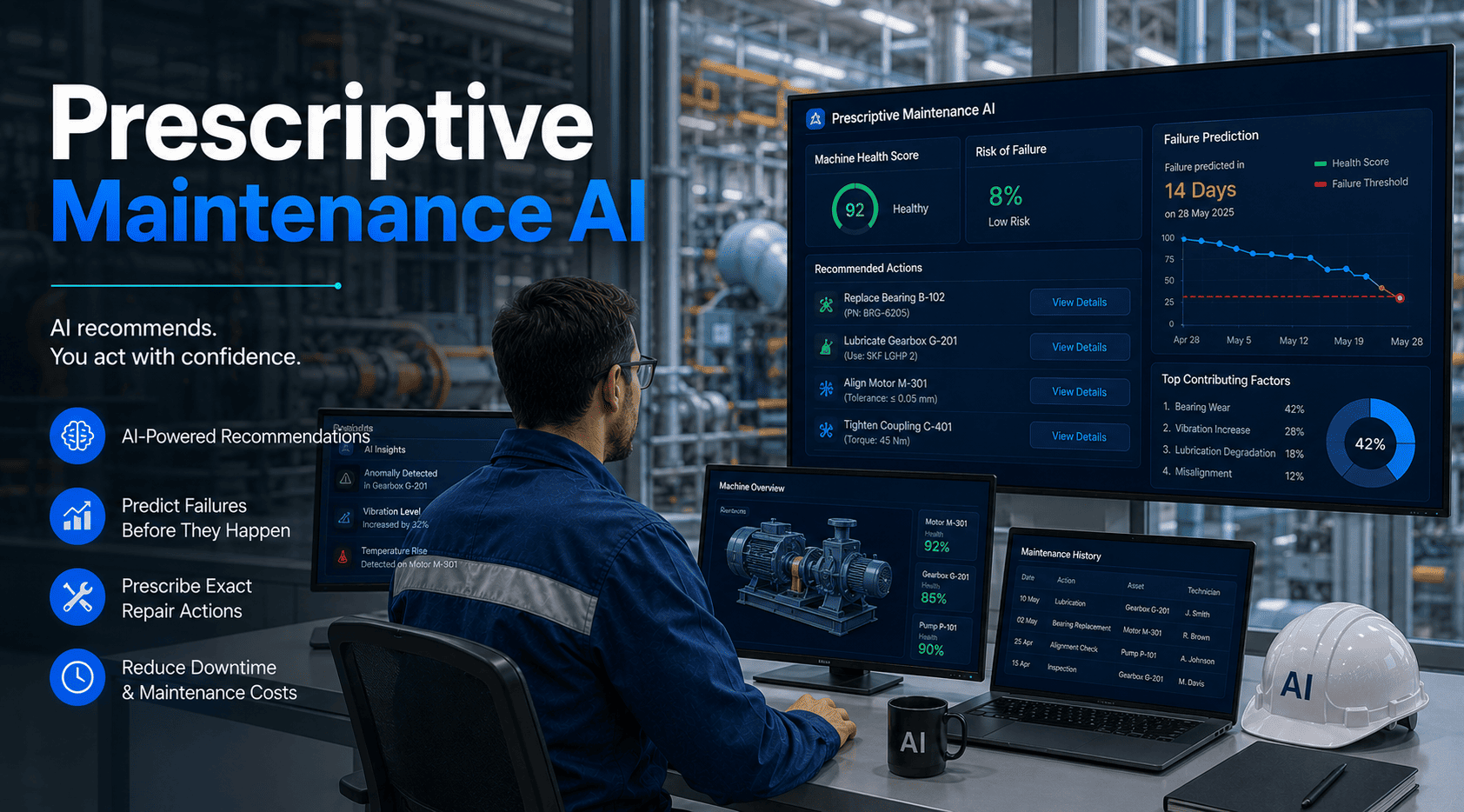
An industrial AI copilot operates at a different intelligence layer entirely. It does not wait to be queried — it continuously analyzes the data in the system and surfaces the decision that matters right now. Which asset is most likely to fail in the next 14 days and why. Which PM tasks will generate the highest reliability return this week. Which assets have accumulated enough repair cost to justify replacement in the next CapEx cycle. The difference between recording and deciding is the difference between a maintenance log and a maintenance strategy.
OxMaint is built as an AI-first platform — not a traditional CMMS with an AI add-on bolted to the side. Every layer of the platform — asset registry, PM scheduling, work order management, CapEx forecasting — is designed to generate intelligence, not just records. Operations teams that make the shift see measurable changes in unplanned downtime, maintenance spend, and CapEx accuracy within the first quarter — start a free trial to see the platform working on your asset data, or book a demo to compare your current system directly.
Eight Dimensions Where AI Copilots Outperform Traditional CMMS
Six Ways Traditional CMMS Silently Drains Your Maintenance Budget
Six AI Copilot Capabilities That Deliver Measurable ROI in 2026
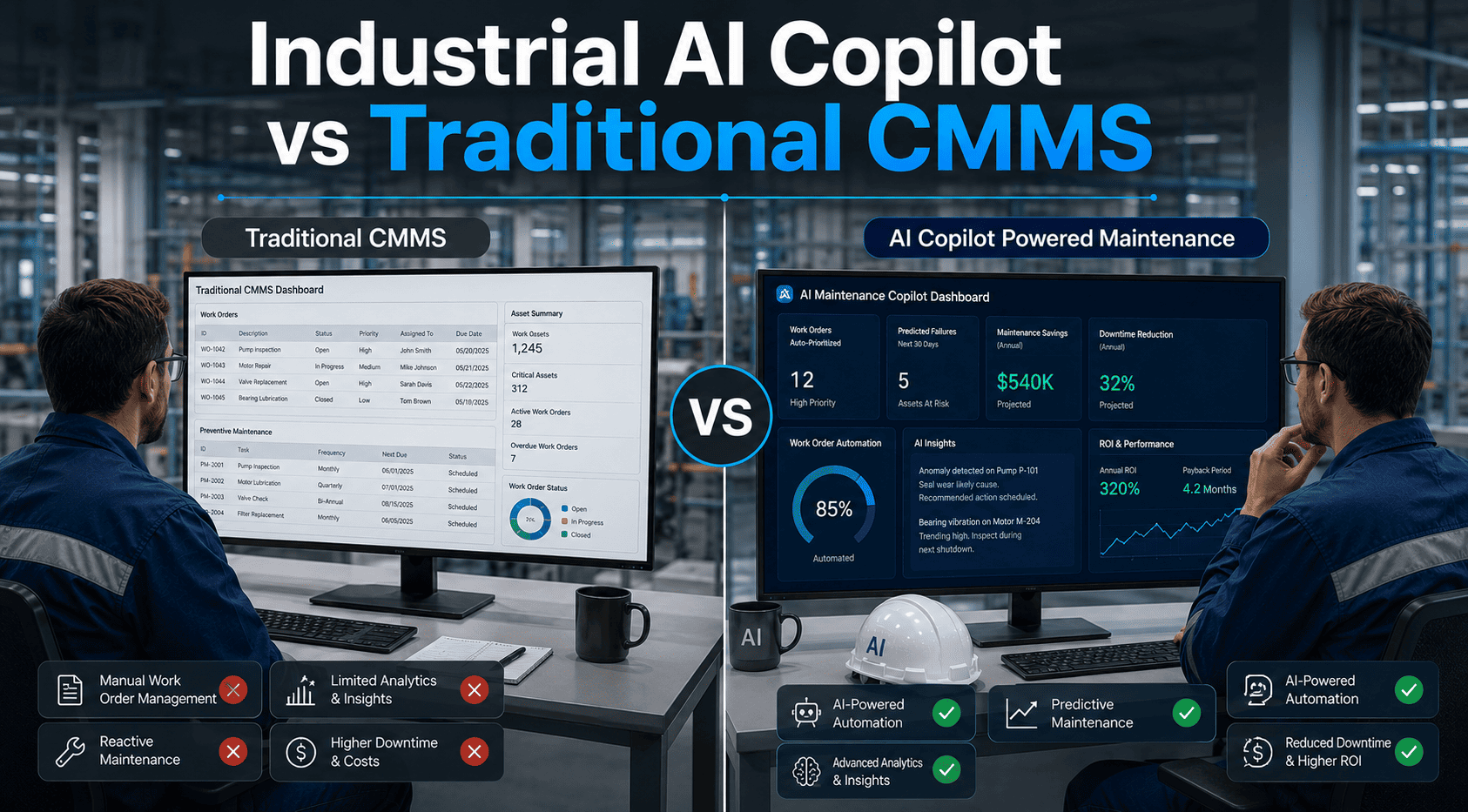
Industrial AI Copilot vs Traditional CMMS: 2026 Feature and ROI Comparison
| Capability | Traditional CMMS (Legacy) | OxMaint AI Copilot (2026) |
|---|---|---|
| Failure Response | Reactive — work orders created after failure | Predictive — alerts generated 14–60 days before failure |
| PM Scheduling | Fixed calendar intervals — condition-blind | Dynamic — adjusted by real-time condition scoring |
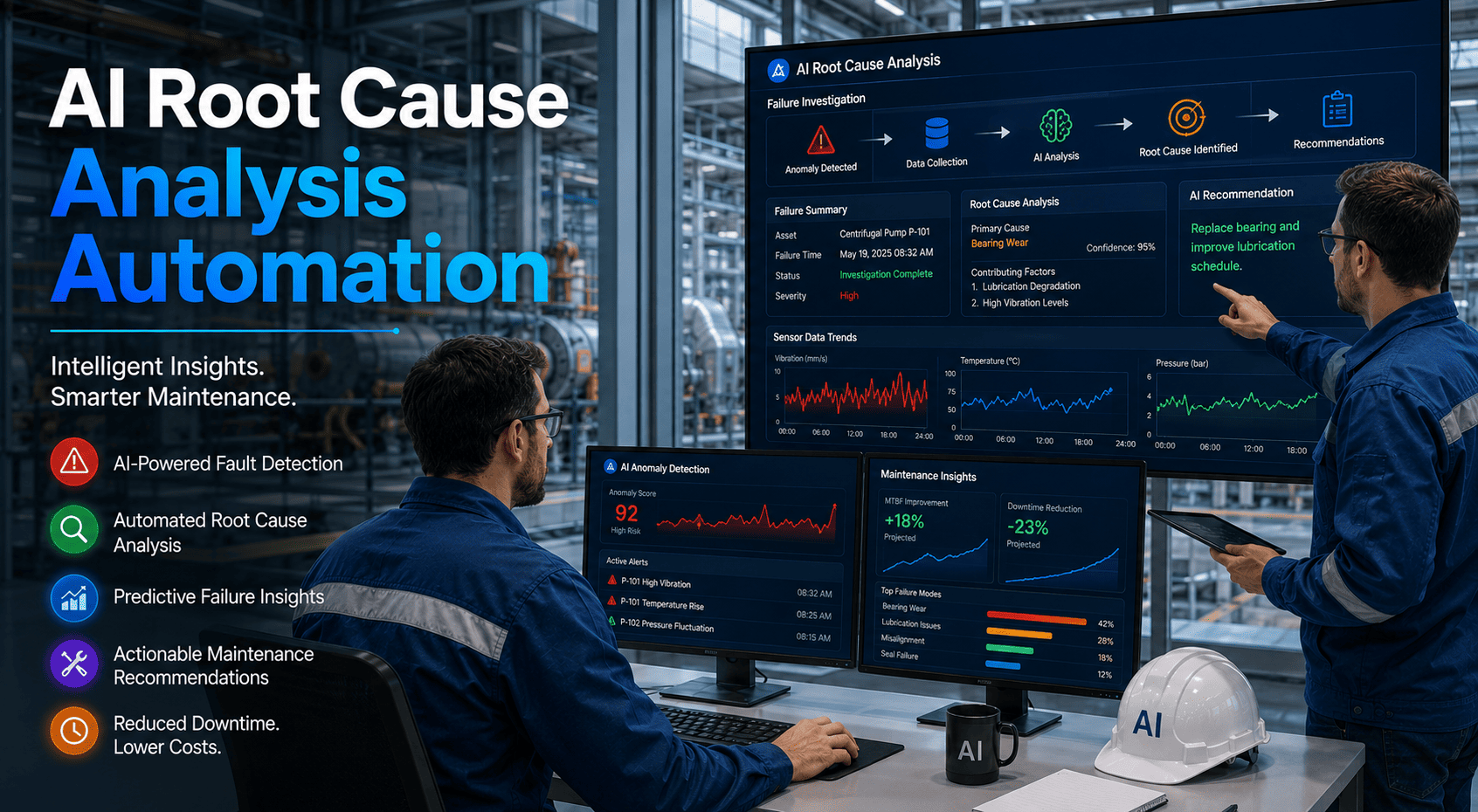
| Root Cause Analysis | Manual — engineer correlates data across systems | Automated — multi-signal correlation in under 2 minutes |
| CapEx Forecasting | Reactive budgeting — driven by failures, not data | Rolling 5–10 year models from condition trajectory |
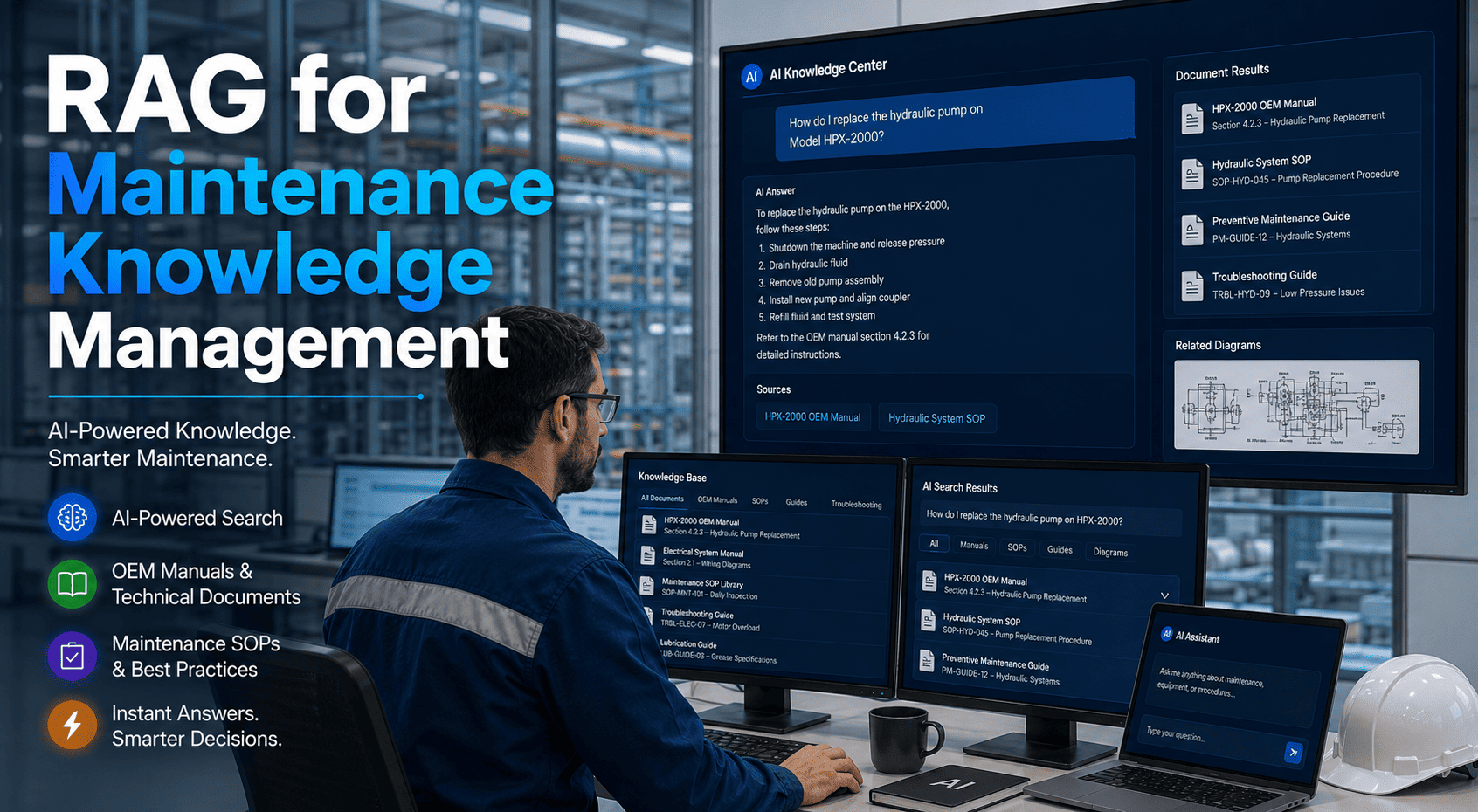
| Knowledge Access | Document storage — find files yourself | RAG retrieval — contextual answers at point of repair |
| Multi-Site Visibility | Isolated site views — no portfolio comparison | Portfolio hierarchy — cross-site intelligence layer |
| Asset Health Status | Active / inactive binary status | Continuous condition score with degradation trajectory |
| Implementation Time | 6–18 months — heavy IT and consultant dependency | Days — no heavy onboarding, live from first work order |
| Emergency Repair Rate | 40–60% of maintenance budget — industry average | 18–25% target — predictive intervention closes the gap |
Documented ROI from AI Copilot vs Traditional CMMS Deployments
Operations teams upgrading from traditional CMMS to AI-copilot platforms see measurable ROI within the first quarter — start a free trial to see OxMaint on your own asset data, or book a demo and we will model the ROI for your specific portfolio.
AI Copilot vs Traditional CMMS: Frequently Asked Questions
Can OxMaint replace a traditional CMMS completely or does it work alongside one?
How does OxMaint's AI layer differ from AI features bolted onto legacy CMMS platforms?
How long does it take to see ROI after switching from a traditional CMMS to OxMaint?
How does OxMaint handle multi-site portfolios that legacy CMMS platforms struggle with?
Stop Losing Millions to Reactive Maintenance Your Data Already Predicted
Turn every asset into a predictable, trackable system with an AI copilot that acts on your data — not just stores it.
- Real-time asset visibility and condition scoring across every site
- Predictive failure alerts 14–60 days before breakdown
- 5–10 year CapEx forecasting powered by live condition data