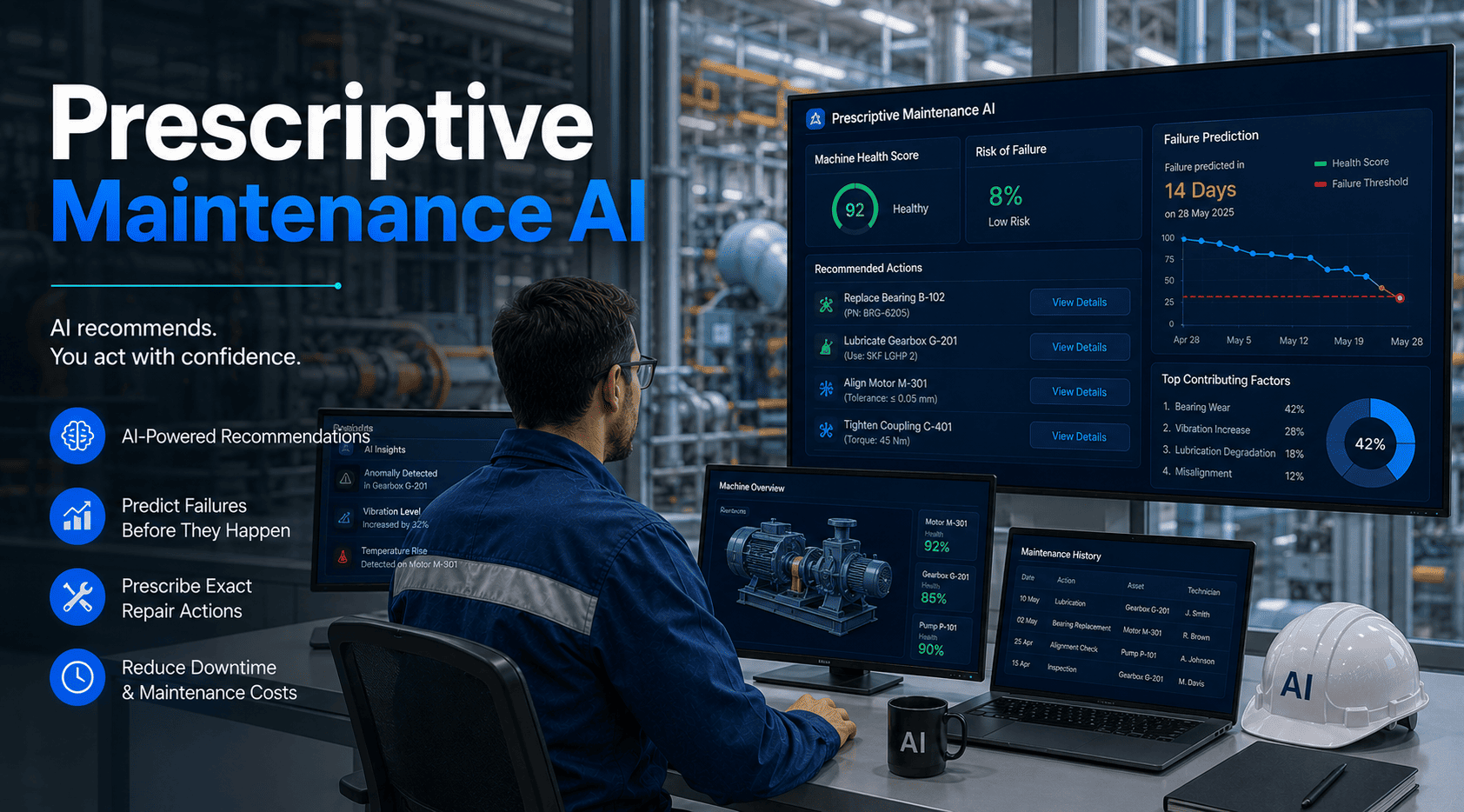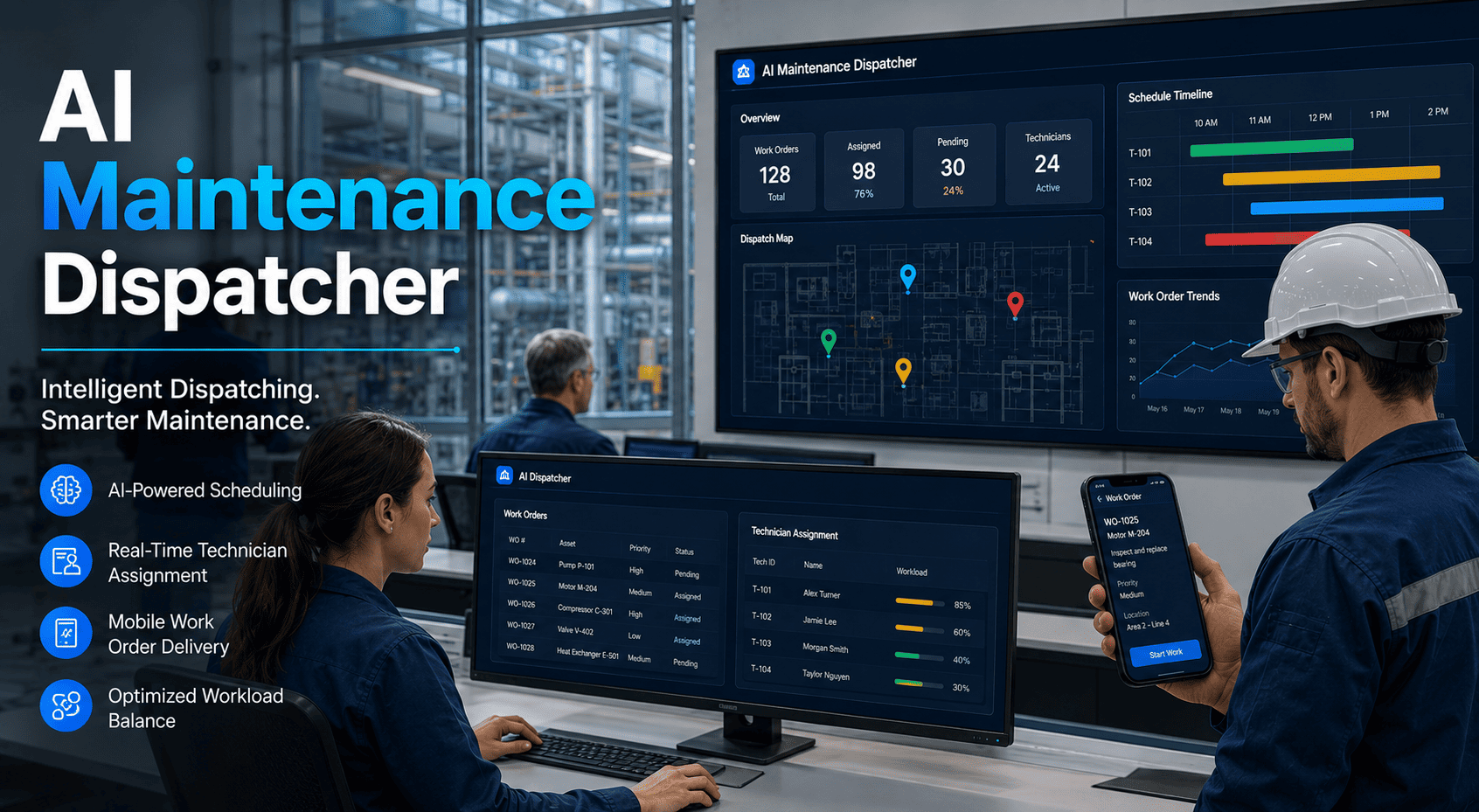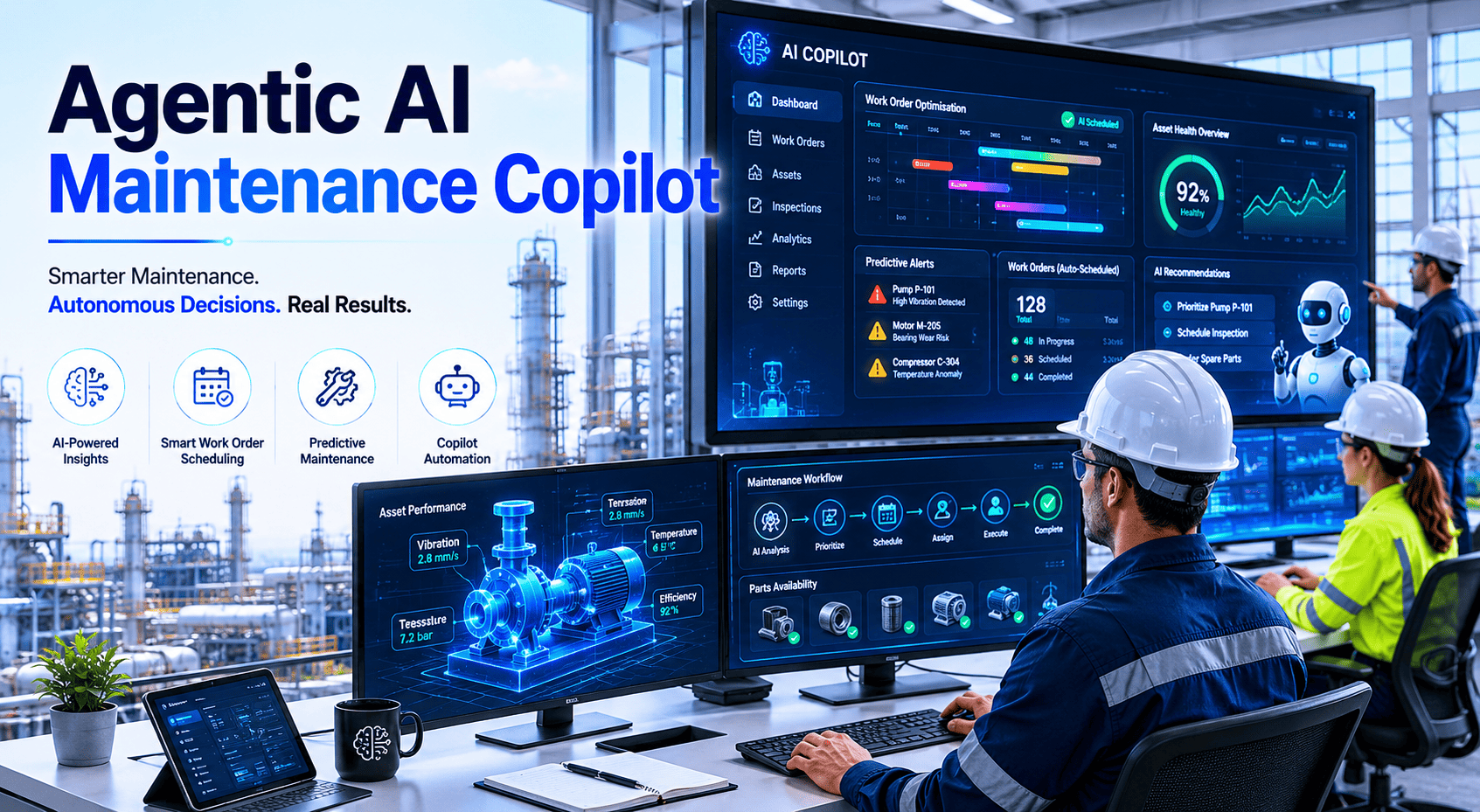
In 2026, maintenance teams are no longer just using software to track work orders — they are deploying agentic AI systems that autonomously detect equipment degradation, generate work orders, assign the right technician, schedule the task into open calendar slots, and close the order after verification, all without a dispatcher touching a keyboard. The gap between facilities still relying on manual scheduling and those running agentic AI copilots is already measurable in uptime, cost, and technician utilization — start a free trial to see how OxMaint's AI copilot self-schedules your work orders from day one, or book a demo and watch autonomous scheduling run live on your asset data.
Your AI Maintenance Copilot is Already Scheduling While You Sleep
Agentic AI doesn't wait for a manager to create a ticket. It monitors sensor data, detects anomalies, spawns work orders, assigns technicians by skill and proximity, and logs completions — fully autonomously.
What Is an Agentic AI Maintenance Copilot
An agentic AI maintenance copilot is a software system that combines large language models, real-time sensor data, historical maintenance records, and scheduling logic to autonomously execute the full work order lifecycle — from anomaly detection through task assignment, execution tracking, and closure verification. Unlike traditional CMMS tools that wait for a human to input a request, an agentic copilot acts on its own reasoning loop: observe, decide, execute, verify.
The "agentic" distinction matters. Standard AI maintenance tools surface recommendations — a dashboard flag saying "pump bearing at risk." An agentic copilot acts on that signal: it creates a corrective work order, checks technician availability and skill match, slots the task into the shift schedule, sends the assignment to the technician's mobile device, and monitors completion. Human oversight is available at every step, but no human is required to initiate the chain.
By 2026, leading industrial facilities are deploying multi-agent architectures where specialized AI agents handle different domains — one agent monitors IoT sensor streams, another manages scheduling optimization, a third handles parts procurement pre-staging — all coordinated by a central copilot layer that maintenance managers interact with in natural language. Start a free trial to deploy OxMaint's agentic copilot across your asset portfolio today.
6 Core Capabilities of a 2026 Agentic Maintenance Copilot
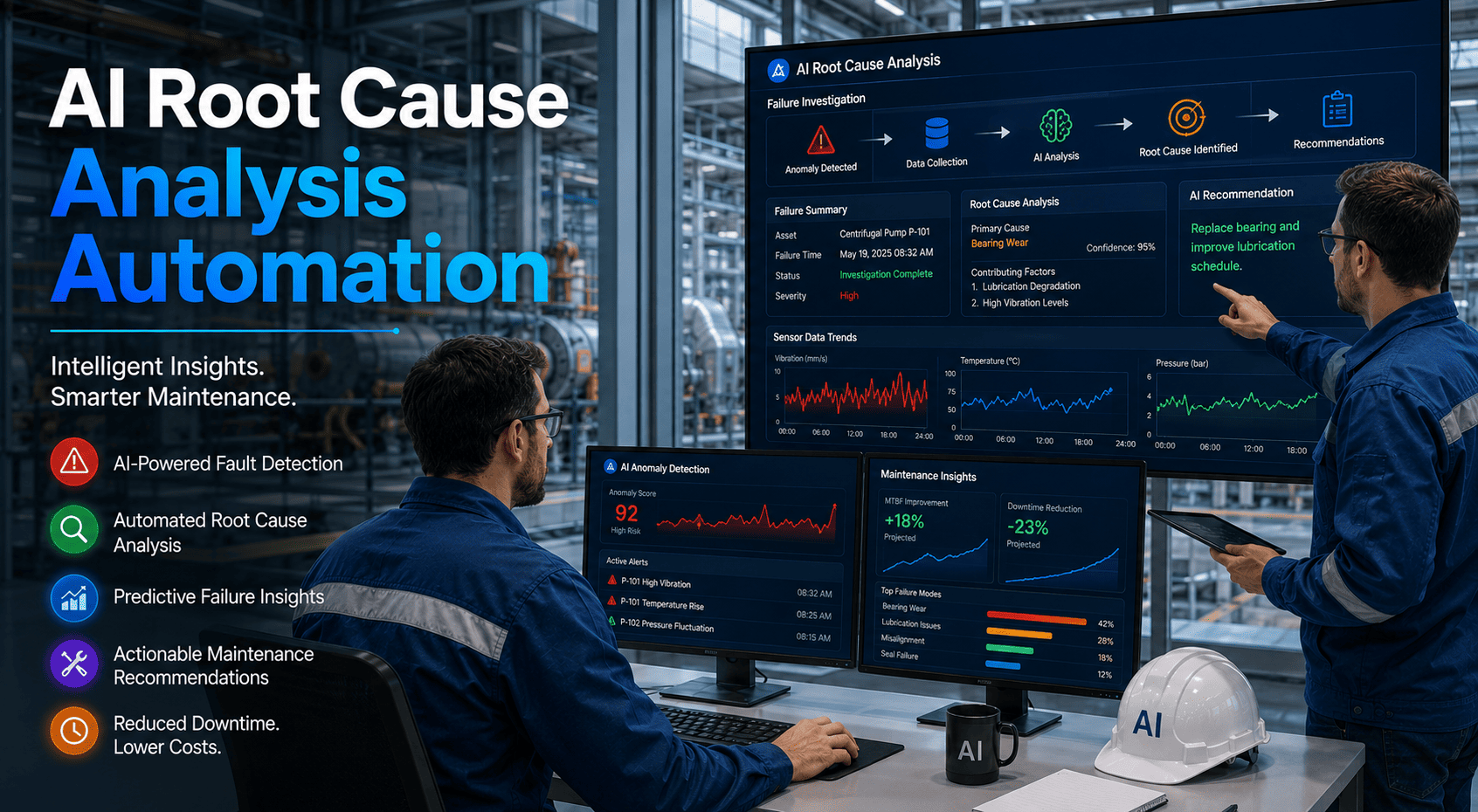
The copilot monitors asset health signals — vibration, temperature, runtime hours, inspection scores — and spawns corrective or preventive work orders when thresholds are crossed, without waiting for human input.
Each work order is matched to the best-qualified available technician using real-time data: certification level, current workload, site proximity, and historical success rate on similar asset types.
The scheduling agent continuously reorders the work queue based on asset criticality, production impact, parts availability, and technician capacity — adapting in real time when emergencies or absences occur.
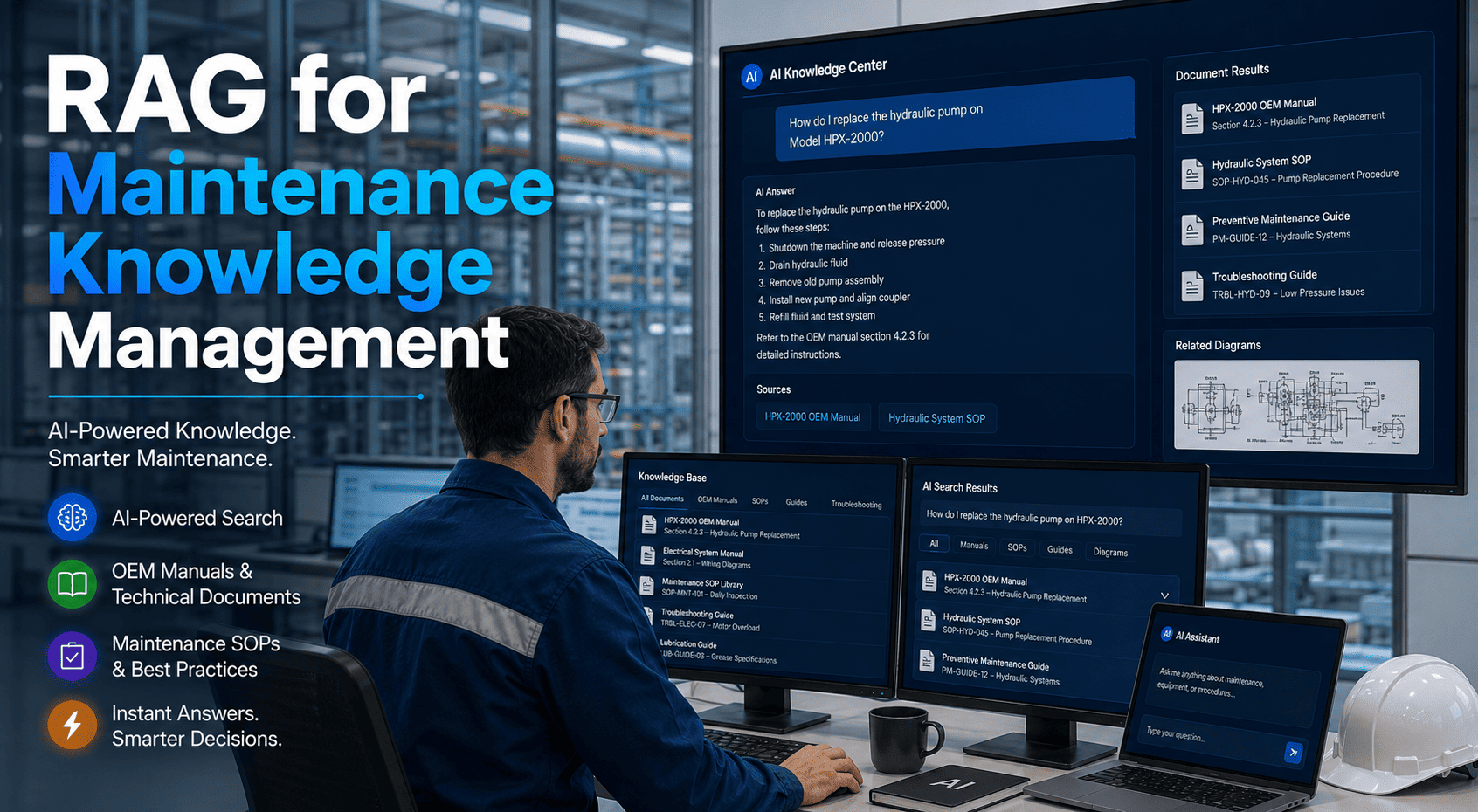
Maintenance managers query the system in plain English: "What assets are at risk this week?" or "Who is best to handle the HVAC compressor?" The LLM layer translates intent into structured queries and actions.
Before assigning a work order, the copilot checks spare parts inventory. If a required component is below safety stock, it automatically triggers a procurement request — ensuring technicians arrive with everything they need.
After technician sign-off, the copilot validates completion data, updates asset condition scores, feeds results back into the predictive model, and adjusts future PM schedules based on actual failure patterns observed.
Why Manual Maintenance Scheduling Is Breaking Operations Teams
Every hour a dispatcher spends manually routing work orders is an hour not spent on reliability improvement. The organizational cost of manual scheduling compounds invisibly — until an asset fails and the reactive spiral begins. Book a demo to see how OxMaint eliminates these exact bottlenecks in your operation.
All work order creation and assignment flows through one or two people. When they are unavailable, maintenance stops. Agentic AI eliminates the single point of failure in your scheduling chain.
Without AI matching, the nearest available technician gets the job — regardless of specialization. Mismatched assignments drive rework rates up 34% and extend mean time to repair significantly.
Without real-time monitoring feeding into the CMMS, degradation happens silently between inspections. By the time a technician sees the problem, failure is hours away and parts are not on site.
Emergency repairs cost 4.8× more than planned maintenance. Each reactive failure consumes budget that was never allocated, forcing CapEx deferrals that create the next wave of failures 12–18 months later.
Manual schedules collapse when a technician calls in sick or an emergency work order arrives. Rebuilding the day's schedule manually takes hours and pushes critical PM tasks past their intervals.
Sensor data, asset history, and work order logs live in separate systems. Without an AI layer connecting them, the data exists but never drives autonomous action — it just fills dashboards no one monitors in real time.
How OxMaint's Agentic Copilot Transforms Your Maintenance Operation
OxMaint's copilot monitors your asset hierarchy — Portfolio, Property, System, Asset, Component — and autonomously generates work orders when condition scores drop, PM intervals are reached, or IoT thresholds are crossed.
Every work order is auto-assigned to the optimal technician using a multi-variable model: skill certification, current queue depth, site location, parts availability, and historical completion performance on that asset class.
Ask OxMaint anything: "Which assets at Site 3 are overdue for inspection?" or "Reschedule all non-critical PMs this week to accommodate the chiller emergency." The copilot executes the intent, not just the search.
When a technician goes absent or an emergency work order arrives, OxMaint automatically rebalances the remaining schedule — reprioritizing by asset criticality and production impact without dispatcher intervention.
OxMaint connects to your existing sensor infrastructure and SCADA systems. Real-time readings feed directly into the copilot's decision layer — so degradation signals trigger work orders in minutes, not the next inspection cycle.
Each completed work order updates the predictive model. OxMaint learns which assets fail faster than their nominal intervals at your specific sites, tightening PM schedules where the data shows higher-than-average degradation rates.
See your asset ROI in 30 minutes
See how much cost you can eliminate from reactive maintenance by deploying OxMaint's agentic copilot across your facility or portfolio.
- Real-time asset visibility across every site and system
- Autonomous work order generation and technician dispatch
- 5–10 year CapEx forecasting driven by AI condition scoring
Used by operations teams managing 10,000+ assets. Live in days, not months.
No heavy implementation required · Works across multi-site portfolios · Limited onboarding slots this quarter
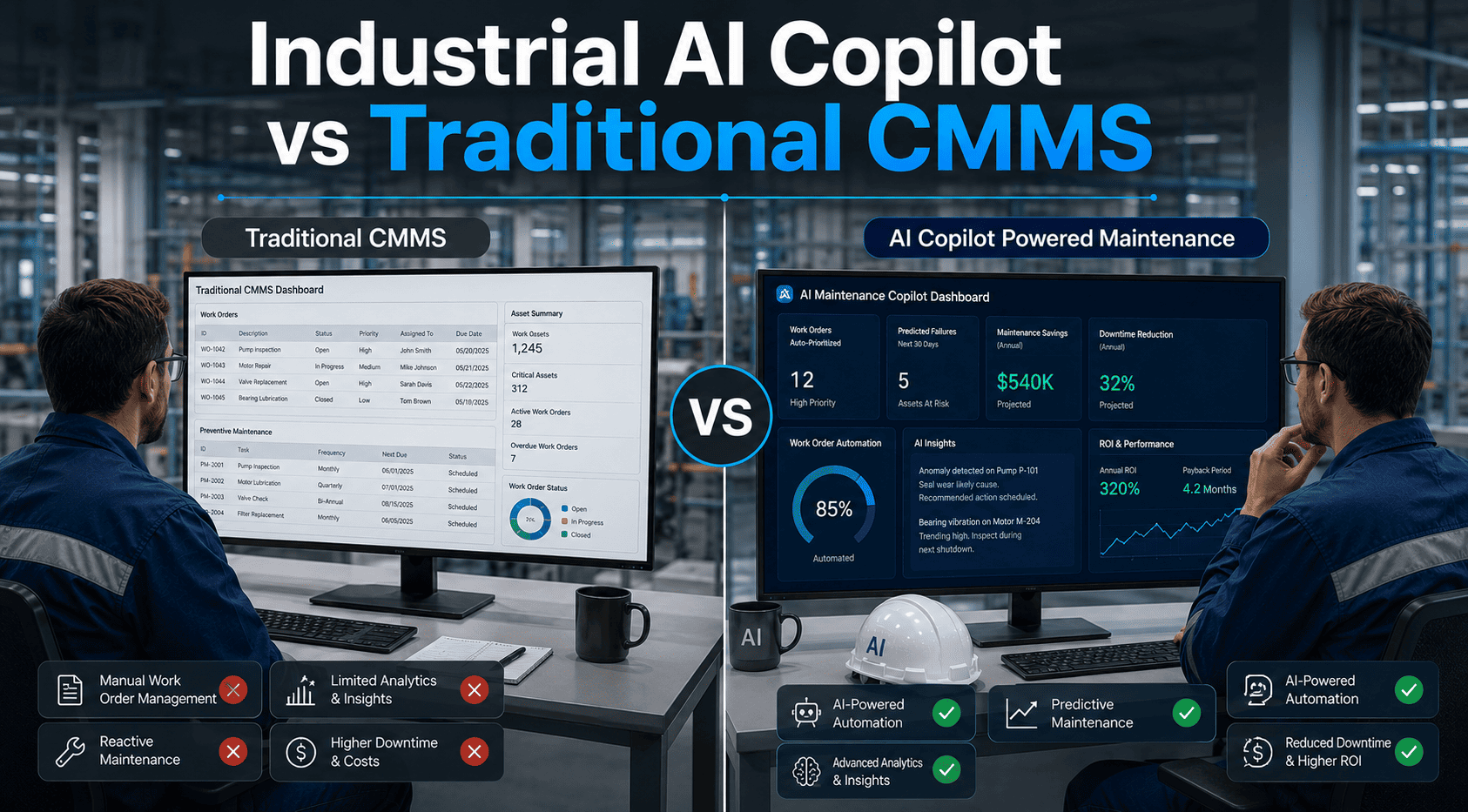
Reactive Maintenance vs Agentic AI Copilot: The Full Comparison
| Dimension | Reactive / Manual | Agentic AI Copilot |
|---|---|---|
| Work Order Creation | Technician or manager notices problem and manually creates ticket | Copilot detects anomaly and spawns work order automatically within minutes |
| Technician Assignment | Dispatcher assigns nearest available person regardless of skill match | AI matches technician by certification, proximity, workload, and asset history |
| Schedule Resilience | Absence or emergency collapses the day; rebuild takes hours | Copilot auto-rebalances queue in real time, reprioritizing by criticality |
| Failure Detection Lead Time | Detected at or after failure — zero warning window | Detected days to weeks before failure via sensor trend analysis |
| Parts Pre-Staging | Technician arrives and discovers parts unavailable; job delayed | Copilot checks inventory and triggers procurement before work order is assigned |
| CapEx Forecasting | Annual guess based on age and gut feeling; frequent surprises | Rolling 5–10yr model driven by AI condition scores and failure probability curves |
| Dispatcher Dependency | All scheduling flows through one or two people; single point of failure | Copilot runs 24/7 autonomously; humans focus on strategy, not routing |
| Maintenance Cost | 4.8× higher per repair event; budget surprises every quarter | Planned maintenance reduces per-event cost by up to 60% vs reactive baseline |
What Facilities Achieve When They Deploy Agentic AI Maintenance
Facilities using AI-driven PM scheduling report 40% fewer emergency work orders within 90 days of deployment — because degradation is caught and acted on before failure.
Autonomous scheduling eliminates dispatcher overhead and reduces technician idle time between tasks, delivering 28% average labor efficiency gains in multi-site operations.
AI dispatch cuts average time from work order creation to technician assignment from 47 minutes (manual) to under 15 minutes — with better skill matching than human dispatchers achieve.
Predictive work order generation and parts pre-staging reduce unplanned downtime by an average of 18% in year one — translating directly into production output and revenue protection.
These results compound over time as the AI model learns your specific asset failure patterns. Start a free trial and see measurable results within the first 30 days, or book a demo to see the ROI model built around your own asset portfolio.
Questions Operations Teams Ask About Agentic AI Maintenance
How does an agentic copilot handle situations where it does not have enough data to make a confident scheduling decision?
Can OxMaint's AI copilot integrate with our existing SCADA and IoT sensor infrastructure?
What happens to existing work order backlogs when we deploy the AI copilot?
How does the copilot handle multi-site portfolios where technicians and assets are distributed across locations?
Stop Losing Millions to Reactive Maintenance
Turn every asset into a predictable, trackable system with OxMaint's agentic copilot. Autonomous scheduling, AI dispatch, and condition-based CapEx forecasting — live in days, not months.
- Real-time asset visibility across every site
- Autonomous work order generation and AI dispatch
- 5–10 year CapEx forecasting from AI condition data
Used by operations teams managing 10,000+ assets · See measurable results in first 30 days · No heavy implementation required