A K-12 district facilities director manages 22 school buildings, 4.1 million square feet, and 847 maintainable assets with a team of 16 technicians. Monday morning starts with 94 open work orders, 3 boiler complaints from Friday, a principal demanding the gym floor refinish before basketball season, and a roof leak in the elementary school that was "reported two weeks ago." The director spends 2.5 hours triaging, dispatching, and re-prioritizing — then an HVAC failure in the middle school cafeteria forces three technicians off their PM schedule for the day. By Friday, 12 preventive maintenance tasks have been deferred, the roof leak has worsened, and the boiler complaints have escalated to the superintendent. This cycle repeats every week in districts without a centralized maintenance system. A CMMS for schools eliminates it by automating work order routing, protecting PM schedules, tracking every asset across every building, and giving administrators real-time visibility into facility condition and spending. Schedule a demo to see education CMMS running on campus facility data.
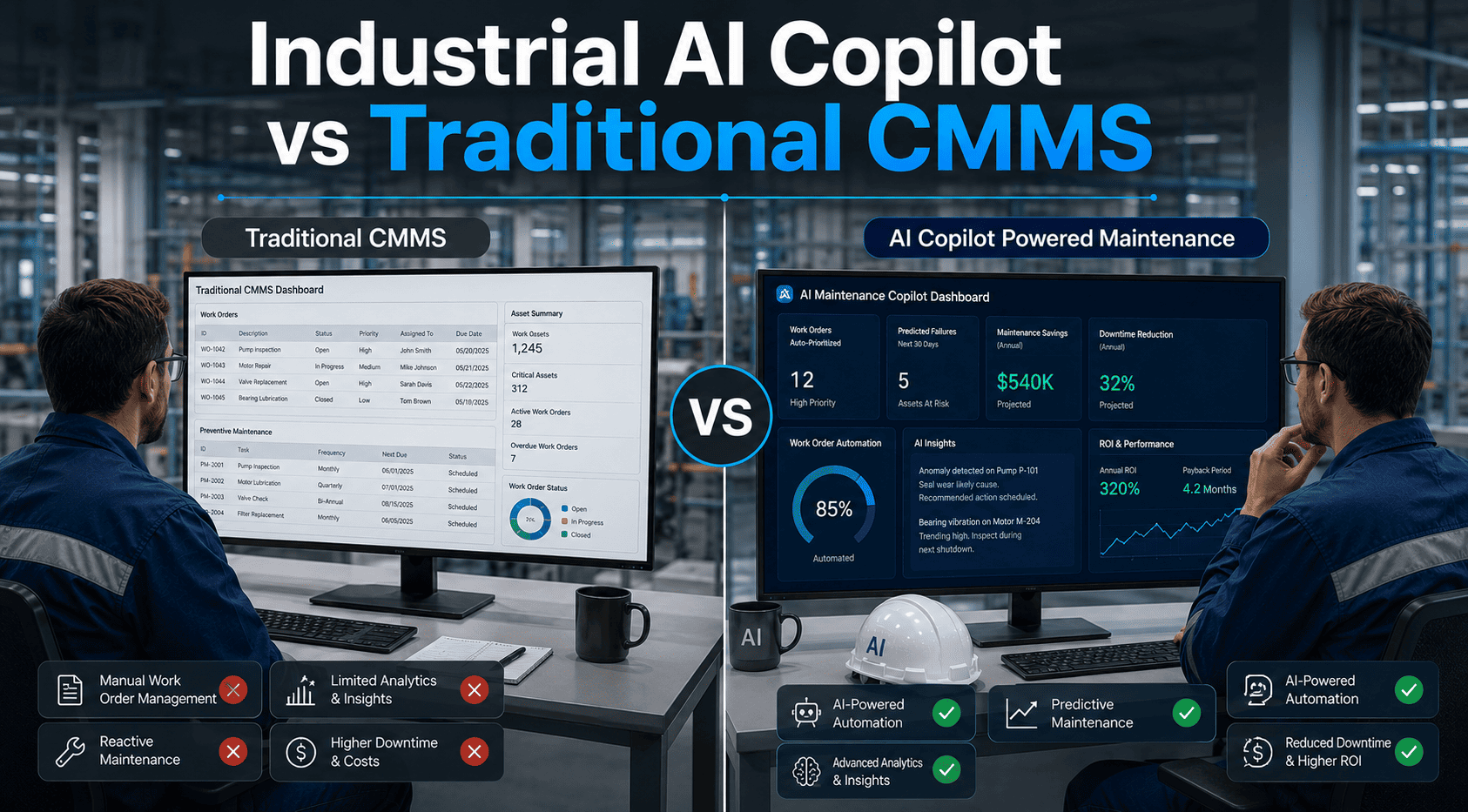
Legacy Campus Maintenance
Paper work orders and reactive firefighting
Work orders via email, phone, or hallway conversations
Priority based on who complains loudest to the principal
PM schedules on paper calendars — deferred when emergencies hit
No asset history — technicians diagnose from memory
Facility condition data unavailable for bond referendums
Outcome: 40%+ emergency ratio. Deferred maintenance backlog grows $2M–$8M annually. Bond requests lack evidence. Student comfort complaints reach the school board.
CMMS-Driven Campus Operations
Automated scheduling and full visibility
Mobile work order submission with photo and location
AI priority scoring by safety, student impact, and compliance
Protected PM capacity — emergencies fill remaining time
Complete asset history at point of repair via mobile app
Condition data generates evidence-based capital requests
Outcome: Emergency ratio under 15%. PM compliance above 95%. Maintenance cost per sq ft documented and defensible. Bond requests backed by data.
$4.5M
Average deferred maintenance per K-12 district (NCES)
40%
School technician time lost to travel, paperwork, and parts searching
2×
Effective output with route optimization and mobile dispatch
Why Schools and Universities Need Purpose-Built CMMS
Education facilities operate under constraints that commercial buildings do not face: academic calendars that dictate when disruptive work can happen, student safety requirements that elevate every HVAC and plumbing issue, regulatory compliance across OSHA, EPA, ADA, and state education agencies, and public accountability for every maintenance dollar spent from taxpayer or tuition funds. Sign up free and have your campus asset registry loaded within the first week.
K-12 District Challenges
Buildings:15–50 schools spread across the district
Budget:Fixed annual allocation — no revenue flexibility
Scheduling:Disruptive work limited to breaks, evenings, weekends
Accountability:School board, parents, and taxpayer oversight
K-12 districts need geographic routing across dispersed campuses, academic calendar integration, and facility condition reporting for bond referendums.
Higher Education Challenges
Portfolio:50–200 buildings, 2M–15M gross square feet
Systems:Central plant, BAS, research labs, residence halls
Enrollment:Facility condition is a top-3 student retention factor
Compliance:OSHA, EPA, ASHRAE, NFPA, ADA — simultaneous
Universities need predictive maintenance on critical plant, student-impact scheduling, and capital planning intelligence for board presentations.
Six CMMS Capabilities That Transform Campus Maintenance
01
Academic Calendar-Aware Scheduling
The CMMS integrates your academic calendar so disruptive maintenance — roof work, HVAC shutdowns, floor refinishing — auto-schedules for breaks, evenings, and summer. Classroom and residence hall HVAC work orders escalate to same-day during finals and move-in week.
Student impact: Zero classroom disruptions from planned maintenance
Efficiency: 100% of disruptive work in off-hours windows
OxMaint enables this: Calendar integration with student-impact weighting ensures classrooms, labs, and dining facilities always receive priority scheduling.
02
Multi-Building Geographic Routing
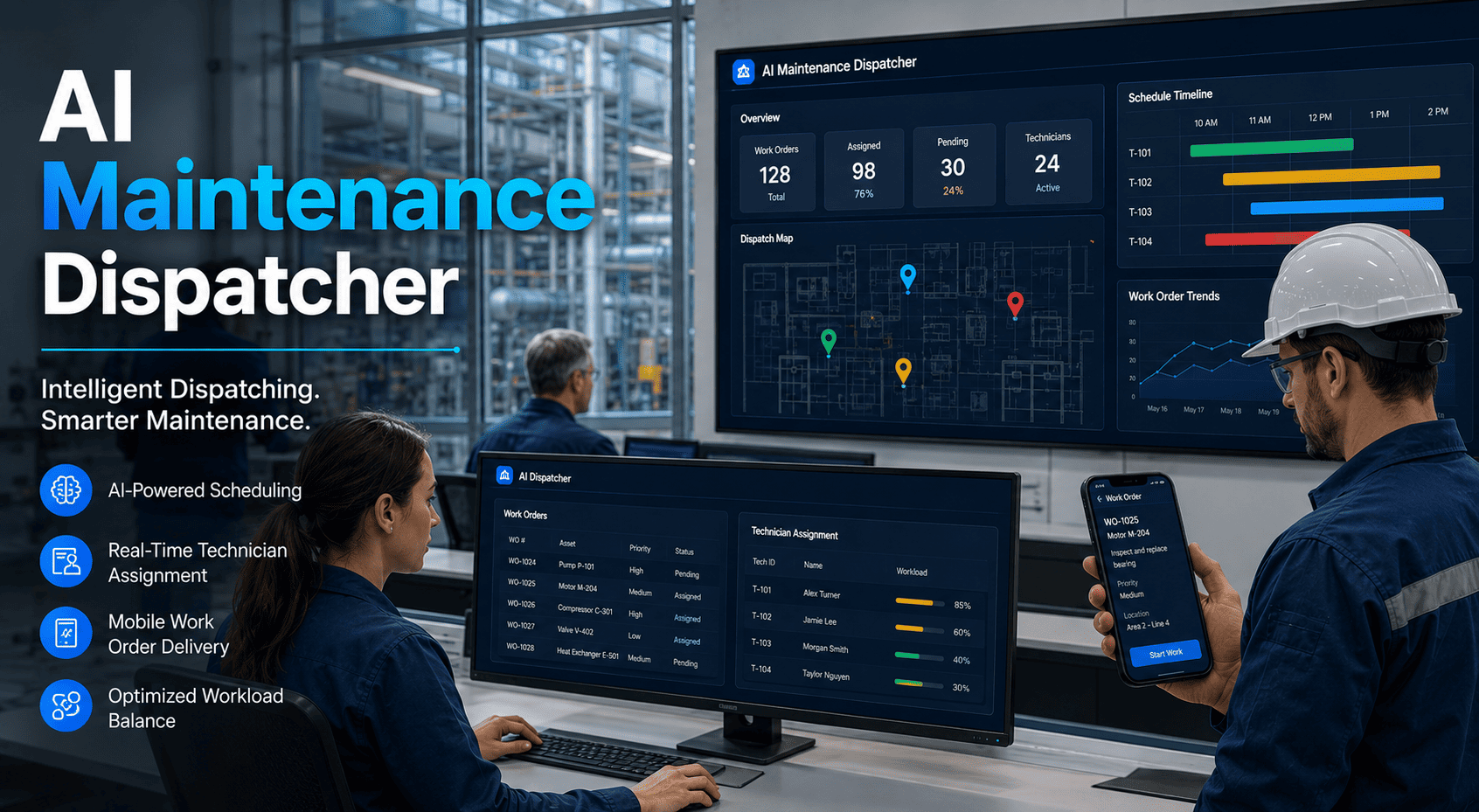
K-12 districts with 15–50 buildings spread across a city waste 60–90 minutes per technician per day on travel between schools. AI routing clusters work orders by building proximity, batching 4–6 tasks per trip instead of dispatching single visits across the district.
Labor recovery: 1.5–2.0 FTE equivalent at zero hiring cost
Completions: +25–40% daily work orders from same team
OxMaint enables this: GPS-optimized dispatch assigns technicians to building clusters matching their trade and current location.
Your Team Is Not Understaffed. They Are Under-Routed.
OxMaint's geographic clustering recovers 12–18 hours per week of technician time lost to travel between school buildings.
03
Compliance Tracking Across Every Regulation
Schools face OSHA workplace safety, EPA environmental (AHERA asbestos, lead paint), ADA accessibility, NFPA fire/life safety, and state education facility standards — simultaneously. The CMMS auto-tags compliance work orders and tracks deadlines with escalation alerts.
Audit readiness: 100% — 1-click compliance reports
Penalty avoidance: $200K+ in OSHA and ADA risk eliminated
OxMaint enables this: Every work order auto-tags with its regulatory domain. Overdue compliance items escalate before deadlines, not after.
04
Facility Condition Assessment for Capital Planning
Bond referendums and capital budget requests fail when they rely on estimates. The CMMS generates asset condition data, failure frequency, maintenance cost trending, and remaining useful life projections — producing evidence-based capital requests that school boards and legislators can evaluate objectively.
Budget approval: 25–40% higher with data-backed requests
Planning horizon: 5–10 year capital replacement projections
OxMaint enables this: Asset lifecycle analytics feed board-ready capital reports showing exactly which systems need replacement and when.
05
Mobile Field Execution with Full Context
Technicians receive work orders on mobile with building, room, asset history, suggested repair, and required parts — no return to the shop for information. GPS check-in, photo documentation, barcode parts scanning, and voice-to-text notes complete documentation in 90 seconds.
First-time fix: 85%+ with parts pre-staging and asset context
Documentation: 100% complete close-out on every work order
OxMaint enables this: The mobile app works offline for basements and mechanical rooms, syncing timestamps when connectivity returns.
06
Staff and Parent Request Portal
Teachers, staff, and building administrators submit maintenance requests via web or mobile app with location, photo, and description. AI auto-classifies, deduplicates, and routes to the correct technician. Status notifications push at each milestone — eliminating "when will this be fixed?" calls to the facilities office.
Call reduction: 78% fewer status inquiry calls
Capture rate: 100% — no lost requests from hallway conversations
Financial Impact for Education Facilities
$800K+
Emergency repair avoidance — planned fixes cost 3–5× less
$350K+
Labor productivity — 12–18 hrs/week recovered from routing
$150K+
Energy savings — timely HVAC PM prevents 15% waste
$2M+
Asset life extension — 25–35% longer with consistent PM
Annual Value for a Mid-Size District or University
$3.3M+ Documented Savings
Platform starts free · Full deployment in 30–60 days · ROI from week one
30-Day Deployment for Education
Asset Registry and Building Setup
✓ Import buildings, rooms, and equipment across all campuses
✓ Apply criticality ratings and compliance requirements
✓ Configure technician profiles with skills and zones
✓ Load academic calendar for scheduling integration
Work Order Automation and Mobile Deployment
✓ Enable AI classification, routing, and priority scoring
✓ Deploy mobile app to field technicians
✓ Activate staff request portal with auto-acknowledgment
✓ Link parts inventory to work order scheduling
PM Activation and Capital Intelligence
✓ Activate preventive maintenance with protected capacity
✓ Configure compliance tagging (OSHA, EPA, ADA, NFPA)
✓ Deploy KPI dashboards for administration
✓ Generate first data-backed capital planning report
By day 30, every building, every asset, and every work order flows through a system that routes the right technician to the right job with the right parts — while documenting every action for compliance, budgeting, and capital planning. Start your free trial and have campus maintenance operational within the first week.
Your Students Deserve Facilities That Work. Your Team Deserves Tools That Help.
OxMaint gives education facilities teams the scheduling, compliance, and capital planning intelligence to maintain every building at the standard students, parents, and school boards expect. Deploy in 30 days. Free to start.
Frequently Asked Questions
Can one CMMS manage both K-12 districts and university campuses?
Yes. OxMaint scales from a 5-building elementary district to a 200-building university. Role-based access lets each school or department manage their own work orders while central administration sees the full portfolio — spending by building, PM compliance by campus, and capital needs across the entire system.
How does the system handle summer maintenance projects?
The academic calendar integration identifies summer break as the primary window for disruptive work. The CMMS queues deferred projects, floor refinishing, deep cleaning coordination, and capital improvement prep into the summer schedule automatically — ensuring the team maximizes the 8–10 week window without manual planning.
Does OxMaint help with school safety compliance?
Every compliance domain — OSHA workplace safety, AHERA asbestos management, EPA lead paint and environmental, ADA accessibility, NFPA fire and life safety — is auto-tagged on relevant work orders. Overdue inspections escalate before deadlines. One-click audit reports replace the 2–4 week scramble that most districts experience before state inspections.
Book a demo to see compliance tracking configured for education regulations.
Can teachers and staff submit work orders without training?
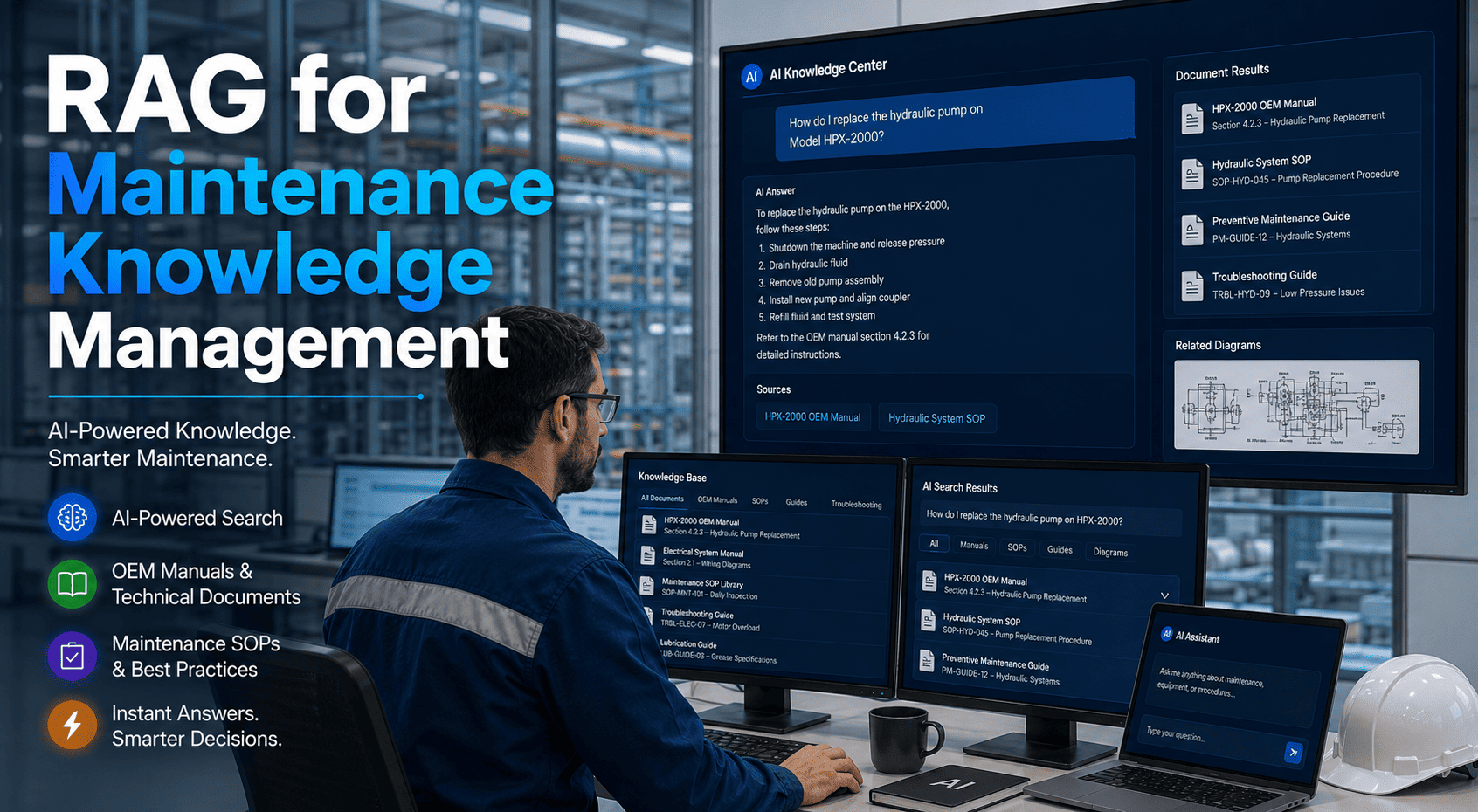
The requestor portal requires zero training. Staff select their building and room from a dropdown, describe the issue in plain language, attach a photo, and tap submit. AI classifies the request, assigns priority, and routes it — no maintenance terminology needed. Auto-acknowledgment with tracking number eliminates follow-up calls.
What ROI should we present to the school board?
The business case rests on four pillars: emergency reduction ($800K+ from 3–5× cost avoidance), labor productivity ($350K+ from routing optimization), energy savings ($150K+ from timely HVAC PM), and asset life extension ($2M+ over 5 years). Combined, a mid-size district documents $3.3M+ in annual value against a platform that starts free.