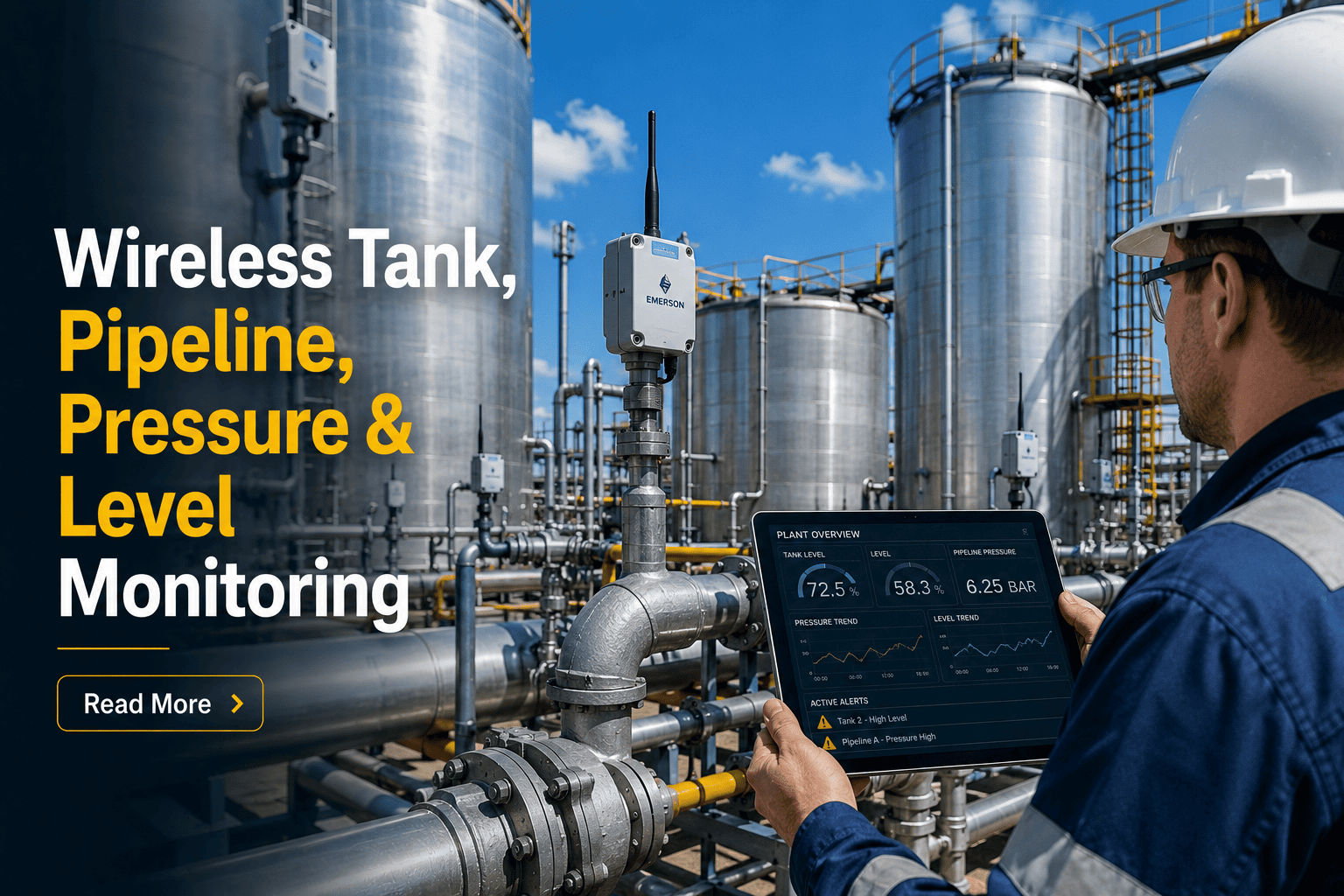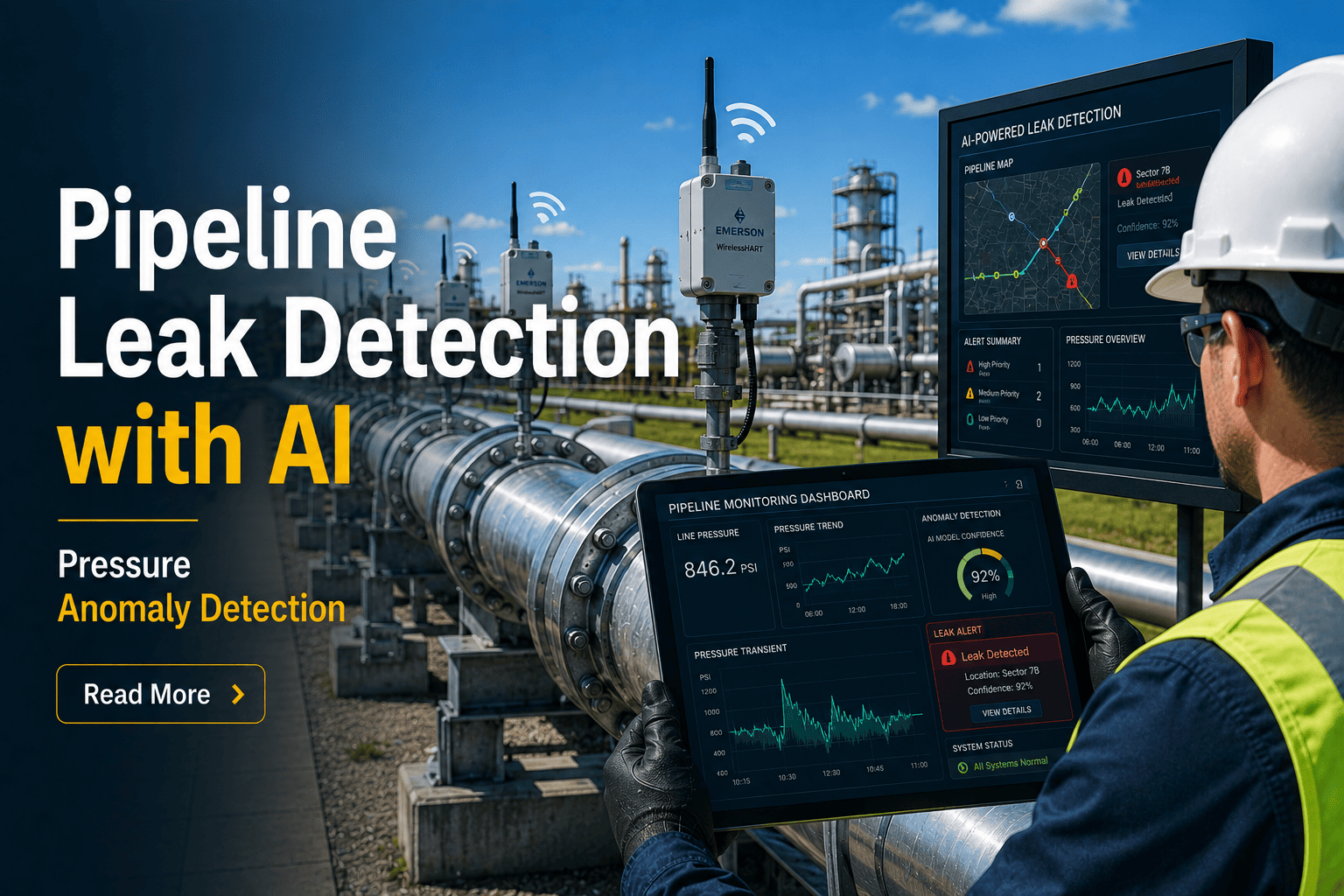
Pipeline failures do not announce themselves. A pressure transient developing over three days, a slow seep at a buried fitting, a water hammer event damaging a check valve — these failure precursors are happening in your pipeline network right now, generating data that no one is watching. The average industrial pipeline system loses 10–20% of its capacity to undetected leakage annually, and pipeline failures that would have been prevented with a 2% early-warning detection capability go unnoticed until the rupture, the environmental release, or the production shutdown forces visibility. AI-powered anomaly detection changes the detection paradigm entirely: instead of waiting for a threshold alarm that fires after failure begins, AI learns the normal operating behavior of each pipeline segment and identifies the subtle pressure transients, flow deviations, and temperature patterns that precede failure by days to weeks — automatically generating CMMS work orders the moment a developing condition is identified. Start a free trial to connect your pipeline infrastructure to OxMaint's AI anomaly detection platform, or book a demo to see how AI pressure analysis is preventing pipeline failures at industrial facilities like yours.
Industrial operators managing pipeline networks across oil and gas, chemical, water, and utilities trust OxMaint to prevent failures that manual monitoring cannot catch.
Works with existing pressure sensors and SCADA • No rip-and-replace • Live in days
Why Traditional Pipeline Monitoring Fails to Prevent Failures
Conventional SCADA pressure monitoring operates on fixed thresholds: when pressure drops below a minimum or rises above a maximum, an alarm fires. This approach catches acute failures in progress — it does not catch the developing conditions that precede them. A slow leak growing from 0.5% to 3% of flow over 60 days does not cross a SCADA threshold until it becomes a rupture. Water hammer events that gradually fatigue check valves and pipe joints go unrecorded. Corrosion-driven pressure decay that indicates wall thinning develops invisibly between inspection intervals.
AI anomaly detection takes a fundamentally different approach. Rather than comparing measurements to fixed thresholds, AI learns the normal operating envelope for each specific pipeline segment — accounting for flow rate, fluid type, ambient temperature, pump operating points, and demand patterns. When any parameter deviates from the learned normal in a way that matches historical failure precursor patterns, the AI flags it immediately, regardless of whether a threshold has been crossed. This is what enables 2% leak detection and 14–90 day advance warning on developing pressure anomalies. Book a demo to see how AI anomaly detection maps to your specific pipeline network and operating conditions.
Six Pipeline Failure Modes AI Monitoring Detects Early
Four Operational Gaps That Let Pipeline Failures Happen
Traditional SCADA threshold alarms are calibrated to detect failure-in-progress, not failure-in-development. By the time a pressure drop alarm fires on a liquid pipeline, the release is already occurring. AI anomaly detection shifts detection to the trend deviations that precede threshold crossings — providing intervention time measured in days, not seconds of response time after the alarm.
Water hammer events, surge pressures, and rapid valve closures create millisecond-scale pressure spikes that standard SCADA data historians record at 1–60 second intervals — completely missing the transient signature. High-frequency sensors connected to OxMaint capture these events and build a fatigue damage history for each pipeline segment, enabling condition-adjusted inspection scheduling.
A 2% flow loss on a large pipeline is commercially significant but analytically invisible to standard monitoring. Over 12 months, that 2% represents substantial product loss, potential soil contamination, and a failure mode that is accelerating. Statistical mass balance AI detects the signal in the noise — identifying developing leaks weeks before they become visible incidents.
Even when a pressure anomaly is detected manually, the response process is slow: the operator notifies a supervisor, the supervisor creates a work order, parts availability is checked manually, and a technician is dispatched with incomplete information. OxMaint compresses this from days to under 60 seconds — anomaly to dispatched work order with parts pre-reserved and procedures pre-loaded.
Each of these gaps represents a preventable failure waiting to happen. The data to prevent them already exists in your pressure sensors — what is missing is the AI to interpret it and the CMMS to act on it. Start your free trial and connect your pipeline monitoring data to OxMaint's AI anomaly detection engine today.
How OxMaint AI Monitors Pipeline Integrity End-to-End
OxMaint's AI builds a unique operating envelope for each pipeline segment — accounting for fluid type, flow rate, temperature, elevation profile, and demand patterns. Anomaly detection is relative to each pipeline's own normal, not generic industry thresholds, reducing false alarms while catching real deviations earlier.
Pipeline health is not captured by any single sensor. OxMaint correlates pressure, flow, temperature, vibration, and pump data simultaneously — detecting the multi-parameter signatures of developing failures that single-sensor thresholds miss entirely. A corrosion-driven leak shows in pressure decay, temperature change, and acoustic emission together.
When OxMaint detects an anomaly, it classifies the fault type — slow leak, transient damage, blockage, or valve failure — and populates the work order with the specific fault, the affected pipeline segment, the recommended inspection method, and the relevant safety procedures. The technician arrives with a diagnosis, not just a complaint.
OxMaint adds AI intelligence to your existing SCADA and pressure sensor infrastructure. No new sensors required for initial deployment on most pipeline systems — OxMaint connects to existing data streams and adds anomaly detection, trend analysis, and CMMS work order automation on top of what you already have.
OxMaint maintains a complete maintenance and inspection history for each pipeline segment — previous repairs, corrosion inhibitor applications, hydrostatic test results, and anomaly events. This history feeds into the AI model, improving detection accuracy over time as the system learns each segment's specific aging characteristics.
Pipeline condition trend data feeds OxMaint's 5–10 year capital planning model. When AI identifies a pipeline segment approaching end-of-useful-life, the replacement is surfaced in the CapEx forecast — with enough lead time for engineering, regulatory approval, contractor procurement, and planned installation without emergency spend.
Traditional Pressure Monitoring vs AI Anomaly Detection
| Detection Capability | Traditional SCADA Thresholds | OxMaint AI Anomaly Detection |
|---|---|---|
| Slow leak detection | Not detected — below alarm threshold until rupture | Detected at 2–3% of flow via statistical mass balance AI |
| Advance warning time | Seconds to minutes after failure begins | 14–90 days before catastrophic failure in most failure modes |
| Water hammer events | Missed — standard 1–60s scan rates cannot capture transients | Captured at high frequency, fatigue damage history maintained |
| Fault classification | Alarm only — technician diagnoses on arrival | Auto-classified: leak, transient, blockage, or valve fault |
| Work order generation | Manual, 30–60 min, incomplete information | Automatic in under 60 seconds, fully populated with fault details |
| False alarm rate | High — fixed thresholds generate alarms on normal transients | Low — adaptive baseline distinguishes normal from anomalous |
Measured Results from AI Pipeline Monitoring Deployments
These results compound over time. As OxMaint's AI models accumulate pipeline-specific operating data, detection lead times extend and false alarm rates decrease — making each year of operation more effective than the last. Book a demo to see how quickly OxMaint's AI can begin delivering value on your pipeline network's existing sensor data.
Frequently Asked Questions
How does OxMaint detect leaks that are too small to trigger SCADA alarms?
What types of pressure transients can OxMaint detect and record?
Does OxMaint require replacing existing SCADA or pressure sensors?
How long does it take for OxMaint's AI to establish a reliable pipeline baseline?
OxMaint's AI detects pipeline pressure anomalies, slow leaks, and water hammer damage weeks before catastrophic failure — automatically generating CMMS work orders that close the gap between sensor data and maintenance action.
Live anomaly detection on your existing sensors within the first week. See your first pipeline risk reports in 30 days.