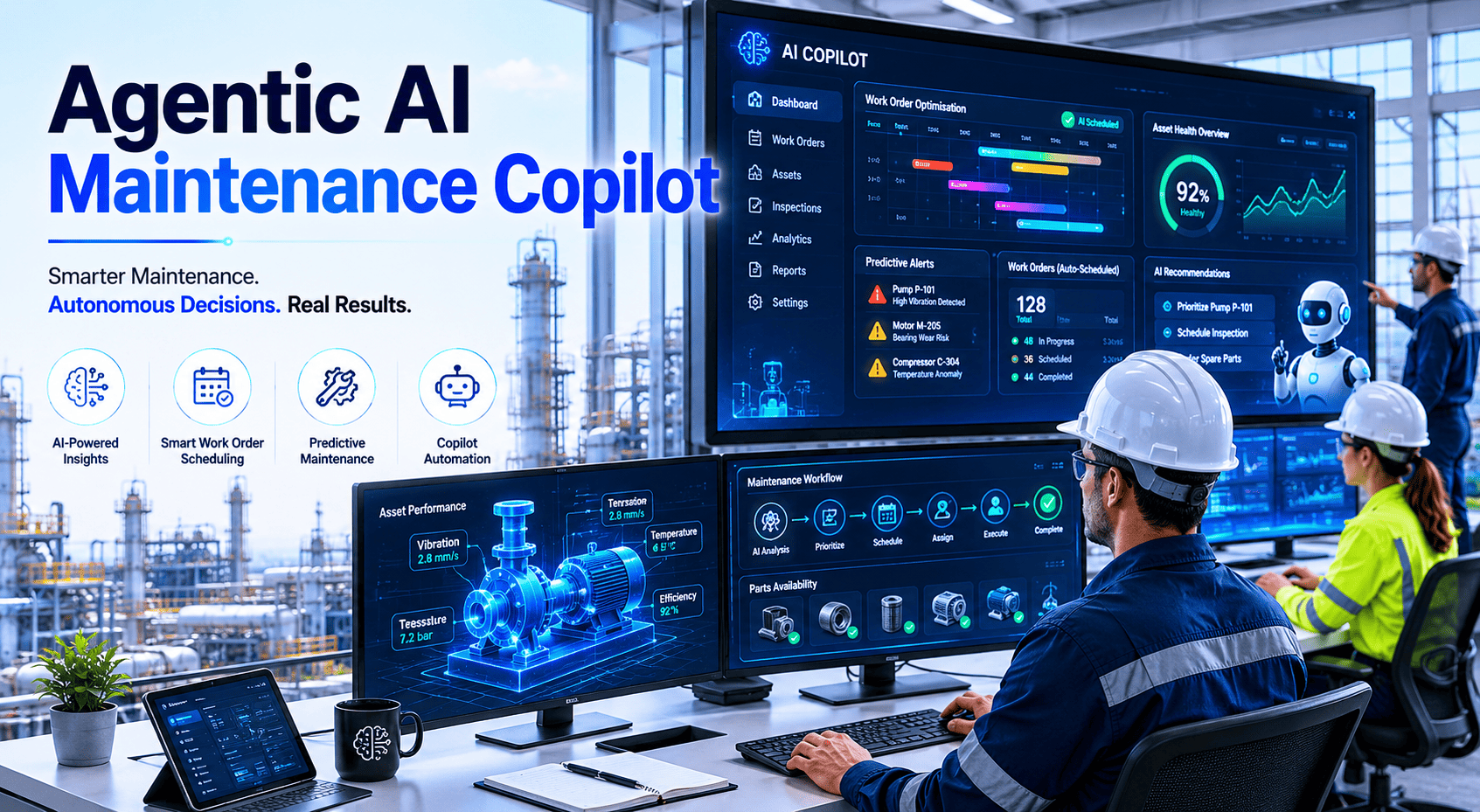
A $2,000 bearing replacement becomes a $25,000 emergency when the bearing seizes and damages the shaft, housing, and coupling. Multiply that across hundreds of assets, and you begin to understand why unplanned downtime costs industrial manufacturers $50 billion annually — with the average plant losing $253 million per year to failures that were entirely predictable. The technology to prevent this has existed for years. What changed in 2025–2026 is that IoT sensors now cost under $1 per unit, AI models predict failures 30–90 days in advance with up to 97% accuracy, and CMMS platforms turn those predictions into auto-generated work orders that get executed before the breakdown happens. The predictive maintenance market reached $14.29 billion in 2025 and is growing at 28% annually — because the math is undeniable: every $1 invested returns $7. The only question is whether your plant captures that return this year or next. Start a free trial for 30 days or book a demo with our predictive maintenance team.
Predictive MaintenanceAI + IoT + CMMSIndustry 4.0
AI & IoT Predictive Maintenance in Manufacturing — How Smart Factories Eliminate Unplanned Downtime
Predictive maintenance combines IoT sensors, machine learning, and CMMS automation to forecast equipment failures weeks in advance — replacing reactive firefighting with planned interventions that cost 4–6x less.
97%Accuracy of AI failure prediction models using LSTM neural networks
$7:1Return on every dollar invested in IoT-based predictive maintenance
30–50%Reduction in unplanned downtime achieved in first 12 months
What It Is
What Is AI & IoT Predictive Maintenance?
Predictive maintenance is a data-driven strategy that uses IoT sensors to continuously monitor equipment health and AI algorithms to identify patterns that indicate developing faults — allowing maintenance teams to intervene before breakdowns occur. Unlike time-based preventive maintenance that services equipment on a calendar (whether it needs it or not), predictive maintenance services equipment when sensor data and AI analysis indicate actual degradation — not before, not after.
Sense
IoT sensors capture vibration, temperature, pressure, current, and acoustic data continuously from every critical asset
Analyze
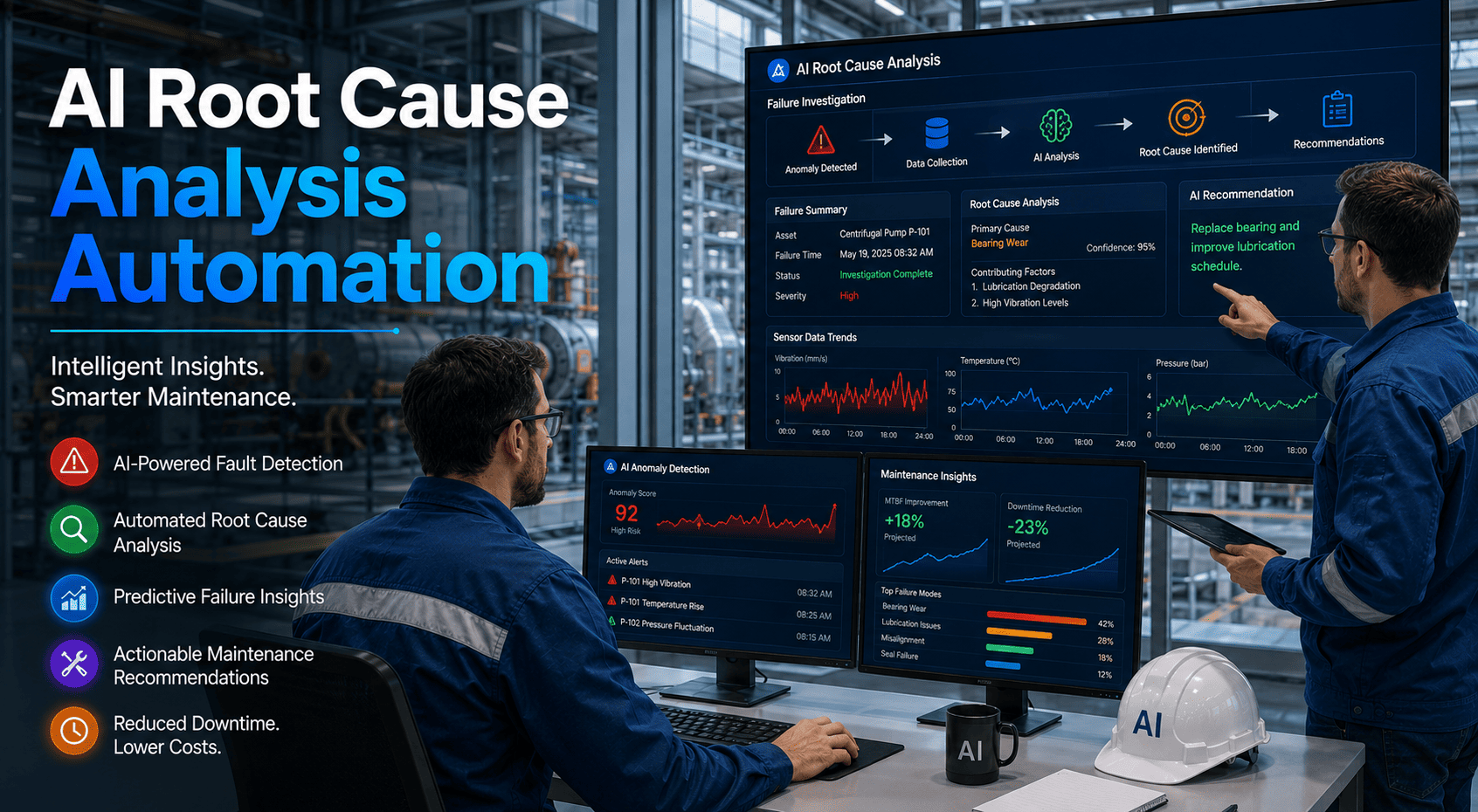
AI/ML algorithms process data at edge or cloud — detecting anomalies, identifying degradation patterns, and scoring failure probability
Predict
Failure forecast generated 30–90 days in advance with 80–97% confidence — identifying which component, when, and why
Act
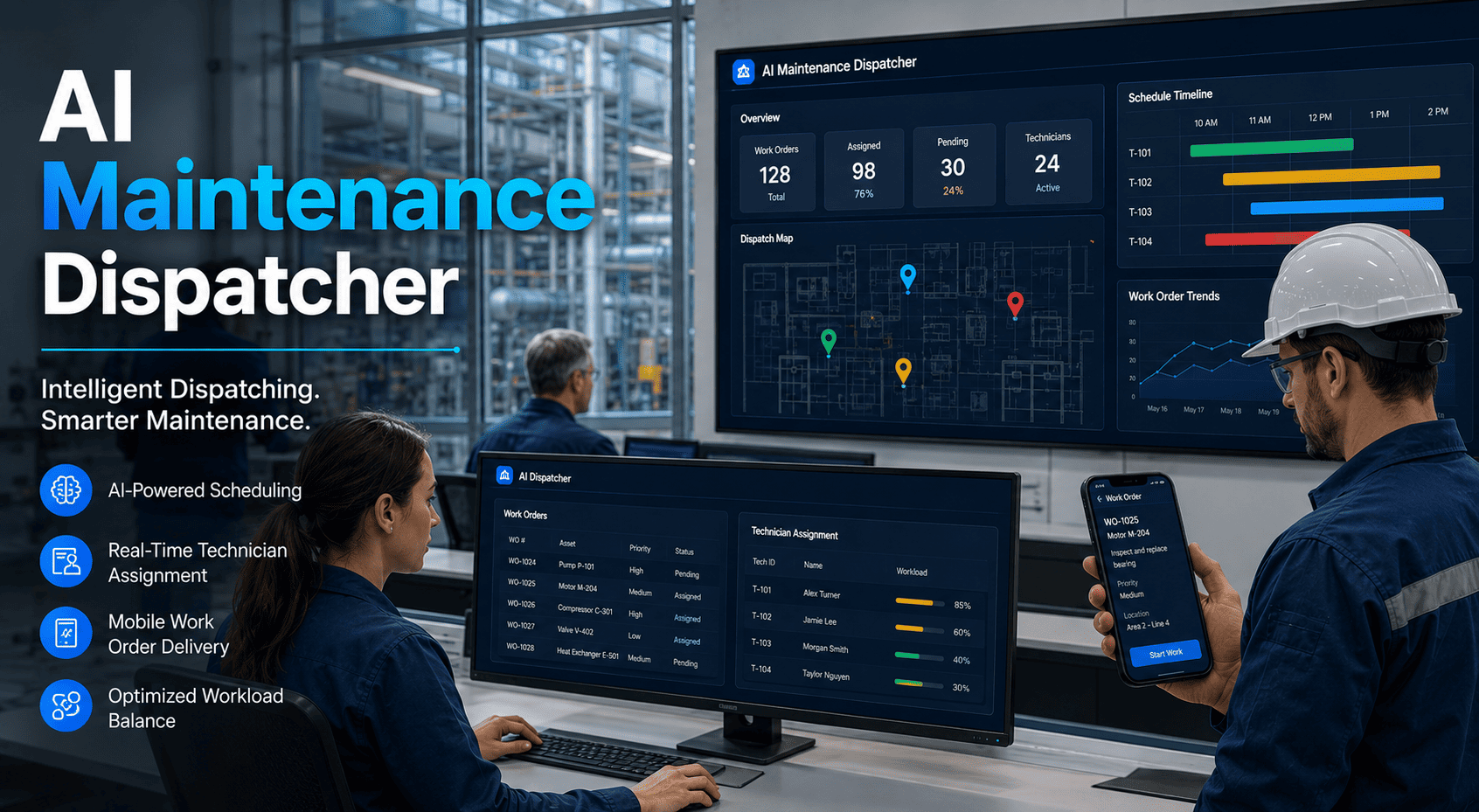
CMMS auto-generates work order with parts, procedures, and technician assignment — scheduled during planned downtime
This four-step loop runs continuously across every monitored asset — creating a living maintenance intelligence system that gets smarter with every data point. The plants running this loop report 30–50% less unplanned downtime in year one. See the loop running on your equipment — start a free trial or book a demo to walk through your asset fleet.
Head-to-Head
Reactive vs. Preventive vs. Predictive — The Real Cost Comparison
Most plants operate with a mix of all three strategies. The question isn't which one to use — it's what percentage of your maintenance is in each category. Plants with 60%+ predictive maintenance consistently outperform those stuck in reactive mode by every measurable metric.
71% use preventive — but only 51% of activity is actually PM
Predictive (AI + IoT + CMMS)
Lowest cost — service only when data demands it. Equipment runs to 85–95% of rated life.
27% adoption — but 65% plan to implement by end of 2026
The adoption gap is closing fast. Two-thirds of maintenance teams plan to adopt AI by end of 2026. The plants that move first capture the margin advantage while competitors are still piloting. OxMaint gives you the CMMS foundation to make predictive maintenance operational — book a 30-minute demo and see the platform configured for your asset types.
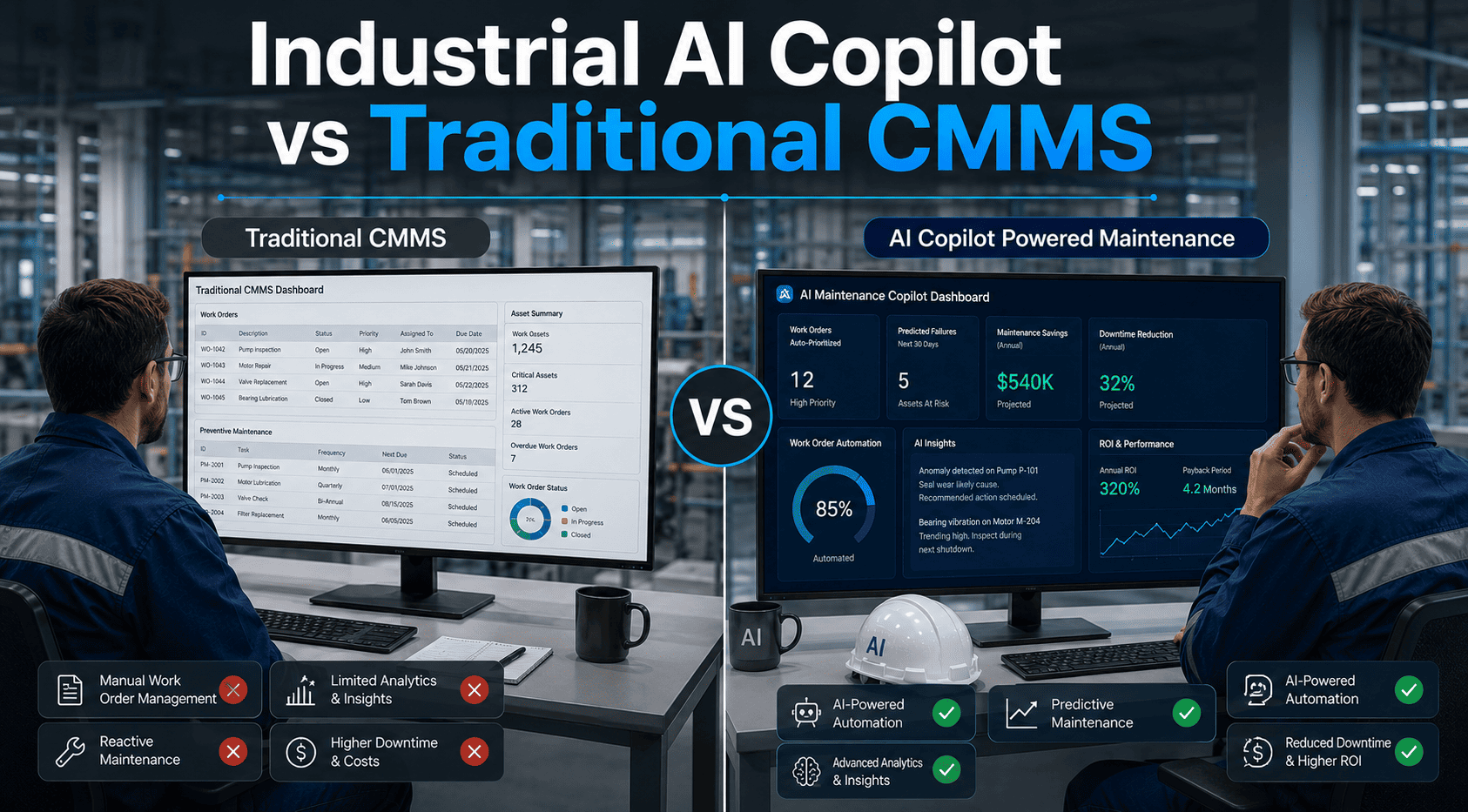
Every $1 invested in IoT predictive maintenance returns $7.OxMaint is the CMMS layer that turns sensor data into auto-generated work orders — bridging the gap between prediction and action.
A working predictive maintenance system isn't one tool — it's four layers working together. Each layer serves a specific function, and the CMMS is what ties them into an operational workflow that maintenance teams actually use.
L4
CMMS — Action Layer
Auto-generated work orders with parts lists, procedures, and technician assignment. Maintenance history feeds back into the AI model. OxMaint is this layer — connecting predictions to execution.
L3
AI/ML — Intelligence Layer
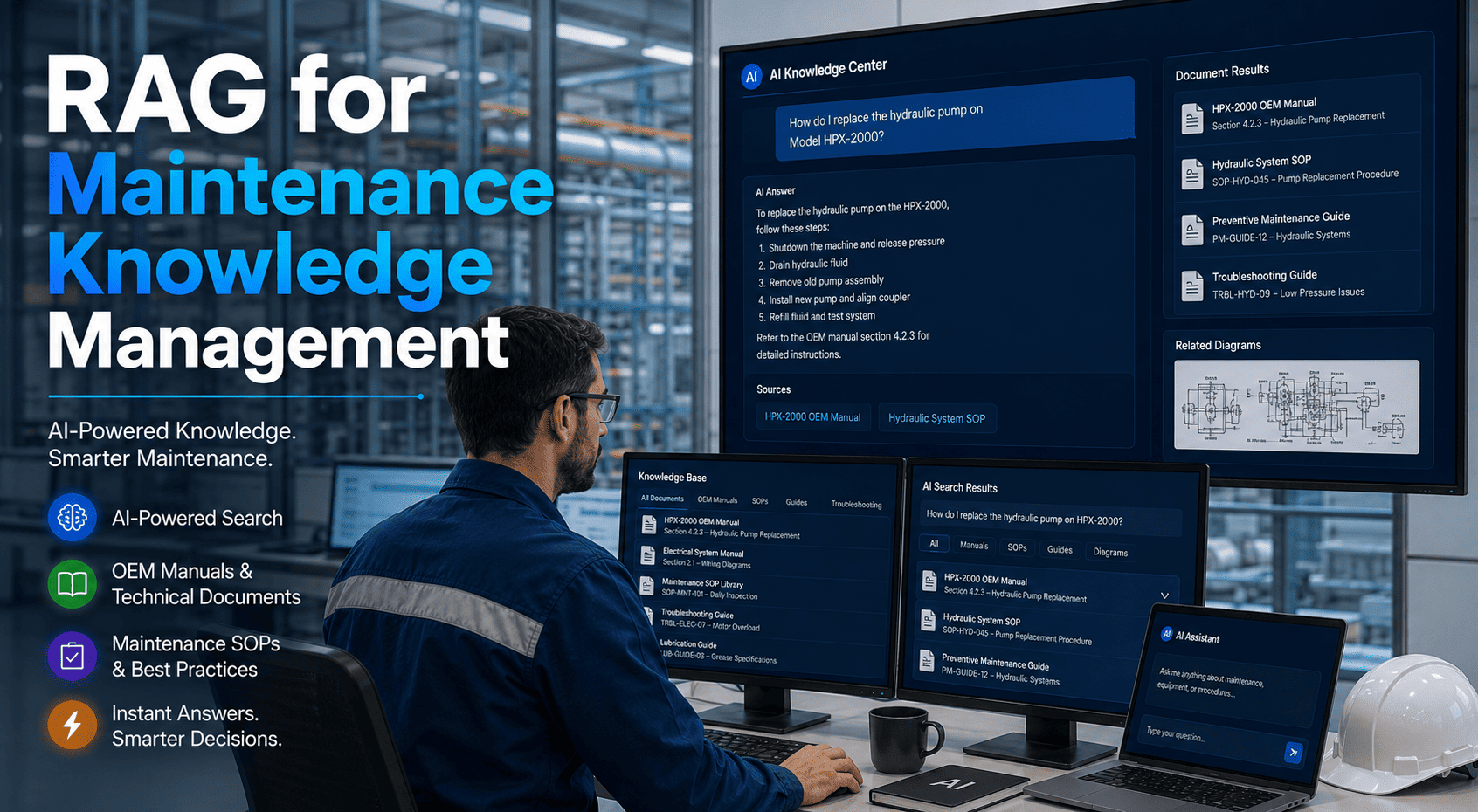
Machine learning algorithms (LSTM, random forest, gradient boosting) analyze sensor data streams. Pattern recognition identifies anomalies. Failure prediction models score probability and remaining useful life (RUL).
L2
Edge/Cloud — Processing Layer
Edge gateways pre-process data at the machine level for latency-critical alerts. Cloud platforms handle historical analysis, model training, and cross-asset pattern detection across multiple sites.
L1
IoT Sensors — Data Layer
Vibration, temperature, pressure, current, acoustic, and oil analysis sensors. Now under $1/unit. Wireless, battery-powered, retrofit-friendly. Connect to existing PLCs via MQTT/OPC-UA protocols.
Most predictive maintenance implementations fail not because the sensors or AI don't work — but because there's no system to act on predictions. OxMaint closes that gap. Your IoT infrastructure feeds data in; OxMaint generates the work orders, tracks execution, and feeds results back to improve the model. Get the action layer live in days — start your free trial now.
Measured ROI
The Financial Case — What Plants Actually Achieve
The ROI of predictive maintenance is no longer theoretical. Documented deployments across manufacturing sectors consistently deliver returns that exceed initial projections — often within the first 6–12 months.
$233B
Estimated annual savings for Fortune 500 companies with full adoption of condition monitoring and predictive maintenance
30–50%
Reduction in unplanned downtime in year one
18–25%
Lower maintenance costs vs. preventive approaches
20–40%
Extension in equipment lifespan through condition-based service
10:1–30:1
ROI ratio achieved within 12–18 months of implementation
We expected to save $180K from predictive maintenance in year one. We saved $4.2M — from a single servo motor monitoring application on one stamping press line. The ROI exceeded every projection we presented to leadership.
Most organizations achieve 60–70% of projected savings within the first quarter — and full ROI confirmation by month 12. The initial investment for pilot deployments starts under $50,000 with plug-and-play sensors and cloud-based AI. OxMaint provides the CMMS foundation at zero upfront cost — start free today and connect your sensors when ready.
OxMaint Role
6 Ways OxMaint Powers Predictive Maintenance
OxMaint isn't a sensor platform or an AI engine. It's the action layer that turns predictions into executed maintenance — and the data backbone that makes AI models smarter over time.
Condition-Based Triggers
PM work orders generated by sensor thresholds — vibration, temperature, pressure, or runtime hours. Not calendar guesswork.
Auto Work Order Generation
When AI detects an anomaly, OxMaint auto-creates a work order with the right parts, procedures, and technician — no manual step required.
Asset Health Scoring
Every asset gets a real-time condition score based on sensor data, maintenance history, and failure patterns — prioritizing interventions where risk is highest.
IoT & SCADA Integration
Native integration with MQTT, OPC-UA, and SCADA platforms. Sensor data flows directly into OxMaint — no middleware, no manual data entry.
Mobile Execution
Technicians receive predictive work orders on their phone with full context — asset history, failure mode, parts list, and safety procedures. Close-out with digital signature.
Feedback Loop to AI
Every completed work order — findings, parts replaced, time to repair — feeds back into the predictive model. The system gets more accurate with every intervention.
You don't need a fully deployed IoT infrastructure to start. OxMaint works with condition-based triggers today and scales to full AI-driven predictive workflows as your sensor network matures. Start where you are — book a demo and we'll map the implementation path for your facility.
FAQs
Frequently Asked Questions
How accurate is AI predictive maintenance in manufacturing?
Modern AI models using LSTM neural networks achieve up to 94.3% accuracy in predicting manufacturing equipment failures. With sufficient historical data, some models reach 97% accuracy, predicting failures 30–90 days in advance — giving maintenance teams weeks of lead time to plan interventions during scheduled downtime. Try OxMaint free.
Does predictive maintenance work with legacy equipment?
Yes. Edge gateway devices connect to existing PLCs and control panels, or retrofit wireless vibration and temperature sensors can be added to any asset. These gateways translate legacy machine data into standard digital formats (MQTT, OPC-UA) and send it to the CMMS platform — making legacy equipment IoT-ready without replacing or modifying the equipment itself.
What ROI can we expect from predictive maintenance?
PwC research shows IoT-based predictive maintenance delivers $7 return for every $1 invested. Documented deployments report 30–50% reduction in unplanned downtime, 18–25% lower maintenance costs, and 20–40% equipment lifespan extension. Most organizations achieve 60–70% of projected savings within the first quarter. Book a demo to model ROI for your plant.
How does OxMaint fit into a predictive maintenance system?
OxMaint is the action layer — the CMMS that turns AI predictions into executed maintenance. When sensors and AI detect an anomaly, OxMaint auto-generates a work order with the right parts, procedures, and technician assignment. Every completed intervention feeds data back to improve the AI model. It works standalone for condition-based maintenance and scales to full predictive as IoT infrastructure matures.
Trusted by Maintenance Teams in 40+ Countries
Prediction Without Action Is Just Data. OxMaint Closes the Loop.
Join manufacturing facilities achieving 30–50% less downtime, $7 return on every $1 invested, and predictive work orders that execute themselves — with OxMaint live in 3–5 days.