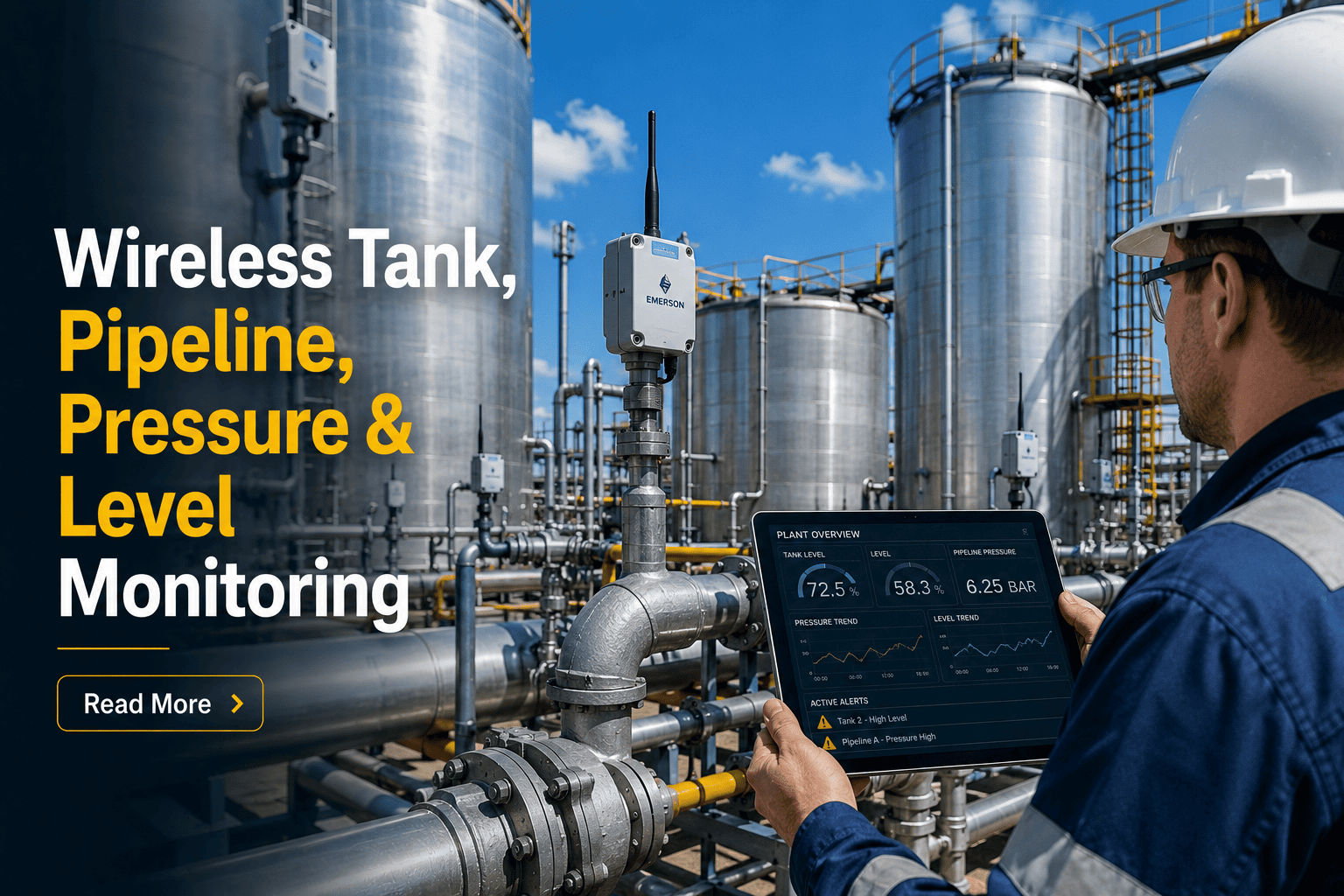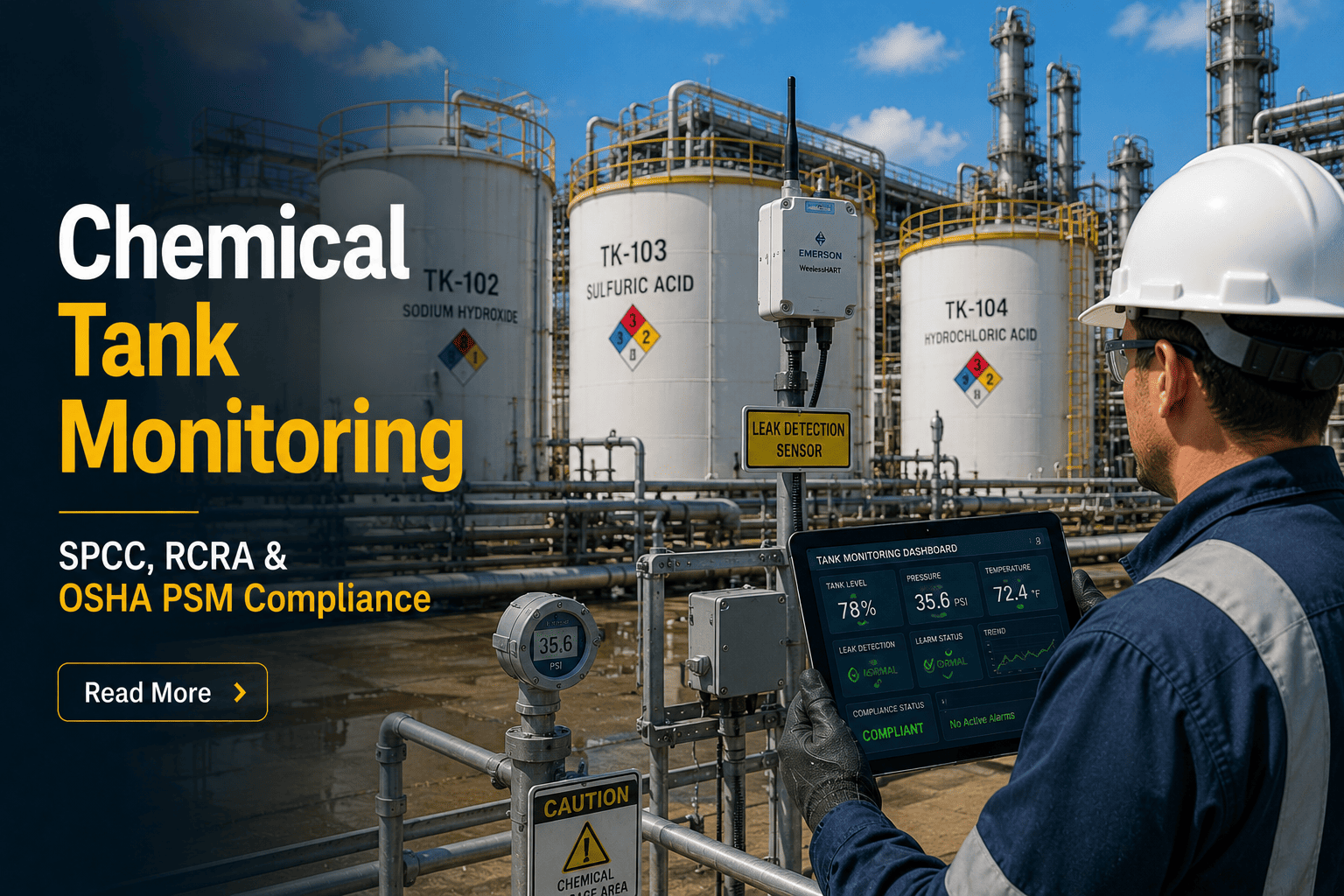
A chemical tank spill is not just an environmental event — it is a multi-agency regulatory incident that activates EPA SPCC notification requirements, RCRA corrective action processes, and OSHA PSM emergency response protocols simultaneously. The average aboveground storage tank spill costs over $700,000 in cleanup, fines, and remediation before you count the production downtime, reputational damage, and increased future regulatory scrutiny. The operational reality is that most facilities are one malfunctioning float switch, one corroded tank fitting, or one missed inspection away from that event — because their tank monitoring is manual, siloed, and gap-ridden. Wireless sensor monitoring integrated with a CMMS like OxMaint changes that calculus: continuous level, pressure, and leak data automatically generates the inspection audit trails that SPCC, RCRA, and PSM regulations require — while catching the anomalies that precede spills before they escalate. Start a free trial to connect your chemical storage assets to OxMaint's compliance-ready monitoring platform, or book a demo to see how facilities like yours are automating SPCC and RCRA compliance documentation with wireless monitoring.
Chemical facilities, refineries, and bulk storage operators rely on OxMaint to pass regulatory inspections and prevent high-cost spill events.
No heavy implementation required • Audit-ready documentation from day one • Multi-site compliance management
What SPCC, RCRA, and OSHA PSM Require from Tank Monitoring
Three federal regulatory frameworks govern chemical tank monitoring at most industrial facilities in the United States — and each has specific inspection, documentation, and corrective action requirements that manual monitoring systems struggle to satisfy consistently.
EPA SPCC (Spill Prevention, Control, and Countermeasure) regulations under 40 CFR Part 112 require facilities with aggregate above-ground petroleum storage above 1,320 gallons to maintain an SPCC Plan, conduct periodic facility inspections, and document all inspections and equipment tests. The regulation does not prescribe continuous monitoring — but it requires proof of adequate inspection frequency, and any spill triggers intensive documentation requirements that manual logs rarely satisfy completely.
RCRA (Resource Conservation and Recovery Act) imposes secondary containment monitoring, leak detection, and corrective action requirements on facilities storing hazardous waste in tanks. Daily visual inspections are required for many tank systems, with documented records that must be retained for three years. OSHA PSM (Process Safety Management) under 29 CFR 1910.119 adds mechanical integrity requirements for process equipment, including documented inspection procedures, frequency, and corrective actions for highly hazardous chemical tanks. Wireless monitoring with automatic CMMS documentation satisfies all three frameworks simultaneously — converting regulatory burden into automated compliance. Book a demo to see how OxMaint maps your specific regulatory framework to automated compliance documentation.
Six Key Monitoring Capabilities for Chemical Tank Compliance
Four Compliance Failures That Cost Facilities Most
SPCC and RCRA inspections routinely find missing inspection dates, incomplete entries, and illegible records in manual log systems. Each gap is a potential violation finding. EPA inspectors look for consistent, dated, complete records — and manual systems under-deliver. OxMaint generates automatic, complete inspection records that satisfy regulatory documentation standards without additional staff effort.
A tank losing 0.1% of inventory per day does not trigger a visible alarm. Over 90 days, that becomes a significant spill that has already reached soil and potentially groundwater before detection. Continuous volumetric monitoring detects statistical inventory anomalies that indicate slow leaks — triggering RCRA-required corrective action while the release is still minor and containable.
OSHA PSM requires documented inspection procedures, test records, and corrective action logs for mechanical integrity elements of covered processes. Most facilities maintain these records in spreadsheets or paper files that are difficult to correlate, difficult to retrieve during incident investigations, and impossible to analyze for trend patterns that predict future failures.
SPCC plans require emergency response procedures — but emergency response is only effective if the spill is detected quickly and the response team has current, accurate information about what is stored, where, and in what quantities. Manual systems rarely provide real-time inventory data to emergency responders. OxMaint's live asset records and condition data are accessible on mobile devices for first responders and EHS staff alike.
These failures are structurally embedded in manual monitoring programs — they cannot be inspected away. Start your free trial to see how wireless monitoring with automatic CMMS documentation eliminates these compliance gaps from your chemical tank program.
How OxMaint Automates Chemical Tank Compliance
OxMaint automatically logs every sensor reading, inspection event, and anomaly against the specific tank asset record with timestamp, location, reading value, and technician ID. The complete inspection history required by SPCC is generated continuously — not assembled before an EPA visit.
Continuous volumetric monitoring and secondary containment sensor data create the RCRA-required leak detection record for hazardous waste tank systems. Anomaly events automatically trigger RCRA-formatted corrective action work orders with documentation that tracks through closure.
OxMaint tracks inspection frequency, test results, and corrective actions against each process equipment item in PSM scope. Condition trends from continuous monitoring feed into the mechanical integrity program — identifying deterioration between required inspection intervals rather than discovering failure during the next test.
OxMaint's AI analyzes level, pressure, temperature, and volumetric trends to detect developing spill precursors — not just threshold crossings. A slowly accelerating level drop that indicates a developing tank leak triggers a work order weeks before the loss becomes reportable.
Field technicians complete SPCC and RCRA required inspections on mobile devices — guided by standardized checklists that ensure complete, consistent data capture. OxMaint enforces required inspection frequency and escalates overdue inspections before they become compliance violations.
When an EPA inspector arrives or an annual SPCC certification is due, OxMaint generates the complete inspection history, corrective action log, and mechanical integrity record for every tank in scope — in minutes, not days of manual record assembly.
Manual Compliance vs OxMaint Automated Compliance
| Requirement | Manual Compliance Program | OxMaint Automated Compliance |
|---|---|---|
| SPCC Inspection Records | Manual logs with gaps, illegibility, and inconsistent frequency | Continuous automatic record, complete and timestamped from day one |
| RCRA Leak Detection | Monthly manual level checks — 30-day detection gaps | Continuous volumetric monitoring — statistical anomaly detection in real time |
| PSM Mechanical Integrity | Paper records, spreadsheets, difficult retrieval | Structured asset records with complete inspection and test history, instantly retrievable |
| Corrective Action Tracking | Ad hoc email trails, inconsistent documentation | Structured work orders from detection through closure — regulatory-formatted documentation |
| Audit Preparation | Days of manual record assembly, transcription errors | One-click report generation — complete compliance record in minutes |
| Spill Prevention | Reactive — detection after release begins | Predictive — AI anomaly detection weeks before reportable spill conditions |
Compliance and Operational ROI from Chemical Tank Monitoring
The regulatory environment for chemical storage is tightening — not loosening. Investing in automated compliance documentation now is both a risk management decision and an operational efficiency play. Book a demo to see your specific SPCC, RCRA, and PSM compliance gaps mapped against OxMaint's monitoring capabilities.
Frequently Asked Questions
Does OxMaint generate SPCC-compliant inspection records automatically?
How does wireless monitoring help with RCRA leak detection requirements?
What PSM mechanical integrity documentation does OxMaint generate?
Can OxMaint monitor secondary containment areas for SPCC and RCRA compliance?
OxMaint automates the inspection documentation, leak detection records, and corrective action trails that SPCC, RCRA, and OSHA PSM require — while its AI catches the tank anomalies that lead to spills before they become reportable incidents.
Measurable compliance documentation improvement in the first 30 days. Limited onboarding slots available this quarter.