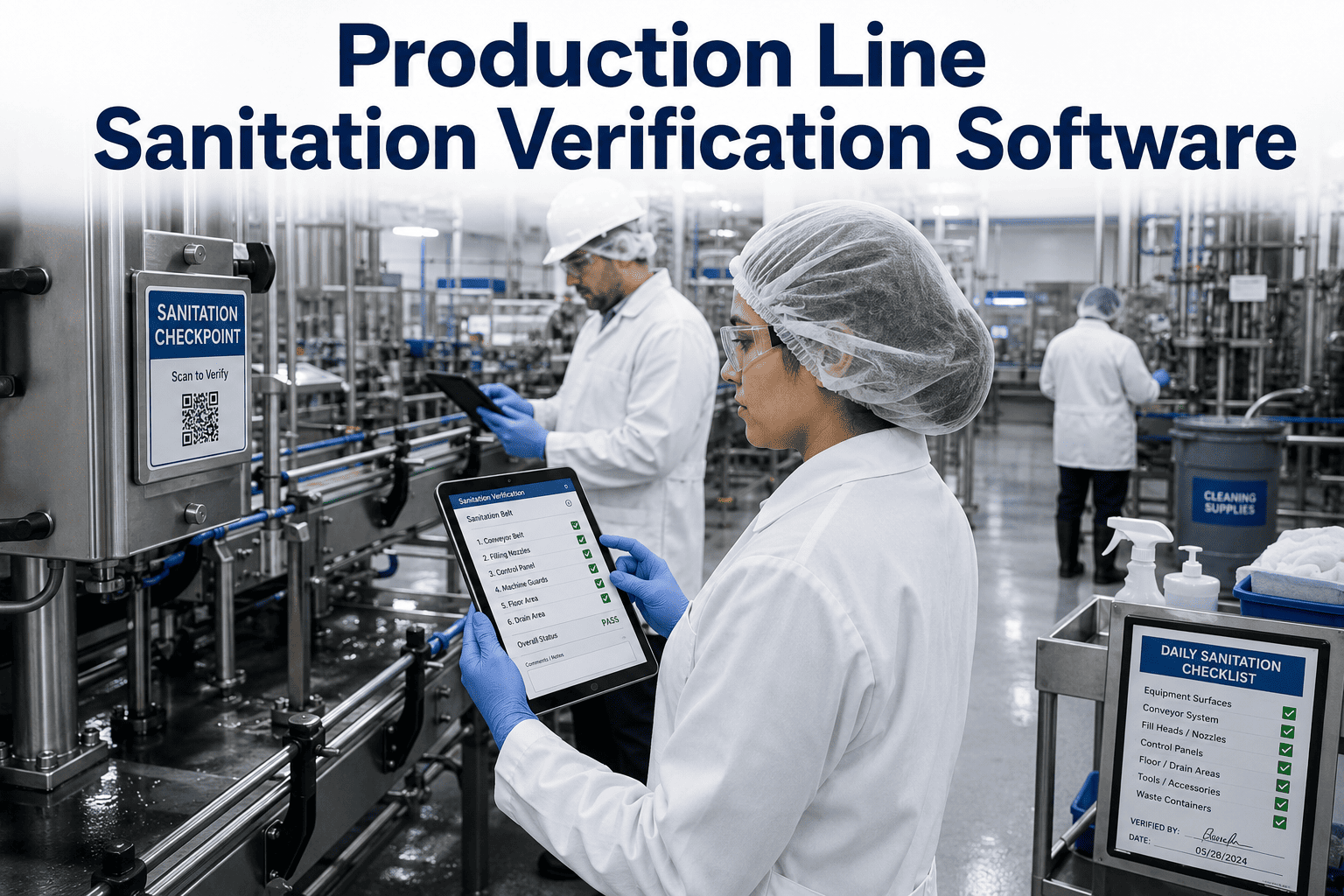
In regulated manufacturing — food, beverage, pharmaceutical, and cosmetics — a failed sanitation verification is not a housekeeping issue. It is a production shutdown, a regulatory notice, a potential recall, and a reputational event that takes years to repair. The FDA, FSMA, EU Food Safety Regulation, and GMP compliance frameworks all require documented, verifiable evidence that sanitation procedures were completed to specification — not that someone remembers doing them. Yet 58% of food and beverage manufacturers still manage cleaning verification through paper checklists, clipboard sign-offs, and email confirmations that disappear into folders no one opens until an auditor arrives. Digital sanitation verification changes that — replacing unverifiable paper trails with timestamped, photo-documented, audit-ready records at every point on every production line. Start a free trial to digitize your sanitation verification workflow in Oxmaint, or book a demo and see how regulated production lines manage sanitation compliance in the platform.
How digital sanitation verification replaces unverifiable paper checklists with timestamped, photo-documented, audit-ready cleaning records across regulated manufacturing production lines — eliminating the compliance gap between what was done and what can be proved.
of food and beverage manufacturers still use paper-based sanitation checklists with no digital verification or audit trail
$10M+
average cost of a Class I food recall in the US — sanitation failures are among the top three root causes identified by the FDA
3×
more likely to pass unannounced regulatory inspection when sanitation records are digital and retrievable within 60 seconds
40%
reduction in sanitation-related line stoppages reported by manufacturers using structured digital verification programs
What Is Production Line Sanitation Verification?
Production line sanitation verification is the documented process of confirming — with timestamped, signed, and where required, photo-evidenced records — that each cleaning and disinfection step on a production line was completed to specification before the line resumed production. It is distinct from the cleaning itself: sanitation is what your team does; verification is what you can prove to a regulator.
In regulated manufacturing environments, verification requirements are explicit. FSMA's Preventive Controls rule requires manufacturers to document sanitation controls as part of their food safety plan. EU Regulation 852/2004 requires documented cleaning procedures for all food contact surfaces. GMP guidelines for pharmaceutical manufacturing require batch-level records of each line clearance and sanitation step. Paper systems cannot reliably satisfy these requirements because they cannot prove that a record was created at the time the action occurred — a gap that regulators and plaintiffs' lawyers both exploit effectively. Start a free trial to see how Oxmaint handles GMP-compliant sanitation verification, or book a demo and walk through a live regulated production line setup.
8 Verification Points on a Regulated Production Line
01
Pre-Production Line Clearance
All previous product, packaging, and materials verified removed before the line starts. Documented by named operator with timestamp — the single most audited sanitation record in food manufacturing inspections.
02
Food Contact Surface Cleaning
All surfaces in contact with product — conveyors, hoppers, fillers, sealing jaws — cleaned with documented chemical concentration, contact time, and rinse verification. Photo evidence increasingly required by retailers and auditors.
03
CIP System Verification
Clean-In-Place cycle parameters — temperature, flow rate, chemical concentration, and contact time — logged per cycle per circuit. Deviations from specification flagged automatically and linked to affected production batches.
04
Allergen Changeover Verification
Critical Control Point
Documented verification that allergen-containing products are fully removed before allergen-free production begins. Swab test results recorded against the line clearance record — a mandatory CCP in most food safety plans.
05
Environmental Monitoring Program
Zone 1–4 environmental swab results recorded and trended against action limits. Positive results trigger corrective action work orders — creating a documented response trail required by FSMA preventive controls.
06
Maintenance-Triggered Sanitation
Any maintenance work on food-contact equipment automatically triggers a required sanitation verification before line restart. The work order and sanitation record are linked — auditors see both actions against the same equipment event.
07
Chemical Dilution and Storage
Sanitizer concentration verification records at point of use — not just receipt. Storage temperature and segregation compliance logged. Chemical safety data sheets linked to each cleaning agent in the verification record.
08
Shift Handover Sanitation Check
End-of-shift sanitation status verified and recorded before the incoming shift operator accepts the line. Creates accountability at the handover point — the most common moment when sanitation gaps are transferred without documentation.
Where Paper-Based Sanitation Verification Breaks Down
Backdated and Blanket Sign-Offs
Paper checklists are completed at end of shift for the entire day, or signed in advance. There is no way to verify that actions occurred when recorded. Regulators know this — and so do their lawyers after a recall event.
No Real-Time Deviation Alerts
A CIP cycle runs short. A sanitizer concentration is out of range. A swab comes back positive. On a paper system, none of these events triggers automatic escalation — they are discovered during review, if reviewed at all.
Maintenance-Sanitation Gap
Maintenance completes a work order on a filler head. Production restarts. Nobody confirms whether the post-maintenance sanitation was completed. This is the root cause of some of the most serious food safety incidents on record.
Audit Preparation Costs Days
An unannounced FDA or BRC audit requires immediate production of the last 12 months of sanitation records. Paper systems take 2–3 days to locate, copy, and organize. Digital systems take under 60 seconds.
No Trend Visibility Across Lines
Paper records cannot reveal that Line 3 has had three out-of-spec CIP cycles in the last 30 days, or that the environmental positive rate in Zone 2 is trending upward. Pattern recognition requires digital data — paper has none.
Untracked Corrective Actions
When a sanitation deviation is found, the corrective action — re-clean, re-swab, hold product, notify QA — needs to be tracked to closure. Paper systems log the deviation; they cannot track the response chain through to verified resolution.
Sanitation documentation failures — not actual sanitation failures — are the leading cause of voluntary recalls in food manufacturing. What can be proved matters as much as what was done.
How Oxmaint Digitizes Sanitation Verification Across Production Lines
Oxmaint replaces paper sanitation checklists with GMP-compliant digital verification workflows — where every cleaning step is completed on a mobile device, timestamped at point of action, signed by the responsible operator, and stored against the production line asset record. When a deviation occurs, a corrective action work order is automatically created and tracked to closure. When an auditor arrives, the complete record set is exportable in minutes. Book a demo to see the sanitation verification module configured for a regulated production line.
Mobile Sanitation Checklists
Operators complete digital sanitation checklists on mobile devices at the point of action — not at end of shift on a clipboard. Every step timestamped, operator-signed, and optionally photo-evidenced at the moment of completion.
Maintenance-Triggered Sanitation Lock
Any maintenance work order on food-contact equipment places a sanitation lock on the line. Production restart requires completion and sign-off of the associated sanitation verification — the lock cannot be bypassed without documented evidence.
Deviation Alert and Corrective Action
Out-of-specification entries trigger automatic alerts to QA and supervisors. A corrective action work order is created, assigned, and tracked to verified closure — creating a complete documented response chain from deviation to resolution.
Environmental Monitoring Records
Swab sample results entered by zone and location, trended against action limits, and stored against the production line asset record. Positive results trigger corrective action workflows automatically — all FSMA-traceable.
Multi-Line Sanitation Dashboard
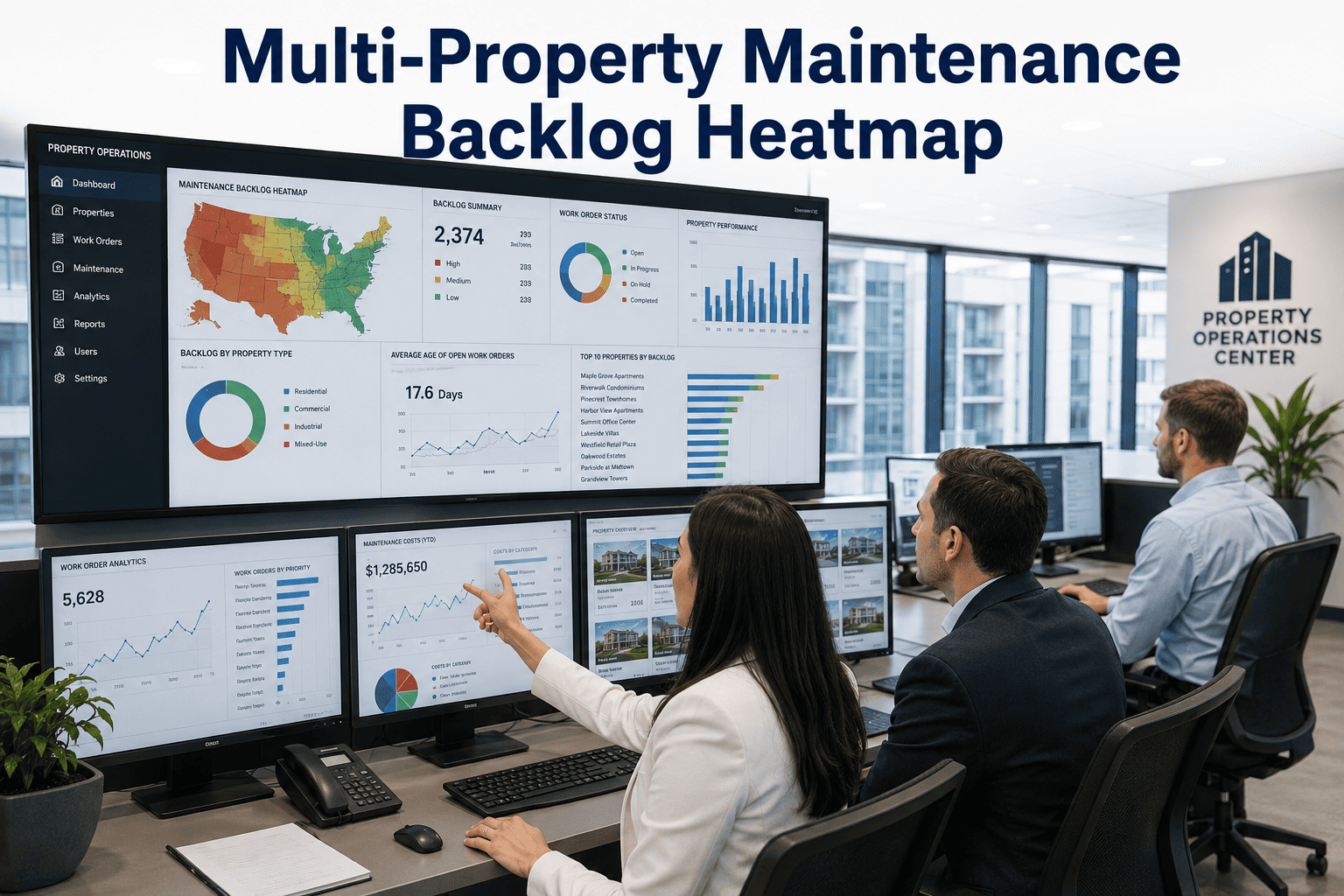
QA and production managers see real-time sanitation status across every line — which are cleared for production, which have open verification steps, and which have active corrective actions in progress.
Audit-Ready Record Export
Any date range, line, shift, or verification type exported in minutes as a structured compliance report. Every record includes operator identity, timestamp, GPS location (where applicable), and attached photos — ready for FDA, BRC, or SQF review.
Paper Checklists vs. Digital Sanitation Verification
Verification Area
Paper Checklist Approach
Oxmaint Digital Verification
Record Integrity
Backdated sign-offs undetectable; regulators cannot verify records were created at time of action
Every record timestamped at point of submission — cannot be backdated; audit trail is immutable
Deviation Response
Out-of-spec entries noted on paper; corrective action tracked informally or not at all
Deviation auto-creates corrective action work order assigned to named technician; tracked to verified closure
Maintenance Integration
Maintenance and sanitation records separate; post-maintenance sanitation often undocumented
Maintenance work order triggers mandatory sanitation verification before production restart — linked records, no gap
Trend Analysis
No trend visibility; recurring deviations on same line or equipment invisible until failure occurs
Rolling trend reports by line, equipment, shift, and verification type — surface systemic issues before they become incidents
Audit Preparation
2–3 days to locate, copy, and organize paper records under unannounced audit pressure
Complete record set exported by line, date range, and verification type in under 60 seconds
Multi-Site Visibility
Each facility manages its own paper system; no consolidated view of sanitation compliance across sites
Portfolio dashboard shows real-time sanitation compliance status across every site and production line
What Digital Sanitation Verification Delivers in Practice
40%
Fewer Line Stoppages
Manufacturers using structured digital sanitation programs report 40% reduction in sanitation-related production line stoppages and holds
3×
Higher Audit Pass Rate
Facilities with digital sanitation records are 3× more likely to pass unannounced regulatory inspections vs paper-based systems — documentation retrieval speed and integrity are primary audit criteria
60 sec
Audit Record Retrieval
Any sanitation record, corrective action, or deviation report retrieved and exported within 60 seconds — vs 2–3 days for paper-based systems under unannounced audit conditions
$10M+
Recall Cost Avoided
The average US Class I food recall exceeds $10M in direct costs — a single avoided recall event delivers returns that dwarf the cost of a structured digital verification program
The ROI case for digital sanitation verification is not theoretical — it is a single avoided recall, a single passed FDA inspection, a single retailer audit that results in a new contract rather than a delisted product. Manufacturers that make this shift report not just compliance confidence, but operational improvement: fewer re-cleans, faster line startups, and a production team that knows exactly what is expected and can prove it was done. Start a free trial to digitize your first production line sanitation workflow in Oxmaint, or book a demo and we will configure a regulated production line setup for your facility type.
The FDA does not accept "we always do it" as evidence. Every sanitation step needs a timestamped, signed, retrievable record — or it did not happen as far as compliance is concerned.
Frequently Asked Questions
Does Oxmaint support GMP-compliant sanitation verification for pharmaceutical manufacturing?
Yes. Oxmaint supports GMP-compliant inspection and verification workflows with operator sign-off, timestamped records, and batch-level traceability. Line clearance checklists, equipment sanitation records, and corrective action documentation are all stored against the relevant asset with full audit trail. For pharmaceutical environments, Oxmaint's records structure aligns with GMP documentation requirements for equipment cleaning validation and batch release processes.
How does Oxmaint handle the link between maintenance work orders and required sanitation verification?
Any maintenance work order completed on food-contact or regulated equipment can be configured to trigger a mandatory sanitation verification requirement before the production line is marked available for restart. The work order and sanitation verification record are linked in the system — auditors see both the maintenance event and the subsequent sanitation sign-off as a connected record, eliminating the most common post-maintenance sanitation documentation gap.
Can Oxmaint manage sanitation verification across multiple production sites or facilities?
Yes. Oxmaint's portfolio hierarchy — Portfolio > Facility > Production Area > Line > Equipment — supports multi-site sanitation program management. Each site can carry its own sanitation protocols and verification requirements, while QA directors and operations managers see consolidated compliance status across the entire manufacturing estate. Cross-site trend analysis identifies systemic issues that would be invisible in single-site paper systems.
How quickly can a production team move from paper checklists to digital sanitation verification with Oxmaint?
Most food and beverage manufacturers are running digital sanitation checklists within one to two weeks of account creation. Existing paper checklists are replicated as digital templates in Oxmaint — with required fields, photo evidence steps, and sign-off requirements configured to match your current sanitation plan. No IT integration or custom development is required; QA and production managers configure the system directly and operators access it via mobile on the production floor.
Compliance Starts Here
Stop Managing Sanitation on Paper. Start Proving It Digitally.
Turn every cleaning step into a timestamped, audit-ready record — and every regulatory inspection into a confident, prepared response — with Oxmaint's digital sanitation verification platform.
GMP-compliant digital checklists with operator sign-off and photo evidence
Automatic corrective action work orders triggered by any deviation
Audit-ready record export in under 60 seconds for any date range or line
No heavy implementation required · Works across multi-site production portfolios · Live in days, not months