Power plant operators are facing a stark reality: unplanned generator failures cost an average of $260,000 per incident in lost generation revenue alone — and that figure excludes emergency repair labor, expedited parts, and regulatory penalties. The old model of calendar-based maintenance and reactive repairs is collapsing under the weight of aging fleets, tighter grid reliability mandates, and a shrinking pool of experienced technicians. Generator health score dashboards change the equation entirely — shifting teams from reactive firefighting to continuous, data-driven asset oversight. Every generator in your fleet gets a real-time composite score built from vibration signatures, thermal readings, oil analysis, run-hour accumulation, and inspection history, so your team knows exactly which units need attention before they fail. Start a free trial to build your generator health baseline in Oxmaint or book a demo and walk through your fleet structure with our team.
Power Generation · Asset Health Analytics 2026
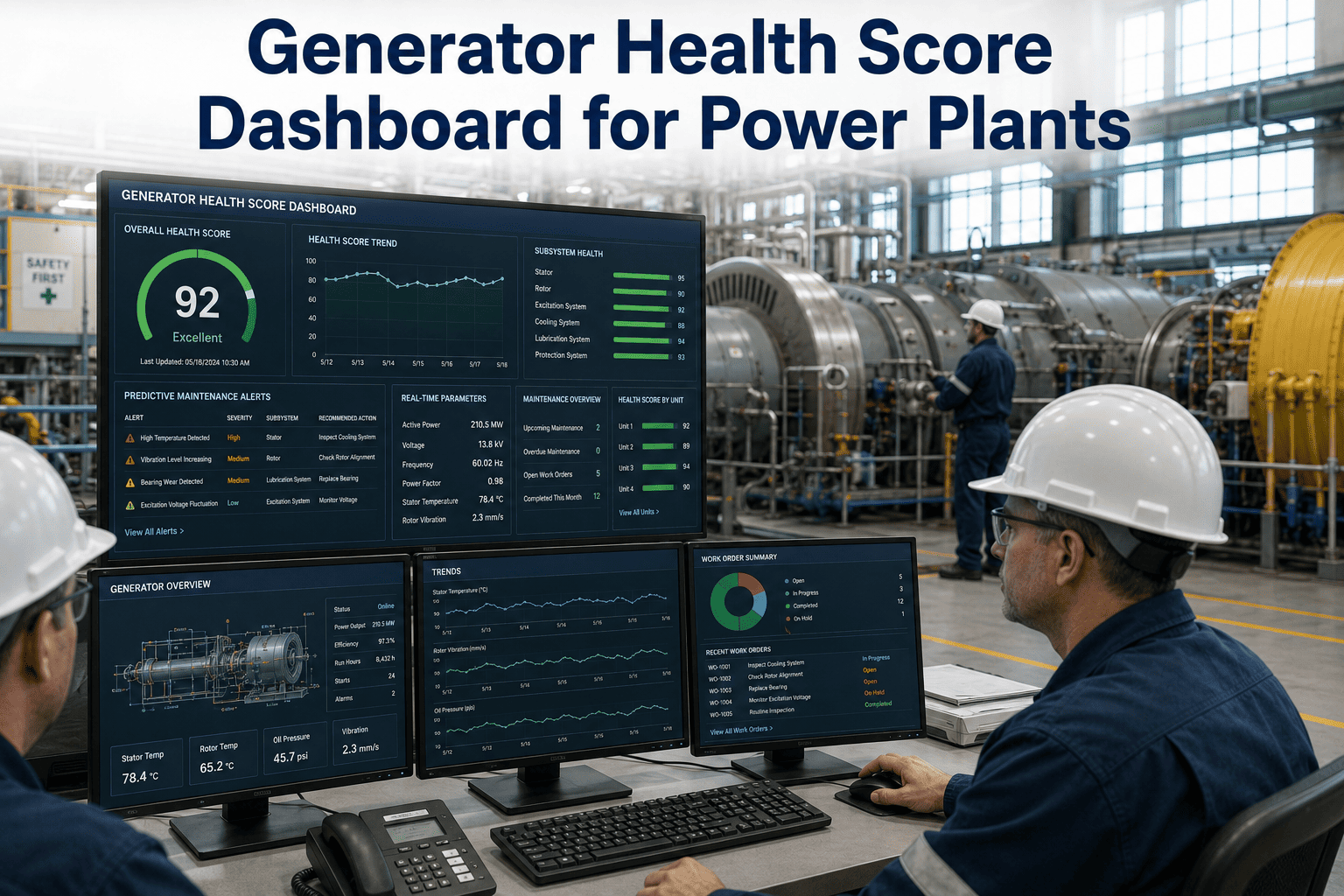
Generator Health Score Dashboard for Power Plants
Monitor every generator's condition score, predictive failure alerts, and operational performance from one centralized platform — built for multi-unit power plant operations.
Used by operations teams managing 10,000+ assets | Live in days, not months | No heavy implementation required
average cost per unplanned generator failure in a power plant, excluding regulatory penalties
4.8×
more expensive to repair a failed generator reactively than with planned preventive maintenance
38%
of unplanned plant outages are traceable to assets with no condition monitoring or health scoring
30%
reduction in generator downtime reported by plants adopting continuous health score monitoring
What Is a Generator Health Score Dashboard?
A generator health score dashboard is a centralized operations view that aggregates real-time and historical data from every generator unit in a plant — translating raw sensor readings, inspection records, work order history, and run-hour data into a single composite health score per asset. Rather than waiting for an alarm or scheduled inspection interval, plant managers get a continuous, ranked view of generator condition across the entire fleet.
The health score is a weighted composite that typically draws from vibration amplitude trends, winding temperature deviations, lube oil degradation markers, load profile irregularities, and PM compliance history. A generator running at 91/100 needs monitoring. One at 63/100 needs an immediate work order. One at 41/100 needs an outage window scheduled before it dictates one itself.
Most power plants lose 15–25% of planned generation capacity annually to reactive failures that predictive health scoring could have flagged weeks in advance.
Core Components of a Generator Health Score
01
Vibration Signature Analysis
Baseline vibration signatures are recorded at commissioning. Any deviation in amplitude, frequency spectrum, or harmonic pattern triggers a health score deduction and predictive alert before mechanical failure occurs.
02
Thermal and Winding Monitoring
Stator and rotor winding temperatures are tracked against rated thresholds. Sustained thermal exceedances degrade insulation class and shorten generator life — the health score captures this degradation in real time.
03
Lube Oil and Coolant Quality
Oil viscosity, contamination levels, and coolant pH are tracked against laboratory analysis intervals. Degraded oil is one of the top three root causes of bearing failures — a direct path to unplanned outage.
04
Run-Hour and Load Factor Tracking
Cumulative run hours, peak load events, and load factor trends are mapped against OEM maintenance milestones. Generators running persistently above 85% load accumulate fatigue at accelerated rates.
05
PM Compliance and Inspection History
Health scores factor in whether scheduled preventive maintenance tasks have been completed on time. A generator with three consecutive missed PM intervals carries a compounding risk multiplier in its score.
06
Failure Mode and Alert Classification
Each health dimension maps to specific failure modes — bearing wear, insulation breakdown, fuel system degradation — so alerts are actionable and prioritized by failure consequence and repair lead time.
07
OEE and Availability Correlation
Overall Equipment Effectiveness is calculated per generator and benchmarked across the fleet. Low-OEE units trigger automatic investigation workflows tied to health score inputs to identify the root cause.
08
CapEx Forecasting Integration
Health score trends over 12–36 months feed into rolling 5–10 year capital expenditure models, enabling plant managers to justify generator overhaul or replacement budgets with data — not estimates.
Why Power Plants Struggle Without Health Score Visibility
Invisible Degradation
Without continuous scoring, generators degrade silently between inspection intervals. By the time a fault becomes audible or visible, the repair bill has already multiplied several times over what early intervention would have cost.
Calendar PM Doesn't Match Asset Reality
A generator running at peak load for 18 hours daily degrades far faster than one on standby. Calendar-based PM schedules ignore actual operating conditions — resulting in both over-maintenance of healthy assets and under-maintenance of stressed ones.
Siloed Data, No Fleet View
Vibration data lives in one system, oil analysis in a spreadsheet, work orders in a paper log. No one has a single ranked view of which generator in a multi-unit plant is the highest failure risk today — so priority decisions are guesswork.
CapEx Based on Guesswork
Without health trend data, capital expenditure requests for generator overhauls are built on gut feel and age. Finance teams push back, approvals are delayed, and the generator that needed replacement 18 months ago fails during peak demand.
Compliance and Audit Exposure
Regulatory bodies in the USA, UK, and UAE require documented evidence of asset condition monitoring and maintenance records. Facilities relying on paper logs and disconnected systems face audit findings and potential operational license risk.
Technician Knowledge Lock-In
Experienced plant technicians carry generator condition knowledge in their heads. When they leave, that institutional knowledge disappears. Without a digital health scoring system, the next failure catches the replacement team completely unprepared.
How Oxmaint Delivers Generator Health Intelligence
Composite Health Score Engine
Each generator receives a 0–100 health score aggregated from vibration, thermal, fluid analysis, PM compliance, and run-hour data. Scores update continuously — not just at inspection intervals — giving plant managers a real-time fleet risk ranking.
Predictive Alert Workflows
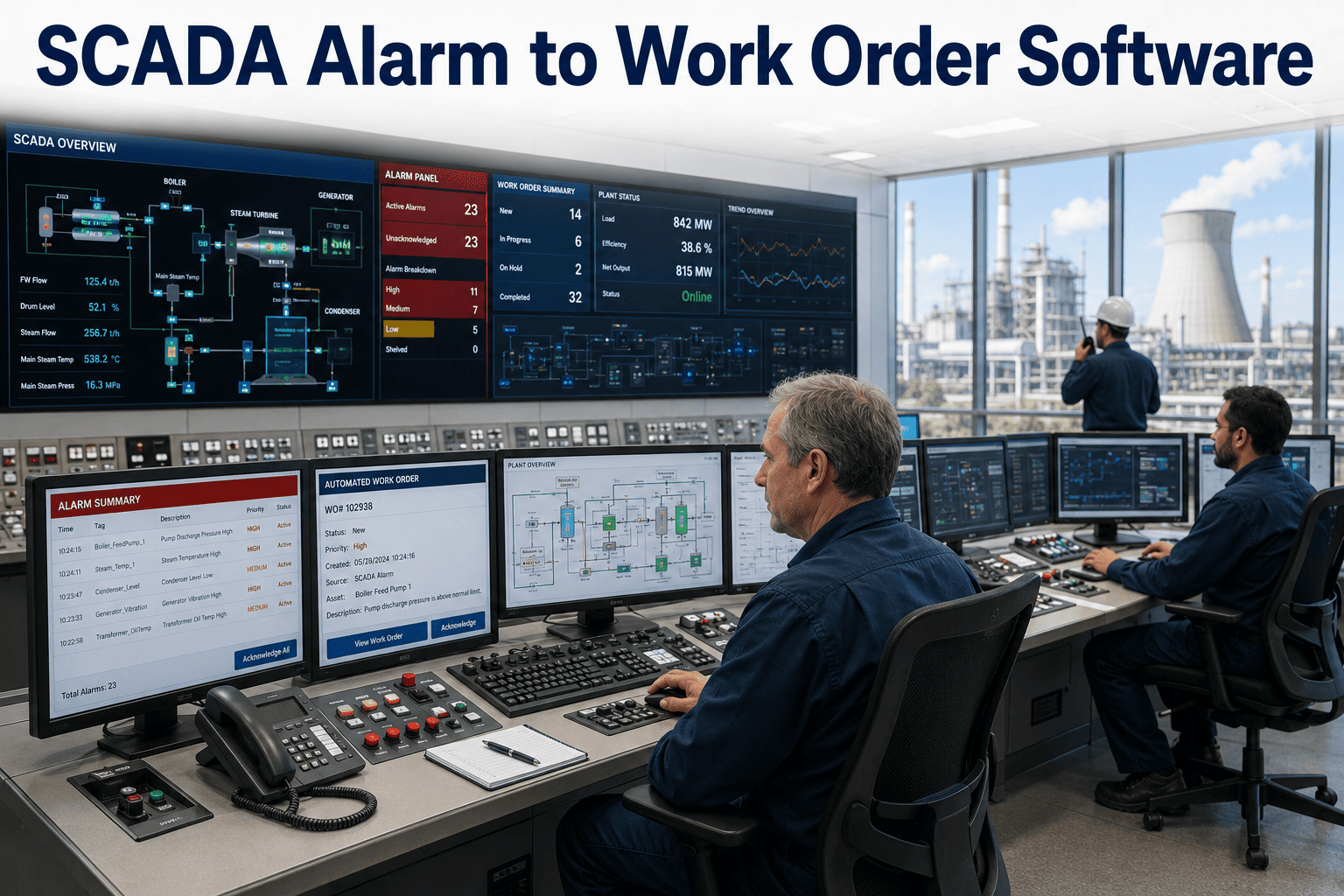
When a health score drops below a configurable threshold, Oxmaint automatically generates a work order, notifies the assigned technician, and flags the asset on the plant manager dashboard — before any operational impact occurs.
IoT and SCADA Integration
Oxmaint connects directly to existing SCADA systems, IoT sensor networks, and vibration monitoring hardware — pulling live telemetry data into the health score engine without requiring a rip-and-replace of current monitoring infrastructure.
OEE and Availability Dashboard
Fleet-level OEE is calculated per generator and benchmarked across all units in the portfolio. Availability trends, mean time between failures, and load factor history are visualized in a single operations view for plant leadership.
5–10 Year CapEx Forecasting
Health score trends feed directly into Oxmaint's rolling CapEx model, generating investor-grade overhaul and replacement forecasts. Plant managers can defend capital requests to finance with documented condition data — not age estimates.
GMP-Compliant Inspection Records
Every inspection, test result, and maintenance action is timestamped and stored in an audit-ready format — meeting OSHA, ISO 55001, and regional utility compliance requirements without additional documentation effort from field technicians.
Facilities using structured health score dashboards recover their implementation cost within the first prevented failure — typically within 60 to 90 days of deployment.
Reactive Maintenance vs. Health Score Monitoring
Reactive Maintenance Approach
Generator Health Score Monitoring
Failures discovered when generators trip offline or alarms sound
Degradation trends flagged 2–6 weeks before operational impact
PM intervals fixed by calendar regardless of actual asset condition
Maintenance triggered by health score thresholds matching real-world usage
Vibration, thermal, and oil data stored in separate disconnected systems
All condition data unified into one composite score per generator
Emergency parts procurement at spot-market prices under time pressure
Planned parts ordering weeks in advance at contracted rates
CapEx requests built on age and gut feel — frequently rejected or delayed
CapEx forecasts backed by health trend data — approved faster with documentation
Audit compliance requires manual record consolidation — weeks of effort
Audit-ready records auto-generated with every inspection and work order
ROI and Performance Results
30%
reduction in unplanned generator downtime within 12 months of health score monitoring implementation
4.8×
cost difference between reactive and planned generator repairs — health scoring closes that gap systematically
22%
average reduction in total generator maintenance spend when PM scheduling is driven by condition score rather than calendar
6 wk
average advance warning time provided by health score alerts before generator failures reach critical stage
How is a generator health score calculated in Oxmaint?
Oxmaint calculates generator health scores as a weighted composite of multiple condition inputs — vibration amplitude trends, thermal and winding temperature readings, lube oil analysis results, PM compliance history, run-hour accumulation against OEM milestones, and load factor data. Each dimension is scored individually and combined into a 0–100 composite score per generator. Weighting can be adjusted to reflect the specific failure modes most consequential for your plant type — gas turbine, diesel genset, or hydro alternator. Scores update continuously as new data is ingested from sensors, SCADA systems, or manual inspection entries.
Can Oxmaint integrate with existing SCADA and IoT monitoring systems?
Yes. Oxmaint supports direct integration with major SCADA platforms and IoT sensor networks via standard API connections and industrial protocols. This means your existing vibration monitors, thermal sensors, and SCADA data streams feed directly into the health scoring engine without requiring replacement of current monitoring hardware. Most integration setups are completed within days, not months, and do not require heavy IT involvement or custom development work from your side.
How does generator health scoring help with CapEx budgeting and regulatory compliance?
Health score trend data over 12–36 months provides the documented condition evidence that finance teams and regulators both require. For CapEx budgeting, Oxmaint's rolling 5–10 year model uses health trajectories to forecast overhaul and replacement windows — transforming capital requests from estimates into evidence-backed projections. For regulatory compliance in OSHA (USA), UK Building Safety, UAE Vision 2030, and Australian jurisdictions, Oxmaint maintains an audit-ready record of every inspection, test, work order, and health measurement — automatically, as part of normal operations.
How quickly can a power plant go live with generator health dashboards in Oxmaint?
Most plant teams complete initial asset setup — entering generator specifications, uploading existing inspection records, and configuring health score thresholds — within the first week. For plants with direct SCADA or IoT integration, live health score feeds typically go operational within 7–14 days. There is no lengthy implementation program, no heavy onboarding requirement, and no custom configuration phase. The platform is designed for plant managers and maintenance engineers to configure themselves, without requiring dedicated IT or implementation consultants.
Generator Health Intelligence · Oxmaint Power Plant Module
Stop Losing Revenue to Reactive Generator Failures
Turn every generator in your fleet into a predictable, trackable, scored asset — with real-time health dashboards, predictive alerts, and investor-grade CapEx forecasting built in.
✔ Real-time health scores across your entire generator fleet
✔ Predictive failure alerts 4–6 weeks before operational impact
✔ 5–10 year CapEx forecasting backed by condition data
See measurable results in the first 30 days · Works across multi-site power portfolios · Live in days, not months