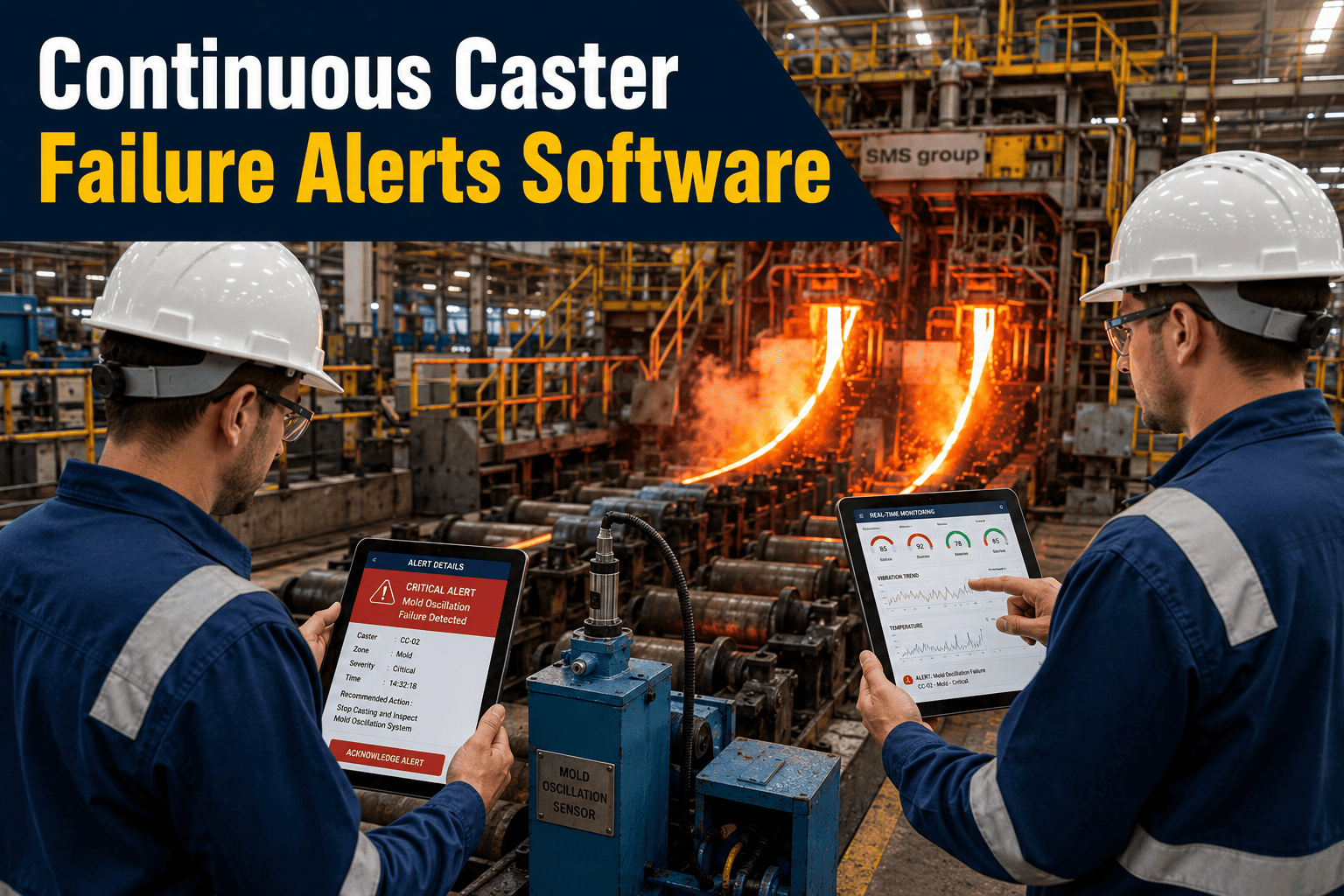
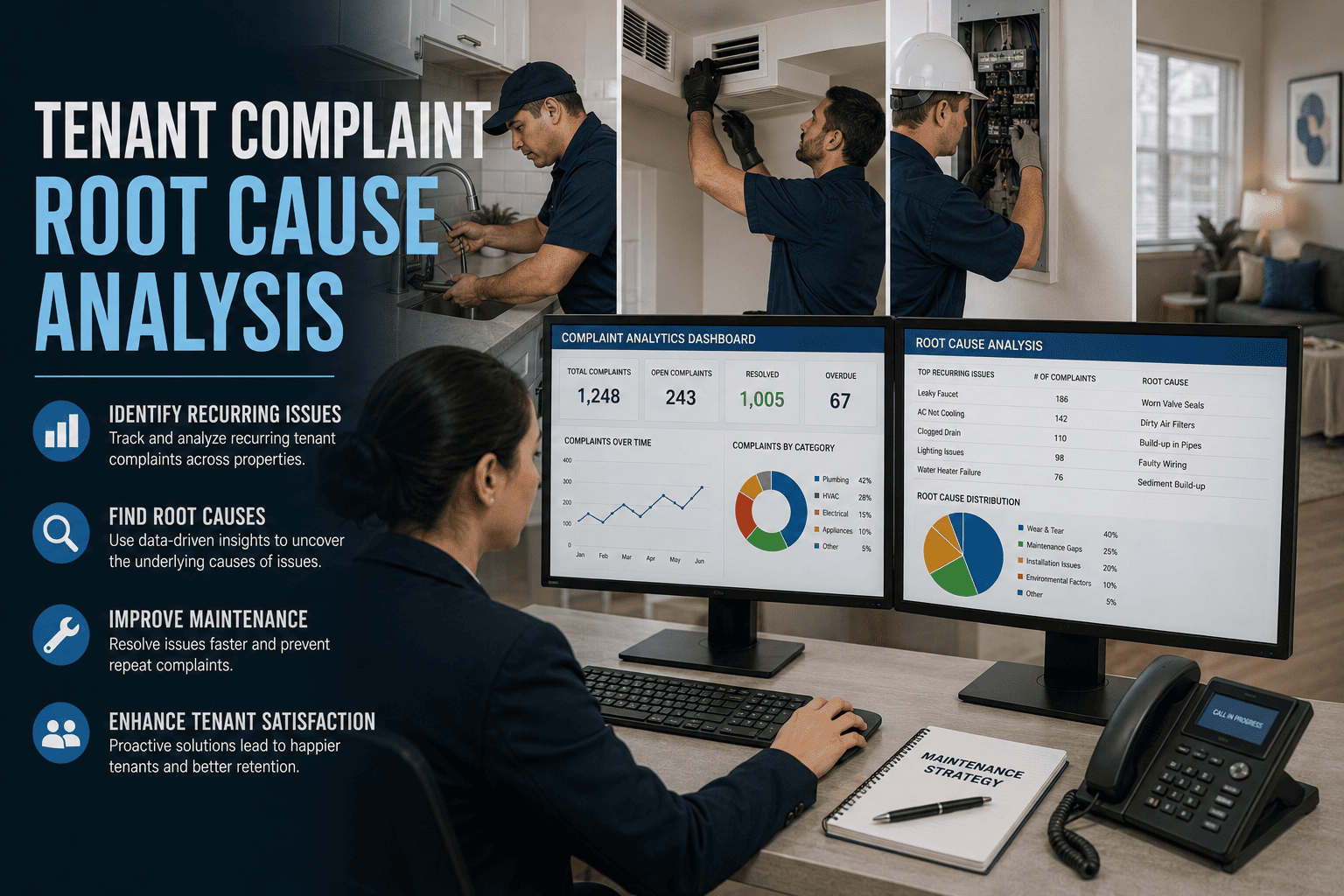
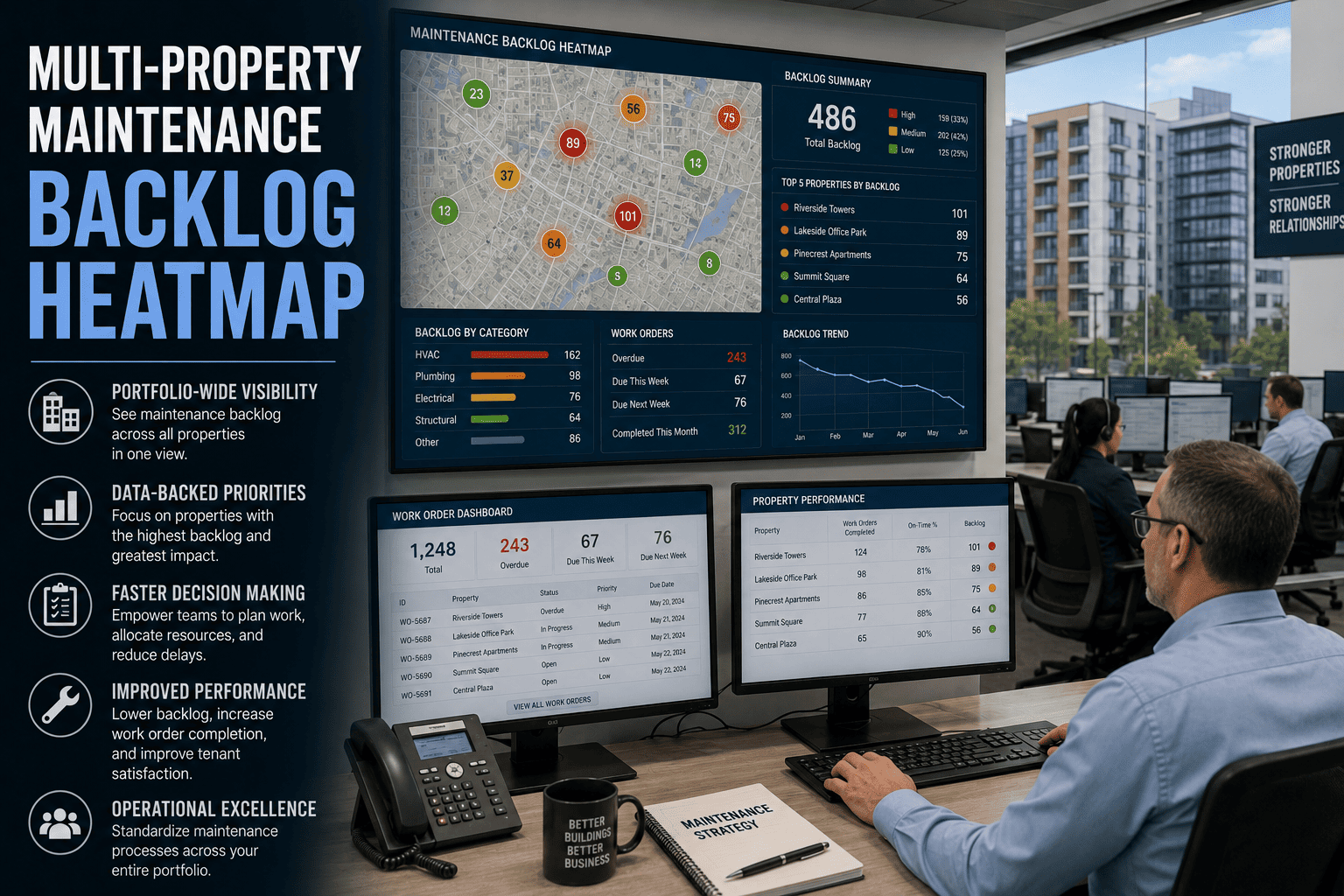
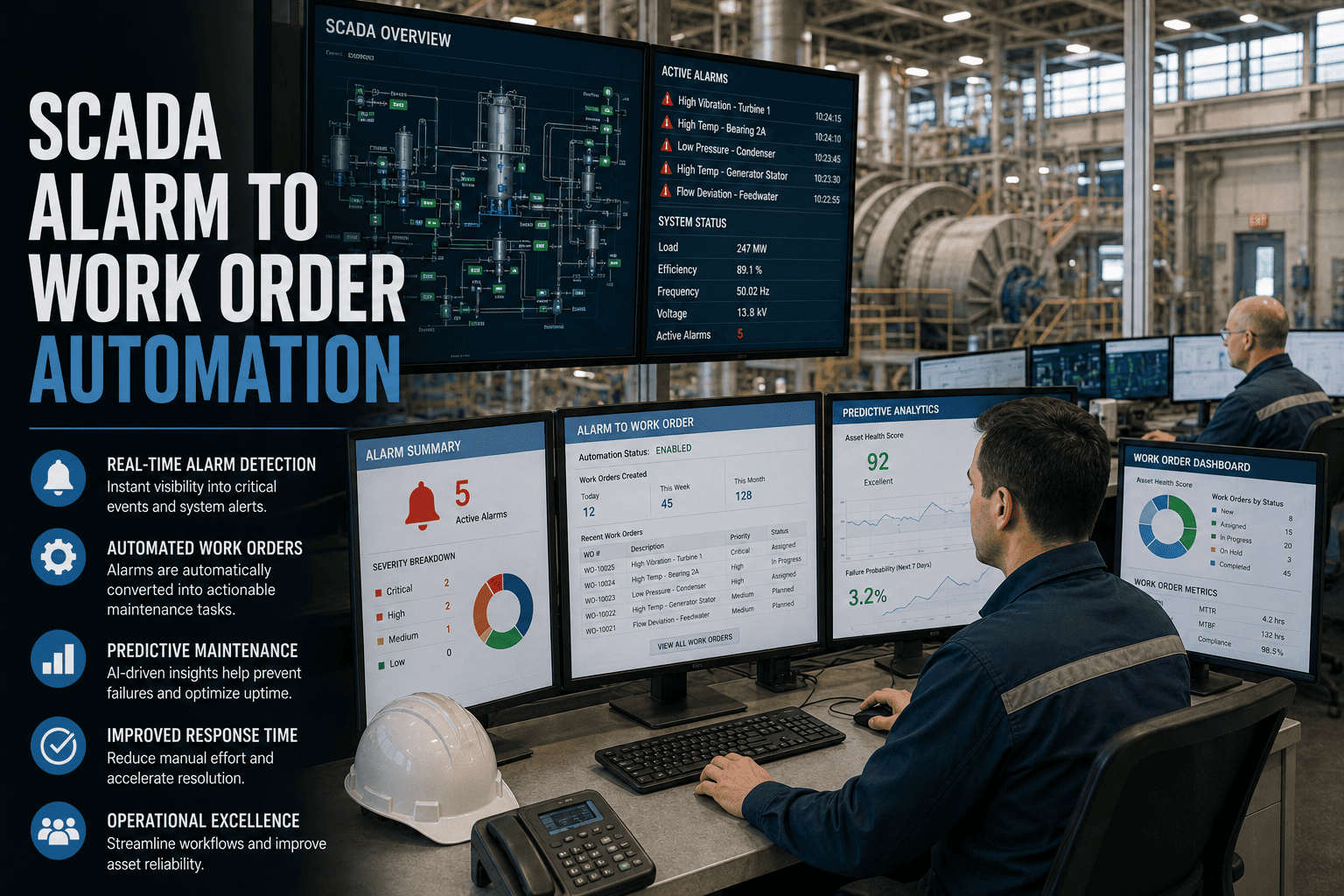
Continuous casters are the production bottleneck in most integrated steel plants — when they stop unexpectedly, the entire melt shop stops with them. A single unplanned continuous caster stoppage costs $100,000 to $400,000 per event in lost production, emergency repairs, and steel scrap generation. The failure modes that cause caster outages are not random: roller bearing degradation, oscillator mechanism wear, mold level control failures, cooling water anomalies, and strand guide alignment drift all follow predictable deterioration trajectories that generate detectable signals weeks before production impact. Continuous caster failure alert software captures these signals and routes them to maintenance teams as actionable work orders — not passive data. Start a free trial on Oxmaint to see how caster failure alerts integrate with your maintenance workflow, or book a demo to review your specific caster configuration..
Detect Caster Failures Before They Stop Production
See how Oxmaint delivers continuous caster failure alerts that give maintenance teams 2–8 weeks of advance warning.
Steel plants using predictive caster monitoring report 50–70% reduction in unplanned caster stoppages — with payback in the first prevented event.
- 2–8 week early warning on roller, oscillator, and cooling failures
- Automatic work order generation from threshold and trend alerts
- Multi-strand fleet health dashboard with component risk ranking
Used by operations teams managing 10,000+ assets — live in days, not months
What Is Continuous Caster Failure Alerts Software?
Real-Time Anomaly Detection for Continuous Casting Operations
Continuous caster failure alerts software is a predictive monitoring system that aggregates sensor data, process parameter trends, and equipment condition indicators from continuous casting machines — and applies threshold analysis, statistical trending, and anomaly detection to identify failure precursors before they reach the point of production impact. Alerts route directly to maintenance CMMS systems for work order generation and repair planning.
The critical integration requirement is that alert data must connect to maintenance action automatically. A caster bearing temperature alert that appears in a standalone monitoring system but never generates a work order provides no operational value. When alerts flow directly into CMMS work orders with asset linkage, priority classification, parts requirements, and technician assignment, the detection-to-repair cycle shrinks from weeks to days — which is where the cost avoidance is realized. Industry benchmark data shows that steel plants with integrated caster monitoring and CMMS report 50 to 70% fewer unplanned caster stoppages within the first year of operation. Start a free trial to see how Oxmaint delivers this for your operations.
Core Capabilities
6 Capabilities That Define Effective Continuous Caster Failure Alerts Software
01
Multi-Parameter Alert Engine
Configure threshold and statistical anomaly rules across roller bearing temperatures, mold level variance, oscillator performance, cooling flow, and strand guide alignment — all feeding into Oxmaint work orders automatically.
02
SCADA and DCS Integration
Pull continuous caster process data from existing control systems via OPC-UA, Modbus, and REST API. Sensor readings become maintenance evidence linked to asset condition history without separate data entry.
03
Caster Asset Hierarchy
Every caster component — segments, rollers, oscillator, mold assembly, cooling headers — is a tracked asset with condition score, alert history, and maintenance record. Full traceability from strand start to bearing replacement.
04
Predictive Parts Pre-Positioning
When alert patterns indicate component replacement within 4–8 weeks, Oxmaint checks spare parts inventory and auto-generates purchase requests if stock is insufficient — before the repair becomes urgent.
05
Production-Aware Alert Scheduling
Critical alerts during active casting sequences route to on-call maintenance without stopping the cast. Non-urgent condition alerts schedule into planned maintenance windows aligned with production break opportunities.
06
Multi-Strand Fleet Dashboard
Reliability engineers see real-time health status across all strands and segments simultaneously — identifying highest-risk components and planning maintenance priorities across the complete caster fleet.
Industry Pain Points
Why Continuous Casters Keep Failing Without Warning
Most operations teams know their maintenance programs have gaps — the challenge is knowing which gaps are costing the most. start a free trial to identify the highest-cost failure patterns in your operations.
Sensor Data Without Context
Caster sensor readings exist in SCADA and DCS systems but aren't compared against equipment condition baselines. A rising roller bearing temperature means nothing without knowing the normal range and degradation rate.
No Automatic Work Order Generation
Process engineers observe anomalies in trend charts but generating a maintenance work order requires manual steps across separate systems — introducing delays of hours to days before repair action begins.
Oscillator Wear Missed Until Failure
Oscillator mechanism wear produces subtle changes in stroke frequency and amplitude that fixed alarms don't catch. By the time alarm limits are exceeded, replacement is urgent — parts often unavailable at standard lead time.
Mold Level Instability Patterns Ignored
Cyclical mold level instability often precedes stopper rod or SEN failure by days. Without pattern recognition across hundreds of casts, these precursor events are invisible in operational noise.
Cooling System Anomalies Underdetected
Secondary cooling water flow anomalies cause strand surface cracking and internal defects before reaching alarm levels. Without statistical baseline comparison, cooling degradation goes undetected until quality impact is measurable.
No Fleet-Level Risk View
Multi-strand casters running multiple campaigns simultaneously have no aggregated health view. Operations managers can't see which strand is highest-risk until it stops production.
Operations teams that digitize continuous caster failure alerts software eliminate 40–65% of the avoidable maintenance costs that reactive approaches generate.
How Oxmaint Solves It
How Oxmaint Delivers Continuous Caster Failure Alerts Software
Multi-Parameter Alert Engine
Configure threshold and statistical anomaly rules across roller bearing temperatures, mold level variance, oscillator performance, cooling flow, and strand guide alignment — all feeding into Oxmaint work orders automatically.
SCADA and DCS Integration
Pull continuous caster process data from existing control systems via OPC-UA, Modbus, and REST API. Sensor readings become maintenance evidence linked to asset condition history without separate data entry.
Caster Asset Hierarchy
Every caster component — segments, rollers, oscillator, mold assembly, cooling headers — is a tracked asset with condition score, alert history, and maintenance record. Full traceability from strand start to bearing replacement.
Predictive Parts Pre-Positioning
When alert patterns indicate component replacement within 4–8 weeks, Oxmaint checks spare parts inventory and auto-generates purchase requests if stock is insufficient — before the repair becomes urgent.
Production-Aware Alert Scheduling
Critical alerts during active casting sequences route to on-call maintenance without stopping the cast. Non-urgent condition alerts schedule into planned maintenance windows aligned with production break opportunities.
Multi-Strand Fleet Dashboard
Reliability engineers see real-time health status across all strands and segments simultaneously — identifying highest-risk components and planning maintenance priorities across the complete caster fleet.
Reactive (No Alert System) vs Predictive (Oxmaint Alerts)
Reactive (No Alert System) vs Predictive (Oxmaint Alerts): Side-by-Side Comparison
| Dimension | Reactive (No Alert System) | Predictive (Oxmaint Alerts) |
|---|
| Caster stoppage frequency |
4–8 unplanned events per year — $400K–$1.6M annual impact |
1–2 events per year after 12-month program maturity |
| Failure detection method |
Alarm-at-failure — damage already extensive when detected |
Statistical trending — 2–8 weeks advance warning on major failure modes |
| Emergency parts premium |
3–5× standard cost — expedited freight and premium contractor rates |
Pre-positioned from condition alert — standard cost and lead time |
| Oscillator maintenance |
Calendar-based or run-to-failure — 60% of failures are unplanned |
Condition-based — wear patterns detected 4–6 weeks before failure threshold |
| Quality-related scrap |
Cooling anomalies cause surface defects — discovered in downstream QC |
Cooling trend alerts catch anomalies before cast quality is impacted |
| Maintenance planning horizon |
Reactive — no forecast visibility on caster component replacement needs |
Rolling 4–12 week forecast — planned outage scheduling and CapEx visibility |
ROI and Results
What Operations Teams Report After Deployment
Organizations using Oxmaint for continuous caster failure alerts software consistently report measurable improvements within the first 12 months. Start a free trial to see how your operations metrics could shift.
60%
Fewer Unplanned Caster Stoppages
Integrated monitoring and CMMS vs reactive maintenance on equivalent caster fleets
2–8 Wks
Early Warning Lead Time
Roller bearing and oscillator failure precursor detection before production impact
$320K
Average Savings Per Prevented Event
Emergency repair cost vs planned replacement on major caster component failure
12–18 Mo
Full Program Payback
Typical integrated steel plant achieves full ROI within 12–18 months of deployment
FAQ
Continuous Caster Failure Alerts Software: Common Questions
Which caster failure modes does the alert system cover?
Oxmaint supports configurable alert rules for roller bearing temperature trending, oscillator stroke and frequency variance, mold level instability patterns, secondary cooling flow anomalies, segment misalignment indicators, and breakout prediction parameters. Alert coverage is configured per caster type and campaign history. Start a free trial to see how alert templates are configured for your specific caster model.
Can the system integrate with our existing SCADA without replacing it?
Yes. Oxmaint integrates with existing SCADA and DCS systems as a maintenance layer — not a replacement. Process data from Siemens, ABB, GE, and other automation platforms connects via OPC-UA and standard APIs. Oxmaint adds maintenance logic, work order generation, and asset tracking on top of existing process control infrastructure. Book a demo to review your specific SCADA architecture.
How does the alert system handle false positives during process transitions?
Oxmaint's alert rules support operating-condition filters — temperature alerts during cold start sequences, for example, are suppressed until steady-state production is achieved. Statistical baseline comparison methods use operating-condition-normalized data to eliminate false positives from normal process variations while catching genuine component degradation.
What is the typical deployment timeline for caster monitoring integration?
Initial SCADA integration and basic threshold alerts are typically live within 2–4 weeks. Statistical baseline models require 4–8 weeks of operating data to establish reliable anomaly detection sensitivity. Full program maturity — optimized alert thresholds and minimal false positive rate — is typically achieved at 3–6 months post-deployment.
Detect Caster Failures Before They Stop Production
Stop Absorbing $400,000 Caster Failures That Were Preventable
Turn every caster sensor signal into predictive maintenance intelligence with Oxmaint's alert platform.
- 2–8 week early warning on roller, oscillator, and cooling failures
- Automatic work order generation from threshold and trend alerts
- Multi-strand fleet health dashboard with component risk ranking
Used by operations teams managing 10,000+ assets — limited onboarding slots available this quarter