Manufacturing plants lose an average of $253 million annually to unplanned equipment failures. A single hour of unexpected downtime costs $125,000 in lost production, emergency repairs, and quality issues. Predictive maintenance flips this equation: companies using AI-powered condition monitoring reduce unplanned downtime by 50%, cut maintenance costs by 25-40%, and achieve 10:1 to 30:1 ROI within 12-18 months. The gap between reactive firefighting and intelligent prediction defines competitive advantage in 2026. Start a free trial and see predictive failure detection running on your equipment data in under 30 minutes, or book a demo to see how manufacturers eliminate $2M+ in annual downtime losses.
50%
Downtime Reduction
From reactive to predictive operations
10:1
Average ROI
US Department of Energy benchmark
$253M
Annual Loss Prevented
Per large manufacturing plant
85%
Prediction Accuracy
With AI machine learning models
Start Eliminating Downtime Today
See Predictive Maintenance Running on Your Equipment in 30 Minutes
OxMaint's AI-powered CMMS detects equipment degradation 2-4 weeks before failure, auto-schedules maintenance during planned downtime, and documents every intervention with compliance-ready records. Manufacturing teams deploy predictive monitoring on critical assets in under an hour.
What Is Predictive Maintenance for Manufacturing?
Predictive maintenance uses IoT sensors and AI algorithms to continuously monitor equipment condition and forecast failures before they occur. Unlike reactive maintenance that responds to breakdowns or preventive maintenance that follows fixed schedules, predictive maintenance acts on actual asset health data. Vibration sensors detect bearing wear patterns 4-6 weeks before failure. Temperature monitoring identifies thermal degradation in motors. Current signature analysis catches electrical faults in their earliest stages. The system learns normal operating patterns for each asset, flags deviations that precede failures, and generates maintenance work orders with 85-95% accuracy. This shifts operations from calendar-based intervention to condition-based optimization.
Reactive
Run-to-Failure
Repair only after equipment breaks. Emergency repairs cost 4-8x planned maintenance. Unplanned downtime destroys production schedules.
Cost: $125K per downtime hour
→
Preventive
Time-Based PM
Scheduled maintenance every X hours. Prevents some failures but replaces parts with remaining useful life. 30% of interventions unnecessary.
Improvement: 20% cost reduction
→
Predictive
Condition-Based Intelligence
IoT sensors + AI predict failures 2-4 weeks early. Maintenance occurs exactly when needed. Parts replaced at optimal lifecycle point.
ROI: 10:1 to 30:1 within 12-18 months
The Core Technologies Enabling Predictive Maintenance in 2026
Predictive maintenance requires three integrated technology layers: industrial IoT sensors for continuous data collection, edge computing for real-time processing, and AI algorithms for pattern recognition and failure prediction. The convergence of these systems transforms raw equipment data into actionable maintenance intelligence. Manufacturing plants deploying predictive strategies report that technology maturity in 2026 has eliminated the integration complexity that limited earlier implementations. Cloud platforms, pre-trained AI models, and retrofit sensor kits reduce deployment timelines from 6 months to 4-8 weeks for mid-size facilities.
Industrial IoT Sensors
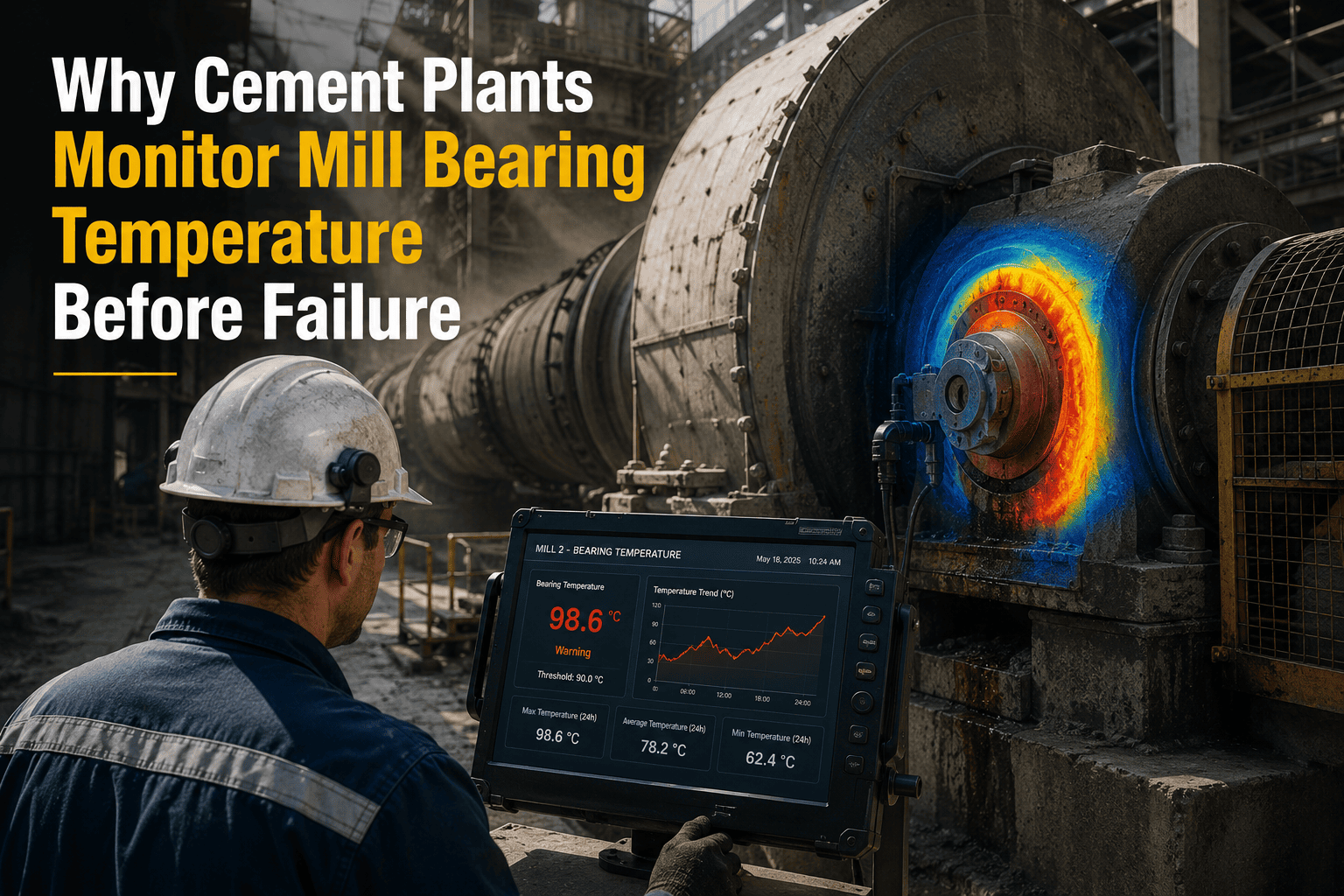
Vibration accelerometers monitor rotating equipment at 10,000+ samples per second. Thermal sensors detect temperature anomalies with ±0.5°C accuracy. Current signature analysis identifies electrical faults through motor draw patterns. Pressure transducers track hydraulic system health. Acoustic sensors detect bearing degradation through ultrasonic frequency changes.
Sensor costs down 60% since 2020, now $50-$300 per unit
Edge Computing Infrastructure
Local processing nodes analyze sensor streams in real-time, reducing latency to under 100 milliseconds. Edge AI runs lightweight models on-site for immediate fault detection. Data aggregation filters noise before cloud transmission, reducing bandwidth costs by 70%. Gateway devices connect legacy PLCs and SCADA systems to modern predictive platforms.
5G and WiFi 6 enable 1,000+ sensors per gateway
AI and Machine Learning Models
Supervised learning trains on historical failure data to recognize degradation patterns. Unsupervised anomaly detection identifies novel failure modes. LSTM neural networks predict remaining useful life with 85-95% accuracy. Generative AI creates synthetic failure scenarios for rare events. Models retrain continuously as new data arrives.
Prediction accuracy improved from 70% (2020) to 94% (2026)
Cloud Analytics Platforms
Centralized data lakes store multi-year equipment history for trend analysis. Cloud AI services process complex algorithms requiring massive compute. Digital twin simulations model equipment behavior under different operating conditions. API integrations connect predictive insights to CMMS work order systems.
Cloud deployment reduces infrastructure costs by 40%
CMMS Integration Layer
Predictive alerts auto-generate work orders with failure probability, recommended actions, and required parts. Maintenance scheduling optimizes technician routes and inventory staging. Compliance documentation captures sensor readings, AI predictions, and corrective actions. Mobile apps deliver alerts directly to technician devices with asset location maps.
Automated work order creation saves 12-18 hours per week
Real-Time Dashboards
Executive KPI views show fleet-wide health scores and maintenance cost trends. Operations dashboards display asset-level status with risk prioritization. Technician interfaces provide diagnostic guidance and repair histories. Automated alerting escalates critical predictions to maintenance managers via SMS and email.
Single-pane visibility across 500+ assets in real-time
Critical Manufacturing Equipment Where Predictive Maintenance Delivers Maximum ROI
CNC Machines and Robotic Arms
$75K-$250K per failure event. Production line stoppage affects downstream assembly.
Triaxial vibration on spindles and servo motors. Torque monitoring on tool changers. Current signature analysis on drive systems.
3-6 weeks advance warning
Compressors and HVAC Systems
$40K-$150K replacement cost. Critical for climate-controlled manufacturing and clean rooms.
Refrigerant pressure sensors. Bearing temperature monitoring. Acoustic analysis for valve degradation.
4-8 weeks advance warning
Conveyor Systems and Material Handling
$20K-$80K per incident. Jams cause production backlog and damage in-process inventory.
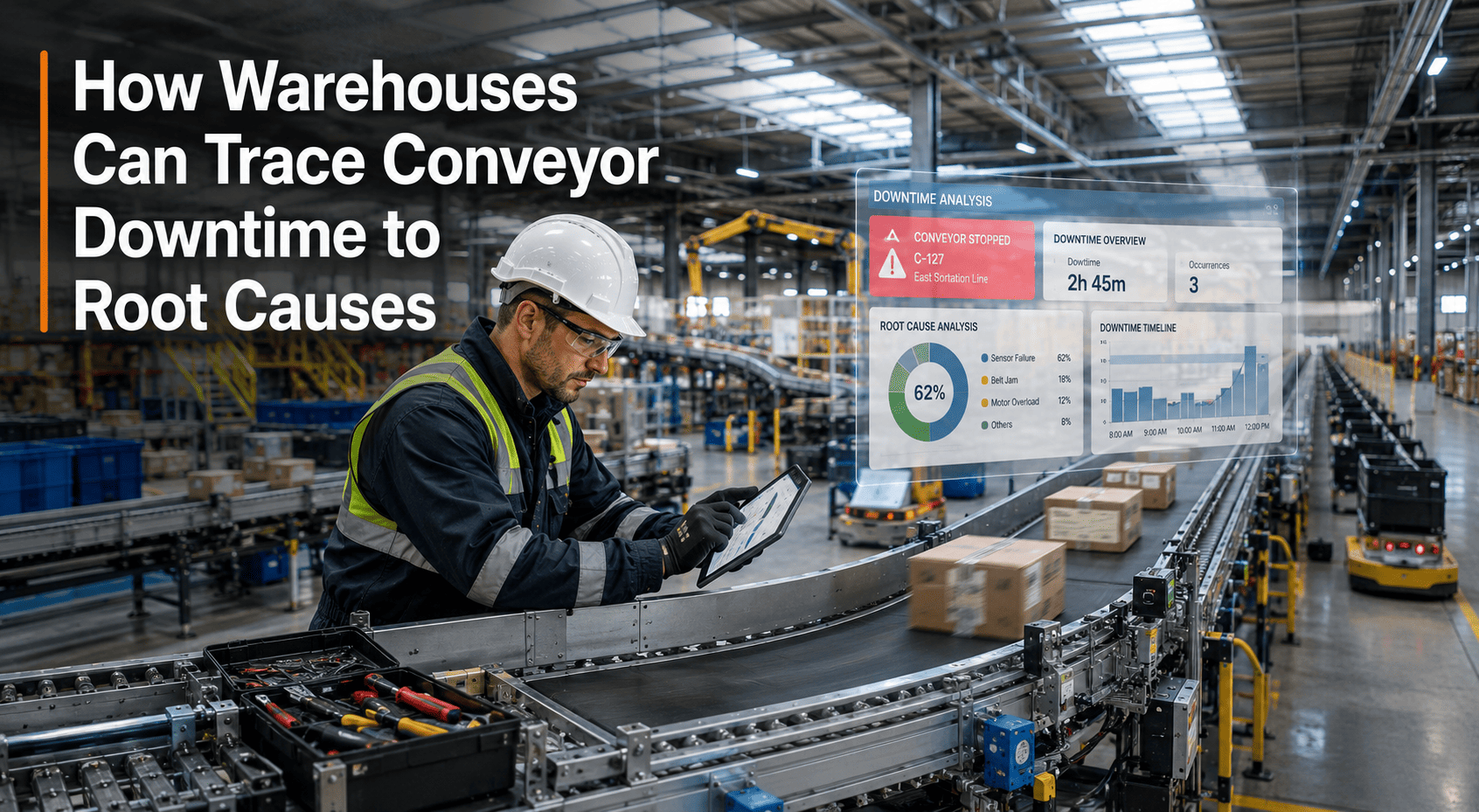
Belt tension sensors. Motor current draw monitoring. Infrared thermography on rollers and bearings.
2-4 weeks advance warning
Electric Motors and Pumps
$15K-$100K per failure. Critical utilities failures shut down entire production areas.
Motor current signature analysis detects rotor bar cracks and eccentricity. Vibration monitoring on pump impellers. Flow and pressure sensors.
3-5 weeks advance warning
Packaging and Filling Lines
$50K-$200K per hour downtime. Packaging failures risk contamination and regulatory compliance.
Vision systems detect seal quality degradation. Torque sensors on capping mechanisms. Fill weight monitoring with statistical process control.
1-3 weeks advance warning
Injection Molding and Extrusion
$30K-$120K per stoppage. Mold damage adds $50K-$500K replacement costs.
Barrel temperature profiling. Hydraulic pressure monitoring. Screw wear detection through torque analysis. Mold temperature uniformity sensors.
2-6 weeks advance warning
Plants prioritizing predictive maintenance deployment on these six equipment categories capture 70-80% of potential downtime reduction value in the first 12 months. Start a free trial to import your critical asset list and see AI-powered condition monitoring configured in under 60 minutes.
How Predictive Maintenance Transforms Manufacturing Operations
Financial Impact: Predictive vs Reactive Maintenance
Unplanned Downtime
$3.2M annually at $125K per hour for 25-30 incidents
$800K annually with 50% reduction to 12-15 incidents
$2.4M saved
Emergency Repair Premium
$600K in overtime labor, expedited shipping, contractor premiums
$120K with planned interventions during regular shifts
$480K saved
Spare Parts Inventory
$850K carrying cost to maintain safety stock for unpredictable failures
$550K with just-in-time ordering based on failure predictions
$300K saved
Secondary Equipment Damage
$400K from cascading failures when breakdowns damage connected systems
$80K with early intervention preventing secondary damage
$320K saved
Production Quality Losses
$550K in scrap and rework from degraded equipment operating below spec
$180K with equipment maintained in optimal condition
$370K saved
Labor Productivity
Baseline technician utilization 55-65% due to unplanned work disruption
75-85% utilization with optimized scheduling and route planning
$280K saved
Total Annual Impact
$5.6M baseline operational cost
$1.73M optimized operational cost
$4.15M total savings
These figures represent a mid-size manufacturing facility with 200-300 critical assets and $125K average downtime cost per hour. ROI calculation: $4.15M annual savings divided by typical $150K-$400K implementation investment equals 10:1 to 27:1 first-year return. Book a demo to see your facility-specific ROI calculation based on actual asset data and current downtime costs.
Deployment Roadmap: 60 Days from Data to Predictions
Import critical asset registry with make, model, installation date, and maintenance history into CMMS
Install retrofit IoT sensor kits on 10-20 highest-priority assets: CNC machines, compressors, critical motors
Deploy edge gateways for local data processing and configure connectivity to cloud platform
Establish baseline sensor readings under normal operating conditions for each monitored asset
Outcome: Live sensor data flowing from critical equipment to predictive analytics platform
Upload 12-36 months of historical maintenance records and failure logs to train AI baseline models
Configure anomaly detection algorithms with equipment-specific thresholds and escalation rules
Integrate predictive platform with CMMS for automated work order creation from AI alerts
Set up mobile app alerts for maintenance technicians and operations managers
Outcome: AI models generating failure predictions with automated work order workflows
Run pilot on 10-20 monitored assets, tracking prediction accuracy and false positive rates
Train maintenance technicians on interpreting sensor data, responding to alerts, and documenting outcomes
Validate first 3-5 predicted failures against actual equipment condition during scheduled inspections
Tune model sensitivity to balance early warning against false alarm frequency
Outcome: Validated predictions preventing 2-4 unplanned failures during pilot period
Expand sensor deployment to next 30-50 critical assets based on pilot success
Deploy executive dashboards showing fleet-wide health scores, prediction accuracy, and ROI metrics
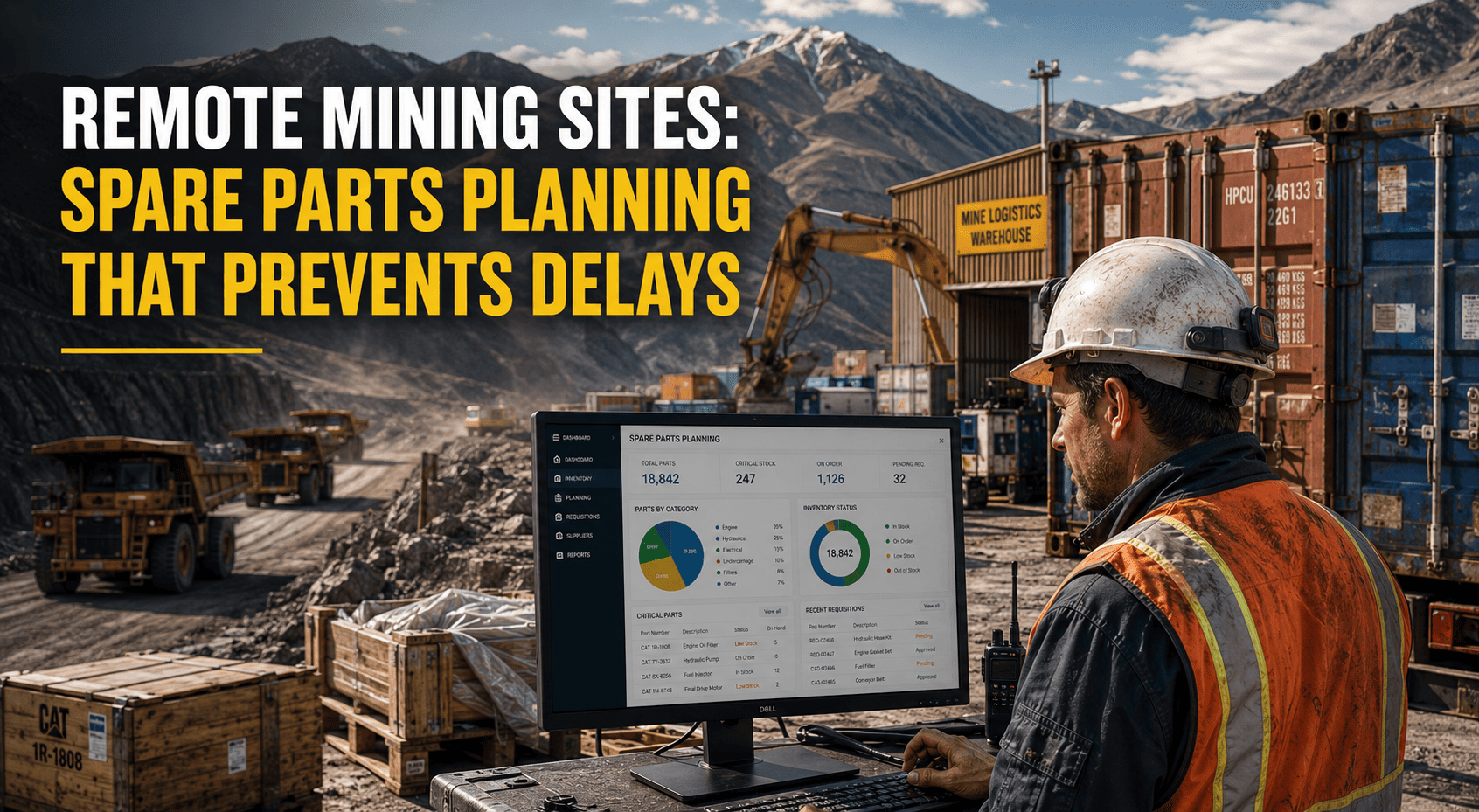
Integrate parts inventory system for automated procurement based on failure forecasts
Calculate first-quarter ROI from documented downtime prevention and maintenance cost reduction
Outcome: Full predictive maintenance platform operational with measurable financial impact
Manufacturing plants complete this deployment timeline with internal teams supported by CMMS vendor onboarding resources. Implementation cost ranges from $150K-$400K for mid-size facilities, delivering 10:1 to 30:1 ROI within 12-18 months. Start your free trial and complete weeks 1-2 of this roadmap in the next 48 hours with OxMaint's guided asset import and sensor integration.
Every Breakdown Prevented Is $125K Saved
Stop Reacting to Failures. Start Predicting Them.
OxMaint combines IoT sensor integration, AI failure prediction, and automated maintenance scheduling in a single platform. Manufacturing teams deploy predictive monitoring on critical assets in under 60 minutes and see first prevented failures within 4-6 weeks. The system learns your equipment, predicts degradation, and schedules interventions during planned downtime automatically.
50%
Downtime reduction in first year
$4.15M
Average annual savings per facility
10:1
ROI within 12-18 months
Frequently Asked Questions
01
How accurate are AI predictions for equipment failures?
Current AI models achieve 85-95% prediction accuracy on equipment failures 2-6 weeks in advance. Accuracy improves over time as models train on facility-specific data. Early deployments start at 70-80% accuracy and reach 90%+ within 12-18 months of continuous operation. False positive rates typically run 10-15%, meaning 1-2 out of 10 alerts may not result in immediate failure but still indicate equipment degradation requiring attention. The cost of one prevented $125K downtime event far exceeds the cost of investigating occasional false alerts.
02
Can predictive maintenance work with older equipment that lacks built-in sensors?
Yes, retrofit IoT sensor kits make predictive maintenance viable for legacy equipment installed in the 1980s-2000s. Wireless vibration sensors attach externally to motor housings and bearing assemblies. Clamp-on current sensors monitor electrical panels without hardwiring. Temperature sensors mount to equipment surfaces via magnetic or adhesive backing. Gateway devices connect to existing PLCs and SCADA systems to extract operational data. Retrofit sensor costs range $50-$300 per monitoring point, making older equipment economically viable for predictive programs.
Book a demo to see retrofit sensor options for specific legacy equipment models.
03
What is the typical ROI timeline for predictive maintenance implementation?
Most manufacturers achieve breakeven within 6-14 months of full deployment. Plants in high-downtime-cost sectors like automotive or pharmaceuticals see payback in 3-6 months because a single prevented major failure covers the entire first-year platform cost. The US Department of Energy documents average 10:1 ROI on predictive maintenance programs, with mature implementations reaching 10:1 to 30:1 returns. Conservative estimates place first-year ROI at 5:1 to 8:1, improving to 10:1 to 15:1 in years 2-3 as AI models become more accurate and deployment expands to additional equipment.
04
How does predictive maintenance integrate with existing CMMS and ERP systems?
Modern predictive platforms connect to CMMS systems via REST APIs or webhooks to auto-generate work orders when failure predictions exceed threshold probability. Sensor data and AI alerts flow into existing maintenance workflows without requiring technicians to use separate systems. ERP integration enables automated parts procurement triggered by failure forecasts 2-4 weeks in advance. Digital twin platforms can connect to manufacturing execution systems to correlate equipment health with production quality and OEE metrics. OxMaint provides pre-built integrations with major CMMS and ERP platforms plus custom API connectors for proprietary systems.