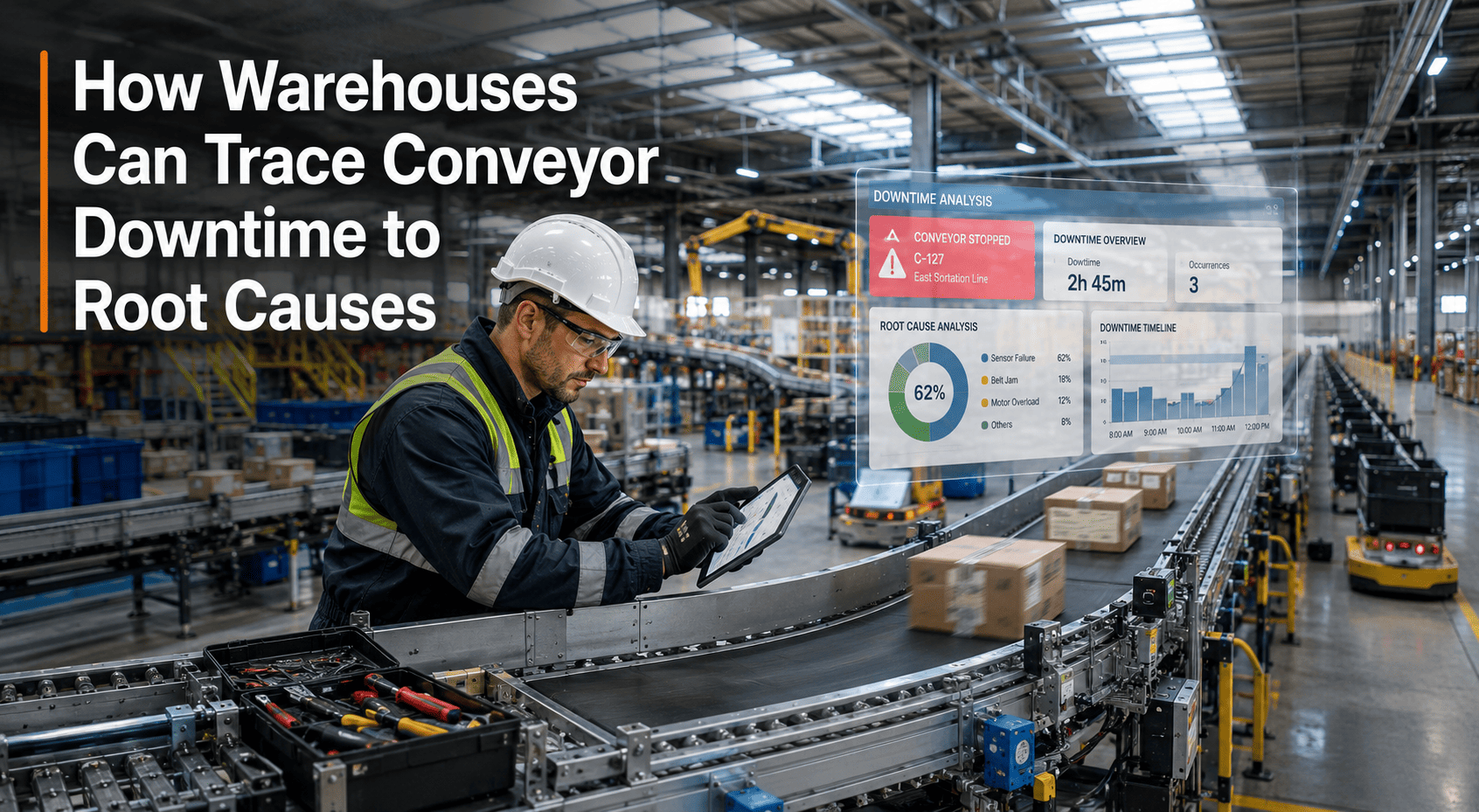
Manufacturing plant maintenance isn't optional overhead — it's the operational foundation that determines whether you hit production targets or lose $50,000–$200,000 per hour to unplanned downtime. A single unexpected conveyor failure doesn't just stop the line; it cascades into missed shipments, penalty clauses, overtime labor to catch up, scrap from restart waste, and customer relationships damaged by late deliveries. Plants implementing structured preventive maintenance checklists reduce unplanned downtime by 60–75%, cut total maintenance costs by 30–40%, and protect on-time delivery rates above 98%. The difference between reactive firefighting and systematic prevention shows up in your OEE, your P&L, and your ability to scale production without proportionally scaling maintenance headcount. Start a free trial to digitize your plant maintenance checklist and eliminate costly breakdowns, or book a demo to see how OxMaint schedules every task automatically by equipment criticality and failure consequence.
60–75%
Reduction in Unplanned Downtime
Plants with structured PM checklists vs. reactive-only maintenance programs
$50K–$200K
Cost Per Hour of Downtime
Direct losses from halted production lines in medium to large manufacturing facilities
30–40%
Lower Total Maintenance Costs
Systematic prevention vs. emergency repair model over 3-year period
98%+
On-Time Delivery Protection
Plants maintaining equipment reliability through structured PM programs
Stop Losing Production Hours to Preventable Equipment Failures
OxMaint digitizes every manufacturing plant maintenance task by equipment type and criticality, schedules inspections automatically, tracks completion rates in real time, and alerts your team before failures halt production. No more missed PM tasks. No more surprise breakdowns. No more scrambling to explain downtime to operations leadership. Want to protect your production schedule and equipment reliability? Start a free trial for 30 days or book a demo with our manufacturing specialists.
What Is a Manufacturing Plant Maintenance Checklist?
A manufacturing plant maintenance checklist is a frequency-based inspection and servicing schedule for every piece of production equipment, utility system, and facility asset — designed to prevent failures, maintain performance, and protect production uptime. Unlike reactive maintenance (fixing equipment after it breaks and halts production), preventive maintenance uses scheduled inspections, lubrication, calibration, and component replacement to keep conveyors, motors, hydraulics, pneumatics, electrical systems, HVAC, and material handling equipment running reliably through every shift. The checklist organizes tasks by equipment criticality (production-critical vs. support systems), failure consequence (downtime cost, safety risk, quality impact), and inspection frequency (daily, weekly, monthly, quarterly, annual) — ensuring nothing is missed and every inspection creates a time-stamped digital record for compliance audits and root cause analysis. Manufacturing plants operating without structured PM checklists spend 40–50% more on emergency repairs than on preventive maintenance, creating a reactive cost spiral where unplanned downtime consumes the budget needed for systematic upkeep. If you're looking to reduce downtime, protect OEE, and extend equipment lifespan across your facility, implementing a comprehensive manufacturing plant maintenance checklist with digital tracking and automated scheduling becomes the single highest-ROI operational decision you can make. Ready to move from reactive firefighting to systematic prevention? Start a free trial to digitize your entire PM program or book a demo to see how OxMaint structures plant maintenance workflows by equipment criticality and failure mode.
The True Cost of Reactive Maintenance in Manufacturing
The financial gap between reactive and preventive plant maintenance extends far beyond repair invoices — it's measured across five distinct cost categories that most manufacturing P&Ls don't isolate but which collectively determine your facility's true operational efficiency.
$50K–$200K
Downtime Cost Per Hour
Lost production revenue, idle labor costs, fixed overhead absorption, missed shipment penalties, and customer relationship damage from a single unplanned line stoppage.
3–5×
Emergency Repair Premium
After-hours technician rates, expedited parts shipping, premium contractor pricing, and production loss while waiting for emergency service vs. scheduled maintenance during planned downtime.
15–25%
Secondary Damage Cascade
When one component fails catastrophically, it damages connected systems — a seized bearing destroys the motor shaft, a failed seal floods the gearbox, a broken belt tears the pulley housing.
8–12%
OEE Impact From Poor Reliability
Unmaintained equipment runs slower (reduced speed losses), produces more scrap (quality losses), and requires more frequent micro-stops (availability losses) — compounding into significant OEE degradation.
40–60%
Shortened Equipment Life
Run-to-failure assets last 40–60% less time than well-maintained equipment, forcing premature capital replacement and accelerating depreciation schedules across your asset base.
Essential Manufacturing Plant Maintenance Checklist by Equipment Type
A comprehensive plant PM program requires equipment-specific inspection schedules organized by failure consequence, production criticality, and regulatory requirements. This checklist covers the seven critical equipment categories that drive 85% of unplanned downtime and maintenance costs when neglected.
Conveyor Systems
Daily
Inspect belt alignment and tracking, check for unusual noise or vibration, verify emergency stop function
Clean debris from rollers and pulleys, inspect belt surface for cuts or wear, test photo-eye sensors
Weekly
Lubricate bearings per OEM schedule, inspect drive chain tension, check belt splice integrity
Measure belt tension with tensiometer, inspect motor coupling alignment, verify safety guard placement
Monthly
Thermographic scan of motor and bearings, inspect pulley wear, measure belt stretch and replace if exceeds tolerance
Failure impact: Line stoppage costing $50K–$150K per hour. Belt failure scatters product and damages downstream equipment. Average repair time: 4–8 hours.
Motors & Drives
Weekly
Inspect for abnormal heat, noise, or vibration, verify cooling fan operation, check termination tightness
Clean air intake vents, inspect for oil or grease leaks, verify VFD parameters and fault logs
Monthly
Thermographic scan of motor housing and connections, measure vibration levels with analyzer
Inspect motor mounting bolts, check shaft alignment, test insulation resistance (megger test)
Quarterly
Professional vibration analysis, bearing condition monitoring, motor current signature analysis
Failure impact: Immediate production halt. Motor replacement: $5K–$50K plus 12–48 hours downtime. VFD failure adds $3K–$15K and 8–24 hours.
Hydraulic Systems
Daily
Check hydraulic fluid level and condition, inspect for leaks at hoses and fittings
Verify system pressure within operating range, check pump temperature and noise
Weekly
Inspect hose condition for cracking or bulging, clean or replace filters per pressure differential
Check accumulator pre-charge pressure, inspect cylinder rod seals for leakage
Monthly
Test hydraulic fluid for contamination and viscosity, inspect pump coupling alignment
Verify relief valve settings, check reservoir breather and strainer condition
Failure impact: Catastrophic fluid loss creates safety hazard and halts production. Contaminated fluid destroys pumps, valves, cylinders ($10K–$80K repair). Downtime: 8–48 hours.
Pneumatic Systems
Daily
Drain moisture from air receiver and filters, check system pressure regulation
Listen for air leaks using ultrasonic detector, verify lubricator oil level on lubricated systems
Weekly
Clean or replace air filters, inspect hose and tubing condition, test safety relief valves
Check compressor oil level and condition, inspect cylinder actuator seals for leakage
Monthly
Comprehensive leak detection survey, inspect compressor intake filter, verify pressure switch calibration
Failure impact: Air leaks waste 20–30% of compressor capacity and increase energy costs $5K–$20K annually. System failure halts automated processes. Repair time: 2–12 hours.
Electrical Distribution
Weekly
Inspect electrical rooms for abnormal heat or odors, verify panel ventilation
Check emergency lighting function, test GFCI outlets in wet locations
Monthly
Thermographic scan of panels, bus bars, and terminations, inspect for corrosion or loose connections
Verify circuit breaker operation, check transformer temperatures and oil levels
Annual
Professional electrical system inspection, circuit breaker testing, grounding system verification
Power quality analysis, harmonics measurement, arc flash study update
Failure impact: Electrical fires create life safety risk and total facility shutdown. Poor power quality damages sensitive equipment. Unplanned outage: $100K–$500K in lost production.
HVAC & Compressed Air
Monthly
Replace HVAC filters, clean condenser and evaporator coils, check refrigerant charge
Inspect compressor oil and separators, test control sequences, verify setpoints
Quarterly
Professional chiller and compressor service, duct inspection, air balance verification
Clean air dryer heat exchangers, inspect compressed air distribution for leaks
Semi-Annual
Replace compressed air dryer desiccant, inspect cooling tower fill and eliminate biological growth
Failure impact: HVAC failure in climate-controlled production areas halts manufacturing. Compressed air failure stops automated assembly. Energy waste from poor maintenance: $20K–$80K annually.
Material Handling Equipment
Daily
Pre-operation inspection of forklifts and overhead cranes per OSHA requirements
Check fluid levels, tire condition, lift mechanism operation, safety features
Weekly
Inspect hoist cables for wear or damage, verify load test dates on lifting equipment
Lubricate lift chains and pivots, check brake function, inspect fork and attachment condition
Annual
Certified crane inspection and load test (OSHA required), forklift comprehensive service
Failure impact: Equipment failure creates immediate safety risk and OSHA violation. Production halt from inability to move materials. Injury liability risk from failed lifting equipment.
How to Prioritize Manufacturing PM Tasks by Equipment Criticality
Not all equipment carries equal production risk. The most effective plant PM programs prioritize inspections by equipment criticality rather than maintenance interval alone — ensuring production-critical assets receive appropriate attention regardless of OEM service schedules. This three-tier criticality framework determines which equipment gets PM priority when maintenance resources are constrained and which failures justify immediate production line shutdown for emergency repair. If you're building your plant's PM program from scratch or restructuring an existing checklist to reduce unplanned downtime, this equipment classification system provides the framework used by world-class manufacturing operations. Want to configure your PM program by equipment criticality automatically? Start a free trial to see OxMaint's criticality-based scheduling engine or book a demo to discuss your facility's unique production flow and failure modes.
CRITICAL: Production-Stopping Equipment
Equipment whose failure immediately halts the entire production line or creates unsafe conditions. No redundancy available. Downtime cost exceeds $50K per hour.
Typical Critical Equipment:
Primary production line conveyors with no bypass
Bottleneck process equipment (rate-limiting steps)
Single-point-of-failure utilities (main electrical service, compressed air header, process cooling)
Safety-critical systems (emergency shutdown, fire suppression, gas detection)
PM Strategy: Condition-based monitoring with predictive analytics. Weekly or more frequent inspections. Spare parts inventory maintained on-site. Backup equipment or bypass capability evaluated. OxMaint flags approaching failure signatures and auto-escalates work orders.
IMPORTANT: Production-Impacting Equipment
Equipment whose failure significantly reduces production capacity or quality but doesn't create complete stoppage. Limited redundancy or workaround available. Downtime cost: $10K–$50K per hour.
Typical Important Equipment:
Secondary conveyors with manual bypass capability
Packaging lines with partial redundancy
HVAC systems serving production areas
Quality control and inspection equipment
PM Strategy: Calendar-based with usage tracking. Bi-weekly or monthly inspections depending on runtime. Common spare parts stocked. Planned maintenance during scheduled production breaks. OxMaint schedules PM during low-production windows automatically.
SUPPORT: Non-Production Equipment
Equipment whose failure doesn't directly impact production or can be quickly replaced. Full redundancy available or failure creates minor inconvenience only. Downtime cost: under $10K per hour.
Typical Support Equipment:
Office HVAC and lighting
Non-production material handling (warehouse forklifts with fleet redundancy)
Facility utilities (landscaping, parking lot lighting)
Administrative systems without production impact
PM Strategy: Run-to-failure acceptable for some assets. Quarterly or annual inspections. Maintenance deferred to low-production periods. Spare parts ordered as needed. OxMaint tracks but doesn't escalate failures unless safety-related.
Stop Losing Production to Preventable Equipment Failures
OxMaint prioritizes your manufacturing plant maintenance checklist by equipment criticality, failure consequence, and production impact — scheduling every inspection automatically, tracking completion rates by asset class, and alerting your team before failures halt the line. Curious how structured PM programs reduce unplanned downtime by 60% while protecting OEE and delivery performance?
Start a free trial to digitize your entire checklist or
book a demo to see criticality-based scheduling in action.
Common Manufacturing PM Mistakes That Increase Downtime
Even plants with maintenance checklists in place often fall into these five operational traps that silently transform preventive programs into reactive firefighting and unplanned downtime.
Treating All Equipment as Equal Priority
The Problem: PM schedules that give the office HVAC the same attention as the primary production conveyor. When resources are constrained, critical equipment maintenance gets deferred alongside low-priority work — increasing the risk of production-stopping failures.
The Solution: Implement the three-tier criticality framework (Critical → Important → Support) to ensure production-critical assets always receive scheduled PM first. OxMaint auto-prioritizes work orders by equipment criticality and production impact, ensuring your maintenance team focuses on the equipment that actually affects uptime and throughput.
Calendar-Only Scheduling Without Runtime Tracking
The Problem: Servicing equipment every 30 days regardless of actual operating hours. A machine running one 8-hour shift gets the same PM frequency as an identical machine running three shifts 24/6 — wasting maintenance resources on under-utilized assets while under-maintaining high-runtime equipment.
The Solution: Track equipment runtime hours and schedule PM based on actual usage. A motor with 720 hours needs service; an identical motor with 180 hours doesn't. OxMaint integrates with SCADA/MES systems to schedule maintenance by runtime thresholds, not just calendar dates — optimizing resource allocation and preventing both over-maintenance and under-maintenance.
No Failure Root Cause Analysis or Pattern Tracking
The Problem: Replacing the same conveyor bearing four times in six months without investigating why it keeps failing. Reactive repairs without root cause analysis create endless repeat failures and wasted maintenance spend treating symptoms instead of solving problems.
The Solution: Link every work order to specific assets and track failure history over time. When OxMaint detects repeat failures on the same equipment, it flags the asset for RCA investigation, PM frequency adjustment, or replacement evaluation — solving the underlying problem instead of perpetually treating symptoms.
Paper Checklists With No Completion Tracking
The Problem: PM tasks scheduled but not verified for completion. Maintenance slippage accumulates silently — a monthly lubrication becomes 45 days, then 60 days, then missed entirely until the bearing seizes and halts production. No visibility into what actually got done vs. what was supposed to get done.
The Solution: Digitize every PM checklist with mobile app completion, photo evidence, and timestamp verification. OxMaint generates weekly completion dashboards showing exactly which tasks were completed, which were skipped, and which are approaching due dates — giving maintenance leadership full visibility into program execution without chasing paper logs or technician memory.
Deferring PM During High Production Periods
The Problem: Skipping scheduled maintenance during peak production demand to avoid taking equipment offline, then experiencing catastrophic failures during the same high-demand period when downtime cost and customer impact are highest. The equipment that needs maintenance most (high-runtime assets) receives it least.
The Solution: Schedule intensive PM work during planned production breaks (shift changes, weekends, seasonal low-demand periods) and perform quick daily/weekly checks during production runs. OxMaint integrates with production schedules to suggest optimal PM timing windows that minimize production impact while maintaining equipment reliability through high-demand periods.
How OxMaint Transforms Manufacturing Plant Maintenance
OxMaint isn't just a digital checklist — it's a complete manufacturing maintenance operating system that schedules every PM task automatically by equipment criticality and runtime, tracks completion rates in real time, flags repeat failures before they become chronic problems, and integrates with your SCADA/MES systems to optimize maintenance timing around production schedules. Here's how leading manufacturing plants use OxMaint to reduce unplanned downtime by 60% while protecting OEE and throughput.
Criticality-Based PM Scheduling
Load your complete plant equipment inventory once with criticality classifications (Critical, Important, Support). OxMaint generates PM work orders automatically with priority levels that ensure production-critical assets always receive scheduled maintenance first — even when maintenance resources are constrained or production demands are high.
Runtime-Based Maintenance Intervals
Instead of servicing every motor on the same 30-day calendar schedule, OxMaint integrates with SCADA systems to schedule PM based on actual operating hours. Equipment running 720 hours triggers maintenance; identical equipment at 180 hours doesn't — optimizing maintenance spend and technician time while preventing under-maintenance of high-runtime assets.
Mobile-First Completion With Photo Evidence
Technicians complete PM checklists directly from mobile devices with photo capture, timestamp verification, and digital signature — creating audit-ready compliance records automatically. Every lubrication point, vibration reading, and filter change logged with location data and technician ID for root cause analysis and equipment history tracking.
Repeat Failure Detection & RCA Alerts
When the same equipment fails repeatedly, OxMaint flags the asset for root cause investigation. Conveyor bearing replaced four times in six months? OxMaint recommends RCA to identify whether the problem is installation technique, contamination, misalignment, or component specification — solving the underlying issue instead of perpetually replacing the same failing part.
Production-Integrated Maintenance Planning
OxMaint integrates with production schedules and MES systems to suggest optimal PM timing windows that minimize production impact. Schedule intensive maintenance during planned downtime (shift changes, weekends, seasonal breaks) and quick inspections during production runs — maintaining equipment reliability without sacrificing throughput.
Real-Time Completion Dashboards & KPIs
Track PM completion rates by equipment type, criticality class, technician, and production area in real time. OxMaint shows exactly which tasks were completed, which were deferred, and which are approaching due dates — plus maintenance KPIs including preventive vs. reactive ratio, MTBF by asset class, and maintenance cost per production hour.
Frequently Asked Questions
How often should manufacturing equipment receive preventive maintenance?
PM frequency depends on equipment criticality, operating hours, and failure consequence rather than a universal schedule. Critical production equipment (conveyors, bottleneck processes, single-point-of-failure systems) typically requires weekly inspections plus monthly lubrication and quarterly professional service. Important equipment with partial redundancy can run on monthly inspections with quarterly service. Support equipment may only need quarterly or annual PM. The key is runtime-based scheduling: equipment operating 720 hours needs service regardless of calendar elapsed time, while identical equipment at 180 hours doesn't. Plants achieving best-in-class uptime track actual operating hours and adjust PM intervals by real usage, not just calendar dates. Want to implement runtime-based PM scheduling across your facility?
Start a free trial to see how OxMaint integrates with SCADA systems for automatic runtime tracking.
What is the ideal preventive vs. reactive maintenance ratio for manufacturing plants?
World-class manufacturing operations maintain an 80/20 ratio: 80% planned preventive maintenance and only 20% emergency reactive repairs. Plants achieving this ratio report 60–75% less unplanned downtime, 30–40% lower total maintenance costs, and significantly higher OEE compared to facilities operating at 50/50 or worse ratios. The financial logic is clear: emergency repairs during production runs cost $50K–$200K per hour in lost output, require 3–5× premium contractor rates, and often cause secondary damage that multiplies repair costs. OxMaint tracks your preventive vs. reactive ratio automatically and alerts when emergency work orders exceed target thresholds — giving you early warning when your PM program needs adjustment before it shows up as unplanned downtime on the production floor. Interested in seeing your facility's current ratio and roadmap to 80/20?
Book a demo to analyze your maintenance data with our manufacturing specialists.
How should manufacturing plants prioritize maintenance tasks when resources are limited?
Always prioritize by equipment criticality and failure consequence, not by maintenance interval or OEM recommendations alone. Use the three-tier framework: Critical equipment (production-stopping, no redundancy, downtime over $50K/hour) receives PM first regardless of other demands. Important equipment (production-impacting, limited redundancy, $10K–$50K/hour downtime) receives PM second. Support equipment (non-production, full redundancy, under $10K/hour impact) can be deferred to low-production periods or even run-to-failure for some assets. Within each tier, prioritize by days-until-due and equipment runtime hours. This ensures your maintenance team always focuses on the assets that actually affect production uptime and throughput, rather than wasting time on low-consequence equipment while critical assets approach failure. OxMaint auto-prioritizes work orders using this framework and flags when critical equipment PM tasks are approaching due dates — preventing the common mistake of treating all maintenance as equally urgent. Want to implement criticality-based prioritization across your facility?
Start a free trial to see automated work order prioritization in action.
How much can manufacturing plants save by implementing structured preventive maintenance programs?
Manufacturing plants implementing structured PM programs typically reduce unplanned downtime by 60–75% and cut total maintenance costs by 30–40% annually. For a medium-sized facility with $100K per hour downtime cost, reducing unplanned stoppages from 200 hours to 60 hours annually saves $14 million in lost production alone — plus reduced emergency repair premiums (3–5× normal rates), eliminated secondary damage from catastrophic failures, extended equipment life (40–60% longer lifespan), and improved OEE from better equipment reliability. Implementation costs are minimal compared to these returns: OxMaint has no setup fees, goes live in under 60 days, and delivers measurable downtime reduction within the first quarter through better PM completion tracking and failure prevention. The ROI compounds over time as equipment reliability improves and your maintenance team shifts from reactive firefighting to systematic prevention. Curious about your facility's specific savings potential based on current downtime rates and maintenance spend?
Book a demo to calculate your projected cost reduction and ROI timeline.