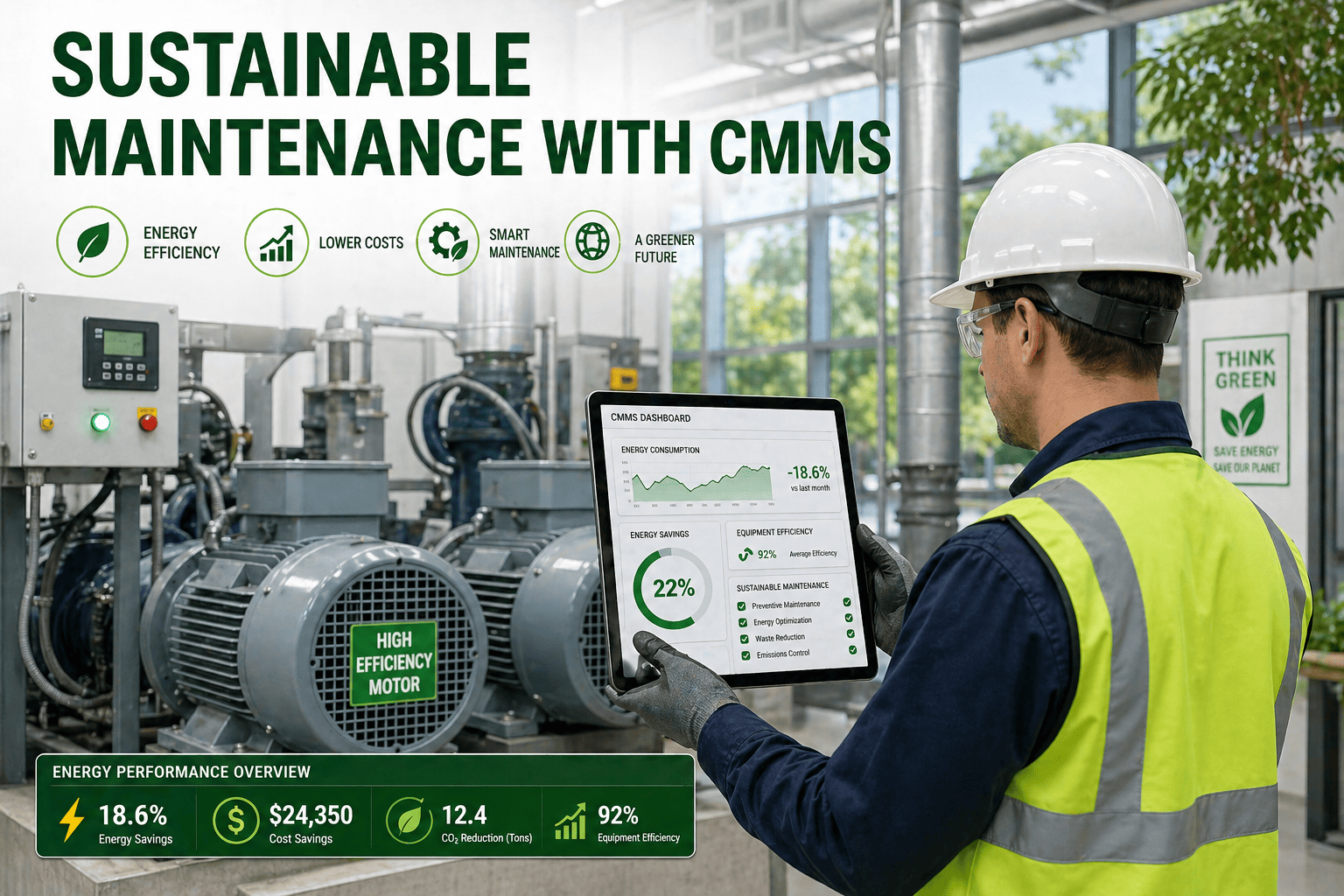
Buildings and industrial facilities account for nearly 40% of global energy consumption — and a significant portion of that energy is wasted by poorly maintained HVAC systems, misaligned motors, degraded insulation, and lighting systems running beyond their efficient lifespan. Sustainable maintenance is not a separate initiative from your core operations — it is the discipline of maintaining equipment so that it runs at designed efficiency, consumes only the energy it should, and lasts as long as it was engineered to last. A CMMS turns this discipline from aspiration into measurable, auditable practice. Book a demo to see how Oxmaint tracks energy performance alongside asset condition across your entire portfolio.
Sustainability & Energy Management · Carbon Reduction · CMMS
Sustainable Maintenance: Reduce Energy and Carbon Footprint with CMMS
HVAC optimization, motor efficiency tracking, lighting system maintenance, energy consumption monitoring, and carbon reduction strategies — a practical guide to using CMMS for sustainable facility management.
30%Potential reduction in facility energy costs with optimized maintenance
40%Of global energy consumed by buildings and industrial facilities
40-60%Reduction in unplanned downtime with preventive CMMS programs
25-35%Average maintenance cost reduction with data-driven strategies
Turn Maintenance Into Your Most Powerful Sustainability Strategy
Oxmaint tracks energy performance, automates efficiency-critical maintenance, and generates the sustainability data your ESG reports require — all from one platform.
Section 01
What Is Sustainable Maintenance and Why Does It Matter Now?
Sustainable maintenance is the practice of maintaining physical assets so they operate at peak energy efficiency throughout their lifecycle — minimizing energy waste, reducing carbon emissions, extending equipment life, and reducing material waste from premature replacements. It is not a new department or a separate green initiative. It is a lens applied to every preventive maintenance task, every work order, and every asset replacement decision your team already makes. The difference is data. Organizations using CMMS to track energy-related maintenance metrics report up to 30% reduction in facility energy costs and 40–50% improvement in equipment reliability. With ESG reporting requirements tightening across the USA, UK, EU, UAE, and Australia, the maintenance data you collect today becomes the compliance evidence you need tomorrow. Want to measure your facility's energy-maintenance baseline? Start a free trial and begin tracking energy performance across your asset portfolio.
Section 02
The Biggest Energy Drains — And How Maintenance Fixes Them
Three asset categories account for the majority of controllable energy waste in most facilities. Each one responds directly to structured, CMMS-scheduled maintenance.
40-60%
HVAC Systems
HVAC typically accounts for 40–60% of commercial building energy use. Dirty coils reduce efficiency by 21%. Clogged filters increase energy consumption by 15%. Refrigerant leaks force compressors to work harder, consuming 20% more energy. Every one of these failures is preventable with scheduled CMMS maintenance.
25-30%
Electric Motors
Motors consume 25–30% of industrial facility electricity. Misalignment increases energy consumption by 5–15%. Worn bearings add friction losses. Over-lubrication creates drag. CMMS-scheduled vibration analysis, alignment checks, and lubrication intervals keep motors at designed efficiency.
15-25%
Lighting Systems
Degraded lamps lose 20–30% output before visible failure, consuming the same power for less light. Dirty fixtures reduce light output by 10–15%. CMMS tracks lamp hours, schedules group replacements, and maintains fixture cleaning cycles for consistent efficiency.
10-20%
Compressed Air Systems
Compressed air leaks waste 20–30% of compressor output in a typical facility. A single 1/4-inch leak costs $2,500 per year in energy. CMMS schedules regular leak detection rounds and tracks repair completion rates to maintain system efficiency.
Section 03
Reactive Maintenance vs. Sustainable Maintenance
| Dimension | Reactive Maintenance | Sustainable Maintenance with Oxmaint |
|---|
| Energy Impact | Equipment degrades silently — consuming 30–60% more energy before failure | Condition monitoring catches efficiency drift early — corrective action before waste accumulates |
| Equipment Life | Run-to-failure shortens asset life by 30–50% | Lifecycle tracking extends useful life through condition-based interventions |
| Carbon Footprint | No measurement, no improvement, no reporting capability | Energy data per asset enables carbon impact tracking and ESG reporting |
| Waste Generation | Premature replacements, emergency parts, expedited shipping | Planned replacements, optimized inventory, reduced material waste |
| Cost Profile | Emergency repairs cost 4.8x more than planned maintenance | 25–35% lower total maintenance costs with preventive strategies |
| Compliance Readiness | No data for ISO 50001, LEED, or ENERGY STAR reporting | Automated documentation for environmental audits and certifications |
Section 04
How Oxmaint Powers Sustainable Maintenance
Energy Tracking
Asset-Level Energy Performance Data
Track energy consumption per asset over time. Identify equipment drifting from baseline efficiency and trigger corrective maintenance before energy waste accumulates across your portfolio.
Preventive PM
Efficiency-Critical Maintenance Scheduling
Automate filter changes, coil cleaning, motor alignment, bearing lubrication, and leak detection rounds. Every task linked to its energy impact — prioritized by efficiency ROI, not just calendar dates.
IoT Integration
Real-Time Sensor Data
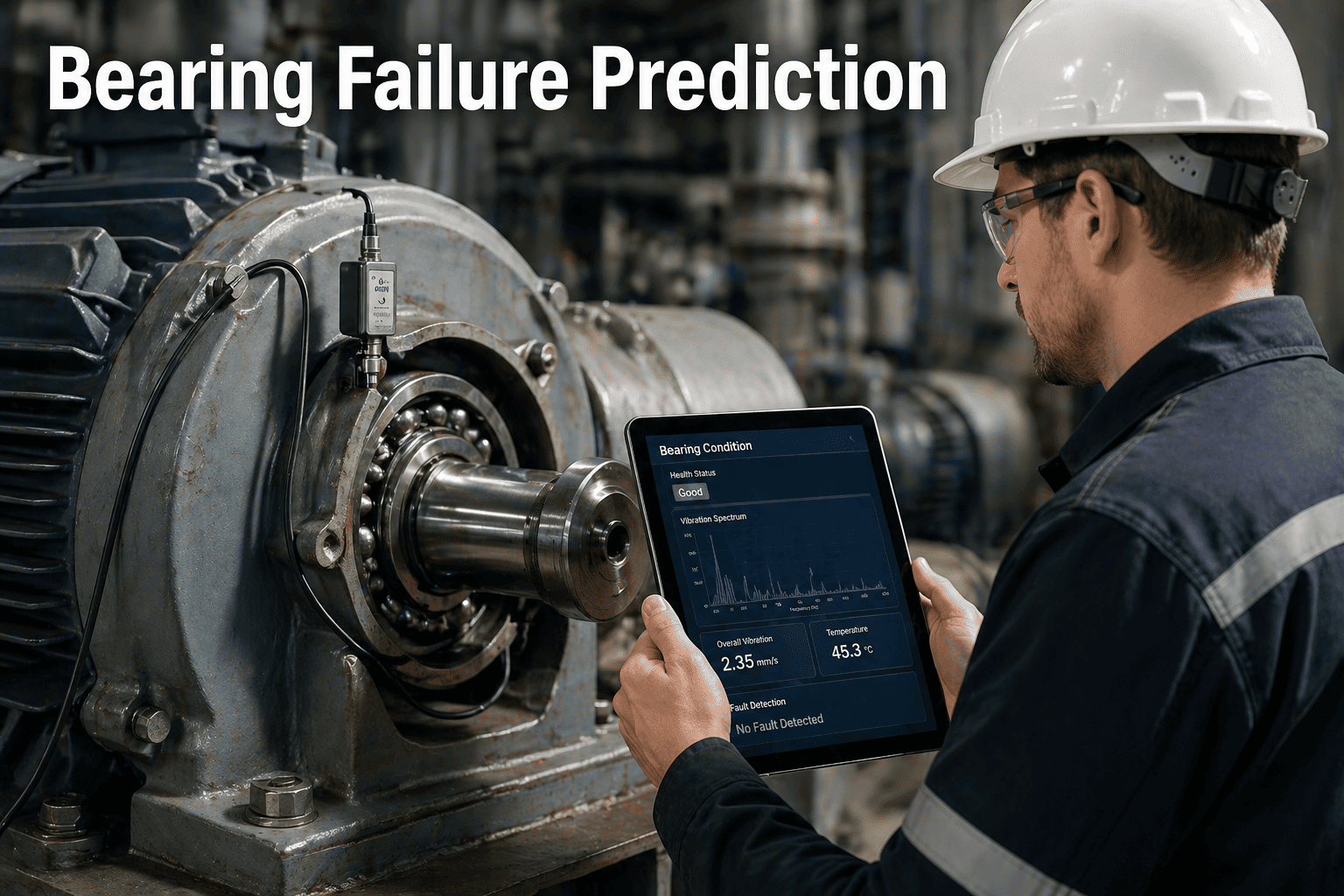
Connect to IoT sensors and SCADA systems for real-time vibration, temperature, and pressure monitoring. Trigger condition-based maintenance only when efficiency thresholds are crossed — no wasted interventions.
Lifecycle Planning
Replacement vs. Repair Analysis
Condition scoring and lifecycle cost data help you determine exactly when repairing aging equipment costs more in energy waste than replacing it with efficient alternatives. Data-driven, not gut-feel.
Reporting
ESG and Sustainability Documentation
Generate energy consumption trends, carbon impact reports, and maintenance efficiency data for ISO 50001, LEED, ENERGY STAR, and corporate ESG reporting requirements.
Multi-Site
Portfolio-Level Energy Benchmarking
Compare energy performance across every property in your portfolio. Identify which sites consume more energy per square foot and target maintenance interventions where the efficiency gains are greatest.
Section 05
Measurable Sustainability Impact
30%
Energy Cost Reduction
Facilities with structured, CMMS-driven maintenance programs achieve up to 30% lower energy costs through optimized equipment performance.
40-50%
Better Equipment Reliability
Preventive maintenance extends equipment life and maintains designed efficiency — reducing both energy waste and replacement frequency.
25-35%
Lower Maintenance Costs
Data-driven maintenance eliminates unnecessary time-based interventions and prevents costly emergency repairs that consume resources and generate waste.
40-60%
Less Unplanned Downtime
Reduced downtime means fewer emergency startups — each cold start consumes significantly more energy than maintained, continuous operation.
Sustainability in maintenance is not about spending more — it is about spending smarter. Every properly maintained HVAC coil, every aligned motor, every sealed compressed air line directly reduces your facility's energy consumption and carbon output. The data to prove it already flows through your maintenance operations — you just need a system that captures and reports it. Ready to quantify your sustainability impact? Book a demo to see portfolio-level energy tracking in Oxmaint, or start a free trial to begin measuring your maintenance-driven energy performance today.
FAQs
Frequently Asked Questions
How much energy can proper HVAC maintenance actually save?
Research consistently shows that maintaining clean coils, replacing filters on schedule, verifying refrigerant charges, and calibrating controls can reduce HVAC energy consumption by 15–30%. Given that HVAC represents 40–60% of commercial building energy use, even a 15% improvement translates to 6–9% reduction in total building energy costs.
Start a free trial to schedule HVAC efficiency maintenance automatically.
Can CMMS data support ISO 50001 energy management certification?
Yes. ISO 50001 requires documented energy performance indicators, energy baselines, and evidence of systematic improvement. Oxmaint captures asset-level energy data, tracks maintenance actions that affect energy performance, and generates the trend reports and documentation that ISO 50001 auditors require.
Book a demo to discuss ISO 50001 support.
What is the ROI timeline for sustainable maintenance programs?
Most facilities see measurable energy cost reductions within 3–6 months of implementing structured CMMS-driven maintenance — particularly from HVAC filter and coil maintenance, compressed air leak repairs, and motor alignment corrections. The full ROI, including extended equipment life and reduced replacement costs, typically materializes within 12–18 months.
How does Oxmaint help with ESG reporting for sustainability?
Oxmaint generates portfolio-level reports on energy consumption trends, maintenance-driven efficiency improvements, equipment lifecycle data, and waste reduction metrics. These reports provide the quantified evidence that ESG frameworks require — not estimated projections, but actual measured improvements tied to specific maintenance actions.
Start a free trial to explore sustainability reporting.
Every Unmaintained Asset Is Wasting Energy Right Now. Fix the Maintenance. Fix the Footprint.
Oxmaint tracks energy performance per asset, automates efficiency-critical maintenance, integrates with IoT sensors for real-time monitoring, and generates the sustainability data your ESG reports demand — turning your maintenance program into your most powerful carbon reduction strategy.