Every year in the United States, failure to control hazardous energy during maintenance causes an estimated 50,000 injuries and 120 fatalities. The root cause is almost never a missing lock or tag — it is a missing system. Technicians who rely on memory, paper binders, or verbal instructions to execute lockout tagout procedures operate in an environment where a single skipped step can be fatal. A CMMS that enforces LOTO as a mandatory digital workflow — not a suggestion — transforms safety from a compliance exercise into an embedded operational discipline. Book a demo to see how Oxmaint enforces zero-energy verification before any maintenance work begins.
Safety & Compliance · Lockout Tagout · Zero Energy State
Lockout Tagout (LOTO) in CMMS: Ensure Zero Energy Safety Compliance
Automated LOTO workflows, machine-specific energy isolation procedures, digital verification checklists, and audit-ready safety records — a complete guide to enforcing zero-energy compliance through CMMS.
50,000Injuries prevented annually by proper LOTO compliance (OSHA)
120Fatalities prevented each year through energy control programs
10%Of all serious workplace injuries caused by uncontrolled energy
24 DaysAverage lost workdays per hazardous energy injury
Enforce Zero-Energy Verification on Every Work Order — Automatically
Oxmaint embeds machine-specific LOTO procedures directly into work orders, requires digital verification before work begins, and stores every step as audit-ready evidence.
Section 01
What Is Lockout Tagout and Why Is It Non-Negotiable?
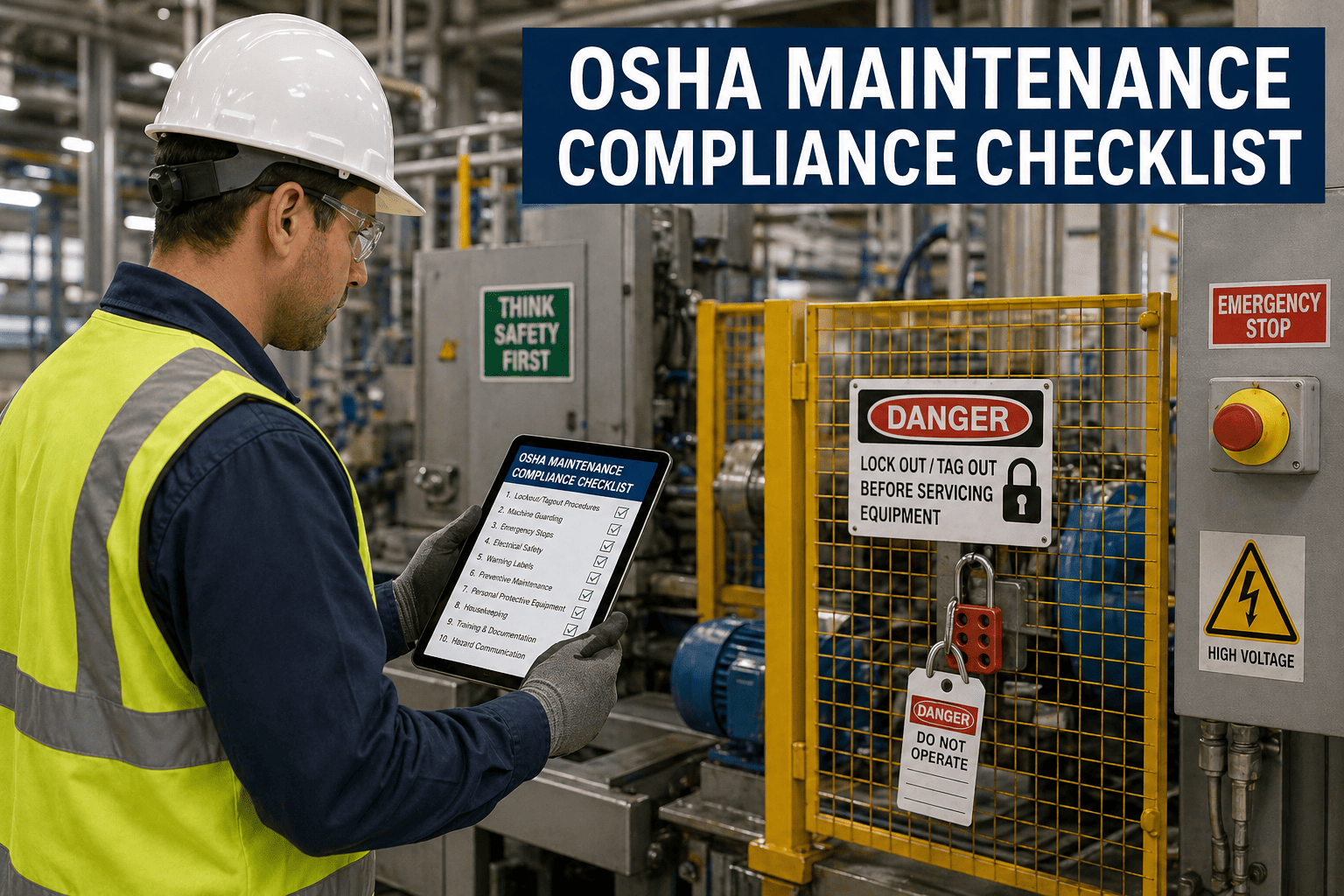
Lockout Tagout (LOTO) is a safety procedure required under OSHA standard 29 CFR 1910.147 — the Control of Hazardous Energy. It ensures that machines and equipment are completely de-energized, isolated from all energy sources, and verified as safe before any maintenance or servicing work begins. The procedure applies to electrical, mechanical, hydraulic, pneumatic, chemical, thermal, and gravitational energy sources. LOTO ranked 5th on OSHA's Top 10 Most Cited Standards in FY 2024 with 2,443 violations — and the most common citation is the failure to develop documented, machine-specific energy control procedures. That single gap accounts for more LOTO violations than any other deficiency. Organizations that digitize their LOTO procedures through CMMS report 40–60% fewer safety incidents because the system enforces procedure compliance rather than relying on individual memory. Want to eliminate the documentation gap that drives most LOTO violations? Start a free trial and digitize your energy control procedures today.
Section 02
The 6-Step LOTO Process — Mapped to CMMS Workflow
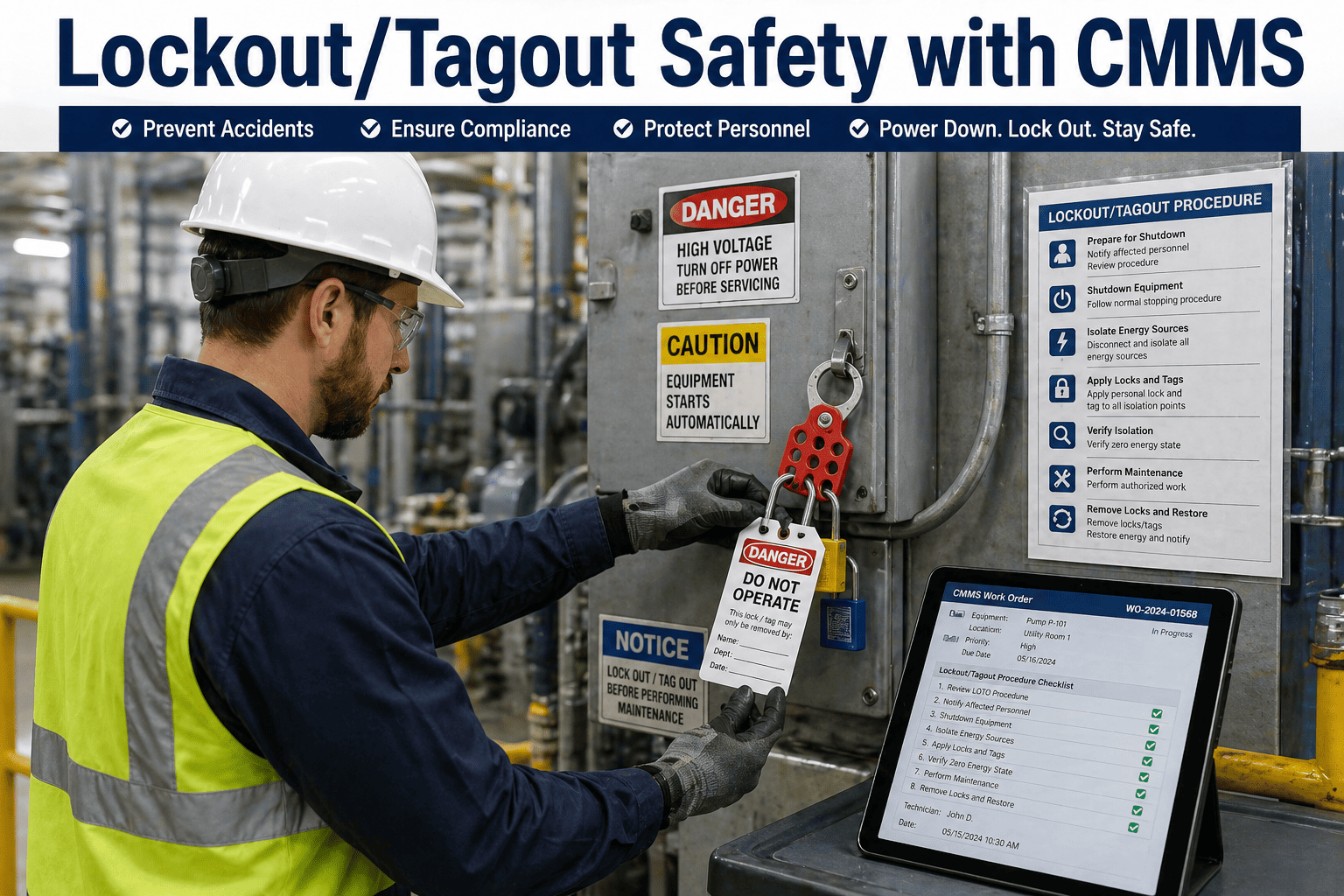
OSHA defines a structured sequence for achieving a zero-energy state. Each step below maps directly to a CMMS workflow that Oxmaint automates and documents.
Step 1
Preparation
Identify all energy sources for the specific machine. Oxmaint stores machine-specific energy source maps linked to each asset record — technicians see every isolation point before starting work.
Step 2
Notification
Notify all affected employees that equipment will be shut down. Oxmaint triggers automated notifications to operators, supervisors, and affected personnel when a LOTO work order is initiated.
Step 3
Shutdown
Follow normal stopping procedure for the equipment. The CMMS work order displays the documented shutdown sequence specific to that machine — no guessing, no improvisation.
Step 4
Isolation
Physically isolate all energy sources using lockout devices. Oxmaint's digital checklist requires the technician to confirm each isolation point individually with a digital signature.
Step 5
Stored Energy Dissipation
Release or restrain all residual energy — capacitors, springs, hydraulic pressure, elevated components. The checklist includes machine-specific residual energy points with dissipation instructions.
Step 6
Verification (Tryout)
Attempt to start the equipment to verify zero-energy state. This critical step must be digitally confirmed in Oxmaint before the work order status changes to "In Progress" — the system blocks work without verification.
Section 03
Why Paper-Based LOTO Fails — And What Goes Wrong
01
Outdated Procedures
Paper binders become outdated when equipment is modified. 62% of LOTO citations involve procedures that do not reflect current machine configurations — a gap that digital, version-controlled procedures eliminate.
02
Skipped Verification Steps
The tryout step — physically attempting to restart equipment — is the most frequently skipped step in paper-based LOTO programs. Without enforcement, technicians under time pressure skip the step that confirms zero energy.
03
No Group Lockout Protocol
When multiple technicians service one machine, paper systems cannot enforce individual lock placement and removal. CMMS tracks each person's lockout status independently, preventing premature re-energization.
04
Missing Annual Inspections
OSHA requires annual periodic inspection of each LOTO procedure. Paper-based tracking consistently misses these reviews — Oxmaint schedules them automatically and escalates when overdue.
Section 04
How Oxmaint Enforces LOTO Compliance
Procedures
Machine-Specific Digital Procedures
Every asset has its own energy control procedure stored digitally — with energy source maps, isolation points, and residual energy instructions. Always current, always accessible on mobile.
Enforcement
Mandatory Pre-Work Verification
Work orders requiring LOTO cannot be started until every isolation point is confirmed and the tryout step is digitally signed. The system blocks work without complete verification.
Group LOTO
Multi-Person Lockout Tracking
When multiple technicians work on one machine, each person's lock is tracked individually. Equipment cannot be re-energized until every lock is digitally removed by its owner.
Audit Trail
Timestamped Safety Records
Every LOTO application, verification, and removal is permanently recorded with technician ID, timestamp, and digital signature. Audit evidence is always complete and instantly retrievable.
Section 05
Paper LOTO vs. CMMS-Enforced LOTO
| LOTO Requirement | Paper-Based Approach | Oxmaint CMMS Approach |
|---|
| Energy Control Procedures | Binders — outdated when equipment changes | Digital, version-controlled, linked to each asset |
| Tryout Verification | Often skipped under time pressure | Mandatory digital confirmation — work blocked without it |
| Group Lockout | Manual tracking — prone to errors | Individual digital locks per technician, tracked in real time |
| Annual Inspections | Spreadsheet reminders — frequently missed | Auto-scheduled with overdue escalation alerts |
| Training Records | Filed separately — hard to cross-reference | Linked to employee profiles with certification expiry alerts |
| Audit Evidence | Days to compile, gaps in records | Instant retrieval — complete, timestamped, signed |
Section 06
Safety and Compliance Impact
40-60%
Fewer Safety Incidents
Facilities using CMMS-integrated LOTO workflows report significant reductions in energy-related injuries compared to paper-based programs.
100%
Procedure Compliance
Digital enforcement means every LOTO step is completed and documented — no skipped steps, no missing records, no guesswork.
$165K
Max Penalty Avoided
Each willful LOTO violation carries penalties up to $165,514. Documented digital compliance provides the evidence to avoid citations entirely.
24 Days
Lost Time Prevented
Each hazardous energy injury averages 24 lost workdays. Proper LOTO enforcement prevents the injuries that drive lost-time incidents.
These outcomes are not aspirational — they represent documented improvements from facilities that replaced paper-based LOTO programs with CMMS-enforced digital workflows. The investment in digital safety enforcement pays for itself with a single prevented injury. Protect your team and prove your compliance — book a demo to see LOTO enforcement in Oxmaint, or start a free trial to digitize your energy control procedures today.
FAQs
Frequently Asked Questions
What is the difference between lockout and tagout?
Lockout uses a physical locking device to hold an energy-isolating device in the safe position — it physically prevents re-energization. Tagout uses a prominent warning tag attached to the device to indicate that it must not be operated. OSHA requires lockout whenever the energy-isolating device is capable of being locked out. Tags alone are only permitted when lockout is not possible, and additional protective measures must be taken.
Start a free trial to see how Oxmaint tracks both lockout and tagout status digitally.
How does CMMS enforce the tryout step that technicians often skip?
Oxmaint includes the tryout verification as a mandatory checklist item in the LOTO workflow. The work order cannot transition from "LOTO Applied" to "In Progress" until the technician digitally confirms they attempted to restart the equipment and verified zero energy state. This architectural enforcement eliminates the ability to skip the most critical safety step.
Book a demo to see mandatory tryout enforcement in action.
What does OSHA require for the annual periodic inspection?
OSHA 1910.147(c)(6) requires at least one annual inspection of each energy control procedure by an authorized employee other than the one using the procedure. The inspection must verify that the procedure and the requirements of the standard are being followed. Oxmaint schedules these automatically, assigns them to qualified inspectors, and stores the completed inspection with digital signatures.
Can Oxmaint handle group lockout for complex equipment with multiple technicians?
Yes. Oxmaint tracks each technician's individual lockout status on shared equipment. The system maintains a digital register of who has applied locks, prevents re-energization until all individual locks are removed, and provides real-time visibility to supervisors overseeing complex multi-person maintenance operations.
Start a free trial to explore group lockout management.
A Skipped LOTO Step Cannot Be Undone After the Injury.
Oxmaint enforces every isolation point, requires digital tryout verification, tracks group lockout individually, and stores complete safety records with timestamps and signatures — because safety compliance is not optional.