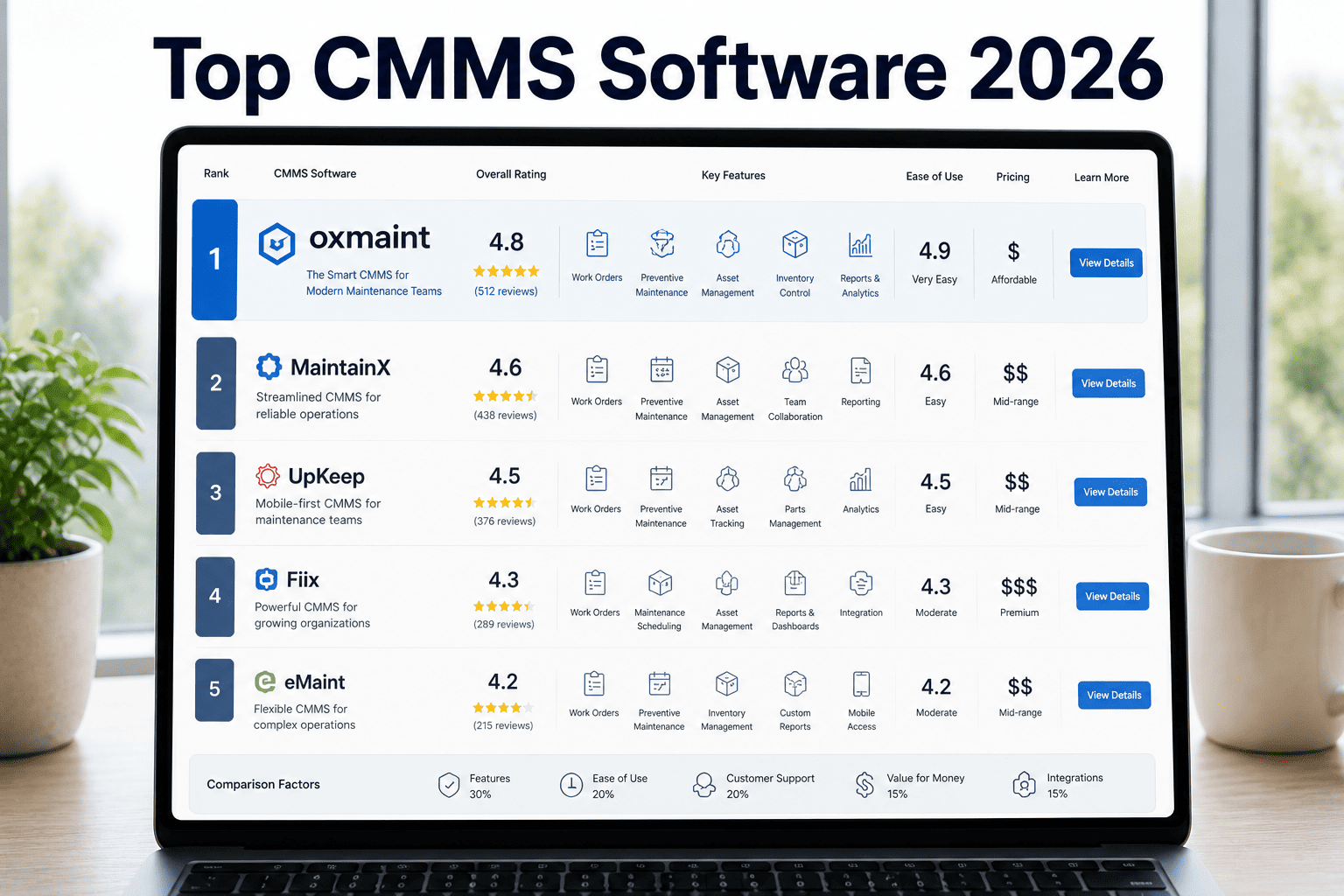
The CMMS market in 2026 is crowded, but the quality gap between platforms is wider than most buyers realize. Some tools are work order ticketing systems dressed up as asset management platforms. Others were built for enterprise manufacturing and carry implementation costs that price out mid-market operators. The right CMMS for a multi-site property portfolio is a different product than the right CMMS for a single-plant manufacturer. Organizations that deploy the wrong CMMS see 60% adoption rates and abandon the platform within 18 months — the same companies that picked the right tool report adoption above 90% and maintenance cost reductions of 20–30% within their first year. Start a free trial on Oxmaint — no credit card, no onboarding call, assets live within 24 hours.
CMMS Comparison · 2026 Rankings · Software Evaluation
See Why Operations Teams Choose Oxmaint Over Legacy CMMS.
Multi-site asset management, condition-based lifecycle tracking, mobile-first work orders, and investor-grade CapEx reporting — without the 6-month implementation project.
$1.7B
Global CMMS market size in 2026, growing at 10.2% CAGR
MarketsandMarkets
60%
CMMS implementations that fail due to poor fit or poor adoption
Gartner
25%
Average maintenance cost reduction with the right CMMS in year one
Aberdeen Group
18mo
Typical time before wrong-fit CMMS implementations are abandoned
Verdantix
What Is a CMMS?
What a Modern CMMS Does — and What It Should Do by 2026
A Computerized Maintenance Management System (CMMS) is the central platform for managing assets, work orders, preventive maintenance schedules, spare parts, and maintenance costs across a facility or portfolio. Legacy CMMS platforms were built for single-site manufacturers in the 1990s — today's leading systems are cloud-native, mobile-first, and designed for multi-site operations with portfolio-level reporting needs.
In 2026, buyers evaluating CMMS platforms should expect: mobile work order management for field technicians, condition-based asset lifecycle tracking, PM scheduling by runtime or calendar, IoT and SCADA integration readiness, multi-site hierarchy support, and CapEx forecasting tied to asset condition data. Platforms that lack these capabilities are maintenance ticketing systems — not asset management platforms. The distinction determines whether you're solving operational problems or building a strategic maintenance program. Book a demo to see how Oxmaint's full feature set compares to your current platform.
Evaluation Framework
8 Criteria That Define CMMS Quality in 2026
01
Asset Hierarchy Depth
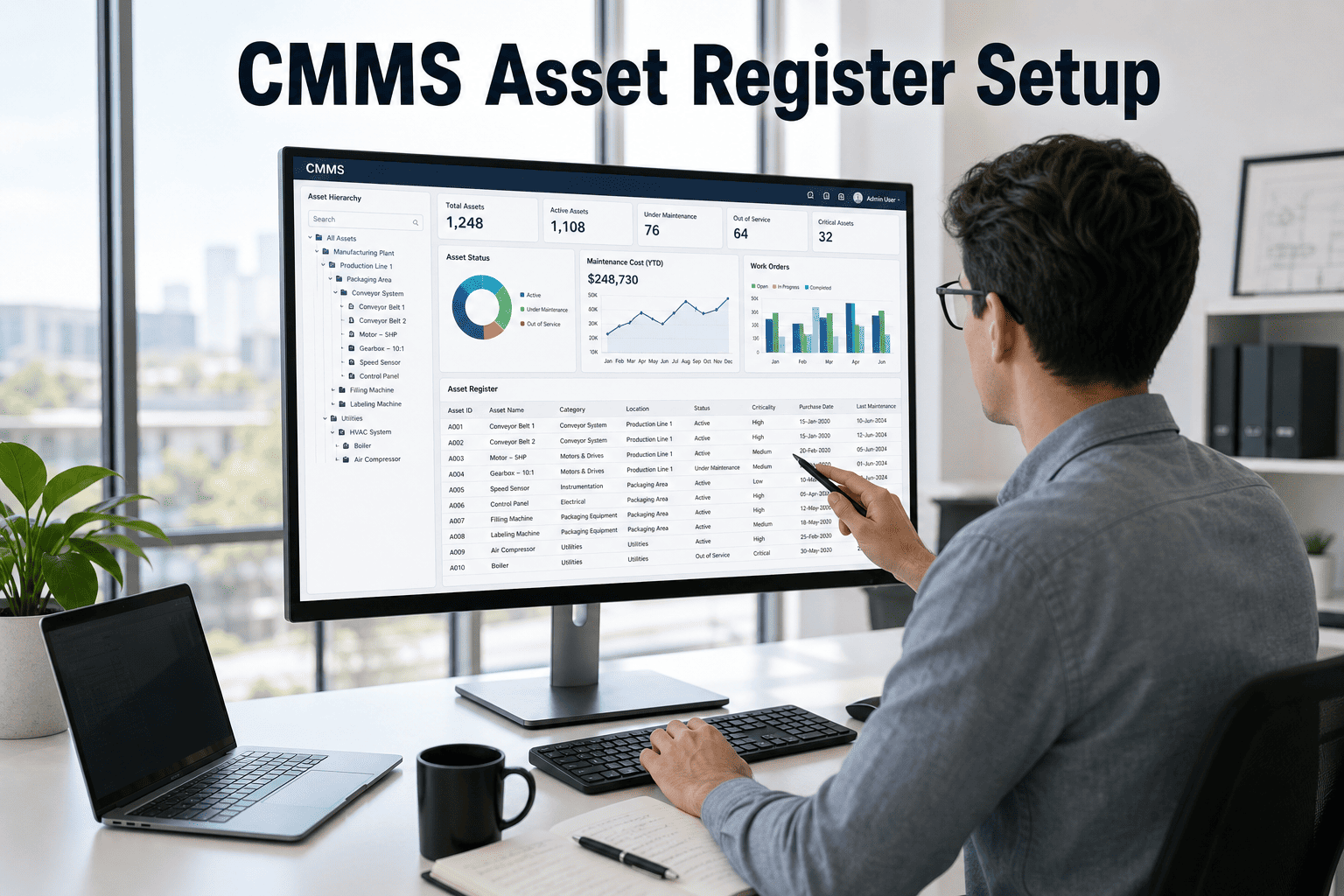
Portfolio → Property → System → Asset → Component. Platforms without multi-level hierarchy force workarounds that break reporting at scale. Required for multi-site operators.
02
Mobile-First Field Interface
Technicians in the field need one-tap work order updates, photo capture, and offline capability. Platforms with desktop-first UIs see 40–60% lower technician adoption rates.
03
PM Scheduling Flexibility
Calendar, runtime, cycle-count, and condition-based triggers. A platform supporting only calendar-based PM cannot serve manufacturing or high-utilization facility environments.
04
CapEx Forecasting
Rolling 5–10yr models
Condition-linked asset replacement forecasting for budget planning. Critical for property managers, VPs of Operations, and portfolio owners presenting to boards or investors.
05
Onboarding Speed
Best-in-class platforms deploy in days, not months. Enterprise CMMS implementations averaging 6–18 months cost more in internal labor than the software itself and kill adoption before it starts.
06
Reporting and KPI Dashboards
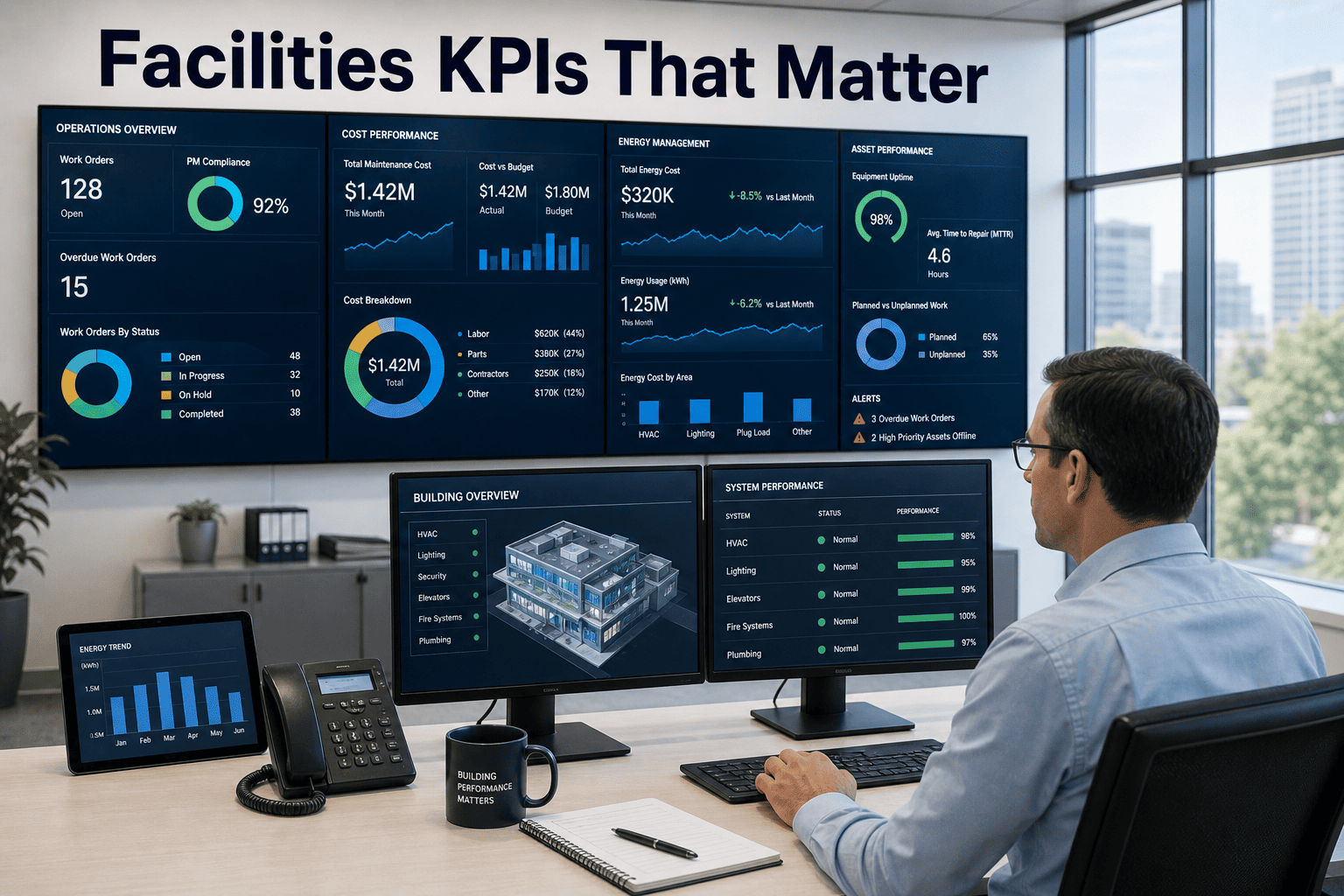
Live PM compliance, planned-vs-reactive ratio, MTTR, and cost per asset — pre-built and accessible without custom configuration. Custom report builders are not a substitute for built-in operational dashboards.
07
IoT and Integration Readiness
SCADA, BMS, and IoT sensor integration via API. Platforms with closed architectures create data silos. Evaluate API documentation and existing integrations before committing.
08
Compliance and Audit Trails
GMP-compliant inspection records, timestamped work order history, and technician sign-off chains. Required for healthcare, food processing, pharmaceutical, and regulated industrial operators.
Buyer Pain Points
Why Buyers Get CMMS Selection Wrong
⚠
Evaluating Features, Not Fit
Feature lists look similar across platforms. The critical question is fit for your asset type, team size, and reporting requirements — not which platform has the longest feature checklist.
⚠
Underestimating Onboarding Cost
Enterprise CMMS vendors charge $50,000–$200,000 in implementation fees before any data is entered. Mid-market buyers often discover this after the contract is signed.
⚠
Ignoring Mobile Adoption Risk
A CMMS that field technicians won't use is worthless regardless of its management-layer features. Evaluate mobile UX with your actual technicians before purchasing.
⚠
Single-Site Platforms for Multi-Site Portfolios
Running multiple properties or plants in a single-site CMMS creates duplicate records, inconsistent asset coding, and no portfolio-level reporting. Scaling is impossible without a re-implementation.
The safest evaluation approach: run a 30-day free trial with your real asset data, your real technicians, and your real PM schedule before committing to any platform. Start your Oxmaint free trial now and evaluate with live data — no sales call required.
How Oxmaint Stands Out
What Oxmaint Delivers That Most CMMS Platforms Don't
Multi-Site Portfolio Architecture
Portfolio → Property → System → Asset → Component hierarchy built into the core data model. VPs and directors get cross-site KPI comparisons without any custom configuration or report writing.
Condition-Based Asset Lifecycle
Asset condition scoring links directly to replacement cost forecasting. Know which assets are approaching end-of-life 2–3 years ahead — and show the board a data-backed CapEx plan, not a guess.
No Heavy Onboarding
Asset registry, PM schedules, and work order queues go live within 24–48 hours. No 6-month implementation. No $50,000 consulting engagement. No dedicated IT project required to get started.
Rolling CapEx Models
5–10 year capital expenditure forecasting tied to asset condition, age, and replacement cost. Investor-grade output for property portfolios, infrastructure operators, and capital-intensive manufacturers.
IoT and SCADA Integration
Open API architecture and pre-built integrations with BMS, SCADA, and IoT sensor platforms. Runtime data flows directly into PM trigger calculations without manual meter reading entry.
GMP-Compliant Inspection Records
Timestamped, technician-signed inspection records with audit trail for regulated industries. Supports ISO 9001, GMP, OSHA, and customer quality audit requirements out of the box.
Oxmaint was built for operators who manage multiple assets across multiple locations and need to report upward — to boards, investors, and regulators — not just manage work orders. Book a demo and walk through how Oxmaint handles your specific asset structure and reporting requirements.
Platform Comparison
CMMS Platform Comparison: Key Criteria for 2026 Buyers
| Evaluation Criteria |
Legacy Enterprise CMMS |
Oxmaint |
| Onboarding Time |
3–18 months with paid implementation partner required |
24–48 hours to live assets and PM schedules, self-serve |
| Implementation Cost |
$50,000–$200,000 before software subscription begins |
No implementation fee — free trial, then transparent subscription pricing |
| Multi-Site Support |
Available but requires custom configuration and additional licenses |
Portfolio hierarchy built into core — cross-site reporting out of the box |
| Mobile Interface |
Desktop-first with mobile app as secondary layer — lower technician adoption |
Mobile-first design — technicians adopt immediately with minimal training |
| CapEx Forecasting |
Requires custom report configuration or third-party tool |
Rolling 5–10yr CapEx models tied to asset condition — built in |
| Condition Scoring |
Not standard — requires customization or third-party integration |
Native condition scoring per asset with trend tracking and lifecycle linkage |
ROI and Results
What the Right CMMS Delivers in Year One
25%
Average maintenance cost reduction
Organizations with right-fit CMMS deployed with high technician adoption
90%+
Technician adoption rate
Mobile-first CMMS vs. 40–60% for desktop-primary enterprise platforms
48hr
Time to first live PM schedule
Oxmaint vs. 3–18 months for enterprise CMMS implementation projects
3×
ROI within 12 months
Measured against total CMMS cost including subscription, setup, and training
FAQ
CMMS Software Selection — Frequently Asked Questions
What is the best CMMS software for mid-market multi-site operators in 2026?
For multi-site operators managing 2–50 properties or facilities, the critical requirement is a portfolio-level hierarchy built into the core data model — not a workaround. Oxmaint is designed specifically for this use case, with Portfolio → Property → System → Asset → Component hierarchy that enables cross-site KPI comparison, centralized PM scheduling, and investor-grade CapEx reporting without custom configuration. Enterprise platforms like IBM Maximo or SAP PM support multi-site operation but require expensive implementation projects and are cost-prohibitive for mid-market organizations.
Start a free trial on Oxmaint to evaluate multi-site functionality with your real asset structure.
How much should a CMMS cost for a 200-asset operation?
Pricing varies significantly by platform tier. Cloud-based mid-market CMMS platforms typically range from $200–$800/month for 200 assets, depending on user count and feature set. Enterprise platforms add $50,000–$200,000 in implementation costs before any subscription fees. The total cost of ownership comparison must include implementation, training, IT resources, and the opportunity cost of a 6–18 month deployment before the tool is operational. Oxmaint's transparent subscription model has no implementation fee and no minimum contract — the free trial covers full functionality so you can validate ROI before spending anything.
What is the difference between a CMMS and an EAM (Enterprise Asset Management) platform?
A CMMS focuses on maintenance operations: work orders, PM scheduling, asset records, and maintenance cost tracking. An EAM extends into the full asset lifecycle including procurement, depreciation, CapEx planning, and disposal. The distinction has blurred significantly in 2026 — leading CMMS platforms now include condition-based lifecycle tracking and CapEx forecasting that were previously EAM-only capabilities. Oxmaint includes rolling 5–10 year CapEx models tied to asset condition scoring, covering both operational maintenance and capital planning in a single platform without the enterprise EAM price tag.
How do I evaluate a CMMS before committing to a subscription?
Run a structured 30-day trial with three specific tests: load your real asset register and check that the hierarchy matches your operational structure; have two or three actual technicians use the mobile interface for a week and collect feedback; and run your most common monthly report and verify the output is accurate and fast enough to be operationally useful. The platforms that pass all three tests with your specific data and team are the platforms worth contracting. Any vendor that won't support a real-data trial before contract is signaling that their onboarding process creates enough friction to hide product weaknesses.
Book a demo to walk through a structured Oxmaint evaluation with your asset data.
CMMS Software · 2026 · Asset Management · Multi-Site Operations
The Best CMMS Is the One Your Team Actually Uses. Start Evaluating Today.
Oxmaint deploys in 48 hours, requires no implementation partner, and delivers multi-site asset management, condition-based lifecycle tracking, and investor-grade CapEx reporting — built for operations teams that need results, not a software project.