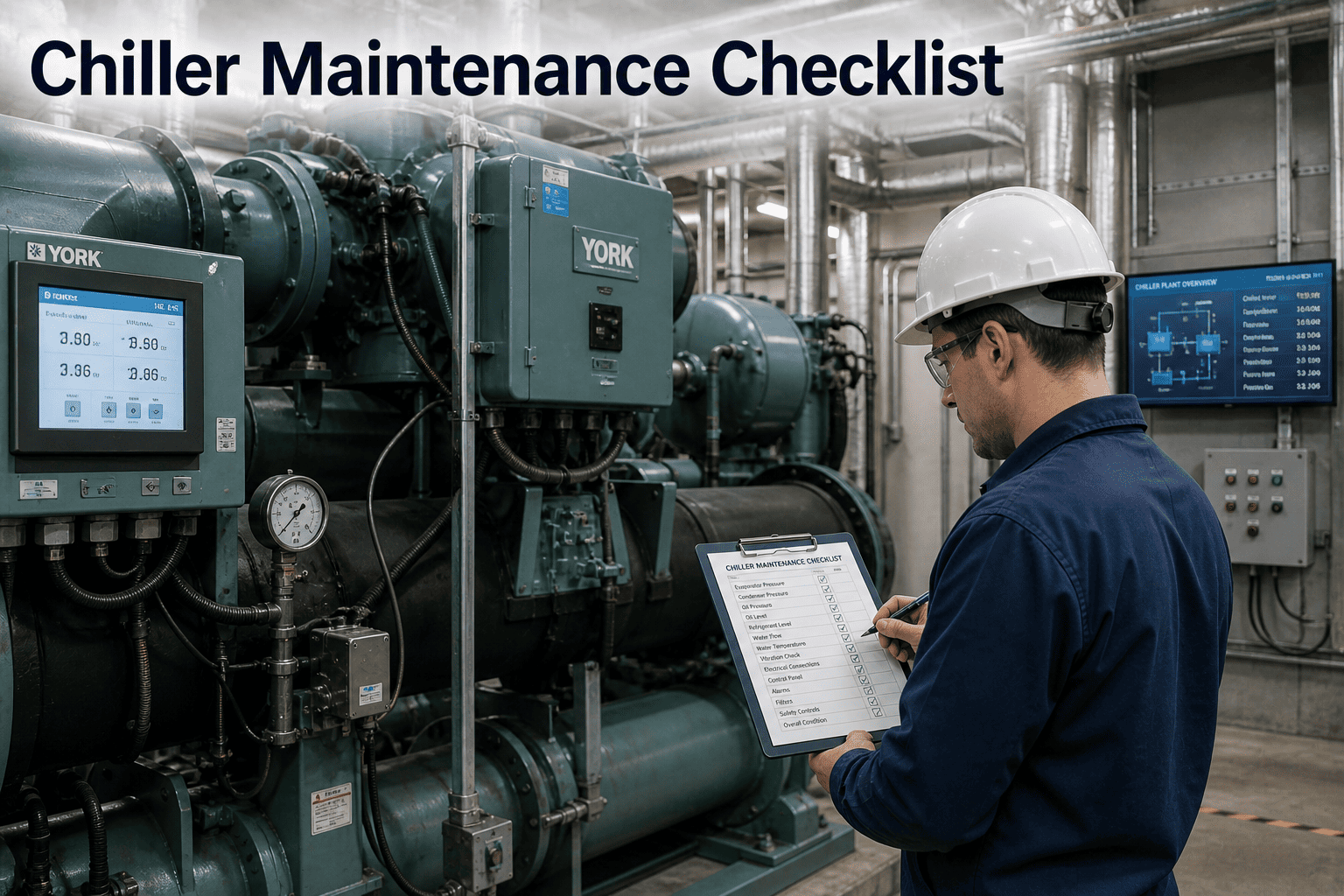
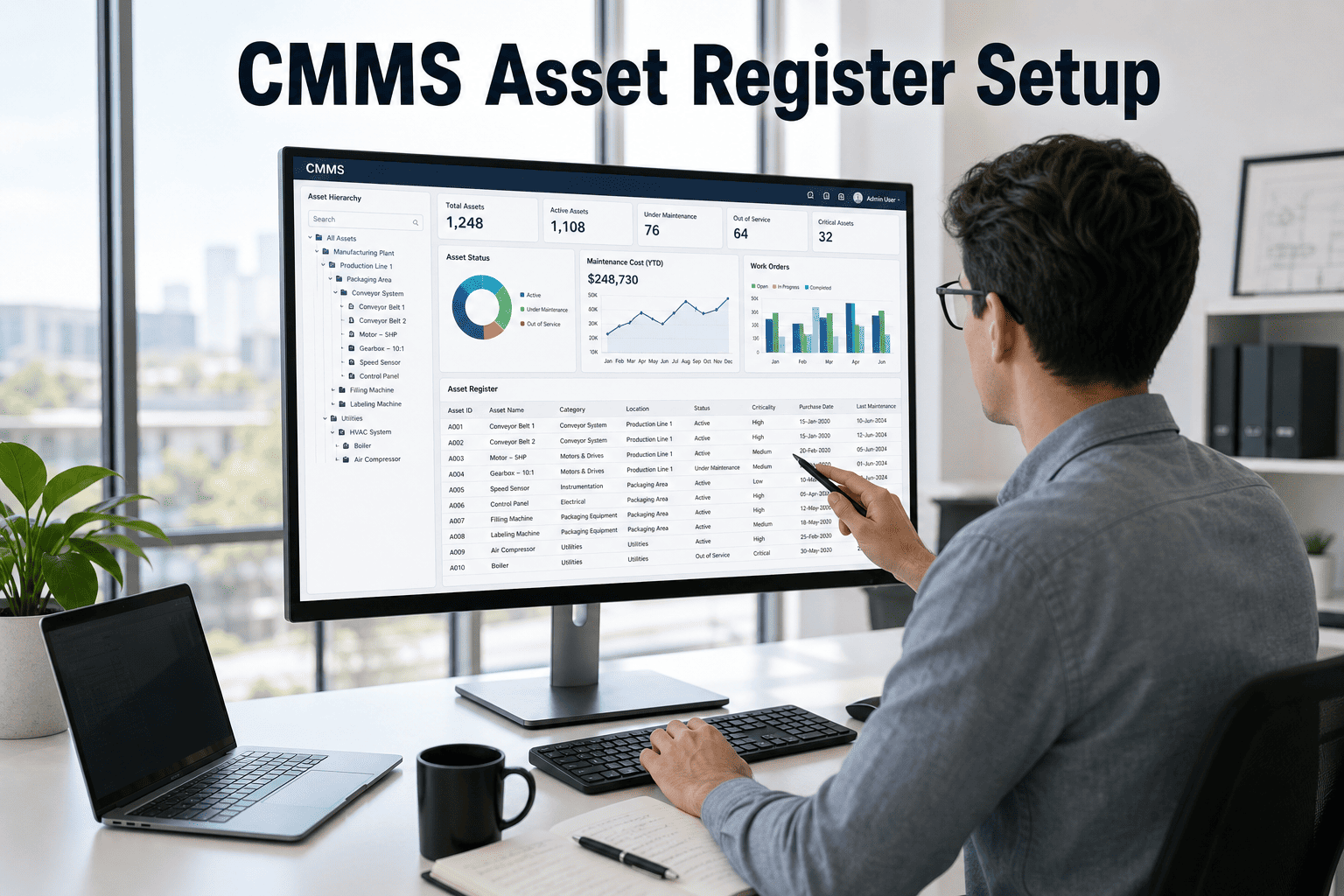
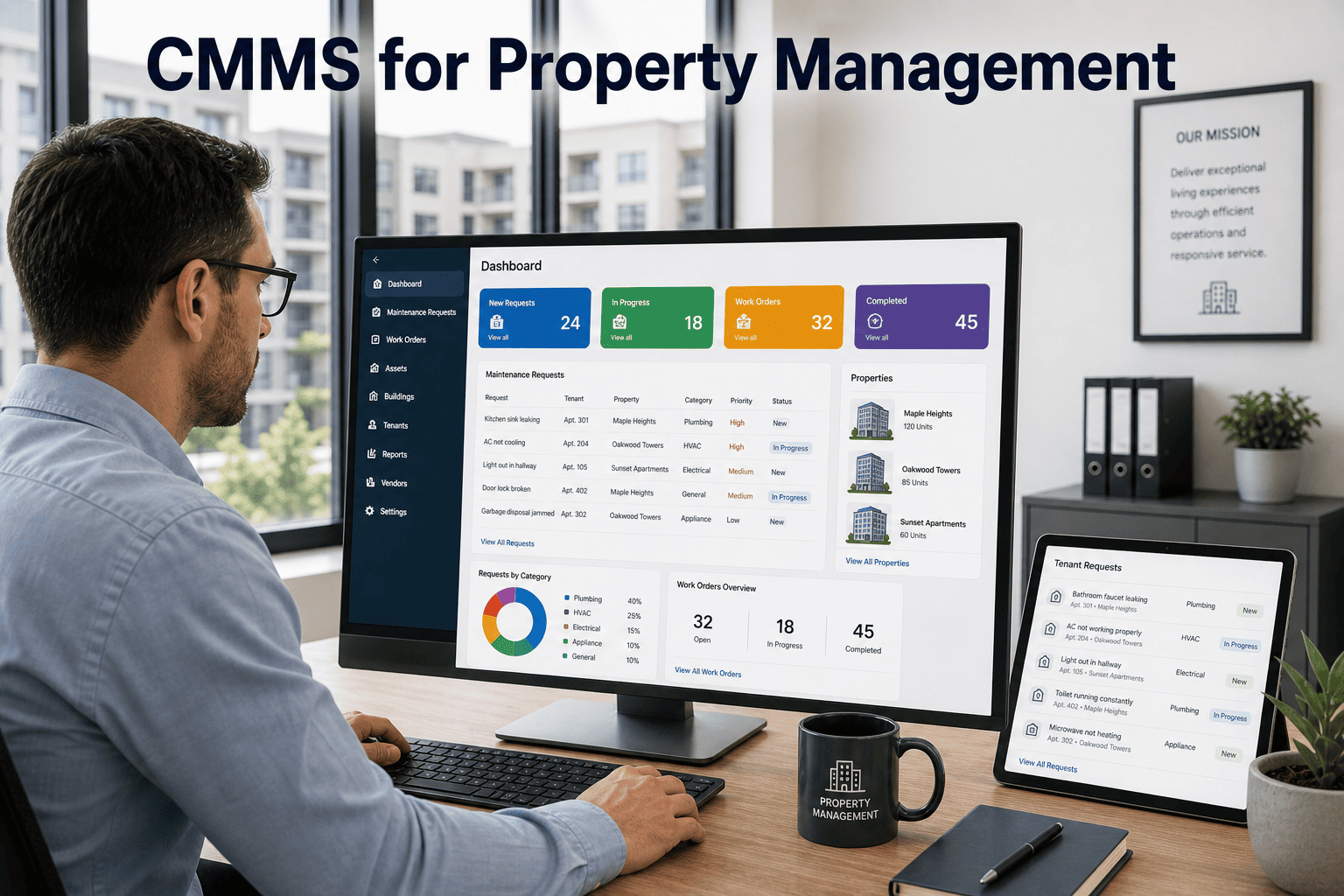
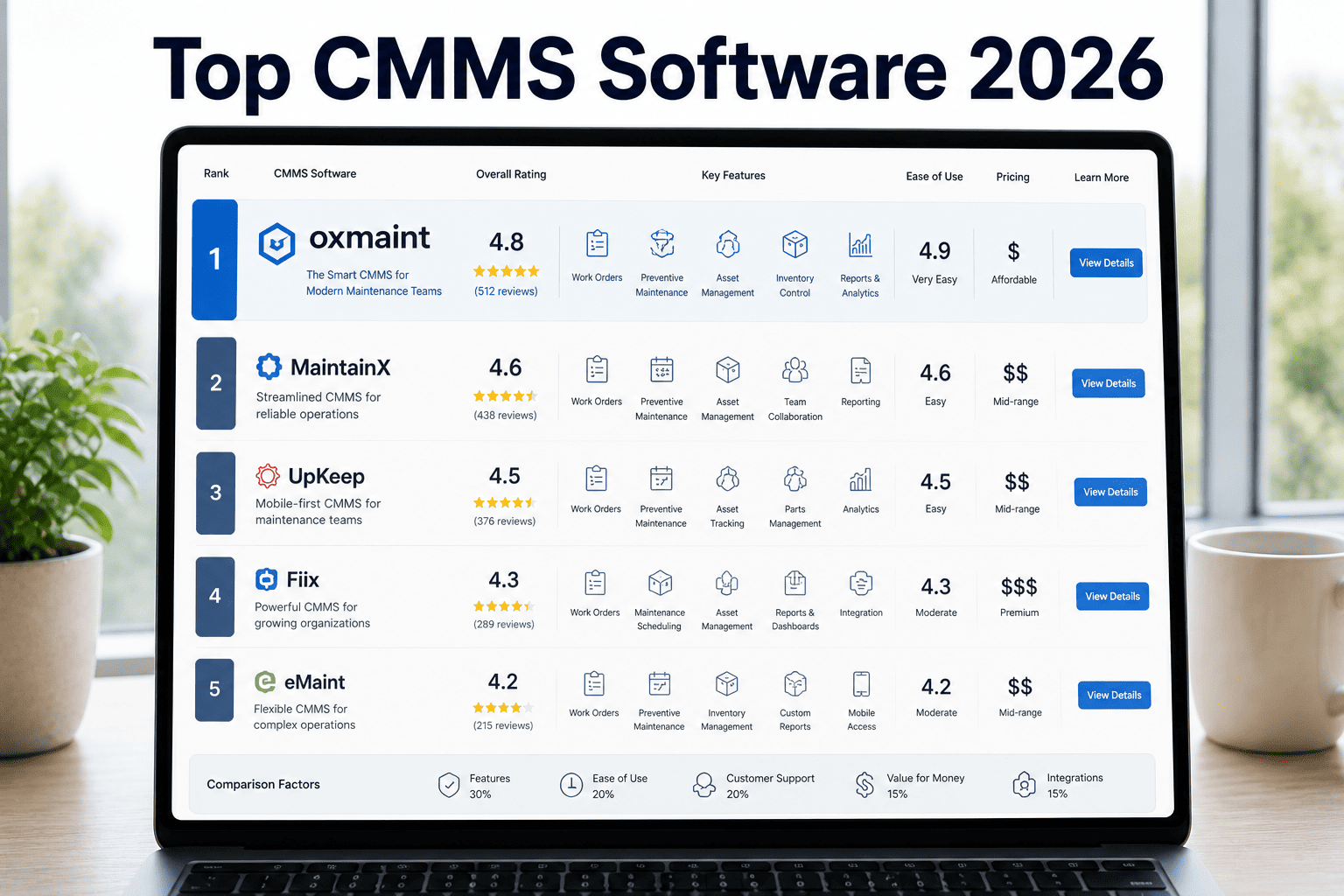
Commercial chillers are the heart of modern HVAC systems — running 24/7 to keep buildings cool, comfortable, and productive. When a chiller fails mid-summer, repair costs jump 4.8× higher than planned maintenance, downtime can hit $50K/day for large facilities, and occupant complaints spike within hours. A structured chiller maintenance checklist prevents these failures before they cascade. This guide covers the complete inspection, cleaning, and performance check workflow that maintenance teams at hospitals, data centers, office towers, and industrial campuses run quarterly to keep chillers reliable — including exactly which measurements to log in your CMMS, which warning signs trigger immediate action, and how condition-based scheduling cuts emergency callouts by 60%. Start a free trial to digitize your chiller PM schedules and track inspection results across your portfolio.
Digitize Your Chiller PM Program · Portfolio-Wide Visibility
Stop Tracking Chiller Inspections in Spreadsheets — Automate PM Scheduling and Trend Analysis
Oxmaint's CMMS digitizes chiller maintenance checklists with mobile inspection forms, automated measurement trending, and predictive alerts when efficiency degrades or readings drift outside spec. Pre-built templates for Trane, Carrier, York, and Daikin chillers with manufacturer-specific acceptable ranges.
4.8×
Emergency chiller repairs cost vs planned PM
Facility Engineering Journal, 2024
$50K
Average daily downtime cost for 500-ton chiller failure
ASHRAE Technical Committee, 2025
60%
Reduction in emergency callouts with quarterly chiller PM
Building Owners & Managers Association, 2024
18–25 yrs
Typical chiller lifespan with proper maintenance vs 12–15 without
HVAC Equipment Life Expectancy Study, 2024
What is a Chiller Maintenance Checklist?
A chiller maintenance checklist is a structured inspection protocol that covers mechanical, electrical, and refrigeration components to verify operating condition, identify developing failures, and document performance baselines. It's organized by system — compressor, evaporator, condenser, controls, water treatment — with specific measurements, acceptable ranges, and corrective actions. The checklist runs quarterly for most commercial chillers, monthly for critical loads (hospitals, data centers), and ties directly into your CMMS work order system so inspection results trigger condition-based parts replacement before catastrophic failure.
The difference between a good chiller checklist and a perfunctory walkthrough is what gets measured and logged. Temperature differentials across the evaporator, refrigerant pressures, oil analysis trends, vibration signatures, electrical draw under load — these data points build a condition history that predicts bearing wear, refrigerant leaks, fouling, and compressor degradation weeks before they cause unplanned shutdowns. Facilities running a disciplined chiller PM program see 18–25 year equipment lifespans vs 12–15 for reactive-only maintenance, which is why start a free trial to template your chiller inspection workflows with automated measurement logging and trend alerts.
Core Chiller Maintenance Components — The 8-System Framework
System 1
Compressor Inspection
Oil level, pressure differentials, vibration analysis, amperage draw, motor winding temperature. Detects bearing wear and refrigerant migration before seizure.
System 2
Evaporator Performance
Approach temperature, water flow rate, tube fouling inspection, refrigerant superheat. Identifies scale buildup and reduced heat transfer efficiency.
System 3
Condenser Check
Entering/leaving water temp delta, tube cleaning frequency, refrigerant subcooling, fan operation. Catches fouling that raises head pressure and kills efficiency.
System 4
Refrigerant Circuit
Charge level, leak detection, oil return, filter-drier condition, expansion valve operation. Prevents slow leaks that degrade capacity by 15–20% before noticed.
System 5
Water Treatment & Flow
Chemical levels, pH, conductivity, flow switch operation, strainer cleaning. Stops corrosion and biological fouling that shorten tube life by 40%.
System 6
Controls & Automation
Setpoint accuracy, sensor calibration, BMS integration, safety interlocks, starter contacts. Ensures accurate staging and prevents nuisance trips.
System 7
Electrical Components
Voltage balance, contact wear, insulation resistance, overload settings, terminal tightness. Finds loose connections that cause phase imbalance and motor failure.
System 8
Performance Logging
Tons of cooling, kW/ton efficiency, run hours, cycle counts, alarm history. Documents baseline so gradual degradation triggers proactive intervention.
Common Chiller Failures That PM Checklists Prevent
Compressor Seizure from Oil Contamination
Moisture and acid in refrigerant oil degrade bearing surfaces. Quarterly oil analysis catches this before $80K compressor replacement. Missed on visual-only checks.
Condenser Tube Fouling Killing Efficiency
Scale buildup reduces heat transfer 30% before symptoms appear. Chiller runs 24/7 at 20% higher kW/ton. Infrared tube inspection during PM reveals fouling early.
Refrigerant Leaks Degrading Capacity
Slow leaks drop charge 15% over months. Building stays warm, complaints rise, root cause unknown. Leak detector and superheat measurement during quarterly PM finds it.
Starter Contact Failure Causing Phase Loss
Pitted contacts create voltage imbalance. Motor runs hot, trips on overload, restarts, trips again. Thermal imaging during PM inspection catches contact wear before failure.
Water Treatment Failure Corroding Tubes
pH drift and low inhibitor levels eat evaporator tubes from inside. First sign is refrigerant contamination and total tube bundle replacement at $120K. Weekly water testing prevents it.
Control Sensor Drift Causing Nuisance Trips
Uncalibrated pressure transducers read false high head. Chiller shuts down healthy. Occupants sweat while techs troubleshoot phantom faults. Sensor calibration check during PM stops this.
How Oxmaint Digitizes Chiller PM Workflows
Pre-Built Chiller Inspection Templates
Load manufacturer-specific checklists (Trane, Carrier, York, Daikin) with measurement fields, acceptable ranges, and auto-flagging when readings drift outside spec. Tech fills one form, all data logs to asset record.
Trend Analysis & Predictive Alerts
System tracks superheat, subcooling, approach temps, kW/ton across inspections. When efficiency degrades 10% or vibration climbs 15%, alert triggers before failure. Shifts PM from calendar to condition-based.
Mobile-First Field Data Capture
Techs log temperatures, pressures, vibration, photos directly from mechanical room on phone or tablet. No paper clipboards, no data re-entry, no lost measurements. Real-time sync to CMMS.
Automated PM Scheduling by Run Hours
Chiller hit 500 run hours? System auto-generates next PM work order. High-use chillers get monthly checks, backup units quarterly. No manual calendar tracking, no missed intervals.
Parts Inventory Integration
Inspection finds worn starter contacts or clogged filter-drier? One-click creates parts request linked to asset and work order. MRO stock syncs so you know if part is on shelf or needs ordering.
Portfolio-Level Chiller Reporting
VP Facilities sees all 47 chillers across 12 buildings: which ones are efficiency outliers, which have overdue PMs, which have recurring faults. Replaces spreadsheet chaos with one dashboard.
Reactive Chiller Maintenance vs Planned PM Schedule
ROI and Outcomes from Structured Chiller PM Programs
60%
Fewer Emergency Service Calls
Facilities running quarterly chiller PM see 60% reduction in unplanned callouts vs reactive-only maintenance
15–20%
Energy Cost Reduction
Clean condenser tubes and proper refrigerant charge improve kW/ton efficiency by 15–20%, cutting annual cooling costs $18K–$35K per 500-ton chiller
4.8×
Lower Repair Costs
Planned bearing replacement costs $6K vs $29K emergency compressor rebuild with after-hours labor premiums
8–10 yrs
Extended Equipment Life
Proper PM extends chiller lifespan from 12–15 years (reactive) to 20–25 years (planned), deferring $180K–$400K capital replacement
$50K/day
Downtime Cost Avoided
Single prevented mid-summer chiller failure in a Class A office tower saves $150K–$350K in lost productivity and tenant appeasement
92%
PM Completion Rate
CMMS-driven PM scheduling achieves 92% on-time completion vs 61% with manual calendar tracking and paper checklists
Frequently Asked Questions
How often should commercial chillers be inspected and serviced?
Quarterly PM inspections are standard for most commercial chillers in office, retail, and light industrial applications — covering mechanical, electrical, refrigeration, and water treatment systems. Critical facilities (hospitals, data centers, pharmaceutical manufacturing) run monthly inspections because downtime risk is unacceptable. High-use chillers that run year-round should trigger PM by run hours (every 500–750 hours) rather than calendar, while backup chillers that rarely operate can stretch to semi-annual checks. Water treatment requires weekly testing regardless of PM schedule because pH drift and biological growth happen fast. The key shift is moving from fixed-calendar PM to condition-based triggers: when vibration climbs 15%, when approach temperature degrades 3°F, when kW/ton efficiency drops 10% — these thresholds should auto-generate inspection work orders in your CMMS before the issue cascades into failure.
What measurements should be logged during every chiller inspection?
The must-log measurements that build predictive value: evaporator entering/leaving water temps and delta, condenser entering/leaving water temps and delta, refrigerant suction and discharge pressures, compressor oil level and condition, superheat and subcooling values, electrical voltage and amperage per phase, vibration readings at compressor and motor bearings, water flow rates on both loops, and kW/ton efficiency under current load. These aren't one-time snapshots — the value comes from trending over 8–12 inspections so you see gradual degradation (approach temp creeping up 0.5°F per quarter signals tube fouling; vibration rising 0.02 IPS per inspection flags bearing wear). Water treatment logs separately: pH, conductivity, inhibitor concentration, total dissolved solids, biological count. Modern CMMS platforms auto-flag when any measurement drifts outside manufacturer spec or deviates from historical baseline, which is why facilities that digitize chiller inspection data catch developing failures 6–10 weeks before they would trip alarms or cause occupant complaints.
Can you run effective chiller PM without expensive vibration analysis or oil testing equipment?
Yes, but you lose the earliest warning signals. A basic chiller PM program built around temperature differentials, pressure readings, visual inspection, and amperage draw will catch 70–75% of developing failures before they cause unplanned downtime — and that alone delivers ROI vs pure reactive maintenance. The remaining 25–30% of failures (bearing degradation, oil contamination, refrigerant breakdown) develop silently until catastrophic, which is where vibration analysis and oil testing earn their cost. A handheld vibration pen runs $800–$1,500 and catches bearing wear 8–12 weeks before audible noise or temperature rise. Oil analysis service (send sample to lab) costs $45–$75 per test and detects acid formation, moisture ingress, and metal particles that predict compressor failure months early. The ROI math: one prevented compressor seizure ($80K emergency replacement) pays for 5+ years of quarterly vibration and oil testing. Start with temperature/pressure-based PM if budget is tight, then add predictive tools as you build the business case from avoided failures.
How do you structure chiller PM for a multi-building portfolio where some sites have no on-site maintenance staff?
Portfolio-level chiller PM requires centralized scheduling in a CMMS that tracks inspection status across all sites, mobile-first data capture so contract techs can log findings from the field without office access, and automated escalation when critical readings trigger alerts. The workflow: corporate facilities team templates the inspection protocol once (Oxmaint stores manufacturer-specific checklists for Trane, Carrier, York, Daikin, McQuay), assigns PM work orders to regional contract vendors or traveling in-house techs, and receives completed inspections with photos and measurements in real-time as techs finish each site. The system flags outliers automatically — "Site 7's Chiller #2 kW/ton jumped 18% since last quarter, condenser approach temp up 4°F" — so the portfolio manager knows which assets need immediate follow-up vs routine acknowledgment. This beats the alternative (each site manager tracking their own chillers in spreadsheets, no cross-site visibility, HQ only learns about problems when emergency invoices arrive). For unmanned sites, the key is ensuring contract vendors use your CMMS mobile app to log data in standardized format rather than emailing PDFs that never integrate into asset history.
Multi-Site Chiller PM · Portfolio Visibility · Predictive Alerts
Stop Running Chillers Until They Fail — Build Condition-Based PM That Predicts Failures Weeks Early
Oxmaint digitizes chiller maintenance checklists with mobile inspection forms, automated measurement trending, and condition-based alerts that catch degrading efficiency, refrigerant leaks, and bearing wear before they cause $50K/day downtime. Pre-built templates for all major manufacturers, real-time sync across your portfolio, and predictive flags when any reading drifts outside spec. No spreadsheets, no paper clipboards, no lost inspection history.