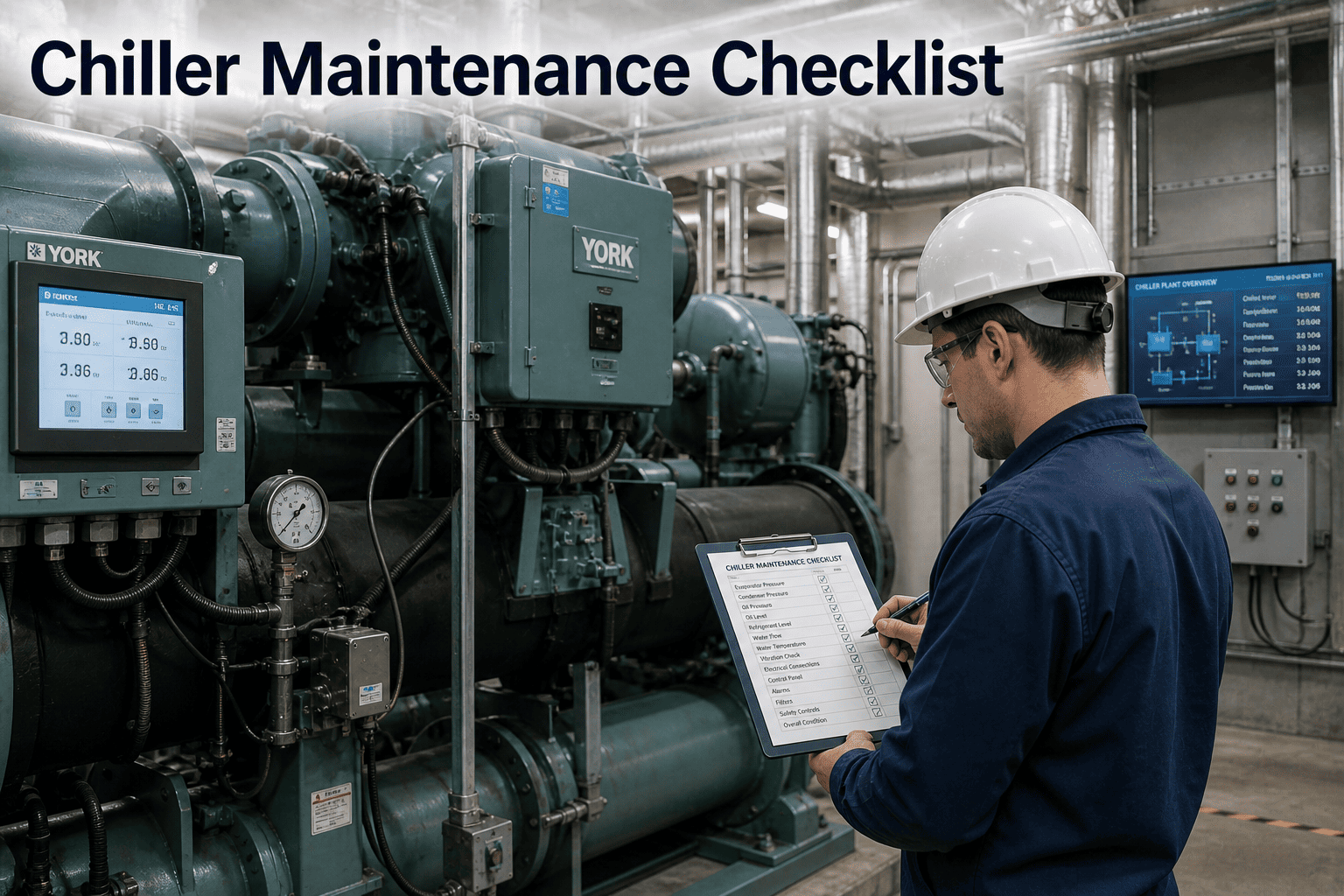
Industrial robots and collaborative robots (cobots) are among the highest-value, highest-consequence assets on the production floor. A single unplanned downtime event on a six-axis welding robot in an automotive line can cost $22,000 per hour in lost production — and most failures are preceded by months of detectable degradation that a structured PM program would have caught. This checklist covers the complete preventive maintenance framework for industrial robots and cobots, from daily visual inspections to annual overhauls, with the specific intervals, wear indicators, and documentation requirements that keep robotics uptime above 97%. Start a free trial to build your robot PM schedule inside Oxmaint and track every inspection against asset condition scores.
Hours-based PM · Not calendar guesswork
Build your robot PM schedule in Oxmaint — triggered by actual operating hours, not approximations
Condition scores, lubrication logs, cobot safety records. All in one asset record, audit-ready on demand.
$22K
Average cost per hour of unplanned robot downtime in automotive manufacturing
ARC Advisory Group, 2025
78%
of robot failures are preceded by detectable wear indicators missed in undocumented inspections
IFR World Robotics Report, 2024
4.2M
Industrial robots operating globally in 2024 — a 10% YoY increase driving maintenance complexity
International Federation of Robotics, 2024
35%
Reduction in robot repair costs achievable with structured PM programs vs. reactive-only maintenance
Plant Engineering, 2025
What Is Robot and Cobot Preventive Maintenance — And Why the Intervals Are Different
Preventive maintenance for industrial robots and cobots is the systematic inspection, lubrication, calibration, and component replacement program that keeps automated assets within OEM-specified tolerances throughout their service life. The critical distinction between robot PM and general equipment PM is that robots accumulate wear across multiple simultaneous dimensions: mechanical (joints, reducers, end effectors), electrical (servo drives, encoders, cables), software (firmware, calibration offsets), and safety (force limits, collision detection thresholds). Skipping any one category creates failure modes that the others cannot compensate for. Cobots add an additional layer — human safety compliance — because ISO/TS 15066 and OSHA 29 CFR 1910.217 require documented verification that safety-rated force and speed limits remain within certified parameters. Book a demo and walk through how Oxmaint structures robot PM schedules with GMP-compliant inspection records and automatic interval triggers.
Robot PM Checklist — 8 Core Maintenance Categories
01
Daily Visual Inspection
Check for unusual sounds (grinding, clicking in joints), visible oil or grease leaks at reducer housings, cable wear or abrasion on cable tracks, and end-of-arm tooling condition. Log in CMMS with pass/fail and timestamp.
02
Weekly Lubrication Check
Verify grease levels at all axis joints per OEM spec sheet. Confirm grease type matches OEM requirements — mixing incompatible greases is a leading cause of reducer failure. Log quantity added per joint and cumulative hours since last service.
03
Monthly Calibration Verification
Run the OEM calibration check routine for TCP (Tool Center Point) accuracy. Verify that positional repeatability is within spec — typically ±0.02–0.05mm for precision assembly robots. Document calibration offset history to identify drift trends.
04
Quarterly Electrical Inspection
Inspect all cable connectors, servo drive connections, and encoder cables for corrosion, fraying, or heat damage. Test backup battery voltage — below-spec batteries cause calibration loss on power cycle. Check cabinet cooling fans for debris buildup.
05
Reducer and Gearbox Service
Harmonic drives and cycloidal reducers require oil changes or re-greasing at OEM-specified hours (typically 4,000–8,000 operating hours). Track cumulative operating hours in CMMS, not calendar time — a robot running 3 shifts hits service intervals far faster than a single-shift unit.
06
Cobot Safety Parameter Verification
For cobots, quarterly verification of safety-rated parameters is mandatory: force limits, speed limits, collision detection thresholds, and workspace boundary enforcement. Document the test procedure and results in a format that satisfies ISO/TS 15066 audit requirements.
07
Firmware and Software Maintenance
ANNUAL
Review controller firmware version against OEM current release. Test backup and restore procedure — verify that robot programs, calibration data, and safety parameters can be fully recovered from backup. Document backup storage location and test date.
08
Annual Mechanical Overhaul
ANNUAL
Full disassembly inspection of all axis joints, replacement of worn components (seals, bearings, brake pads), complete re-lubrication, full calibration, and load testing against OEM repeatability specification. Document inspection findings and component replacements with part numbers.
Where Robot Maintenance Programs Break Down
Calendar-Based vs. Hours-Based Intervals
OEM PM intervals are specified in operating hours, not calendar months. A robot running 3 shifts reaches 4,000 hours in 9 months. The same robot running 1 shift takes 27 months. Calendar-based PM scheduling systematically under-maintains high-utilization robots and over-maintains low-utilization ones.
Grease Type and Quantity Errors
Harmonic drive reducers are destroyed by wrong grease type or over-greasing. Using general-purpose grease in a Nabtesco cycloidal reducer voids the warranty and shortens service life from 10,000+ hours to under 3,000. Grease specifications must be locked in the CMMS, not left to technician memory.
Cobot Safety Drift Goes Undetected
Cobot safety parameters — force limits, speed profiles, collision detection — can drift due to firmware updates, sensor wear, or vibration-induced calibration shift. Unverified safety parameter drift creates an ISO/TS 15066 compliance gap and a real physical risk in human-robot collaborative zones.
No Cumulative Maintenance History
Paper logbooks and disconnected spreadsheets cannot surface patterns. Without a CMMS tracking every lubrication, calibration, and component replacement with timestamps, there's no way to identify which axis is consuming grease faster than expected or which joint is trending toward failure.
How Oxmaint Manages Robot and Cobot PM Programs
Hours-Based PM Trigger Integration
Connect to PLC or OPC-UA data to track actual operating hours per robot. PM tasks trigger automatically at the correct hour interval — not a calendar approximation. No more under-maintaining high-cycle robots.
Asset Condition Scoring per Robot
Each robot carries a condition score built from inspection outcomes, component age, and PM compliance history. Declining scores trigger early review before a failure event — giving your team the information to act proactively.
GMP-Compliant Inspection Records
Safety verification records for cobot ISO/TS 15066 compliance, calibration test results, and component replacement logs are stored in tamper-evident, audit-ready format. No paper binders. No missing records at inspection time.
Spare Parts and MRO Tracking
Critical spare parts — reducer seals, servo cable assemblies, encoder batteries — are tracked per robot with reorder alerts. Lead times for robotics components can be 8–16 weeks. Stockout events are eliminated by proactive reorder triggers.
Mobile Work Orders on the Floor
Technicians complete lubrication logs, calibration test results, and inspection findings on their phone, directly at the robot. No clipboard return trip. No transcription errors. Completed records sync to the asset history within seconds.
CapEx Forecasting for Robot Replacement
Rolling 5–10 year CapEx models incorporate robot condition scores, cumulative operating hours, and historical repair costs to forecast replacement timing. Board-ready capital planning from live asset data — not a facilities manager's guess.
Reactive vs. Planned Robot Maintenance — The Cost Comparison
| Maintenance Factor |
Reactive Robot Maintenance |
Planned PM Program (Oxmaint) |
| Reducer failure cost |
$8,000–$25,000 replacement + 3–5 day downtime |
$200–$400 grease service prevents 90% of reducer failures |
| Calibration drift detection |
Detected via scrapped parts or customer complaint |
Detected at monthly check — corrected in 30 minutes |
| Cobot safety compliance |
Verified only at commissioning or after incident |
Quarterly documented verification, audit-ready records |
| Spare parts availability |
Emergency sourcing — 8–16 week lead times for critical parts |
Pre-stocked critical spares with automated reorder at minimum level |
| Mean time between failures |
Trending downward — each unresolved wear event accelerates next failure |
Maintained at or above OEM spec — typically 12,000–20,000 hours MTBF |
| Robot service life |
8–10 years vs. 15–20 year designed service life |
Full designed service life achieved — 50–100% more operating years |
| Maintenance cost per operating hour |
$4.80–$8.50/hour (reactive repair dominated) |
$1.20–$2.40/hour (preventive-dominated program) |
ROI of Structured Robot PM Programs
35%
Reduction in robot repair costs
Average for operations shifting from reactive to structured PM programs for industrial robotics (Plant Engineering, 2025)
97%+
Robot uptime achievable with full PM compliance
Best-in-class OEE for automated lines with documented PM programs exceeding 80% compliance rates (ARC Advisory, 2025)
$180K
Avoided cost per avoided robot replacement
Average capex cost of a 6-axis industrial robot including installation, programming, and commissioning (IFR, 2024)
5 yr
Additional service life from structured PM
Well-maintained robots routinely exceed designed service life by 40–60%; poorly maintained units fail 5–7 years early (OEM data, Fanuc/KUKA/ABB)
Frequently Asked Questions
How often should industrial robot joints be lubricated?
Lubrication intervals are specified in operating hours, not calendar months, and vary significantly by robot model and axis. Most OEMs specify full joint re-greasing every 3,500–5,000 operating hours for standard duty cycles. High-duty-cycle operations (continuous 3-shift welding or press-tending) should re-check at 2,000 hours. Always use the exact grease type specified in the OEM maintenance manual — harmonic drive reducers in particular require specific ultra-low-viscosity greases (typically Harmonic Drive specified grades or Nabtesco CS3) that are destroyed by standard lithium-based greases. Document the grease type, quantity added per joint, and technician ID in the CMMS at every service.
What is the difference between robot calibration and TCP verification?
Robot calibration is the process of aligning the controller's mathematical model of the robot's kinematic chain with the physical position of the joints — typically performed after battery replacement, reducer replacement, or any axis disassembly. TCP (Tool Center Point) verification is the narrower task of confirming that the physical tip of the end-of-arm tool is accurately represented in the controller's coordinate system. TCP verification should be performed monthly or after any collision event or tooling change. Full kinematic calibration is an annual or incident-triggered task requiring OEM calibration software and laser measurement equipment.
What documentation is required for cobot maintenance under ISO/TS 15066?
ISO/TS 15066 requires documented risk assessment records, validated safety function verification test results (for each safety-rated function — speed, force, stopping distance), and maintenance records that demonstrate ongoing compliance with the certified safety parameters. In practice this means: (1) a test procedure document for each safety function, (2) dated and signed test result records showing actual measured values against allowed limits, and (3) a record of any parameter changes with justification and re-validation. Oxmaint's GMP-compliant inspection templates structure exactly this documentation flow — results are timestamped, technician-attributed, and stored against the cobot asset record for audit retrieval.
How do you build a robot PM program from scratch if there's no existing documentation?
Start with the OEM maintenance manual — every commercial industrial robot ships with one, and it contains the minimum PM intervals by operating hours. If you don't have the manual, contact the OEM's service department with the robot serial number; most provide digital copies. Build your PM schedule in Oxmaint using hours-based triggers rather than calendar dates, connected to PLC operating hour counters where available. In the first 90 days, run the daily visual inspection and weekly lubrication check at minimum. Add the monthly calibration check and quarterly electrical inspection in months 2–3. Track all findings — even "no issues found" — to build the baseline that informs future predictive maintenance decisions.
Hours-Based PM · Condition Scoring · GMP-Compliant Records
Build Your Robot PM Program in Oxmaint — Start This Week
Oxmaint's CMMS tracks robot PM by operating hours, not calendar guesswork — connected to your PLC data for automatic interval triggering. Condition scores, lubrication logs, calibration records, and cobot safety verification — all in one asset record, mobile-accessible on the floor, audit-ready on demand. Start a free trial with your robot asset list, or book a demo and we'll walk through your specific robotics PM structure live.