As we enter 2025, the manufacturing sector faces unprecedented opportunities and challenges, with global output projected to hit $43.6 trillion by 2030. In this high-stakes environment, production efficiency is the linchpin for staying competitive, slashing costs, and meeting growing customer expectations. By optimizing how resources—labor, machinery, and materials—are used, manufacturers can boost output by up to 25%, reduce operational costs by 20%, and enhance sustainability. Production efficiency measures the effectiveness of these resources in delivering quality goods, directly impacting profitability and market share. Advanced tools, such as CMMS software, streamline maintenance and provide real-time insights to minimize downtime and waste. This comprehensive guide dives into how to calculate production efficiency, outlines 20 actionable strategies to achieve a 25% improvement, and explores key production KPIs and lean manufacturing techniques. Whether you’re a plant manager, operations leader, or business owner, these insights will empower you to transform your manufacturing processes and thrive in the dynamic landscape of 2025.
Why It Matters: Optimized production processes can increase throughput by 25% and cut costs by 20%, driving profitability and sustainability in manufacturing.
What Is Production Efficiency and Why Measure It?
Production efficiency is the ratio of actual output to the maximum possible output under ideal conditions, expressed as a percentage. It gauges how well a manufacturing process utilizes resources to produce goods with minimal waste. Measuring efficiency helps identify bottlenecks, optimize workflows, and reduce production costs, aligning with lean manufacturing principles. According to McKinsey, companies that prioritize efficiency can boost throughput by 15-25% and lower operational expenses, enhancing competitiveness. Advanced tools like CMMS platforms support these efforts by automating maintenance and minimizing equipment downtime.
How to Calculate Production Efficiency
The formula for production efficiency is:
Production Efficiency (%) = (Actual Output / Standard Output) × 100
- Actual Output: The number of units produced in a given period.
- Standard Output: The maximum units achievable under ideal conditions (e.g., no downtime, optimal speed).
Example: If a factory produces 1,500 units in a shift but could produce 2,000 units under ideal conditions, the efficiency is (1,500 / 2,000) × 100 = 75%. The goal is to reach 90% or higher using the strategies below.
20 Strategies to Improve Production Efficiency by 25% in 2025
These 20 proven strategies leverage lean manufacturing, automation, and data-driven tools to boost manufacturing productivity by up to 25%:
- Implement Preventive Maintenance: Schedule regular equipment checks to reduce downtime by 26% using CMMS software.
- Adopt Lean Manufacturing: Use 5S and Kaizen to eliminate waste, improving processes by 15%.
- Optimize Equipment Utilization: Track Overall Equipment Effectiveness (OEE) to achieve 85%+ machine capacity.
- Automate Repetitive Tasks: Deploy robotics to increase output by 20% for high-volume production.
- Enhance Employee Training: Provide ongoing training to boost labor efficiency by 10-12%.
- Use Real-Time Monitoring: Monitor equipment performance in real-time to address issues instantly, reducing delays.
- Reduce Setup Times: Apply Single-Minute Exchange of Die (SMED) to cut changeover times by 50%.
- Track Production KPIs: Monitor cycle time, defect rate, and throughput to identify inefficiencies.
- Optimize Inventory Management: Implement Just-In-Time (JIT) to reduce excess stock and cut costs by 15%.
- Strengthen Quality Control: Use Statistical Process Control (SPC) to reduce defects by 20%.
- Redesign Workflow Layout: Optimize factory layouts to minimize movement, boosting throughput by 10%.
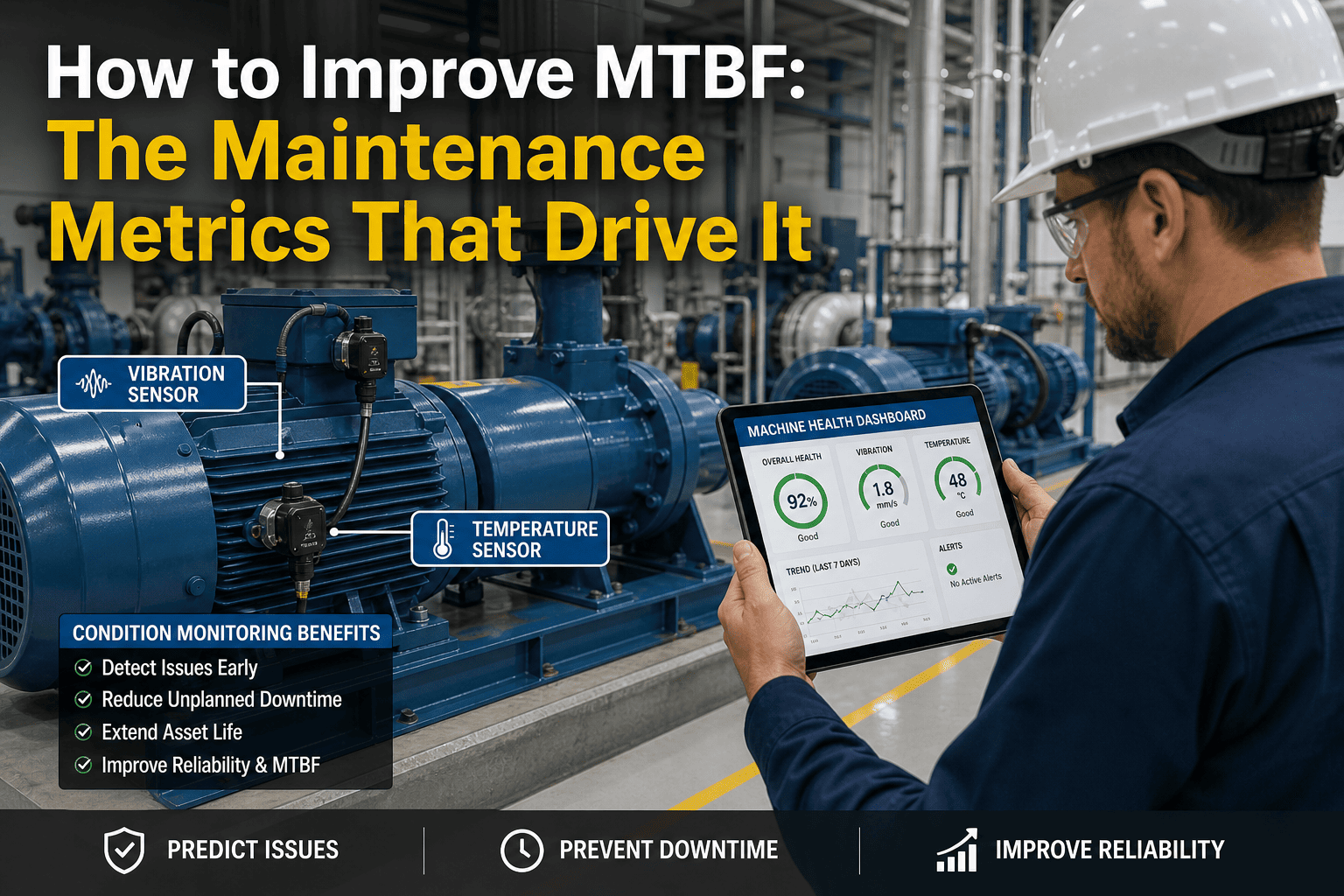
- Integrate IoT Technology: Use IoT sensors to monitor equipment health and prevent unexpected failures.
- Streamline Supply Chain: Collaborate with suppliers to ensure timely deliveries, reducing delays by 15%.
- Adopt Energy-Efficient Practices: Use energy-efficient machines to cut utility costs by 10-15%.
- Leverage Data Analytics: Analyze production data to forecast demand and optimize scheduling.
- Implement Total Productive Maintenance (TPM): Engage staff in maintenance to improve equipment reliability by 20%.
- Standardize Work Processes: Create SOPs to reduce errors and improve consistency.
- Optimize Workforce Scheduling: Align labor with production peaks to boost output by 10%.
- Integrate Predictive Maintenance: Use AI-driven tools to predict failures, reducing downtime by 25%.
- Foster Continuous Improvement: Encourage employee feedback to drive 5-10% efficiency gains.
Tech Advantage: CMMS platforms reduce unplanned downtime by up to 30%, enabling manufacturers to achieve significant efficiency gains.
Key Production Efficiency Metrics to Track
In addition to the efficiency formula, monitor these production KPIs to drive continuous improvement:
- Overall Equipment Effectiveness (OEE): Measures availability, performance, and quality. Target: 85%.
- Cycle Time: Time to produce one unit. Target: Reduce by 10-15%.
- Downtime Percentage: Time equipment is non-operational. Target: Below 5%.
- Defect Rate: Percentage of defective units. Target: Below 2%.
- Throughput: Units produced per hour. Target: Increase by 20%.
- Labor Productivity: Output per worker hour. Target: Improve by 10%.
- Scrap Rate: Percentage of wasted materials. Target: Below 3%.
- First Pass Yield (FPY): Percentage of units produced correctly on the first attempt. Target: 95%.
FAQs About Production Efficiency
What is production efficiency?
Production efficiency is the ratio of actual output to maximum possible output, calculated as (Actual Output / Standard Output) × 100, measuring resource utilization effectiveness.
How can I improve production efficiency by 25%?
Implement strategies like preventive maintenance, lean manufacturing, automation, and employee training to reduce waste and boost output.
How do CMMS tools improve manufacturing efficiency?
CMMS tools automate maintenance, track performance, and reduce downtime by up to 30%, driving significant efficiency improvements.
What is a realistic production efficiency target?
Aim for 85-90% efficiency, with world-class manufacturers targeting 95% using lean principles and advanced tools.
Why is lean manufacturing critical for efficiency?
Lean manufacturing eliminates waste, streamlines workflows, and reduces costs by up to 20%, significantly boosting efficiency.
How does automation impact production efficiency?
Automation reduces manual tasks, increases output by 15-20%, and minimizes errors, enhancing overall efficiency.
What role does employee training play in efficiency?
Training improves worker skills, reducing errors and boosting labor productivity by 10-12%, directly impacting efficiency.
Conclusion: Transform Manufacturing with 25% Efficiency Gains in 2025
In the competitive manufacturing landscape of 2025, achieving a 25% boost in production efficiency is essential for driving profitability, sustainability, and market leadership in a $43.6 trillion industry. By calculating efficiency with the formula (Actual Output / Standard Output) × 100 and adopting 20 proven strategies—such as lean manufacturing, automation, predictive maintenance, and workforce optimization—businesses can reduce costs by 20%, increase throughput, and enhance product quality. Advanced tools like CMMS software streamline these efforts by automating maintenance and providing real-time data, cutting downtime by up to 30%. From small factories to global production facilities, these strategies and KPIs offer a clear path to operational excellence. Embrace data-driven manufacturing, implement these actionable techniques, and propel your operations toward a more efficient, cost-effective, and sustainable future in 2025!
Ready to Maximize Your Factory's Output?
Cut downtime by 30%, boost throughput by 25%, and reduce costs with CMMS-powered production efficiency.