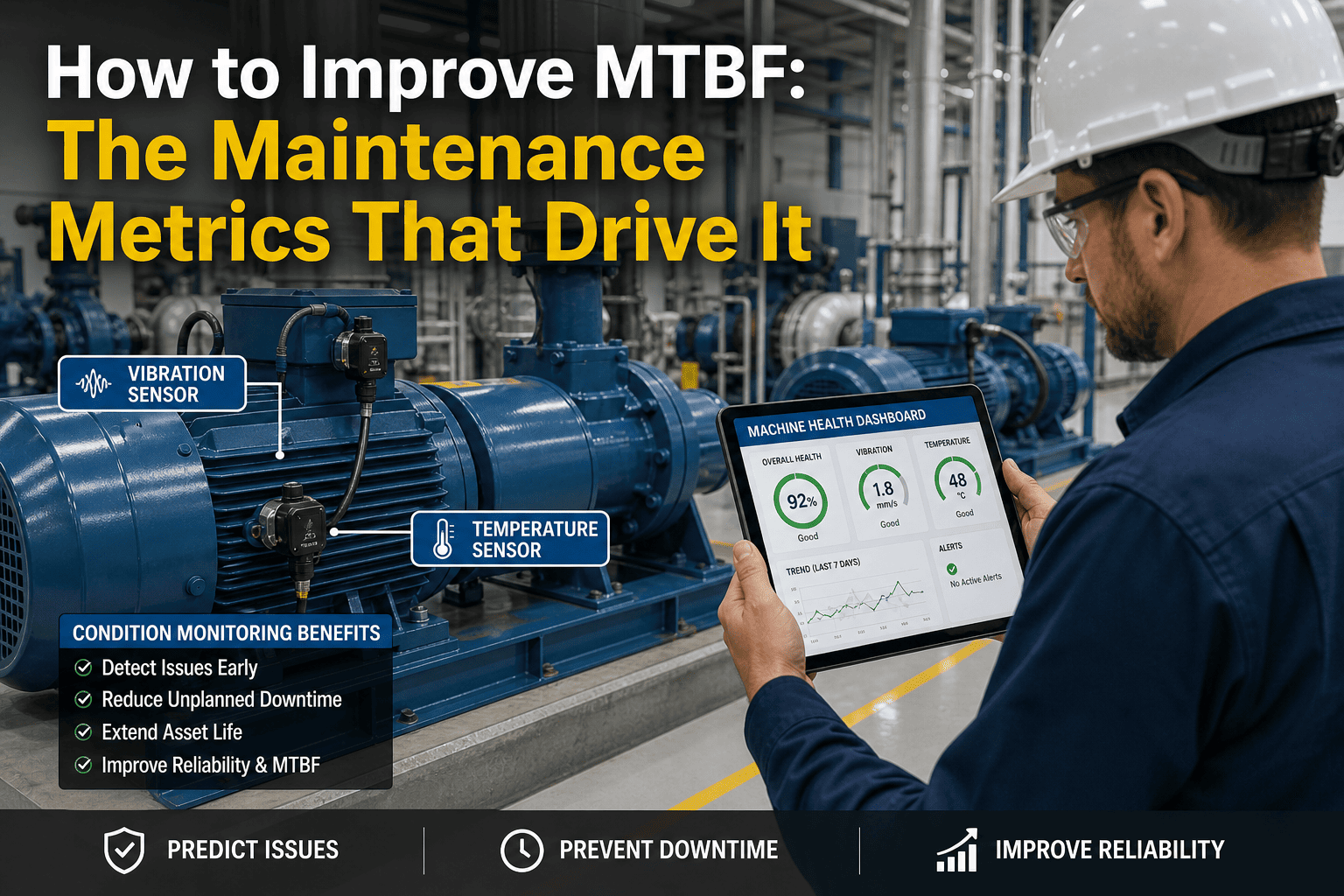
Proactive Maintenance Strategy: Reduce Breakdowns & Downtime

Connect with Industry Experts, Share Solutions, and Grow Together!

Join Discussion Forum
proactive-maintenance-strategy-guide

Most maintenance teams are stuck in a loop — a machine breaks, the team scrambles, costs spike, and the cycle repeats. The real problem isn't equipment failure. It's the absence of a proactive maintenance strategy. Organizations without one spend 18–25% more annually on emergency repairs and experience 3x higher unplanned downtime compared to those with structured preventive and predictive programs. This guide breaks down exactly how to build a proactive maintenance strategy using CMMS, predictive maintenance, and asset criticality — and how platforms like Oxmaint make it measurable from day one. If you're ready to shift from reactive to reliable, start a free trial or book a demo to see how leading operations teams do it.

Maintenance Strategy

Proactive Maintenance Strategy: Stop Reacting. Start Preventing.

Shift from costly breakdowns to planned, data-driven maintenance. Learn how CMMS, predictive tools, and asset criticality frameworks give your team full control of uptime, costs, and reliability.

4.8x

Emergency repairs cost vs planned work
82%

Of equipment failures are random — preventable with the right strategy
25%

Average maintenance cost reduction after going proactive
10x

ROI reported by teams using predictive maintenance programs

Your Equipment Doesn't Have to Fail Without Warning

Oxmaint gives your team the tools to schedule smarter, track asset health, and eliminate guesswork from maintenance decisions — all in one platform built for real operations.

What Is a Proactive Maintenance Strategy?

A proactive maintenance strategy is a structured approach to servicing equipment and assets before they fail — not after. It replaces the reactive "fix it when it breaks" mindset with scheduled inspections, condition monitoring, and data-driven decisions. The result: longer asset life, fewer emergency work orders, and predictable maintenance budgets.

PM
Preventive Maintenance
Time or usage-based tasks scheduled at fixed intervals. Reduces failure probability by 45% when tied to manufacturer specs and real asset data.
PdM
Predictive Maintenance
Sensor and condition data triggers maintenance only when thresholds are crossed. Cuts unnecessary service by 30% versus fixed-interval schedules.
CBM
Condition-Based Monitoring
Continuous asset health tracking via IoT, vibration, temperature, and pressure sensors. Gives 3–6 weeks early warning before most critical failures.
RCM
Reliability-Centered Maintenance
Systematic analysis of failure modes to assign the right strategy per asset. Best-in-class operations achieve 85%+ planned maintenance using RCM frameworks.

The 4-Pillar Framework for Proactive Maintenance

A strategy without structure collapses under real-world pressure. These four pillars form the operational backbone of every high-performing maintenance program — each one builds on the last.

01
Asset Criticality Ranking
Not all assets deserve equal attention. Rank by impact on production, safety risk, and replacement cost. Focus your PM budget where failure hurts most.
02
Scheduled PM Plans Tied to Asset Data
Maintenance intervals built on actual runtime hours, cycle counts, and condition scores — not calendar guesswork. Reduces over-maintenance by up to 30%.
03
CMMS-Driven Work Order Management
Every task documented, assigned, tracked, and closed in one system. Eliminates lost work orders, duplicate efforts, and invisible maintenance backlogs.
04
KPI Tracking and Continuous Improvement
Measure MTBF, MTTR, OEE, and planned vs. reactive ratios monthly. Teams that review KPIs quarterly improve planned maintenance rates by 18% year over year.

Oxmaint brings all four pillars into a single platform with no heavy implementation. Start a free trial and configure your first PM plan in under 30 minutes, or book a demo to walk through the full setup with our team.

Why Most Maintenance Teams Are Still Reactive

Knowing the right strategy isn't enough — these six pain points actively block progress. If any of these sound familiar, your team is leaving significant cost savings and uptime on the table.

Visibility Gap
No Real-Time Asset Condition Data
Without live condition monitoring, teams react to breakdowns instead of preventing them. 67% of unplanned downtime is traceable to deferred or missed PMs.
Data Silos
Maintenance Records Scattered Across Systems
Spreadsheets, paper logs, and disconnected tools make it impossible to see asset history at a glance. Technicians waste 2–4 hours per week hunting for information.
Budget Drain
Emergency Repairs Consuming Planned Budget
Emergency work orders average 4.8x the cost of planned maintenance. One critical failure can erase an entire quarter's maintenance savings.
Compliance Risk
No Audit Trail for Inspections and Work Orders
OSHA, GMP, and building safety regulations require documented maintenance histories. Paper-based systems expose organizations to fines averaging $15,000+ per violation.
CapEx Blind Spots
Capital Decisions Made Without Asset Life Data
Without lifecycle tracking, replacement decisions are made on gut feel. Organizations overspend by 15–20% on premature replacements or under-budget for critical failures.
Technician Productivity
Manual Processes Slowing Response Times
Paper work orders and phone-based dispatching increase MTTR by 35%. Mobile-first CMMS cuts response time in half and improves PM completion rates to 90%+.

How Oxmaint Powers Proactive Maintenance

Oxmaint is built for operations teams managing real assets, real teams, and real budgets — not a demo environment. Here's how each module directly closes the gap between reactive and proactive.

Asset Registry
Full Asset Hierarchy with Condition Scoring
Track every asset from Portfolio to Component level. Condition scores update in real time based on inspection results, IoT signals, and maintenance history.
PM Scheduling
Production-Triggered Maintenance Plans
Schedule PMs by runtime hours, cycle counts, or calendar — whatever fits each asset. Auto-generated work orders ensure nothing slips through the cracks.
Work Orders
Mobile-First Work Order Management
Technicians receive, complete, and close work orders from any device. Full history, parts used, and labor logged — every time, automatically.
IoT + SCADA
Real-Time Condition Monitoring Integration
Connect sensors and SCADA systems to trigger condition-based maintenance automatically. Get 3–6 week advance warning on critical asset degradation.
CapEx Forecasting
5–10 Year Rolling Replacement Models
Asset condition data feeds directly into CapEx forecasting. Justify budgets with data, not estimates. Investor-grade reports out of the box.
OEE Analytics
Real-Time OEE Dashboards per Production Line
Track availability, performance, and quality at the line level. Identify which assets are dragging OEE below the 85% top-quartile threshold.

Reactive vs. Proactive: The Real Cost Difference

Numbers don't lie. The comparison below shows what organizations are leaving on the table by staying reactive — and what proactive operations actually look like in practice.

Metric Reactive Maintenance Proactive with Oxmaint
Planned Maintenance Rate Below 45% 75–90%
Emergency Repair Cost Premium +4.8x per incident Reduced by 60–70%
Average Asset Downtime 12–18% unplanned Below 3% unplanned
Maintenance Cost per Asset 25–35% over budget Within 5% of forecast
Technician Productivity 40–55% wrench time 65–80% wrench time
Mean Time Between Failures (MTBF) Declining year-over-year +35% improvement in 12 months
CapEx Forecast Accuracy Estimate-based, 30%+ variance Data-driven, under 8% variance
Compliance Audit Readiness Manual prep, weeks of effort Always-on digital audit trail

Ready to move your numbers from the left column to the right? Start a free trial today and see your first maintenance dashboard in under an hour, or book a demo for a side-by-side walkthrough of your current state vs. what's possible.

Real Results from Teams Using Proactive Maintenance

27%
Reduction in total maintenance cost
Average within 12 months of implementing a structured PM program
3.5x
Increase in MTBF for critical assets
When condition-based triggers replace fixed-interval scheduling
91%
PM completion rate with mobile CMMS
Up from 62% average on paper-based and spreadsheet systems
6–8
Month average payback period
Oxmaint customers report full ROI recovery within the first year

Frequently Asked Questions

What is the difference between preventive and predictive maintenance?
Preventive maintenance runs on fixed schedules — time or usage intervals set in advance. Predictive maintenance is triggered by real-time asset condition data, such as vibration readings, temperature spikes, or pressure drops. Predictive programs reduce unnecessary maintenance by up to 30% versus fixed-interval scheduling, while still preventing failures. The best proactive strategies combine both: preventive for routine tasks, predictive for high-criticality assets where condition data is available.
How do I determine which assets need the most attention in a proactive strategy?
Start with an asset criticality assessment. Score each asset across three dimensions: impact on production output if it fails, safety and compliance risk, and cost of repair or replacement. Assets scoring highest across all three get the most rigorous PM plans and condition monitoring. Oxmaint's asset registry includes built-in condition scoring that automatically prioritizes work orders based on asset criticality — so your team always focuses on what matters most first.
How long does it take to build a proactive maintenance program from scratch?
Most organizations can deploy a functioning PM program within 30–60 days using a modern CMMS. The first two weeks focus on building the asset registry and assigning criticality rankings. Weeks three and four cover PM schedule creation and technician training. By day 60, most teams are running 65%+ planned maintenance — a significant jump from the typical 40–45% seen in reactive environments. Oxmaint is designed for fast onboarding with no heavy implementation fees or long setup timelines.
Can Oxmaint support multi-site operations and portfolio-level reporting?
Yes. Oxmaint is built specifically for multi-site commercial and industrial portfolios. The platform uses a five-level asset hierarchy — Portfolio, Property, System, Asset, Component — so you can roll up data from every site into a single portfolio view. Operations leaders and investors get standardized reporting across all locations, with CapEx forecasts and OEE dashboards that don't require manual consolidation. Teams managing anywhere from two sites to hundreds of locations use Oxmaint to eliminate the reporting chaos that comes with decentralized operations.

Stop Waiting for Something to Break

Every day without a proactive maintenance strategy costs more than you think — in emergency repairs, reduced asset life, compliance exposure, and technician time spent fighting fires. Oxmaint gives you the structure, visibility, and tools to run a world-class maintenance program — without the implementation headache.

By Jack Edwards

Experience
Oxmaint's
Power

Take a personalized tour with our product expert to see how OXmaint can help you streamline your maintenance operations and minimize downtime.

Book a Tour

Share This Story, Choose Your Platform!

Connect all your field staff and maintenance teams in real time.

Report, track and coordinate repairs. Awesome for asset, equipment & asset repair management.

Schedule a demo or start your free trial right away.

iphone

Get Oxmaint App
Most Affordable Maintenance Management Software

Download Our App