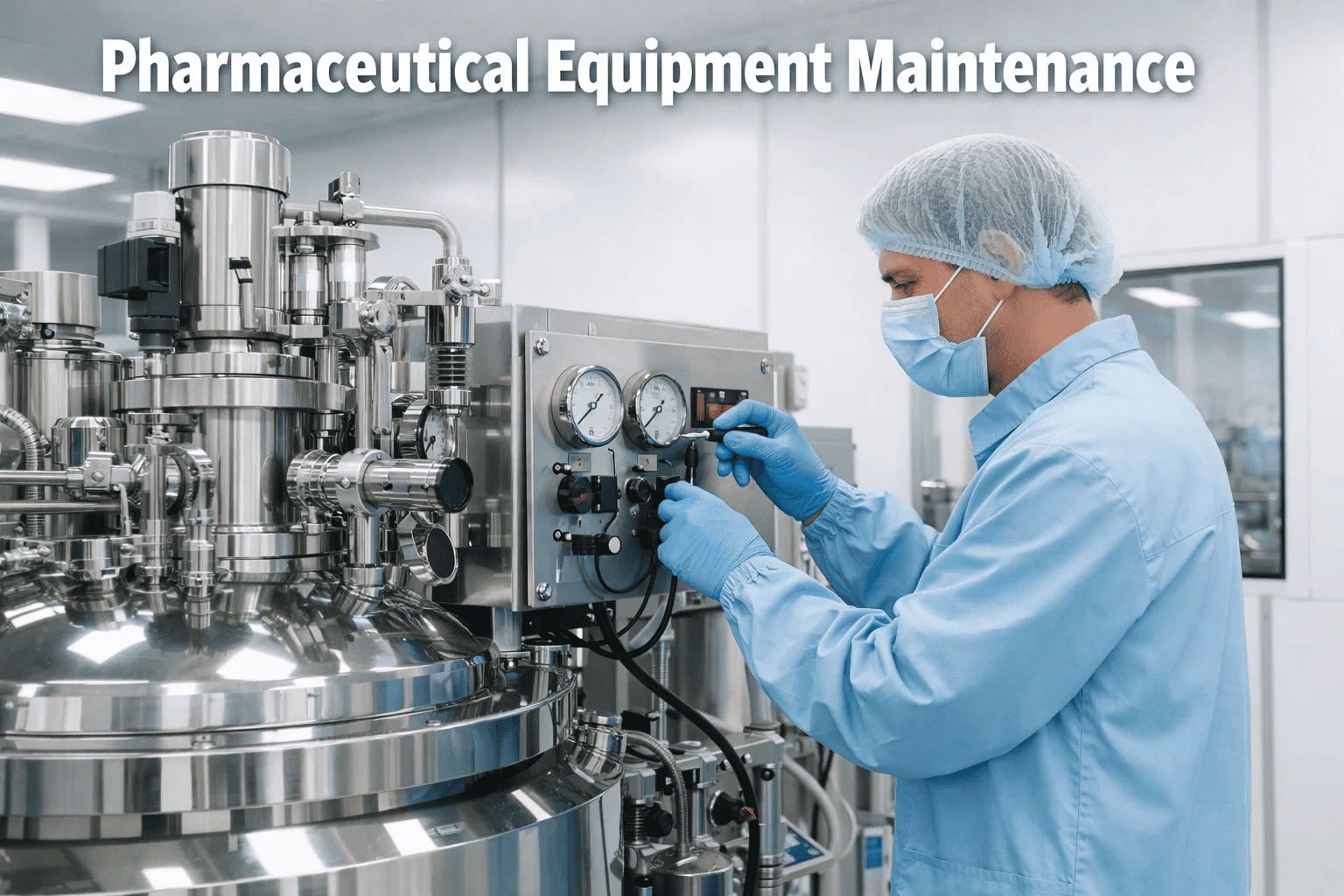
A pharmaceutical manufacturer runs 14 high-speed packaging lines across two plants. Each line generates over 200 sensor readings per second — vibration, temperature, pressure, acoustic signature, motor current. That is 2,800 data points per second across the operation, 241 million data points per day. A standard CPU-based system takes 47 hours to retrain the failure prediction model on a single month of accumulated data. By the time the model finishes training, the data it learned from is already outdated. The maintenance team is always predicting yesterday's failures. Then they deploy an NVIDIA DGX system. Model retraining drops from 47 hours to 90 minutes. The AI now predicts bearing degradation, seal wear, and motor winding faults 60 days before failure — with 4 to 5 times greater accuracy than the previous system. Emergency repairs drop by 73% in the first year. That is the difference GPU-accelerated computing makes in predictive maintenance. It is not about having AI. It is about having AI that is fast enough to keep up with your machines. Book a demo to see how Oxmaint's AI-powered CMMS connects to GPU-accelerated predictive intelligence — starting from $8 per user per month.
UPCOMING OXMAINT EVENT
AI-Powered Predictive Maintenance: Eliminate Unplanned Downtime in Manufacturing
Join Oxmaint's expert-led session covering how AI-native predictive maintenance — including real-time asset intelligence, automated failure detection, and proactive work order generation — transforms reactive maintenance teams into data-driven operations.
Predictive maintenance market in 2026 — projected to reach $98B by 2033, driven by GPU-accelerated AI adoption
72 PFLOPS
AI training performance of NVIDIA DGX B200 — enabling real-time failure prediction across thousands of industrial assets
15×
Faster inference than previous generation — DGX Blackwell architecture processes sensor streams in milliseconds, not minutes
$647B
Lost annually to manufacturing downtime globally — the problem GPU-accelerated predictive AI is built to eliminate
THE HARDWARE BEHIND INDUSTRIAL AI
What Is NVIDIA DGX and Why Does It Matter for Manufacturing?
NVIDIA DGX systems are purpose-built AI supercomputers designed to train and run the deep learning models that power predictive maintenance. Unlike general-purpose servers, DGX packs multiple GPU accelerators — each containing thousands of specialised AI processing cores — into a single system optimised for the massive parallel computation that predictive maintenance AI demands. When a factory generates millions of sensor readings per day, only GPU-accelerated computing can process that data fast enough to predict failures before they happen.
Current Generation
DGX B200
Blackwell Architecture
GPUs8× B200 Tensor Core
AI Training72 petaFLOPS (FP8)
AI Inference144 petaFLOPS (FP4)
GPU Memory1,440 GB HBM3e
Memory Bandwidth8 TB/s per GPU
Interconnect5th Gen NVLink, 64 TB/s
3× faster training and 15× faster inference vs previous generation
Coming H2 2026
Vera Rubin NVL72
Next-Gen Architecture
GPUs72× Rubin GPUs
AI Compute3.6 exaFLOPS (FP4)
CPUs36× Vera CPUs
GPU Memory20.7 TB HBM4
CPU Memory54 TB LPDDR5X
DeploymentLiquid-cooled, 5-rack pod
10× inference cost reduction vs Blackwell — exascale AI for industrial applications
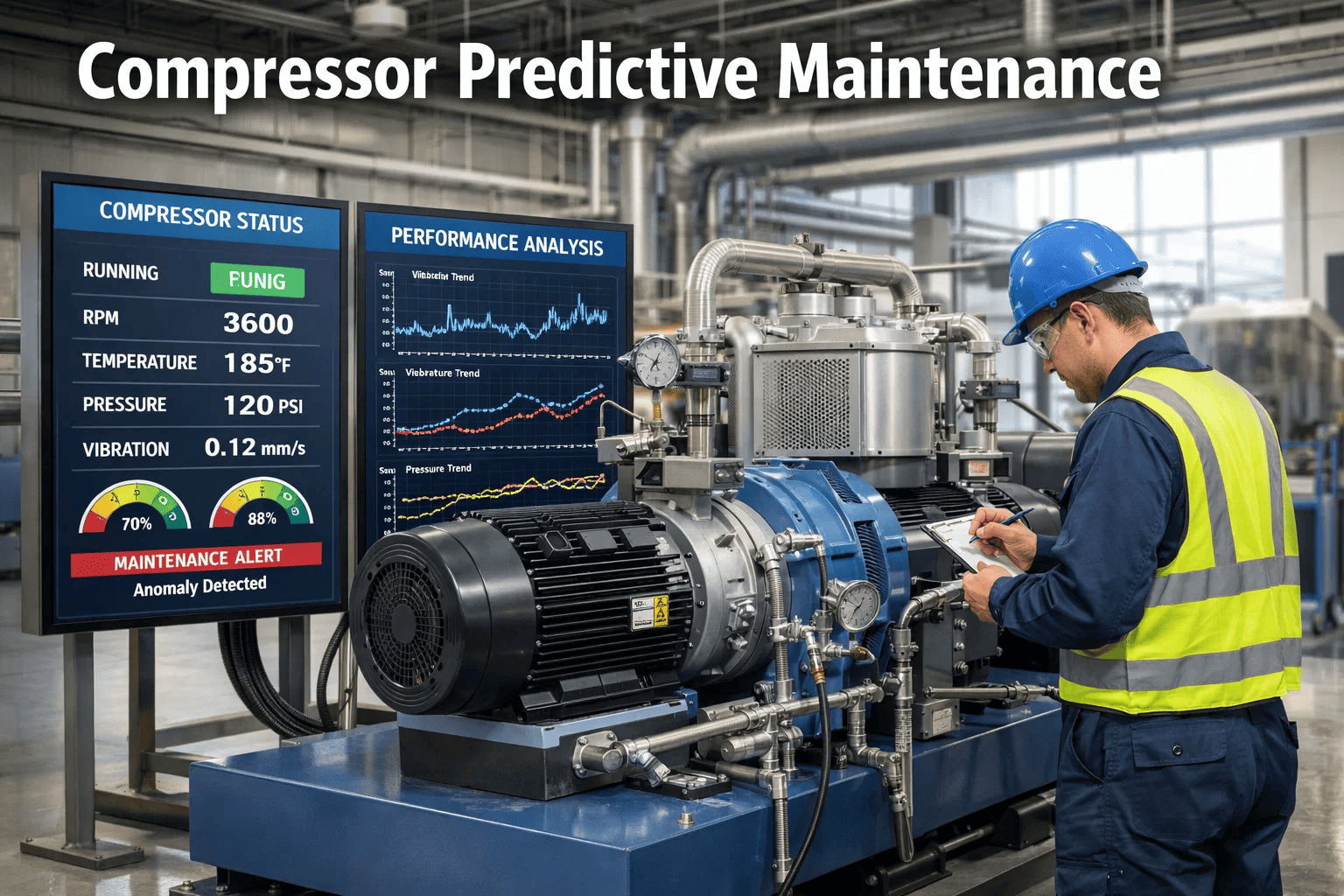
Traditional CPU-based systems were never designed for the parallel computation that AI demands. A single CPU processes data sequentially — one calculation at a time. A GPU processes thousands of calculations simultaneously. When your predictive maintenance model needs to analyse vibration signatures across 500 assets in real time, GPUs are not just faster — they make the analysis possible at all.
CPU-Based Maintenance AI
Model retraining takes hours to days
Predictions lag behind real equipment conditions
Limited to simple statistical models
Cannot process multi-sensor fusion at scale
GPU-Accelerated Maintenance AI
Model retraining in minutes, not days
Real-time predictions as conditions change
Deep learning models with 4–5× greater accuracy
Processes thousands of sensor streams simultaneously
THE PREDICTIVE MAINTENANCE AI PIPELINE
From Sensor to Work Order: How DGX Powers the AI Pipeline
NVIDIA DGX does not replace your CMMS — it supercharges the AI engine behind it. Here is how GPU-accelerated computing fits into the predictive maintenance workflow, from raw sensor data to actionable work orders inside platforms like Oxmaint.
01
Data Ingestion
IoT sensors stream vibration, temperature, pressure, and acoustic data from every monitored asset — millions of readings daily.
Edge Devices & Gateways
02
GPU Training
DGX trains deep learning models on historical failure data — detecting degradation patterns invisible to traditional algorithms.
NVIDIA DGX Systems
03
Edge Inference
Trained models deploy to edge GPUs on the factory floor — running inference in milliseconds without cloud round-trips.
NVIDIA Jetson / EGX
04
CMMS Action
Predictions generate prioritised work orders in Oxmaint — assigned, scheduled, and tracked through to completion.
Oxmaint CMMS
PROVEN INDUSTRY RESULTS
What GPU-Accelerated Predictive Maintenance Delivers Across Industries
Oil & Gas
Baker Hughes + DGX
Deep learning-powered predictive maintenance on NVIDIA DGX predicts equipment failure two months in advance with 4–5× greater accuracy than previous methods. Ready to deploy in weeks.
Manufacturing
RAPIDS AI + DGX
GPU-accelerated data science reduced model training time from days to minutes on manufacturing sensor data — enabling continuous model improvement as new data arrives.
Research
CEITEC + DGX H100
University research facility using DGX A100/H100 clusters for industrial drive diagnostics — from vibrodiagnostics to deploying AI algorithms into industrial microcontrollers.
DGX EVOLUTION FOR INDUSTRIAL AI
NVIDIA DGX Generations: How Each Advances Manufacturing AI
2022
DGX H100
32 PFLOPS FP8
Hopper architecture. Introduced Transformer Engine and FP8 precision. First DGX generation purpose-built for large-scale AI training and generative models.
2024
DGX B200
72 PFLOPS FP8
Blackwell architecture. 208B transistors per GPU. 2nd-gen Transformer Engine with FP4 inference. 3× training, 15× inference over H100.
H2 2026
Vera Rubin
3.6 EFLOPS FP4
72 Rubin GPUs + 36 Vera CPUs per rack. HBM4 memory. 10× inference cost reduction. Liquid-cooled, cable-free modular design.
FREQUENTLY ASKED QUESTIONS
NVIDIA DGX for Predictive Maintenance: What Teams Ask
Does my factory need a full DGX system to use AI predictive maintenance?
No. DGX systems are designed for organisations that need to train custom deep learning models on massive datasets. Many manufacturers benefit from AI-powered predictive maintenance through cloud-hosted GPU infrastructure or CMMS platforms like Oxmaint that embed AI directly into the maintenance workflow — without requiring any on-premises GPU hardware. Oxmaint starts at $8 per user per month with AI capabilities included at all paid tiers. Start your free trial today.
How does Oxmaint connect to GPU-accelerated predictive analytics?
Oxmaint serves as the action layer for AI-generated predictions. Whether your failure predictions come from a DGX-trained model, a cloud-based AI service, or Oxmaint's built-in AI engine, predictions convert into prioritised work orders — assigned, scheduled, and tracked through to completion. Oxmaint ensures that AI insights reach your technicians as actionable tasks, not just dashboard alerts. Book a demo to see the full workflow.
What is the difference between edge AI and data centre AI for maintenance?
Data centre AI (DGX systems) trains the predictive models on large historical datasets — this is where the AI learns what failure patterns look like. Edge AI (NVIDIA Jetson, EGX) runs the trained models directly on the factory floor in real time — detecting anomalies as they happen without sending data to the cloud. Most advanced predictive maintenance deployments use both: DGX for training, edge GPUs for inference, and a CMMS like Oxmaint for execution.
What ROI can manufacturers expect from GPU-accelerated predictive maintenance?
Industry research consistently shows predictive maintenance reduces maintenance costs by 10–40%, cuts unplanned downtime by up to 50%, and extends machine life by up to 40%. Best-in-class GPU-accelerated implementations achieve ROI payback within 12 months, with some reporting returns of $4–7 for every dollar invested. The ROI scales with the cost of downtime — high-value manufacturing lines see the fastest returns.
The AI Hardware Exists. The Software Exists. The Only Missing Piece Is Your Maintenance Data. Start Building Predictive Intelligence Today.
Oxmaint starts at $8 per user per month with AI-powered work orders, predictive scheduling, full asset intelligence, and mobile-first execution. No GPU hardware required. No IT team needed. Deploy in days.