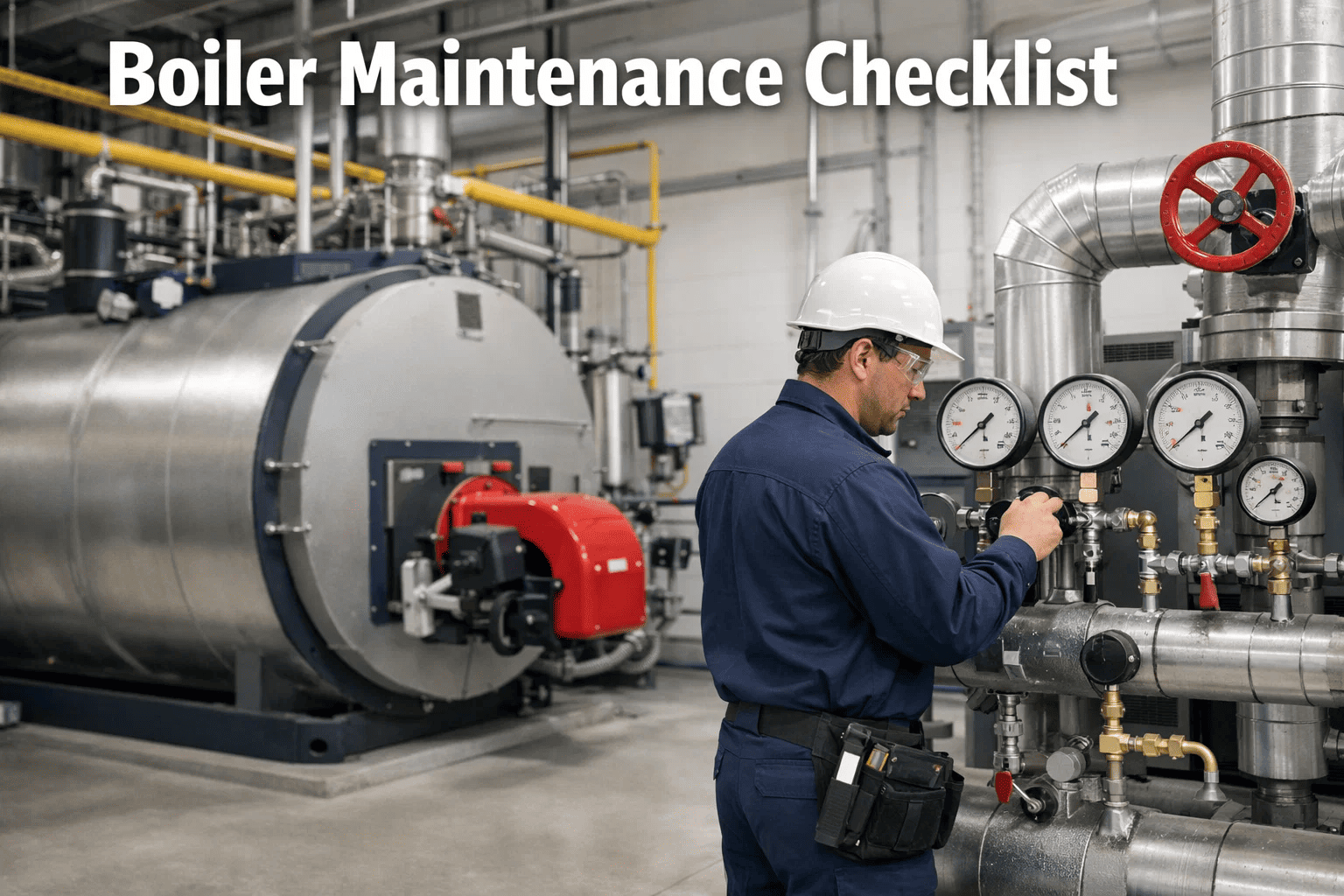
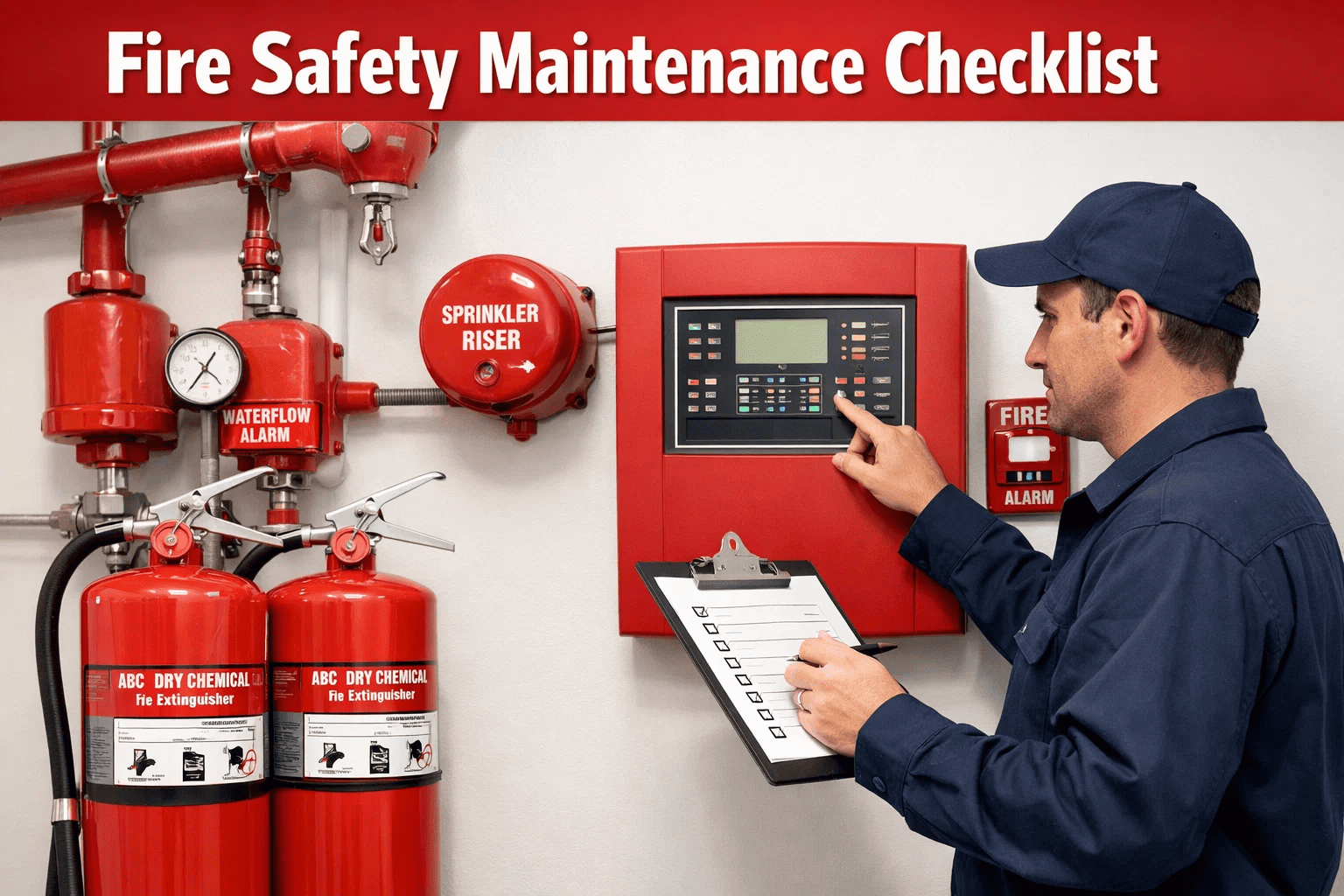
A boiler running at 82% efficiency instead of 90% isn't just burning fuel — it's burning margin, producing extra NOx emissions, and sliding toward a compliance failure that regulators will spot long before your team does. Most boiler breakdowns, scale buildup events, and explosion risks trace back to something on the checklist that got skipped three months ago. This guide walks through the exact daily, weekly, monthly, quarterly, and annual boiler maintenance checklist that keeps steam and hot water systems safe, efficient, and inspection-ready — and shows how tying every task to a digital work order turns compliance from a fire drill into a background process. If you want to see it applied to your boiler room, you can start a free trial or book a demo today.
10-20%
fuel savings from proper burner tuning alone
75%
of boiler failures originate from water treatment issues
$40K+
average cost of a tube failure from scale buildup
30 yrs
design life with consistent PM vs. 12-15 without
Your boiler room compliance record shouldn't live in a binder.
OxMaint gives every technician a mobile checklist, every manager a live status view, and every inspector a signed PDF — in minutes, not days.
Why Boiler Maintenance Is Non-Negotiable
Industrial boilers operate at pressures and temperatures where small oversights become catastrophic failures. A single undetected low-water condition can breach a pressure vessel. Scale buildup as thin as 1/32 of an inch on heat exchanger surfaces drops efficiency by 2% and accelerates tube metal fatigue. A stuck safety relief valve can turn a routine shutdown into a regulatory event. Every checklist item exists because something, somewhere, went wrong without it. Teams that want to see how OxMaint structures this kind of lifecycle rigor can book a demo for a 30-minute walkthrough tailored to their plant.
The Four-Tier Boiler Maintenance Checklist
TIER 1
Daily Checks — Every Shift
10–15 min
01
Water level gauge verification
Visually confirm gauge glass reading; blow down to clear sediment.
02
Operating pressure + temperature
Log against baseline; deviations above 5% warrant investigation.
03
Flame pattern + burner condition
Blue-white stable flame = healthy. Yellow or pulsing = tune required.
04
Boiler room leaks + vibration
Walk the perimeter; note any steam, water, or fuel odor immediately.
TIER 2
Weekly Tasks
45–90 min
01
Low-water cutoff test
Slow evaporation test ensures cutoff fires before real low-water condition.
02
Bottom blowdown execution
Removes sediment; timing based on TDS readings, typically 10–30 seconds.
03
Feedwater chemistry sampling
pH, hardness, conductivity, and oxygen scavenger residual logged weekly.
04
Gauge + control calibration
Cross-verify pressure gauges against reference gauge; flag 2%+ drift.
TIER 3
Monthly + Quarterly Service
3–6 hours
01
Safety relief valve function test
Try-lever test monthly; full accumulation test annually per ASME Section VII.
02
Combustion analysis
Measure O2, CO, CO2, stack temperature; tune burner for 10–15% excess air.
03
Refractory + insulation inspection
Check for cracks, spalling, missing lagging; infrared scan for hot spots.
04
Flame safeguard + ignition check
UV scanner response time, pilot flame stability, electrode gap verification.
TIER 4
Annual Outage + Inspection
2–5 days
01
Internal waterside inspection
Drain, cool, open manways; inspect for scale, corrosion, pitting.
02
Fireside cleaning + tube inspection
Remove soot, check for tube bulging, ultrasonic thickness testing.
03
Certified jurisdictional inspection
NBBI-licensed inspector signs certificate; required for operating permit.
04
Control system + trim rebuild
Service level controls, feedwater valve, check valves, gaskets.
The Four Silent Killers in Most Boiler Rooms
SCALE
Scale Buildup
Just 1/32" of scale raises fuel costs by 2% and creates hot spots that rupture tubes. 75% of tube failures trace back to poor water treatment programs.
+2% fuel per 1/32"
CORR
Oxygen Corrosion
Feedwater oxygen levels above 7 ppb pit boiler steel over years. Most plants discover this only after a tube fails — $40K+ to replace.
Target: under 7 ppb
TUNE
Burner Drift
An untuned burner runs 3–7% rich, wasting fuel and forming CO. Quarterly combustion analysis is the cheapest efficiency win in any plant.
Up to 7% fuel loss
LWCO
Failed Low-Water Cutoff
A stuck LWCO is the single most dangerous unchecked component in a boiler. Weekly evaporation testing is non-negotiable under ASME CSD-1.
Weekly test required
How OxMaint Runs Your Boiler Program
01
Tier-Based PM Schedules
Daily, weekly, monthly, and annual checklists auto-generate work orders on the right cadence — each tied to a specific boiler asset with full history.
02
Mobile Inspection Forms
Technicians log readings, attach photos, and sign off from the boiler room. No paperwork comes back upstairs unfinished or illegible.
03
Water Chemistry Tracking
Trend pH, conductivity, hardness, and oxygen residual over time. Alert thresholds catch deviations before they damage tube metal.
04
Burner Efficiency Logging
Combustion analysis readings stored per asset. Compare efficiency trends month-over-month to justify burner tuning spend with data.
05
Certified Inspection Workflow
Annual jurisdictional inspections tracked with due dates, certificate uploads, and auto-reminders 60 days before expiration.
06
Audit-Ready Exports
ASME, NBBI, OSHA, and insurance auditors get a signed PDF of every log in minutes — not a three-day scramble through filing cabinets.
The next inspector visit shouldn't be a 3-day prep event.
Every reading, signature, and calibration stored, searchable, and ready to export — on demand. See it running on your boiler room.
Before OxMaint vs. After OxMaint
| Operational Area | Before | After |
|---|
| Daily checks completion rate | 62% (paper) | 98% (mobile) |
| Water treatment trend visibility | None — lab sheets only | Live per-boiler charts |
| Burner efficiency year-over-year | Unknown | Tracked, benchmarked |
| Audit prep time | 2–3 days | 20 minutes |
| Unplanned boiler shutdowns / year | 5–9 | 0–2 |
| Fuel cost per MMBtu produced | Baseline | 8–15% lower |
ROI Teams See in 12 Months
FUEL
12%
Average fuel bill reduction after tuned PM + combustion analysis
UPTIME
96%
Scheduled task completion vs. 62% industry average on paper
SAFETY
83%
Drop in compliance findings after first annual cycle
LIFE
2.5x
Equipment life extension from consistent water treatment logs
Frequently Asked Questions
How often is a jurisdictional boiler inspection required?
In the United States, ASME-code boilers require an external inspection annually and an internal inspection every 12 to 24 months depending on state jurisdiction. The certificate must be posted in the boiler room and cannot be allowed to expire — operating without a current certificate is both illegal and a major insurance exposure.
What's the single most important weekly check?
The low-water cutoff slow-evaporation test. It simulates a real low-water event by slowly draining the boiler and confirming the LWCO fires before the water level reaches an unsafe point. A stuck LWCO is the failure mode most closely linked to historic boiler explosions, which is why ASME CSD-1 mandates weekly testing.
Can I skip water treatment if I have a steam boiler with low makeup water?
No. Even closed-loop systems accumulate dissolved solids, pick up oxygen through tiny leaks, and develop pH drift over time. Low-makeup systems actually concentrate contaminants faster because there's less water dilution. Weekly chemistry sampling is required regardless of makeup volume.
How does OxMaint handle multi-site boiler portfolios?
Each boiler lives under a Portfolio > Property > System > Asset hierarchy. A Director of Facilities sees compliance status across all sites on one dashboard. Site engineers see their boilers. Technicians see their work orders. Certification expiration dates, water chemistry trends, and fuel efficiency all roll up automatically.
Turn Your Boiler Room From a Liability Into a Reliability Asset
Every daily check, every chemistry reading, every inspection — captured, tracked, and defensible. Built for maintenance teams who are tired of paperwork and ready for proof.