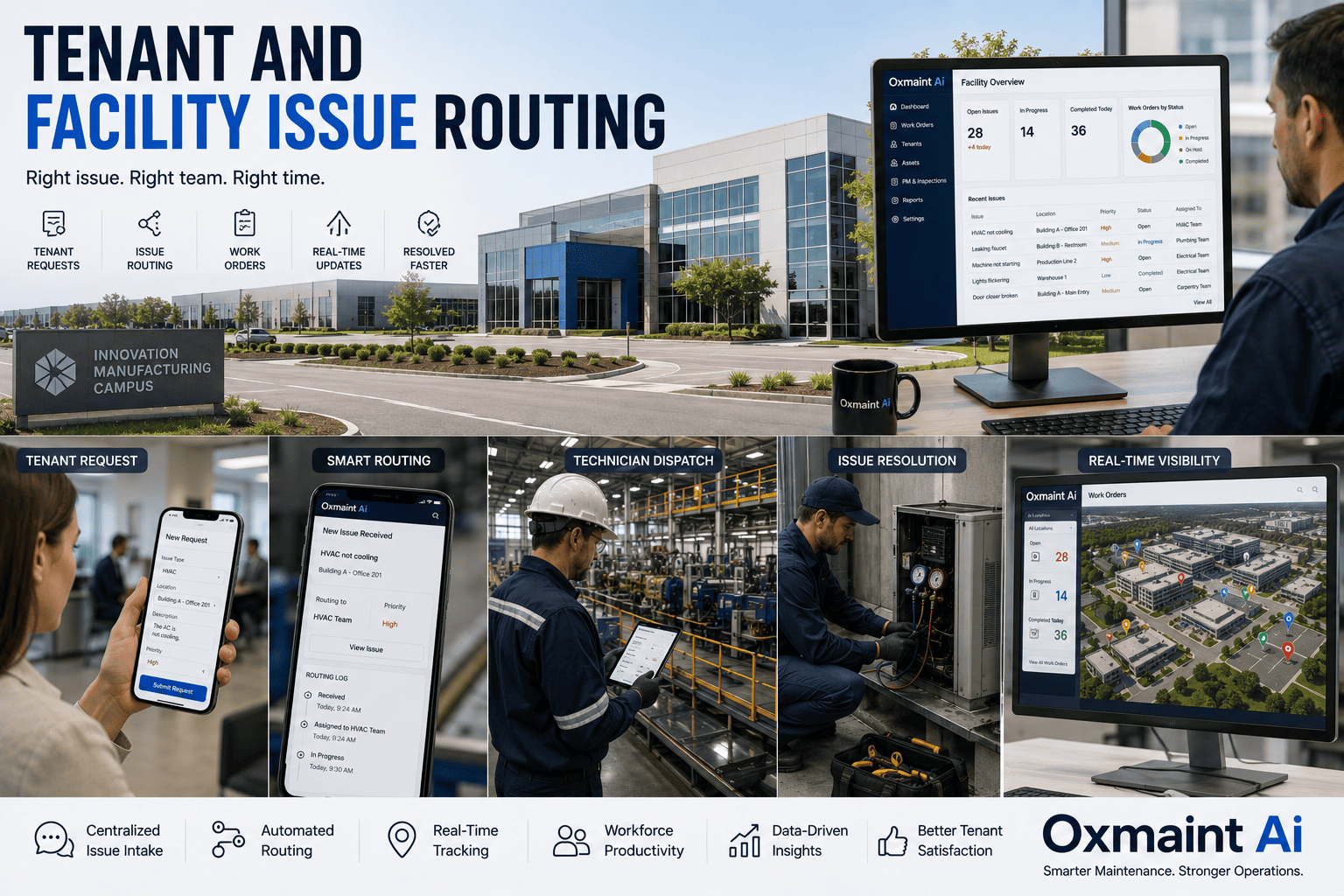
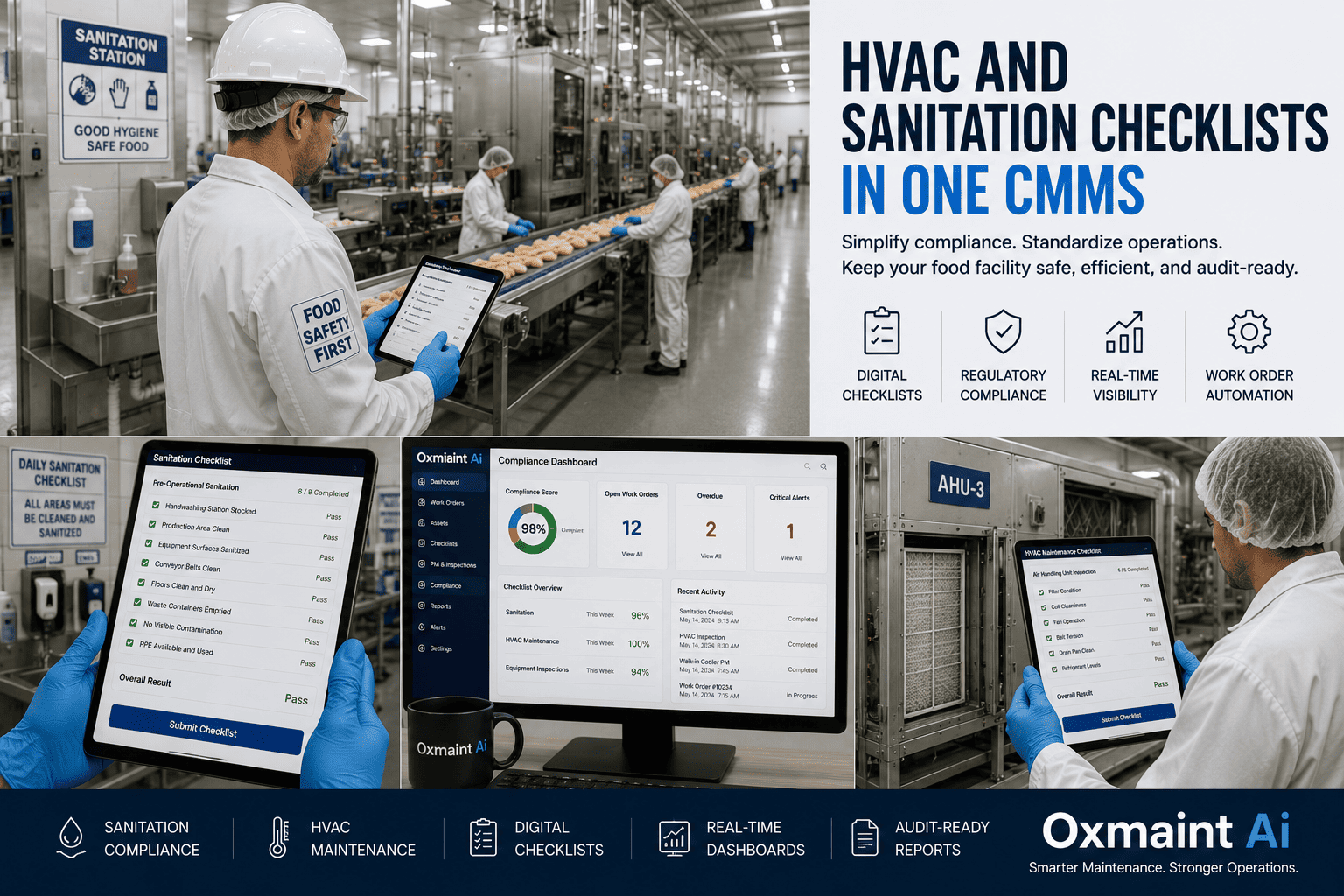
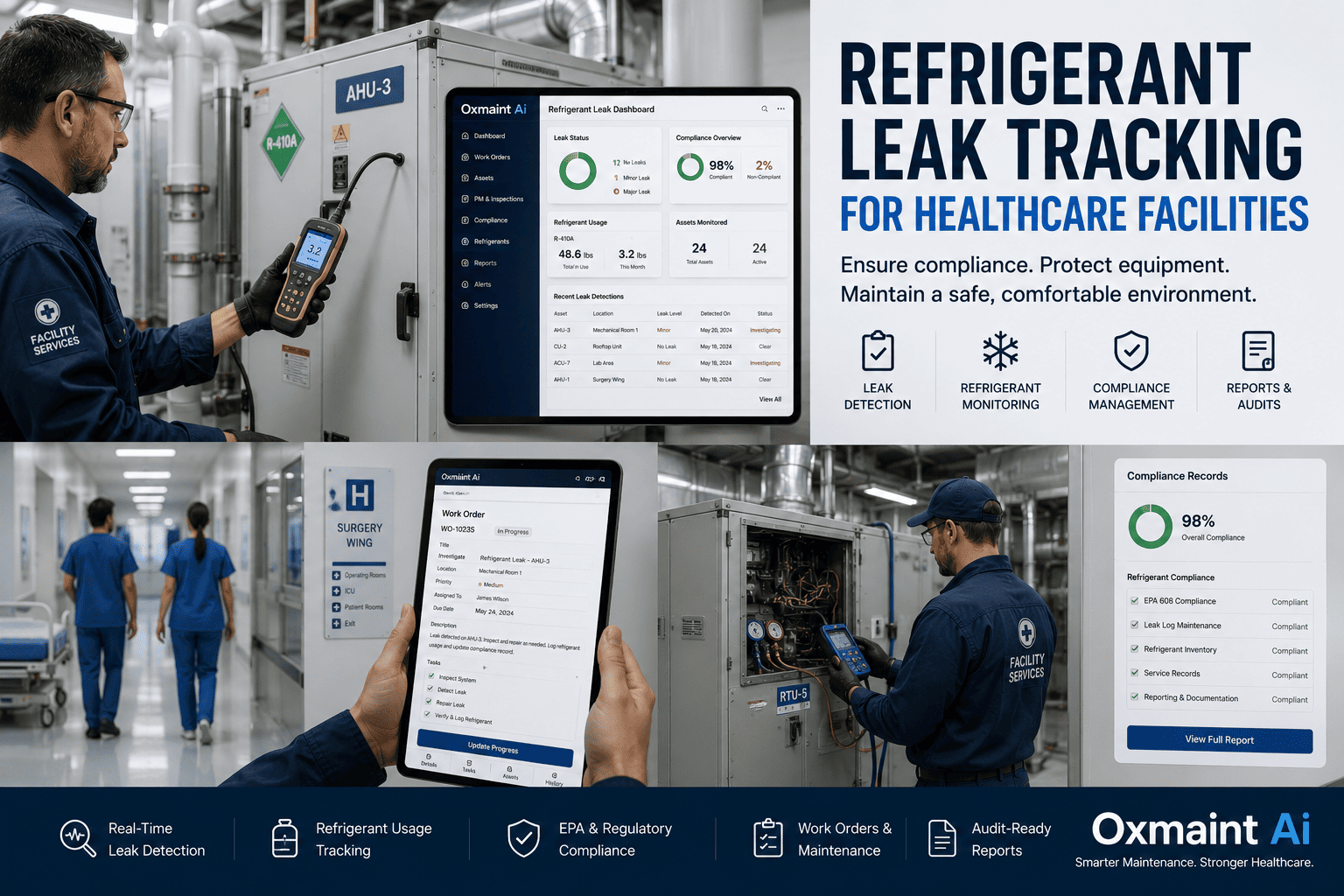
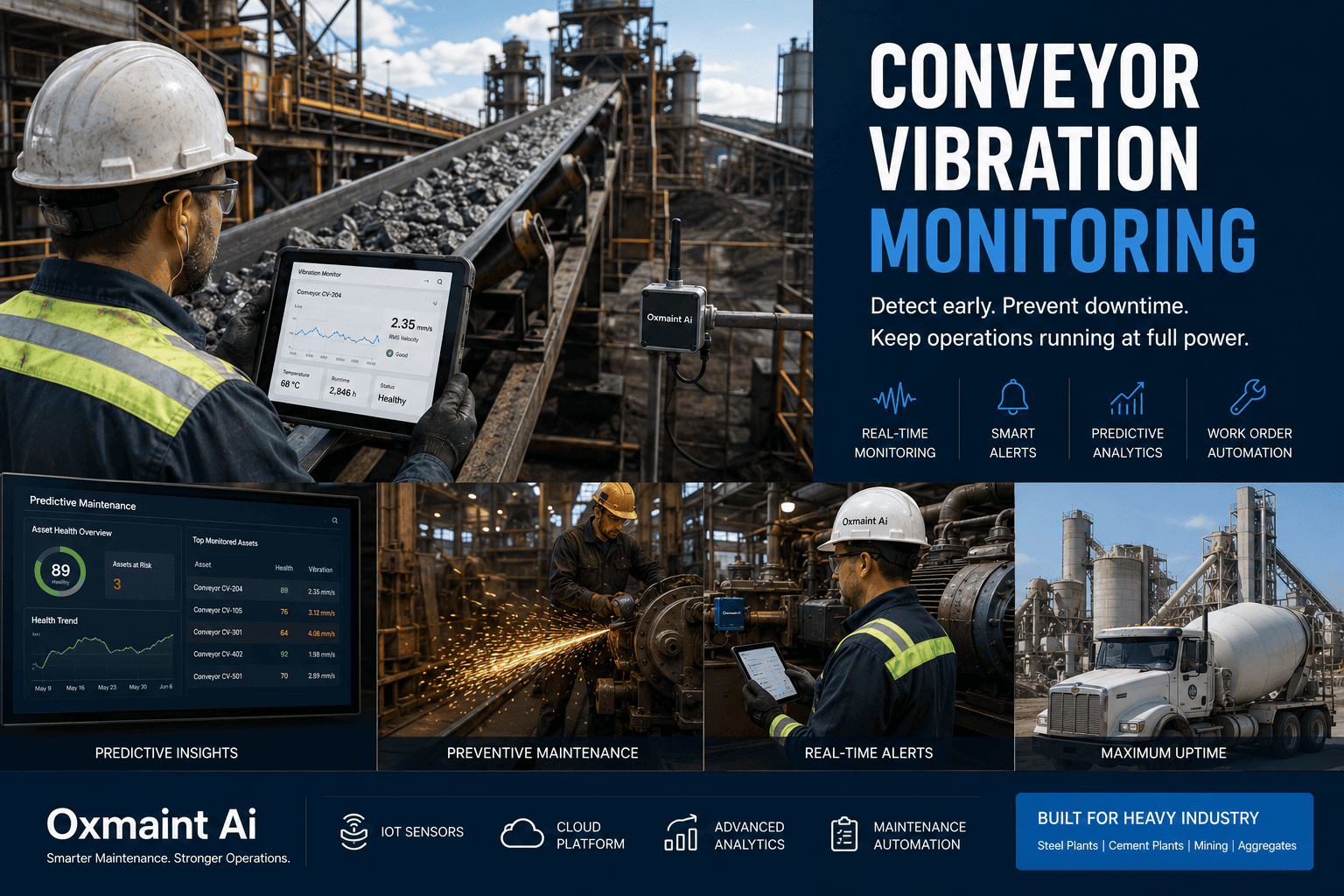
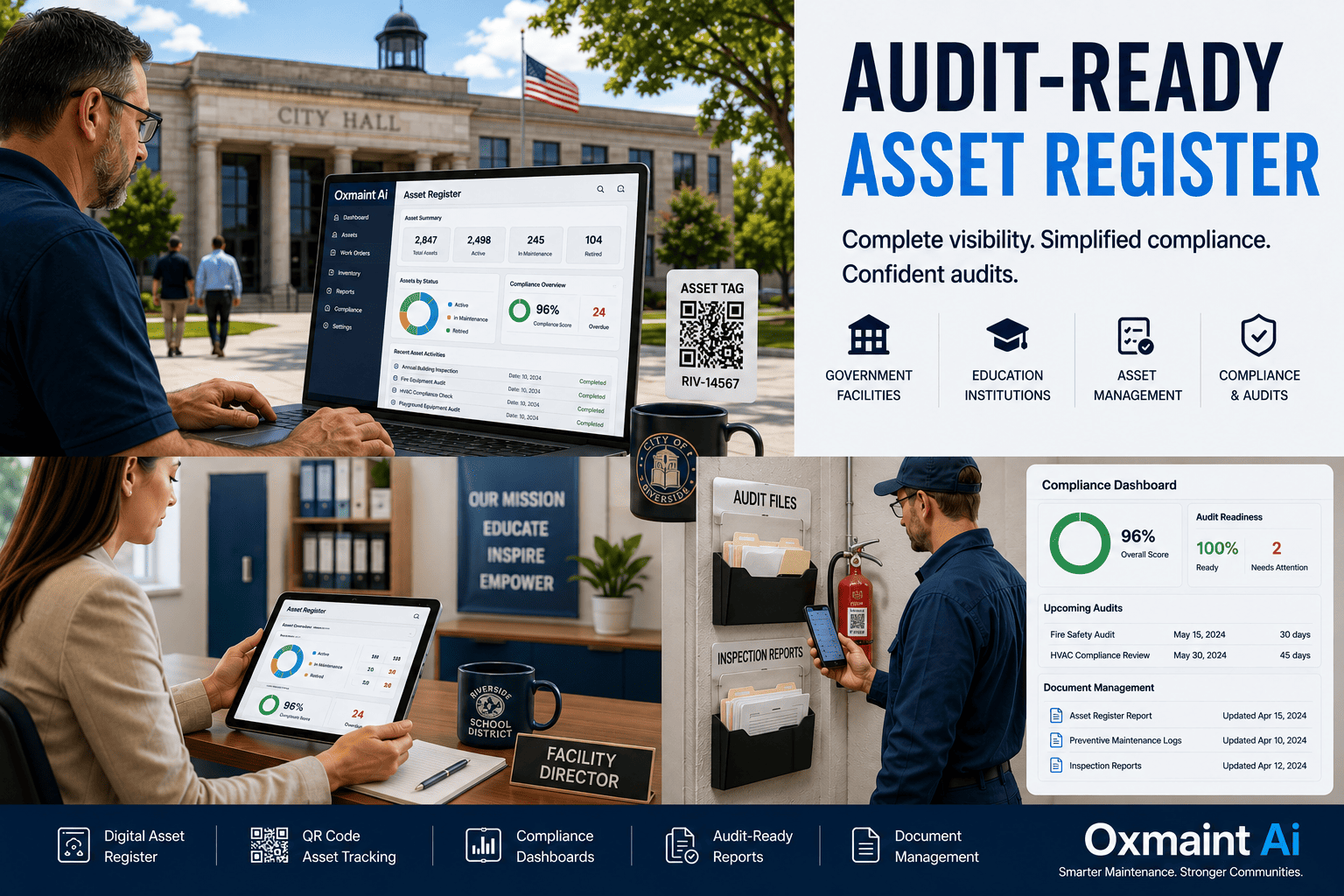
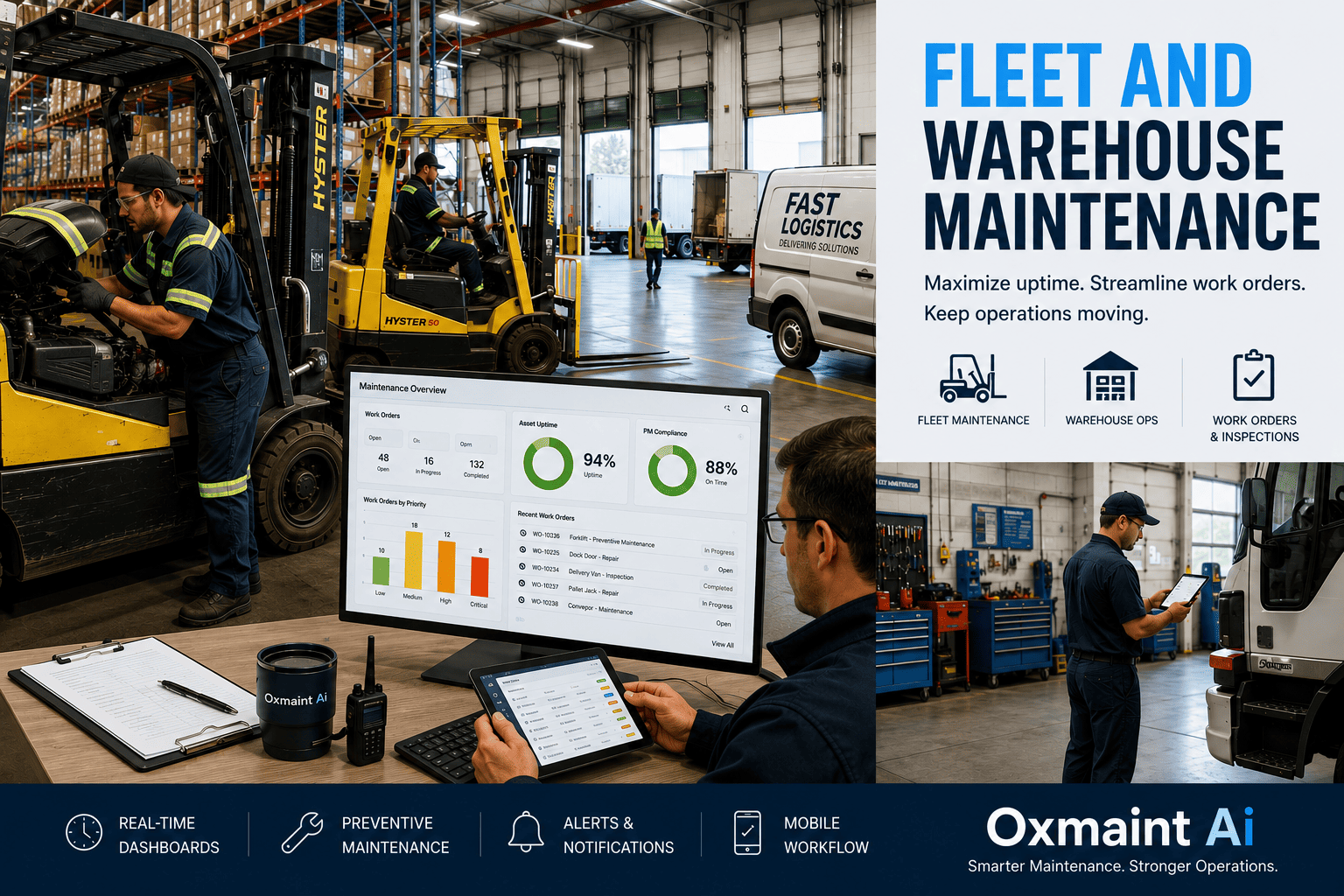
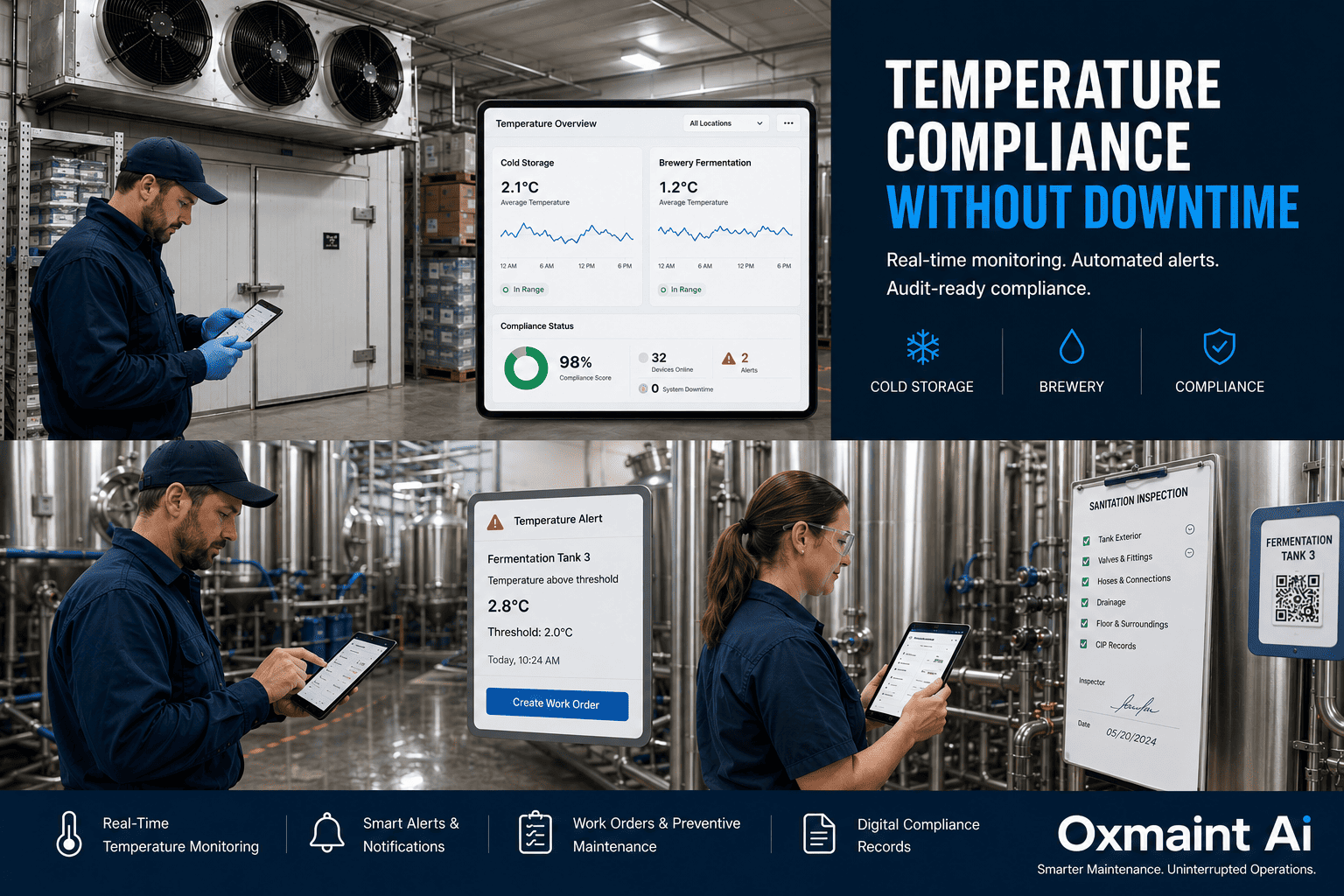
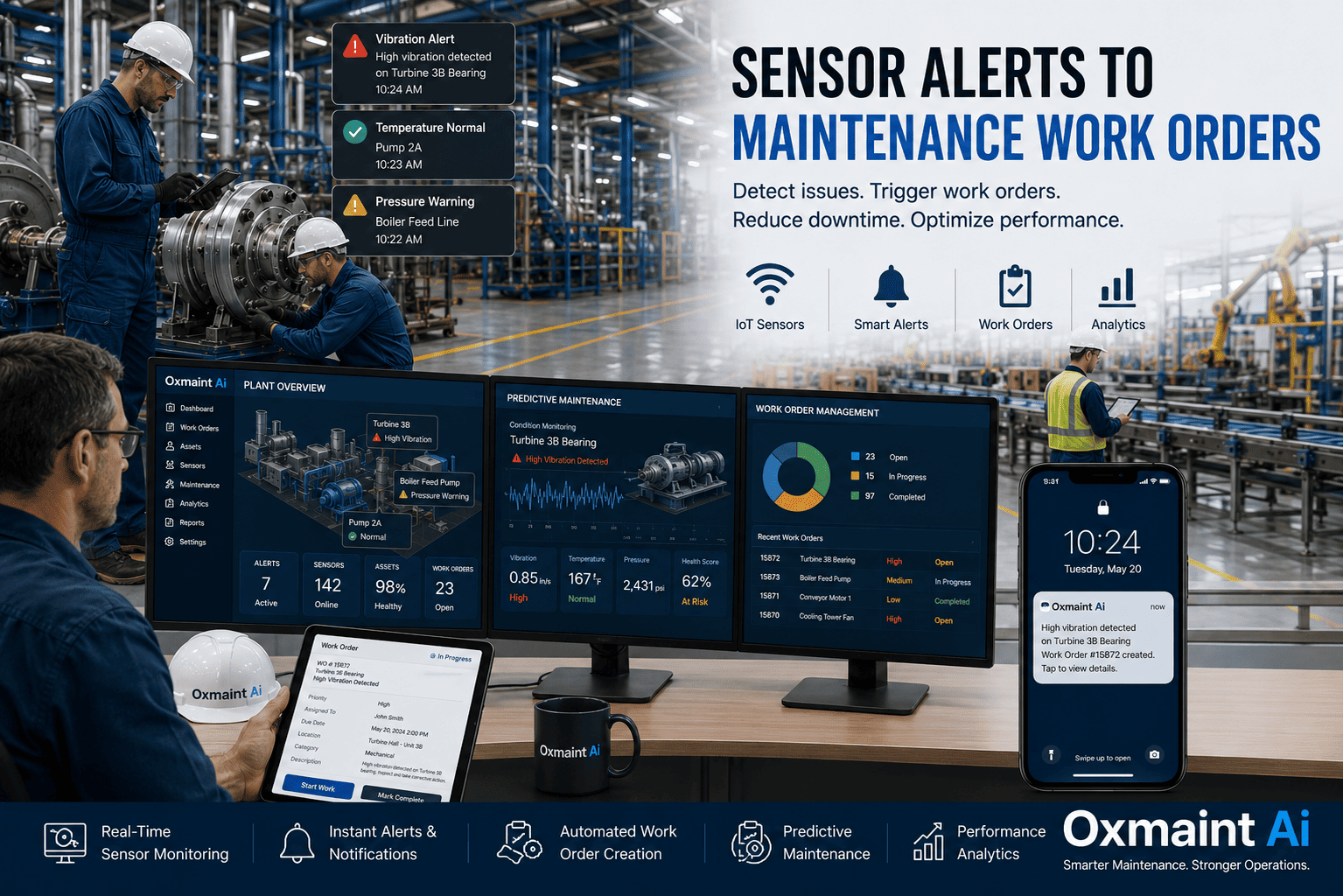
Industrial manufacturing campuses occupy a strange operational middle ground that neither pure-play factory CMMS nor commercial property management software was designed to handle. On a single site you might have a 400,000 square foot production hall running CNC machining or injection molding, a four-story administrative building with two hundred white-collar staff, a research and development lab with class-100 cleanrooms, a cafeteria, a fitness facility, an on-site clinic, and a guest building leased to a logistics provider. Production maintenance has its own logic — OEE, planned downtime windows, OEM contracts. Facility and tenant maintenance has different logic — service-level expectations, comfort complaints, restroom emergencies, lighting. When these two streams flow into the same maintenance team but get routed through different request systems or no system at all, the result is the same predictable failure mode: production tickets get lost in tenant noise, tenant tickets sit in production queues. Oxmaint splits the routing logic without splitting the team, giving you one CMMS that handles production and facility work without forcing tradeoffs — start a free trial to map your campus into the dual-track structure, or book a 30-minute demo to see how mixed manufacturing and facility portfolios run inside Oxmaint.
See how mixed manufacturing campuses route production and facility issues without crossing wires.
- Two routing tracks, one CMMS, one maintenance team
- Tenant request portal with SLA tracking
- Production OEE preserved, facility comfort responded to
Campus Snapshot
Manufacturing Campus Maintenance by the Numbers
3–7×
More facility tickets than production tickets on mixed campuses
Industrial facilities benchmark, 2024
$4,200
Average hourly cost of unplanned production downtime
Mid-size US manufacturing facility
35%
Of maintenance team time spent on tenant comfort
When routing is unstructured
2–4 hr
Typical SLA for facility comfort issues
Tenant expectation on corporate-style campus
Definition
What is Dual-Track Issue Routing?
Dual-track issue routing is a CMMS workflow architecture that recognizes a campus has two fundamentally different request flows and structures the maintenance system around that distinction. The production track handles tickets tied to production assets — machines on the floor, utilities serving the production process, OEE-critical infrastructure — and follows planned-downtime logic, OEM service contracts, and the OEE clock. The facility track handles tickets tied to people-occupied spaces — office HVAC comfort calls, restroom emergencies, lighting outages, parking lot issues, cafeteria requests — and follows commercial property service-level logic.
The two tracks share infrastructure (the maintenance team, the parts room, the work order system) but route, prioritize, and report independently. This is what makes a campus CMMS sustainable: production reporting stays clean for the plant manager and the OEM auditors, facility reporting stays clean for the site general manager and the corporate real estate team, and the maintenance team works from one consolidated queue. Start a free trial to structure your campus on the dual-track model, or book a demo to walk through a mixed campus setup.
Routing Framework
The Six Decisions That Define Every Campus Ticket
Decision 01
Production or Facility Asset?
The first split — production-critical assets follow OEE logic; people-occupied space assets follow SLA logic.
Decision 02
Internal Tech or Vendor?
Skill match, OEM contract scope, and after-hours availability determine which technician resource handles the ticket.
Decision 03
SLA Tier
Comfort, urgent, and emergency tiers per ticket type — facility comfort 4 hr, production line stoppage 30 min.
Decision 04
Cost Allocation
Production work charges to plant operations; tenant work charges to facility OpEx or tenant chargeback.
Decision 05
Scheduling Window
Production work waits for scheduled downtime; facility work executes during business hours when occupant-impacting.
Decision 06
Reporting Audience
Plant manager sees production metrics; site GM and real estate see facility metrics; both view independently.
A production-critical ticket that gets routed into the facility comfort queue loses the OEE clock — and a comfort call that lands in the production queue costs the team three hours of factory floor focus.
Signature Routing
The Dual-Track Routing Diagram
Incoming Request
Work Order Created
Operator on the floor, tenant via portal, sensor alert, or admin staff opens a request in Oxmaint with asset, location, and severity.
Production Maintenance
OEE-driven priority
- CNC, presses, robots, line equipment
- Planned downtime windows respected
- OEM contract scope checked
- Production cost center charged
- Reports to plant manager
Facility and Tenant
SLA-driven priority
- HVAC, lighting, restrooms, cafeteria
- Tenant portal submissions tracked
- SLA tiers enforced 4hr / 24hr / 72hr
- Facility OpEx or tenant chargeback
- Reports to site GM and real estate
Operational Pain Points
Why Mixed Campuses Lose Time to Bad Routing
Comfort Calls Drown Production Priorities
Office temperature complaints and tenant comfort calls flood the same maintenance queue as line-down emergencies, and the team triages by who shouted loudest rather than by impact.
No Tenant Request Portal
Staff email the maintenance lead, call the front desk, or stop a technician in the hallway — none of which produces a tracked ticket or an SLA that anyone can measure.
Cost Allocation Falls Apart
When production and facility work is co-mingled, finance cannot tell which costs belong to plant operations versus facility OpEx, and corporate chargebacks become argumentative.
OEM Contract Scope Lost in Noise
Production equipment under OEM service contract gets repaired by internal techs because no one checked the contract — voiding warranty and driving avoidable costs.
Reporting Reconciles Nothing
Plant manager wants OEE and downtime; site GM wants SLA hit rate and tenant satisfaction — a single co-mingled work order log cannot answer either question cleanly.
After-Hours Coverage Confusion
Production runs second and third shift; facility coverage is daytime only — without routing logic, after-hours tickets land on the wrong technician at the wrong time.
Mixed campuses running dual-track routing in Oxmaint typically recover 25–35% of maintenance team capacity from bad triage — start a free trial to structure your campus, or book a demo to see a campus deployment.
The Solution
How Oxmaint Runs Production and Facility on One CMMS
Asset Hierarchy with Type Tagging
Every asset tagged as production or facility — routing logic flows from the tag, not from manual triage.
Tenant Portal with SLA Logic
Self-service request portal for office staff and tenants with category-based SLA tiers and status notifications.
OEM Contract Scope Tracking
Production assets carry their service contract terms so dispatch knows when to call the OEM versus the internal team.
Cost Center Auto-Allocation
Production charges to plant operations cost center; facility charges to OpEx or tenant chargeback automatically.
Dual-Audience Reporting
Plant manager sees OEE, downtime, and production reliability; site GM sees SLA hit rate and tenant satisfaction.
Shift-Based Dispatch Logic
After-hours tickets route by shift coverage and skill match, with escalation rules built into the workflow.
One CMMS, two tracks, one team — production stays focused on OEE while facility stays accountable to SLAs.
Before vs After
Single-Queue Chaos vs Oxmaint Dual-Track
| Capability |
Single Co-Mingled Queue |
Oxmaint Dual-Track Routing |
| Ticket Intake |
Email, phone, hallway, dependent on who picks up |
Tenant portal plus mobile WO creation with asset linkage |
| Production vs Facility Split |
No structural distinction — triage is manual |
Asset type tag drives routing automatically |
| SLA Tracking |
Not tracked — tickets close when someone gets to them |
Per-category SLA tiers with countdown and escalation |
| OEM Contract Scope |
Tribal knowledge, lost on staff turnover |
Contract terms tied to production asset record |
| Cost Allocation |
Manually reconciled at month end, often inaccurate |
Auto-allocated to production or facility cost center |
| After-Hours Dispatch |
First available technician regardless of skill or scope |
Routed by shift coverage and asset type with escalation |
| Reporting |
One messy report that satisfies neither audience |
Production reliability and facility SLA reports independently |
| Maintenance Team Focus |
Team interrupts production work to chase comfort calls |
Production and facility queues respect priority logic |
Measured Outcomes
ROI of Dual-Track Campus Routing
25–35%
Maintenance Capacity Recovered
From eliminating triage overhead
90%+
Facility SLA Hit Rate
When tenant portal and SLA tiers enforced
15–20%
Production OEE Improvement
From cleaner queue and faster response
100%
OEM Warranty Protected
Contract scope checked before dispatch
$0
Disputed Tenant Chargebacks
With documented cost allocation
2–6 wk
Time to Live Routing
From kickoff to dual-track operation
A dual-track CMMS pays for itself in recovered maintenance team capacity inside the first quarter — start a free trial to model your campus, or book a demo to see how a mixed manufacturing site runs Oxmaint.
Frequently Asked Questions
Common Questions on Campus Routing
Does Oxmaint require separate licenses for production and facility?
No. The dual-track architecture is built into the platform; you license one Oxmaint instance and structure your asset hierarchy with production and facility tagging. The same maintenance team works from one consolidated queue with routing logic separating the two streams.
How do tenants and office staff submit requests?
Oxmaint includes a tenant request portal accessible by web and mobile. Staff submit requests by category (HVAC comfort, lighting, restroom, IT space, security, other), the request maps to the right facility asset, and an SLA tier is assigned automatically. Submitters get status updates as the ticket moves through the workflow.
Can we integrate with our OEM service contract data?
Yes. OEM contract terms — covered assets, scope, contact information, response SLA, and contract expiration — can be attached to the production asset record. When a work order opens on a covered asset, dispatch sees the contract status and can route to the OEM rather than the internal team automatically.
What does a typical campus rollout look like?
Mixed manufacturing campus rollouts run two to six weeks from kickoff to live dual-track operation. Steps are: asset import and tagging (production vs facility), SLA tier configuration, tenant portal rollout, dispatch rule setup, and reporting dashboard configuration. No heavy IT integration is required to start.
Run Production and Facility on One CMMS
Stop Letting Comfort Calls Drown Out Production Priorities
Two tracks, one team, one CMMS — protect OEE and respond to tenants without forcing tradeoffs.
- Production and facility routing logic separated automatically
- Tenant portal with SLA tracking built in
- Cost allocation and dual-audience reporting
Live in 2–6 weeks. Works across mixed-use industrial campuses. Used by manufacturers with on-site administrative, R&D, and tenant operations.