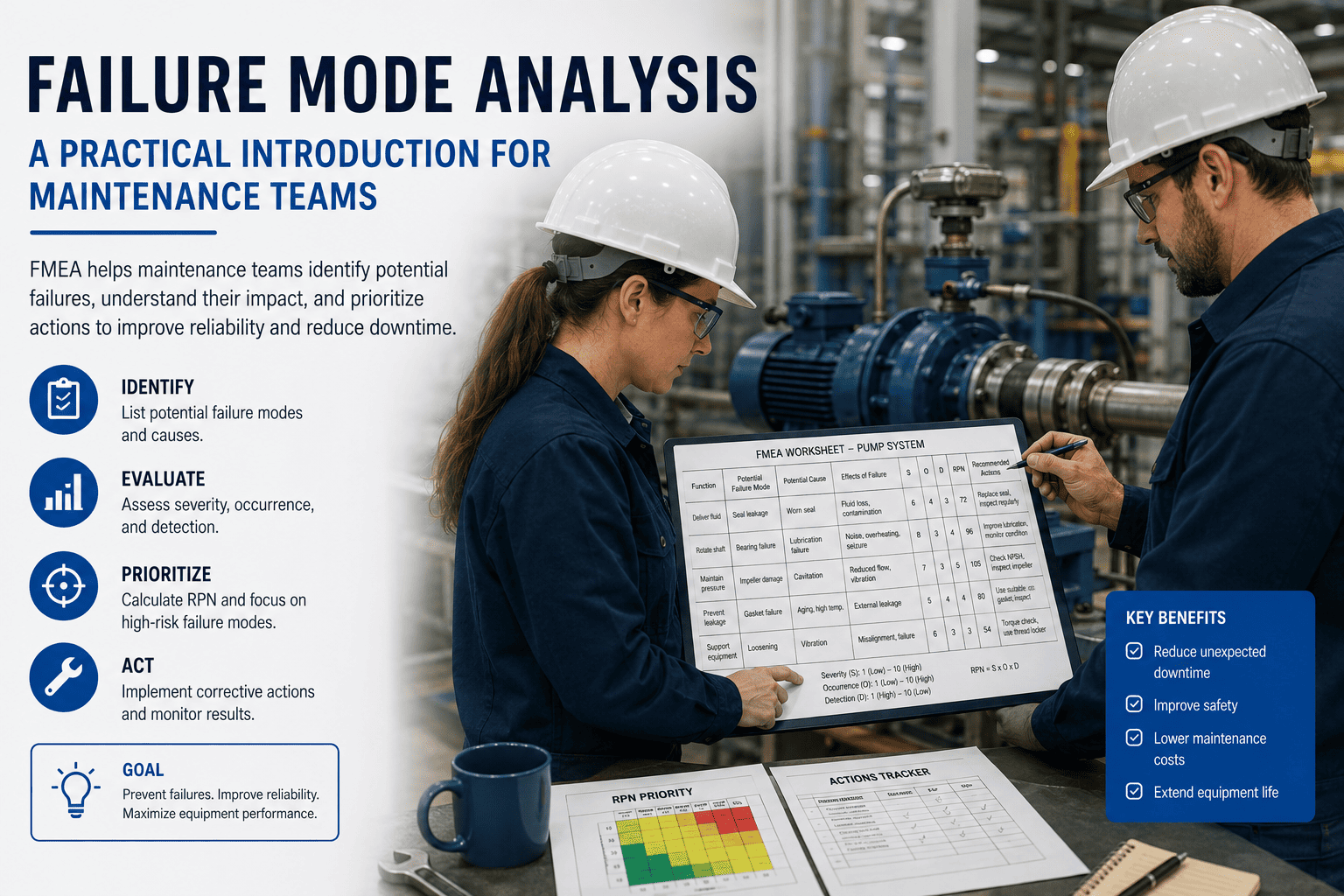
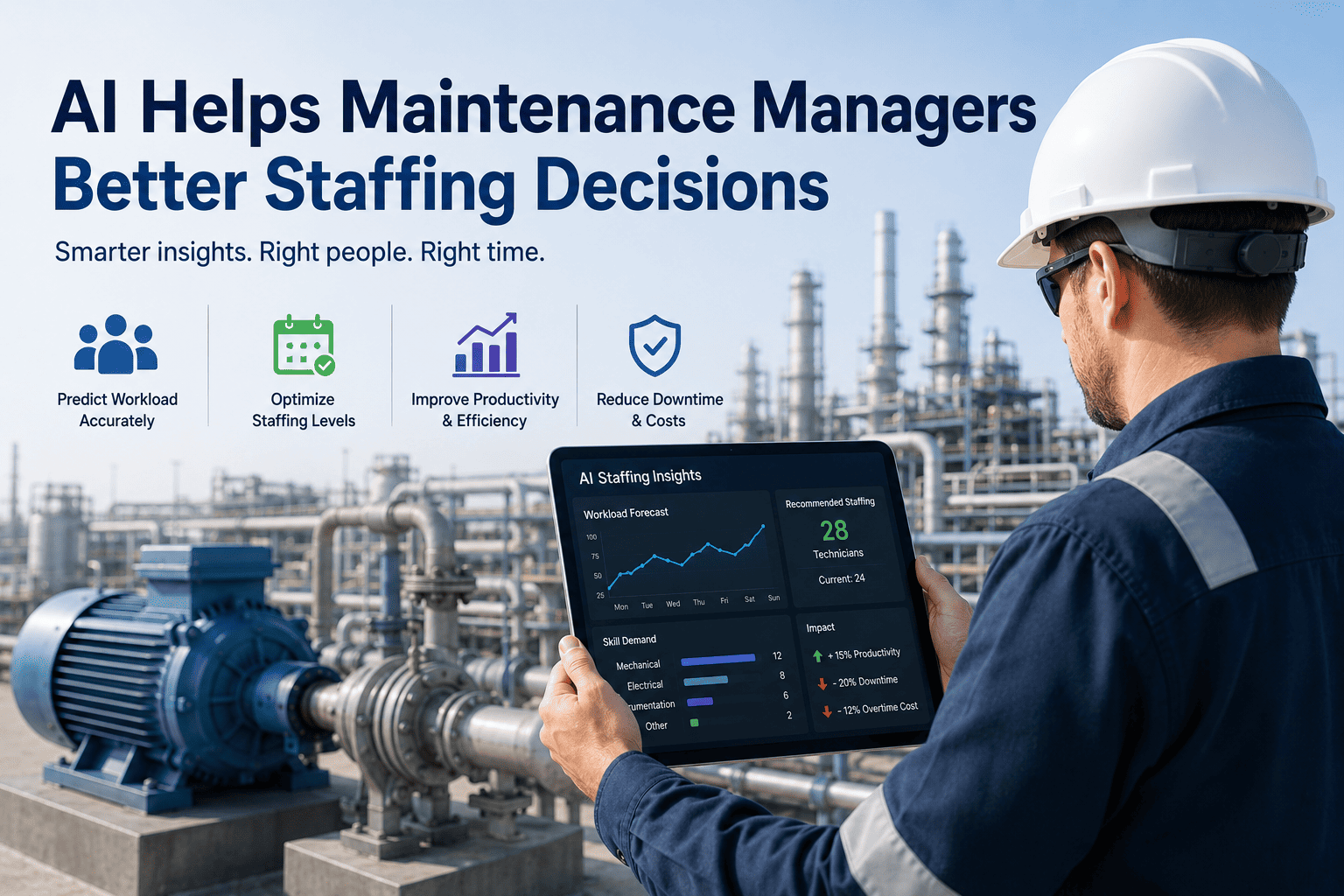
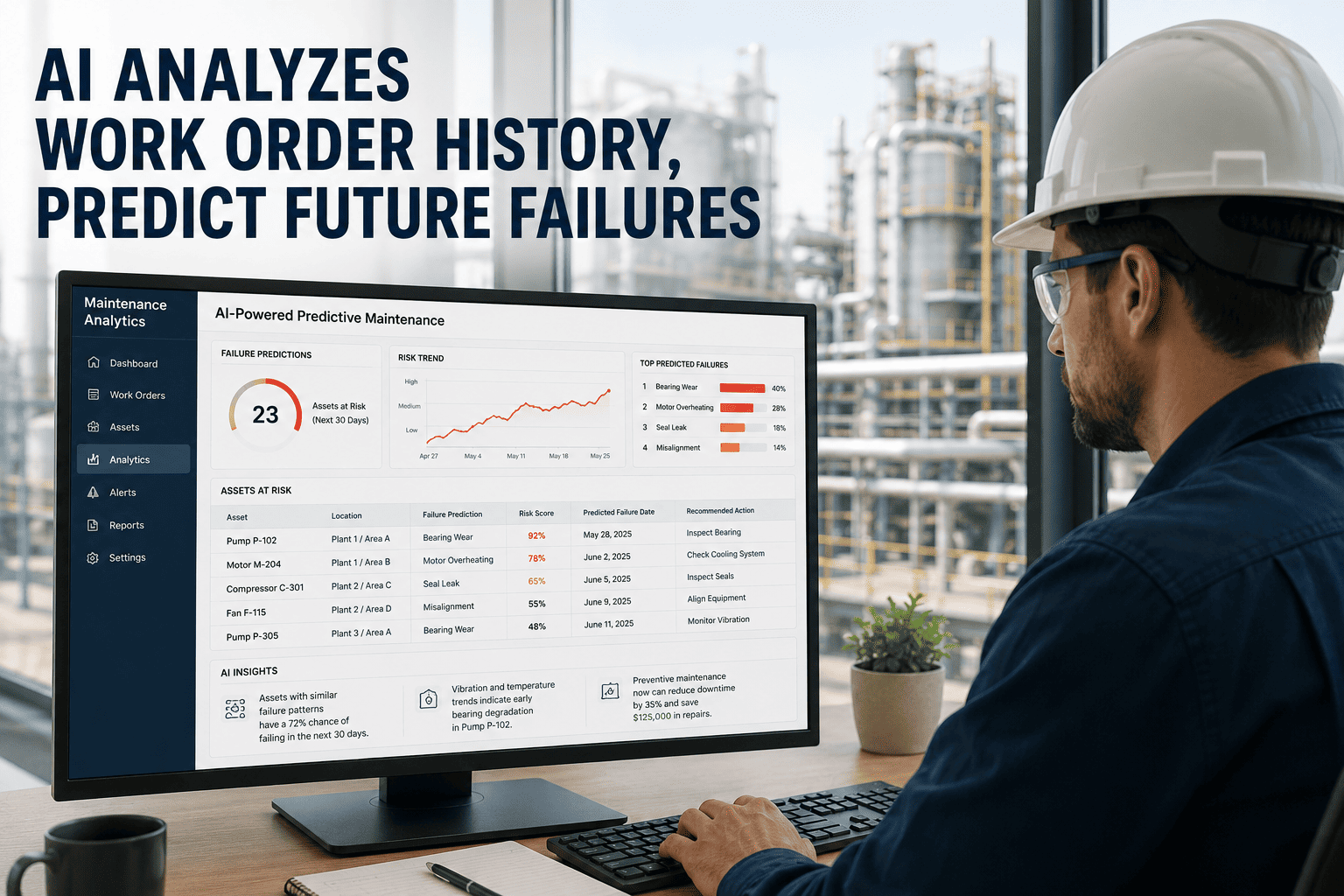
Unplanned equipment failures cost industrial facilities an average of $260,000 per hour in lost production — and in most plants, 60–70% of those failures are preventable. The gap between facilities that run at peak uptime and those that don't almost always comes down to one thing: whether maintenance is managed reactively or proactively. OxMaint's CMMS platform gives maintenance teams the scheduling intelligence, predictive alerts, and real-time asset visibility to close that gap — turning reactive firefighting into structured, data-driven maintenance that protects both equipment and profitability.
Blog · Industrial Maintenance · CMMS Strategy
Machine Maintenance Best Practices 2025
How modern maintenance teams are replacing reactive breakdowns with predictive, scheduled, and cost-controlled programs — powered by OxMaint.
$260K
avg cost per hour of unplanned downtime in manufacturing
3–5×
more expensive to fix reactively than preventively
40%
reduction in breakdown costs reported by OxMaint users
What This Guide Covers
01 · Maintenance Types
02 · Scheduling Strategies
03 · Cost Analysis
04 · OxMaint Dashboard
05 · Before vs After
06 · Best Practices 2025
07 · Expert Review
08 · FAQs
01 — The Three Types of Machine Maintenance
Every maintenance strategy is built from three core approaches. The ratio between them determines your cost structure, equipment reliability, and operational risk. Most facilities operate with the wrong balance — and pay for it every quarter.
01
Preventive Maintenance
Proactive
Scheduled activities performed before failures occur. Reduces overall maintenance costs by 12–18% and extends equipment life by 20–40%. The baseline of any healthy program.
Time-based: intervals regardless of condition
Usage-based: triggered by hours or cycles
Condition-based: when monitoring flags degradation
OxMaint auto-schedules PM work orders by asset, frequency, and team — zero manual follow-up.
02
Predictive Maintenance
Data-Driven
Uses IoT sensors and analytics to predict failures before they occur. Can reduce maintenance costs by 25–30% and eliminate 70% of breakdowns entirely.
Vibration analysis for rotating equipment
Thermal imaging for electrical systems
Oil analysis for hydraulic health
Ultrasonic testing for leaks and arcing
OxMaint connects sensor feeds directly to asset records — anomalies auto-generate inspection work orders.
03
Corrective Maintenance
Reactive
Repairs after failure. Sometimes unavoidable — but over-reliance increases total maintenance spend by 3–5× compared to preventive approaches. Should never exceed 20% of total effort.
Emergency repairs: critical failure response
Deferred maintenance: non-critical, planned downtime
Run-to-failure: acceptable only for low-cost, non-critical parts
OxMaint tracks your reactive vs planned ratio in real time — and shows you exactly where to shift resources.
02 — Maintenance Scheduling Strategies
Choosing the right scheduling approach for each asset class determines whether you're spending maintenance budget efficiently or over-maintaining low-priority equipment while under-protecting critical systems.
T
Fixed-Time
Best for: safety-critical, regulatory assets
Predictable scheduling, compliance-ready
Risk of over-maintenance, higher base cost
C
Condition-Based
Best for: high-value production assets
Optimized timing, cost-efficient
Requires monitoring sensors and expertise
U
Usage-Based
Best for: variable-use production machinery
Aligns maintenance with actual wear
Requires accurate usage tracking systems
R
Risk-Based
Best for: diverse asset portfolios
Optimal resource allocation across all assets
Complex to implement without CMMS support
| Equipment Type |
Daily |
Weekly |
Monthly |
Quarterly |
Annual |
| Production Machinery |
Visual check, lubrication |
Cleaning, adjustments |
Filter changes, belt check |
Alignment, bearing inspection |
Overhaul, major replacement |
| HVAC Systems |
Temp monitoring |
Filter inspection |
Filter replacement, coil clean |
Refrigerant, electrical check |
Full system overhaul |
| Electrical Systems |
Panel temp check |
Connection tightness |
Insulation testing |
Thermal imaging, load analysis |
Full electrical audit |
| Hydraulic Systems |
Pressure, leak checks |
Fluid level check |
Filter swap, hose inspection |
Fluid analysis, pump check |
System overhaul |
OxMaint auto-generates these work orders on the right schedule, assigns them to the right technician, and tracks completion in real time — no spreadsheets, no missed PMs. Start free or book a demo to see your schedule built live.
Most facilities lose 20–40% of their maintenance budget to untracked assets and reactive emergency repairs. OxMaint shows you exactly where it goes.
03 — Maintenance Cost Analysis by Industry
Equipment maintenance costs typically represent 5–15% of total production costs. Understanding where your industry sits — and what drives the gaps between best-in-class and average performers — is the starting point for any cost reduction initiative.
Manufacturing
3–6%
of revenue
$25K–$50K / downtime hour
Target ratio: 70:30 preventive:reactive
Oil & Gas
6–12%
of revenue
$100K–$500K / downtime hour
Target ratio: 80:20 preventive:reactive
Power Generation
8–15%
of revenue
$50K–$200K / downtime hour
Target ratio: 85:15 preventive:reactive
Pharmaceuticals
5–10%
of revenue
$75K–$150K / downtime hour
Target ratio: 75:25 preventive:reactive
The Preventive Maintenance ROI Equation
$3–$5
saved for every $1 invested in preventive maintenance
40–60%
reduction in unplanned downtime events
20–40%
increase in average asset lifespan
6–18 mo
typical payback period for a structured PM program
Teams switching to structured CMMS see up to 40% lower breakdown costs — start a free OxMaint trial to experience this shift, or book a demo to see it on your own asset data.
04 — Live Maintenance Dashboard (OxMaint)
OxMaint gives every maintenance manager a real-time view of asset health, open work orders, and PM compliance — across every site, every team, every shift. Here is what a typical facility dashboard looks like.
94.2%
Overall Equipment Effectiveness
+3.1% vs last month
87:13
Planned vs Reactive Ratio
World-class threshold met
4.2 hrs
Mean Time to Repair (MTTR)
-1.8 hrs vs baseline
98%
PM Schedule Compliance
+12% since OxMaint deploy
Asset Health Status
CNC Mill #3 — Production Floor A
Healthy · PM current · WO#5241 closed 2d ago
Hydraulic Press Line 2 — Plant B
Pressure variance detected · Inspection WO#5268 assigned · 3 hrs ago
Conveyor Drive Motor — Packing Line
Vibration anomaly — bearing wear predicted · Urgent WO#5271 raised · 47 min ago
HVAC Unit — Clean Room 4
Healthy · Quarterly PM scheduled for 06/12 · Auto-assigned to Team C
Bearing wear prediction — Conveyor Drive Motor — WO#5271 auto-generated — Assigned: J. Mehta · 47 min ago
Hydraulic pressure deviation — 8% above baseline — Inspection WO#5268 created · 3 hrs ago
CNC Mill #3 PM completed — All checks passed — Work order WO#5241 closed · 2 days ago
Facilities without structured CMMS average 5.2 unplanned shutdowns per month. OxMaint users average 1.1.
05 — Before vs After: Switching to OxMaint
A mid-size discrete manufacturing facility with 340 assets and 12 maintenance technicians deployed OxMaint across all production lines. Results measured at 12 months against pre-deployment baseline.
Unplanned Downtime (hours/month)
After
14.6 hrs/month (−70%)
PM Schedule Compliance
After
98% compliance (+40pts)
Reactive vs Planned Maintenance Ratio
After
13% reactive (world-class)
Total Annual Maintenance Spend
06 — Reactive Maintenance vs Structured CMMS Program
This is the decision every maintenance manager faces. The difference in outcomes is not marginal — it compounds across every asset, every quarter, every year.
| Dimension |
Reactive-Only Approach |
OxMaint Structured Program |
| Downtime frequency |
4–6 unplanned stops/month |
1–2 stops/month average |
| Maintenance cost per unit |
3–5× higher than planned |
Optimized, tracked, benchmarked |
| Asset lifespan |
15–25% shorter than design life |
20–40% extension over baseline |
| Technician productivity |
60–70% reactive firefighting |
80%+ scheduled, planned work |
| Parts inventory |
Overstocked or critically understocked |
Real-time tracking, auto-reorder |
| Safety incidents |
50–70% higher maintenance-related risk |
Systematic LOTO/PPE compliance tracking |
| Compliance documentation |
Manual, incomplete, audit-risk |
Auto-generated, tamper-proof records |
| Multi-site visibility |
No central view — siloed data |
Single dashboard across all sites |
07 — OxMaint by the Numbers
Across facilities managing 500 to 50,000+ assets, OxMaint consistently delivers measurable outcomes within the first 90 days of deployment.
70%
reduction in unplanned downtime hours
34%
lower total annual maintenance spend
98%
PM schedule compliance (industry avg: 64%)
30 days
to measurable results after go-live
10,000+
assets actively managed on OxMaint
Days
to go live — not months of implementation
Stop Losing Millions to Reactive Maintenance
Turn every asset into a predictable, trackable, cost-controlled system with OxMaint. See measurable results in the first 30 days.
Real-time asset visibility across all sites
Predictive failure alerts before breakdowns
5–10 year CapEx forecasting built in
No heavy implementation — live in days
Used by operations teams managing 10,000+ assets · Limited onboarding slots available this quarter
Expert Review
RM
Rajesh Malhotra
VP Reliability Engineering — Multi-Site Industrial Operations · 24 years · IIT Delhi, Mechanical Engineering · Certified Maintenance and Reliability Professional (CMRP)
The conversation about maintenance efficiency in manufacturing almost always starts with buying better tools or hiring more technicians. What rarely gets examined is the system problem: maintenance teams have the skills, they just lack the visibility. A technician standing in front of a machine with no maintenance history, no sensor data, and a work order printed two days ago is being set up to fail. What OxMaint does differently is close the gap between data and action — the asset record, the sensor alert, the work order, the parts inventory, and the compliance log are all connected in one system. I have seen facilities cut their reactive maintenance ratio from 55% to under 15% within a year — not by changing their team, but by giving their team the information they needed to stop firefighting and start preventing.
Frequently Asked Questions
How often should preventive maintenance be performed on production equipment?
Frequency depends on equipment criticality, operating conditions, and manufacturer guidance. Critical production equipment typically requires daily visual inspections, weekly cleaning and adjustments, and monthly component checks. Non-critical equipment may need only monthly or quarterly attention. OxMaint lets you define frequency per asset, then automatically generates and assigns work orders on that schedule — so nothing falls through the cracks and over-maintenance of low-priority assets is eliminated.
What is the ideal ratio of preventive to reactive maintenance?
World-class organizations achieve an 85:15 planned-to-reactive ratio. Industry average sits closer to 55:45 — meaning the majority of maintenance effort is still firefighting. Reaching 80:20 typically reduces total maintenance costs by 12–18% and improves equipment availability by 25–35%. OxMaint tracks your ratio in real time and surfaces which asset classes or technician teams are pulling the ratio in the wrong direction.
How does OxMaint handle predictive maintenance and IoT sensor integration?
OxMaint connects to existing sensor infrastructure via OPC-UA, MQTT, Modbus TCP, and historian connectors including OSIsoft PI. Vibration, temperature, pressure, and electrical current readings feed directly into asset records. When a reading exceeds a configurable threshold, OxMaint automatically generates an inspection or corrective work order, assigns it to the right technician, and logs the sensor event against the asset history — creating a full audit trail from anomaly to resolution.
What KPIs does OxMaint track for maintenance performance?
OxMaint's dashboard tracks OEE (Overall Equipment Effectiveness), MTBF (Mean Time Between Failures), MTTR (Mean Time to Repair), PM schedule compliance percentage, planned vs reactive maintenance ratio, maintenance cost per unit produced, work order backlog, and parts inventory turnover — all in real time, per asset, per site, and rolled up to portfolio level. Custom KPI thresholds can be configured for each facility.
How quickly can a facility go live on OxMaint?
Most facilities are live and generating their first automated work orders within days of account creation. OxMaint does not require heavy IT implementation, infrastructure changes, or long onboarding cycles. Asset data can be imported from existing spreadsheets or connected from ERP systems. The platform works across multi-site portfolios from day one. A free trial account gives full platform access immediately — no credit card required.
Can OxMaint support compliance and audit documentation?
OxMaint maintains a complete, timestamped, tamper-resistant maintenance history for every asset. Work order records include technician assignment, parts used, time logged, and sign-off status. Safety procedure compliance (LOTO, PPE, confined space, hot work permits) can be embedded directly into work order checklists. This documentation supports ISO 55001 asset management compliance, OSHA record requirements, and internal audit processes without any manual data assembly.
Final CTA
Your Next Breakdown Is Preventable. Start Preventing It Today.
OxMaint gives your maintenance team real-time asset visibility, automated PM scheduling, predictive failure alerts, and the compliance documentation to back it all up — in a platform your team can be using within days.
Real-time asset visibility
Predictive failure alerts
5–10 year CapEx forecasting
Works across multi-site portfolios
No heavy implementation required · Live in days, not months · Used by teams managing 10,000+ assets