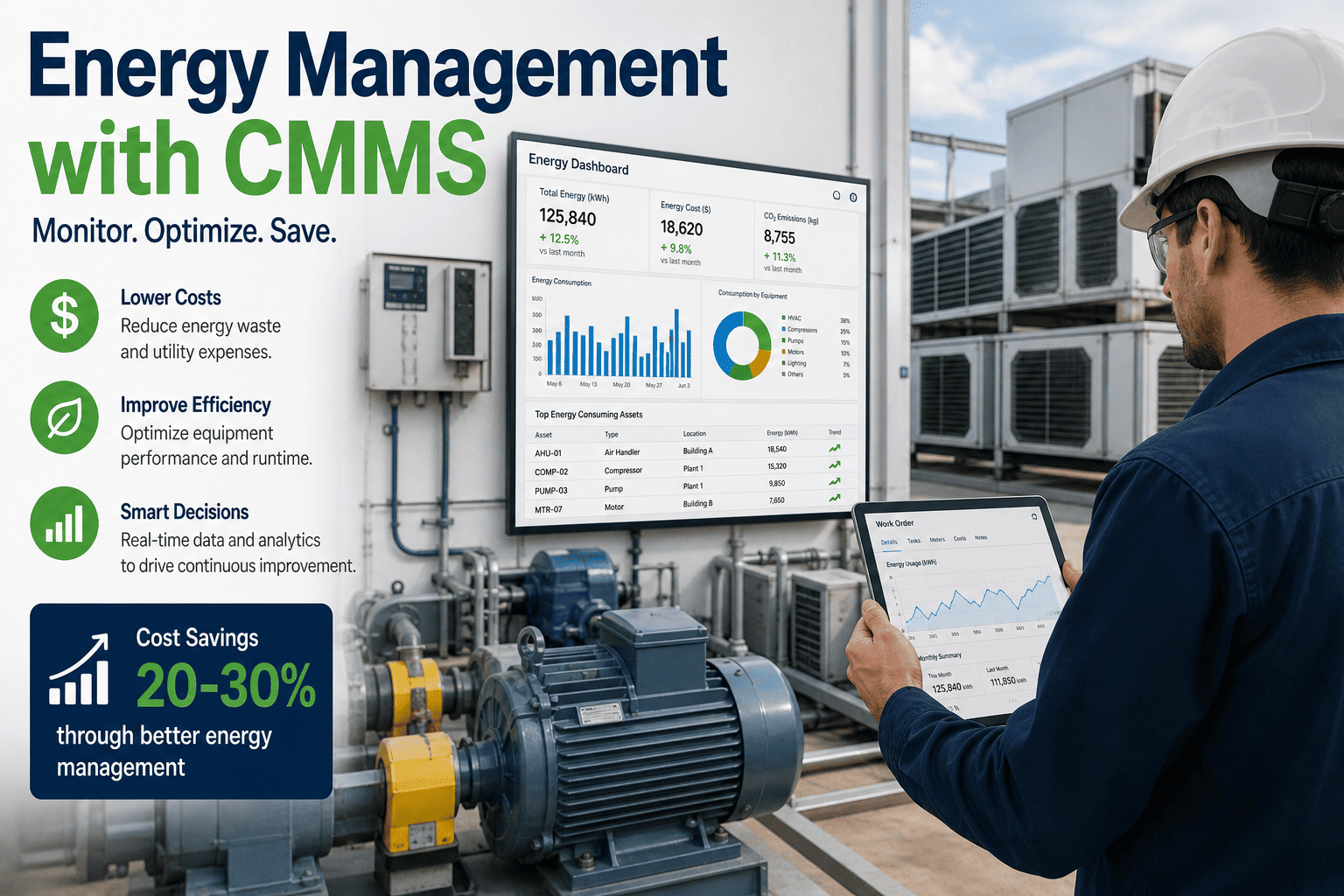
Energy is one of the largest controllable costs in commercial and industrial facility management — and most of it is being wasted by equipment that nobody is maintaining properly. A motor running with a dirty filter draws 15–20% more energy than a clean one. An HVAC system with a refrigerant imbalance uses 30% more electricity to deliver the same cooling. A compressed air system with undetected leaks wastes 20–30% of its entire output. The solution is not a building upgrade — it is a maintenance program that treats energy performance as a KPI tied directly to asset condition. Start a free trial and build energy-driven PM schedules inside Oxmaint today, or book a demo to see how energy efficiency is tracked alongside asset maintenance in one platform.
Energy Efficiency · HVAC · Motor Maintenance · CMMS Optimization
Energy Management With CMMS: Reduce Utility Costs Through Better Maintenance
Every inefficient HVAC unit, degraded motor, and leaking compressed air line is an energy expense hiding inside your maintenance backlog. Oxmaint connects asset condition to energy performance — turning PM schedules into utility bill reductions.
30%
of commercial facility energy is wasted through equipment inefficiency and deferred maintenance
20%
extra energy consumed by a motor running with a clogged filter or misaligned shaft
15–25%
energy savings achievable through CMMS-optimized maintenance on HVAC and motor systems
18 mo
average payback period on energy-focused maintenance programs in commercial portfolios
The Connection
Why Maintenance Quality Is Your Most Underused Energy Reduction Tool
Energy management programs typically focus on capital upgrades — LED lighting, high-efficiency chillers, solar. But the energy waste hiding in your existing equipment is often greater than what a $500,000 capital project would recover. The discipline of connecting maintenance execution to energy consumption data is what separates facilities running at 15% over their energy benchmark from those consistently 10% below it. Oxmaint makes that connection operational.
HVAC
HVAC Systems
Filter replacement — every 6–12 weeks in commercial
Coil cleaning — annual or condition-triggered
Refrigerant check — quarterly via IoT sensor
Belt tension and fan blade inspection — semi-annual
Up to 30% energy reduction with full PM compliance
MTR
Electric Motors
Lubrication — frequency tied to operating hours in Oxmaint
Vibration monitoring — IoT-triggered inspection
Shaft alignment check — after any motor move or coupling replacement
Load factor assessment — quarterly via metering data
3–8% energy saving per motor from correct lubrication alone
CA
Compressed Air Systems
Leak detection survey — quarterly ultrasonic inspection
Pressure setpoint optimization — annual review
Dryer and filter maintenance — monthly
Compressor intake filter replacement — condition-triggered
20–30% of compressed air output lost to undetected leaks
BLD
Building Envelope and Controls
BMS calibration and setpoint review — bi-annual
Insulation inspection — condition-scored in Oxmaint
Door and window seal inspection — annual
Lighting sensor and ballast check — annual
10–15% energy reduction from properly calibrated BMS controls
Where Energy Leaks
The Four Maintenance Failures That Drive Your Utility Bills Up
Overdue PM on High-Draw Equipment
HVAC systems and motors running past their service intervals draw 15–30% more power than maintained equivalents. Every overdue PM is a daily energy cost that compounds over weeks and months.
No Condition Visibility Between Inspections
Without IoT-connected sensors, a degrading chiller or motor runs at reduced efficiency for months before anyone notices — because the only signal was energy consumption that nobody was tracking against asset condition.
Compressed Air Leaks Left Unrepaired
A 1mm compressed air leak at 7 bar costs approximately $700 per year in wasted energy. A typical industrial site has 20–30 active leaks at any time. Leak surveys without a work order system to close them out are meaningless.
Energy Data Disconnected From Maintenance Records
Utility bills live in accounts. Equipment service records live in a CMMS. When those two data streams never meet, the correlation between deferred maintenance and energy cost spikes is invisible to the people who could fix it.
Oxmaint Solution
How Oxmaint Connects Asset Maintenance to Energy Performance
Condition-Based PM
PM Tasks Triggered by Energy Deviation, Not Just Calendar
Connect energy meters and IoT sensors to Oxmaint via SCADA integration. When a motor's power draw exceeds its baseline by 10%, an inspection work order triggers automatically — before the degradation compounds into a breakdown.
Asset Condition Scoring
Condition Score Decay That Reflects Energy Performance
Oxmaint's condition scoring adjusts as PM tasks are completed or overdue. High-energy assets with declining condition scores are flagged to managers before they become both maintenance problems and energy emergencies.
Leak Management
Compressed Air Leak Surveys Closed as Work Orders
Log every identified leak as a work order in Oxmaint with location, estimated loss rate, and repair priority. Track open vs repaired leaks portfolio-wide. Never leave a quarterly survey finding sitting in a spreadsheet with no follow-through.
HVAC Scheduling
Automated HVAC PM Tied to Operating Hours and Seasons
Filter changes, coil cleaning, and refrigerant checks are scheduled by runtime hours in Oxmaint — not arbitrary calendar dates. Seasonal transition checklists deploy automatically before peak cooling and heating loads hit.
Multi-Site Reporting
Energy-Maintenance Correlation Reports Across Your Portfolio
Oxmaint's portfolio reporting lets you benchmark energy performance across sites against PM compliance rates. The sites with the highest PM compliance consistently show the lowest energy intensity — and you will see it in the data.
IoT Integration
Real-Time Equipment Data That Drives Maintenance Decisions
SCADA, OPC-UA, and Modbus integration bring real-time temperature, vibration, pressure, and power data into Oxmaint. Maintenance decisions are made on live asset condition — not assumptions about when the last service was done.
The connection between maintenance quality and energy cost is measurable — and Oxmaint makes it visible. Start a free trial to connect your asset records to energy performance tracking, or book a demo to see how HVAC and motor maintenance are structured inside the platform.
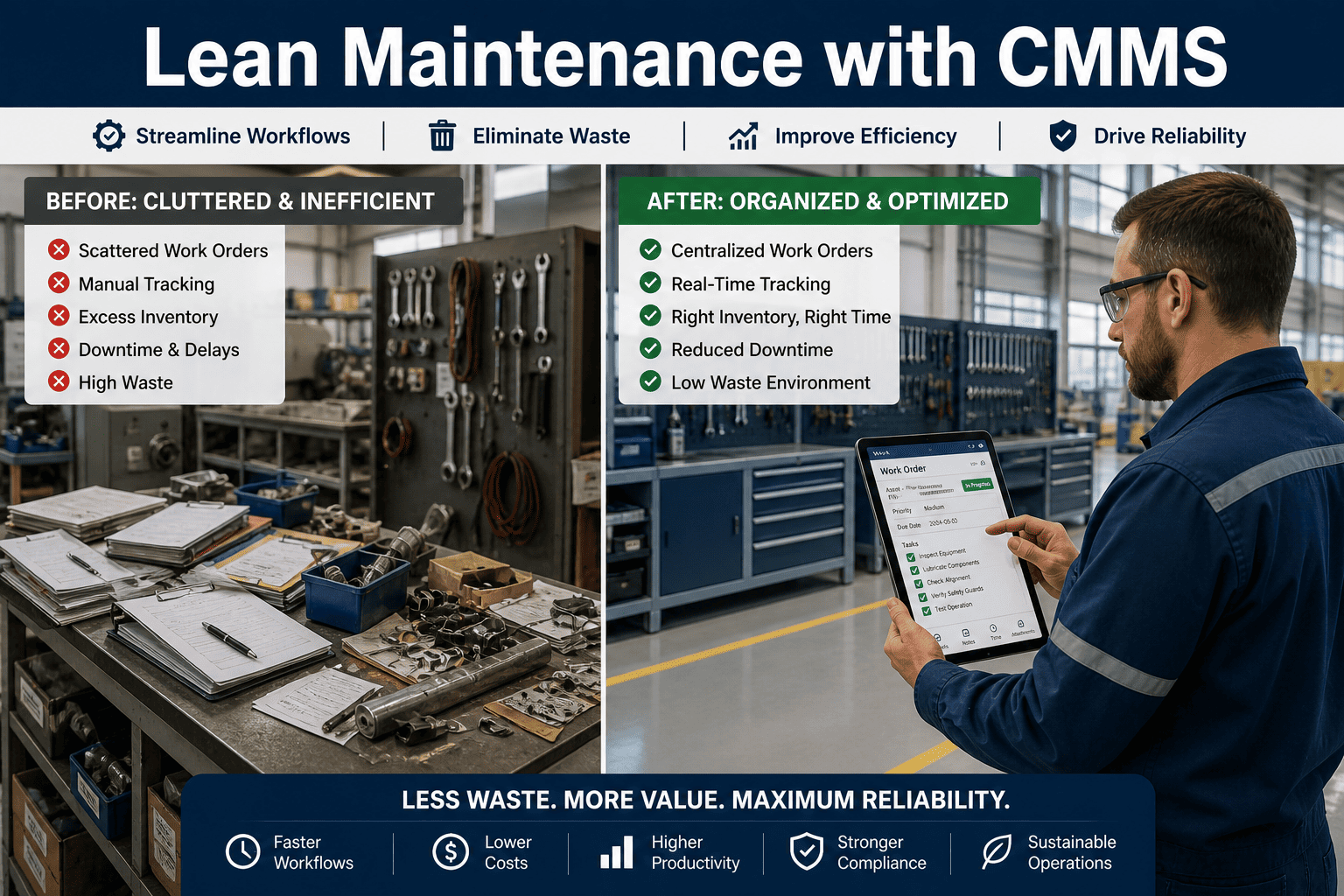
Before vs After
Reactive Energy Management vs CMMS-Driven Energy Optimization
Documented Results
What Energy-Driven Maintenance Programs Deliver in Real Numbers
15–25%
Utility Cost Reduction
Average energy savings from HVAC, motor, and compressed air PM programs fully managed through Oxmaint.
$700
Saved Per Repaired Leak
Annual energy saving from a single 1mm compressed air leak repair — multiply by 20–30 active leaks on a typical site.
18 mo
Typical ROI Payback
Average time for energy savings to pay back the Oxmaint platform cost on a commercial multi-site portfolio.
92%
PM Compliance on Energy Assets
Oxmaint customers running energy-linked PM schedules achieve PM compliance rates above 90%, compared to a 62% industry average.
Your Utility Bills Are a Maintenance Report
Every Spike in Your Energy Bill Has a Maintenance Cause — Find It With Oxmaint
Oxmaint connects asset condition, PM schedules, IoT sensor data, and work order history into one platform — giving facility managers and energy teams the visibility to find waste, fix it, and prove the savings. Stop treating energy and maintenance as separate programs. They are the same problem.
Frequently Asked
Energy Management and CMMS — Common Questions
How does Oxmaint connect energy consumption data to maintenance schedules?
Oxmaint integrates with IoT sensors, SCADA systems, and BMS platforms via OPC-UA, Modbus, and standard API connections. Live power consumption, temperature, vibration, and pressure readings are associated with individual asset records. When readings deviate from baseline thresholds, Oxmaint automatically generates a work order for inspection — so maintenance action is triggered by actual energy performance rather than a calendar date.
Start a free trial to explore the IoT integration setup.
What is the best maintenance strategy for large-motor energy efficiency?
Combine time-based lubrication PMs (scheduled by operating hours in Oxmaint) with condition-based monitoring for vibration, temperature, and load factor. When any condition parameter deviates from baseline, an inspection triggers before efficiency loss becomes a breakdown cost. Shaft alignment checks after any motor-related work are critical — misalignment is responsible for 30–50% of premature bearing failures and the associated energy penalties.
Book a demo to see how motor PM is structured inside Oxmaint.
How often should compressed air leak surveys be conducted?
Quarterly ultrasonic leak surveys are the industry standard for industrial sites with large compressed air systems. The key is not just finding leaks — it is closing them as tracked work orders. Oxmaint allows you to log every finding from a survey as a separate work order with location, estimated loss rate, and repair deadline. Progress toward a leak-free system is tracked and reported rather than forgotten between surveys.
Can Oxmaint support energy sustainability reporting for ESG compliance?
Yes. Oxmaint's portfolio-level reporting provides the maintenance-side documentation that supports energy and carbon reduction claims for ESG frameworks such as GRESB, BREEAM, and LEED. PM compliance rates for energy-critical assets, work order histories for energy optimization projects, and IoT-driven condition data are all accessible as exportable reports — giving sustainability teams the evidence base they need for audit-ready ESG disclosures.
Start a free trial and run your first energy PM compliance report.
Energy · Maintenance · Savings
Cut Utility Costs Without a Capital Project — Start With Better Maintenance
Oxmaint gives facility managers and maintenance teams the CMMS infrastructure to track asset condition, schedule energy-focused PMs, close compressed air leaks, and report on energy performance — all without leaving the platform. The fastest path to lower energy bills is the one that starts in your CMMS.