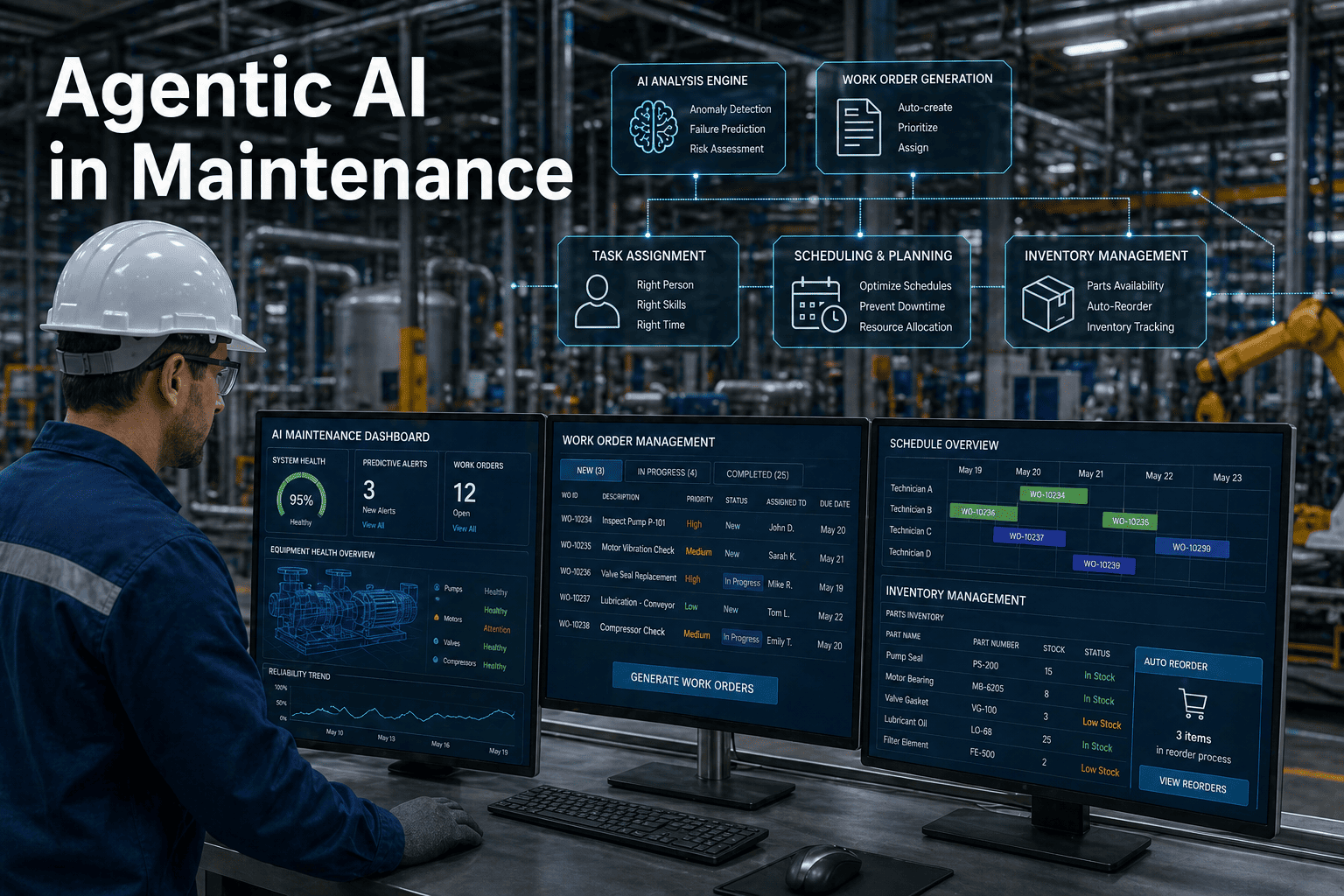
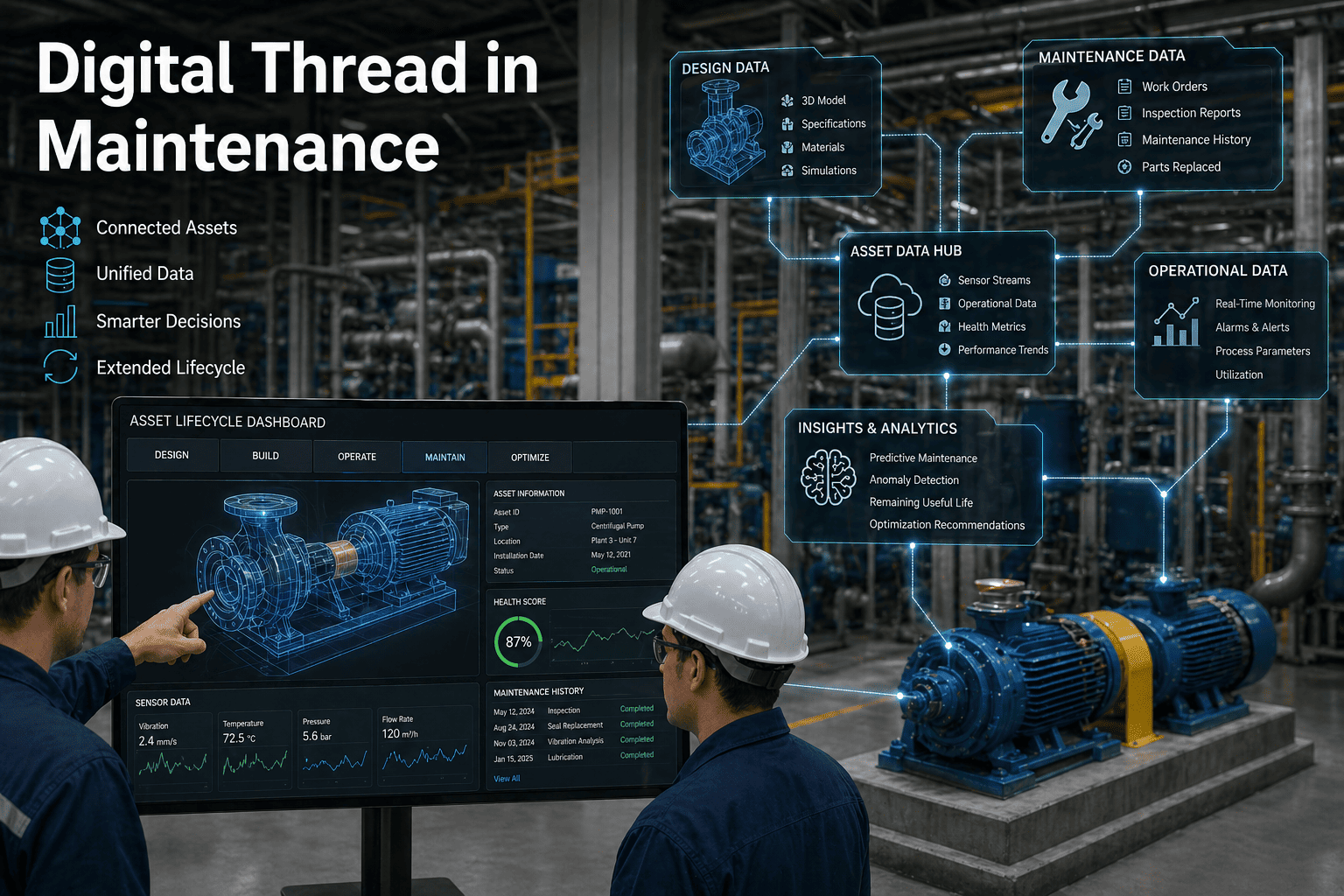
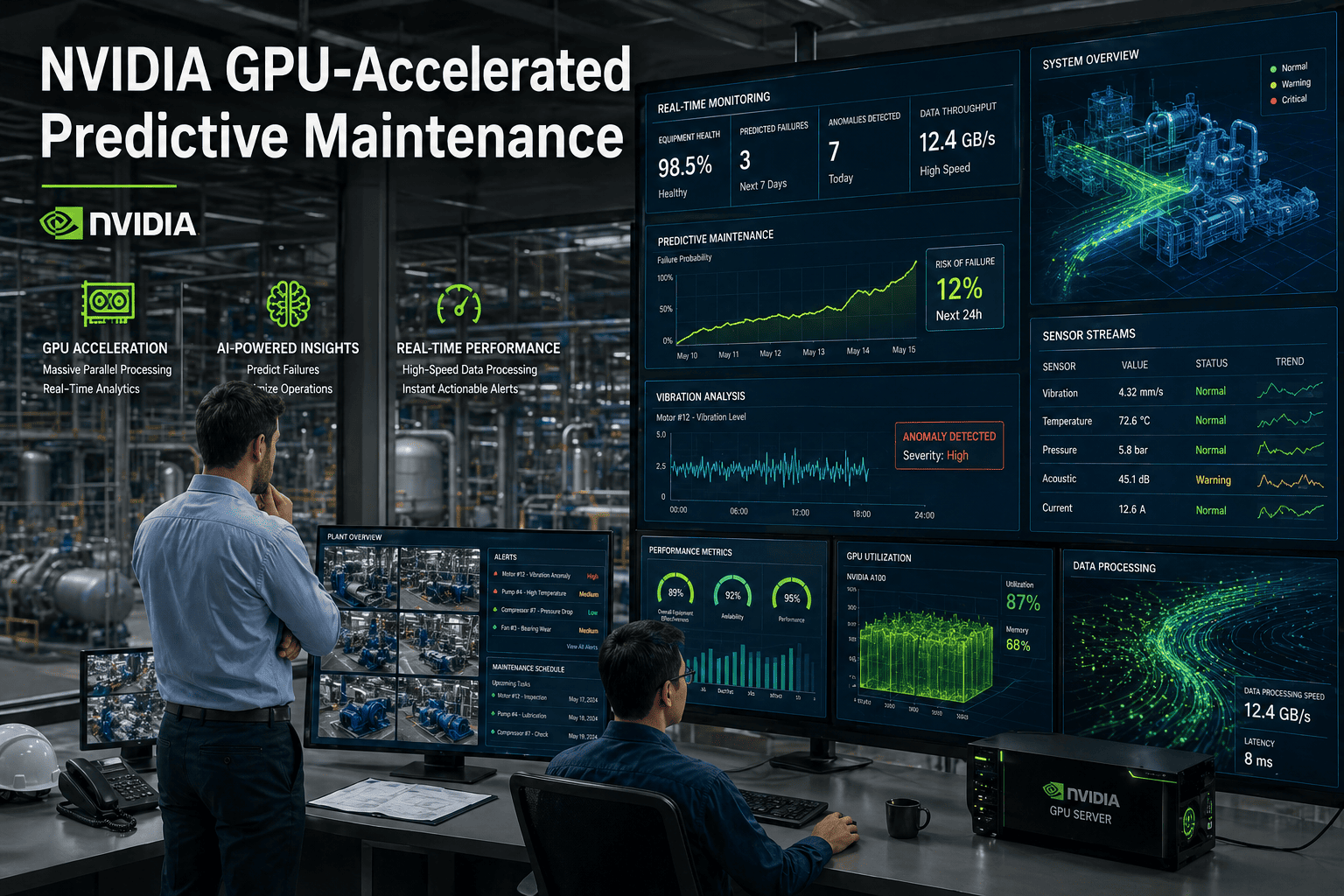
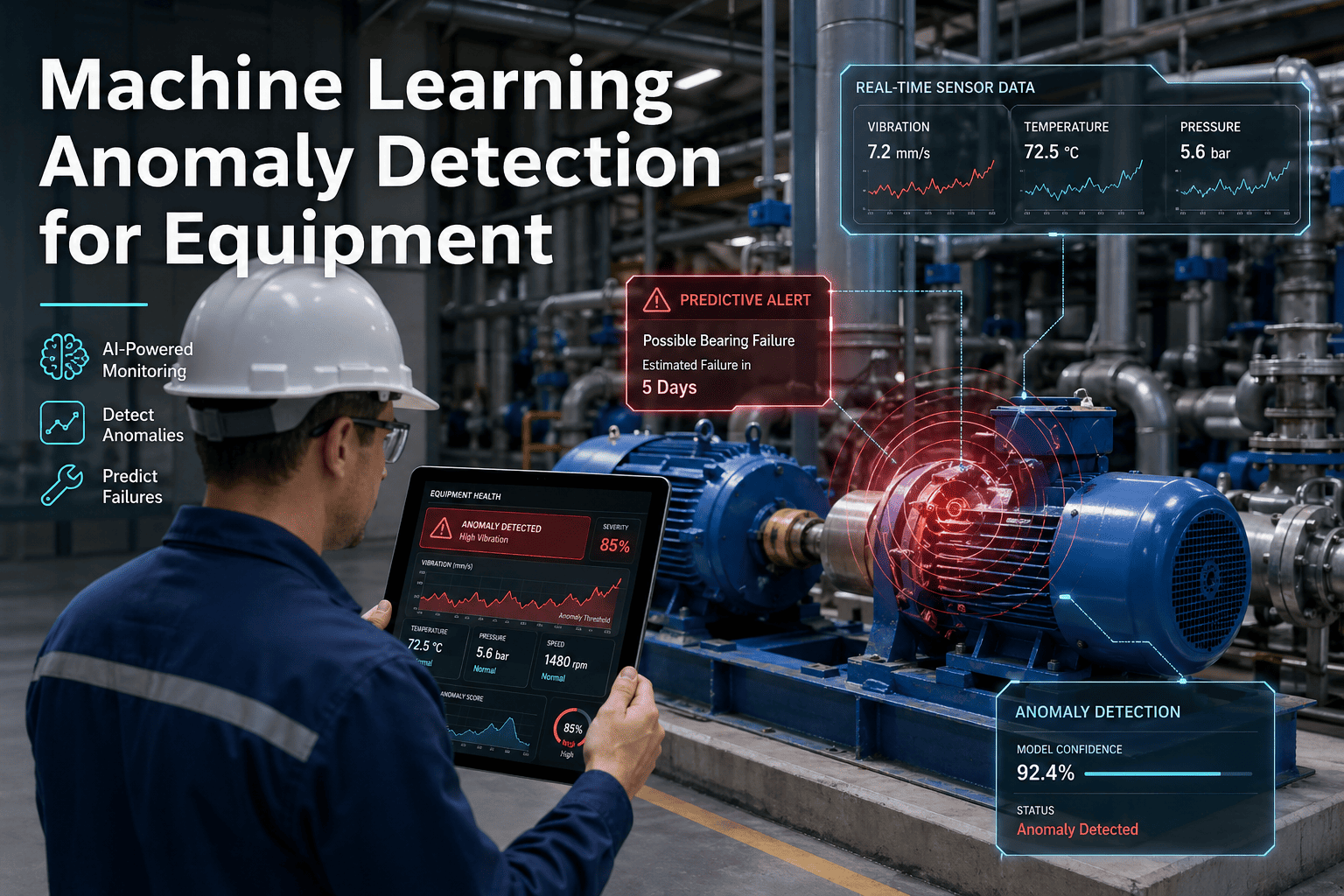
Imagine a maintenance operation where vibration drift on a centrifugal compressor at 02:14 in the morning is not someone's problem at 08:00 — it is already a closed work order with the right technician dispatched, the right spare reserved, and the OEM notified, before anyone has had their first coffee. That is not predictive maintenance. That is agentic AI maintenance — where autonomous software agents sense, decide, and act without waiting for a human to interpret a dashboard. Gartner named agentic AI the top technology trend for 2025. Deloitte projects that 25% of GenAI-enabled enterprises will deploy autonomous agents in 2025, doubling to 50% by 2027. To see agentic workflows running on real assets, you can start a free trial and activate your first agent in minutes.
Autonomous MaintenanceAgentic AICMMS Automation
Agentic AI in Maintenance: Autonomous Work Orders, Self-Healing Operations
Specialized AI agents that detect faults, generate work orders, schedule technicians, reserve spares, and escalate exceptions — autonomously and with a full audit trail. The end of "wait for someone to see the alert."
Detection Agent
Anomaly score: 0.94
02:14:07
↓
Decision Agent
Bearing wear · Severity 3
02:14:09
↓
Action Agent
Work order #4827 dispatched
02:14:11
Stop interpreting alerts. Start closing them.OxMaint's agentic AI engine detects, decides, dispatches, and documents — autonomously.
Average payback for agentic maintenance deployments — under two years, with 5-year NPV exceeding 447K euros per facility.
The Definition
What Is Agentic AI in Maintenance, Really?
Agentic AI is not one large model answering questions. It is a coordinated team of specialized software agents — each with a defined responsibility — orchestrated by a manager agent that breaks complex maintenance scenarios into sub-tasks, delegates them, and consolidates the results. The shift from "AI that predicts" to "AI that acts" is the difference between insight and execution. Traditional CMMS records what happened. Agentic CMMS makes things happen. To see how agents work end-to-end, you can book a demo with our team.
The Agent Squad
Meet the 6 Specialized Agents Inside OxMaint
Each agent has a single job and does it well. The orchestrator agent coordinates them. The result is a maintenance operation that runs at machine speed, with a human in the loop only where judgment matters most.
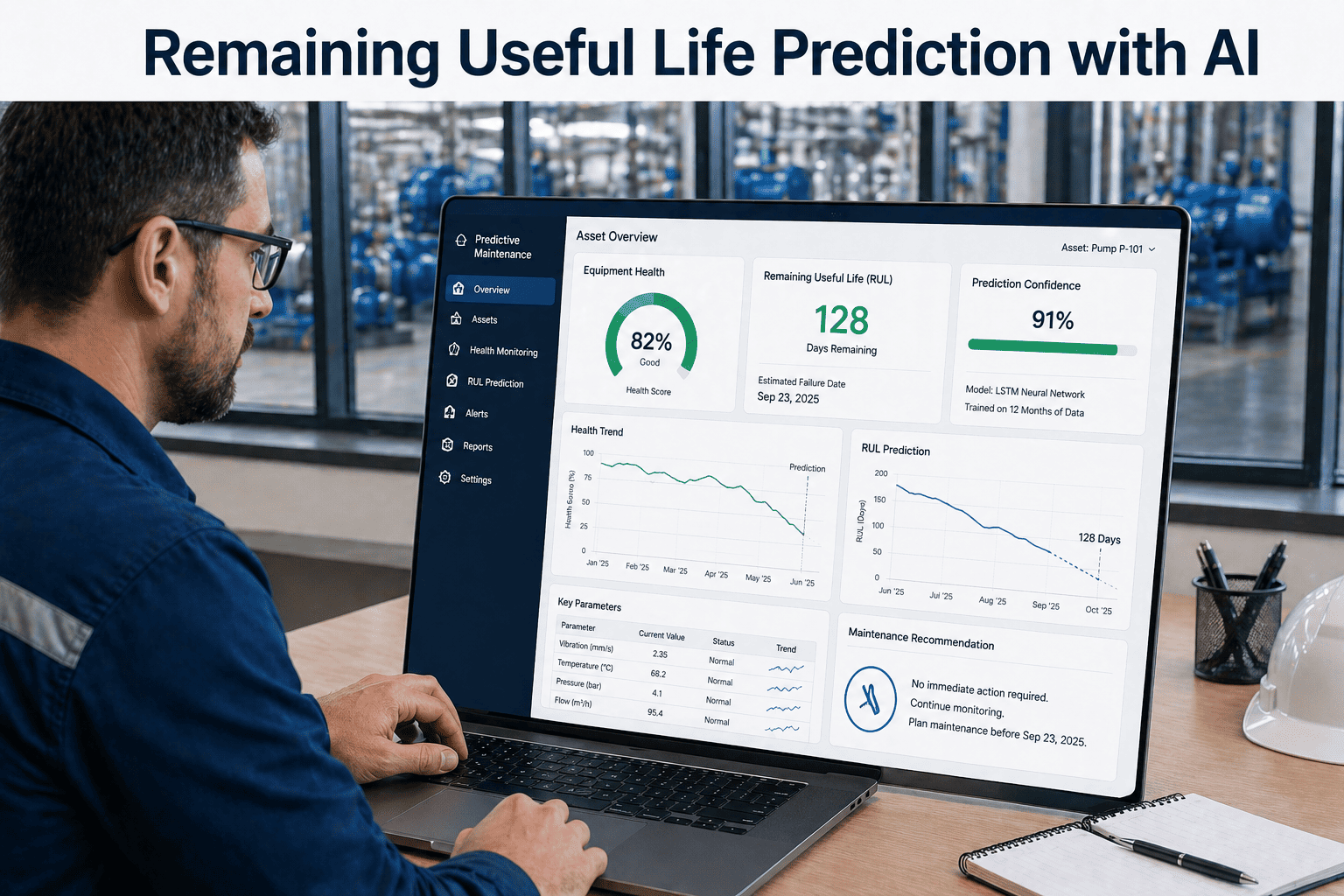
Takes the anomaly signature, classifies the failure mode — bearing wear, imbalance, cavitation, electrical fault — and estimates remaining useful life with confidence bounds.
Decision Agent
Prioritization
Weighs criticality, production impact, asset value, and current operational state. Decides whether to dispatch now, schedule for next planned window, or escalate for human review.
Scheduler Agent
Technician Match
Finds the right technician — by skill, location, current workload, certification — and creates a work order with estimated duration. Handles cross-shift handoffs autonomously.
Inventory Agent
Parts Reservation
Reads the diagnosis, looks up the bill of materials, reserves spares from inventory. If stock is low, triggers procurement automatically with the preferred supplier.
Feedback Agent
Continuous Learning
When the technician closes the work order, ingests actual findings — was the failure mode correct? RUL accurate? — and updates models so every future prediction is sharper.
The Reality
Why Traditional CMMS Plus Manual Triage Cannot Scale
Alert Triage Bottleneck
Every anomaly waits for a human to interpret. Off-hours alerts queue. By morning, the small issue is a 6-figure failure.
Manual Work Order Lag
Average plant takes 47 minutes from "alert raised" to "work order dispatched." Agentic systems do it in under 30 seconds.
Wrong-Technician Dispatch
42% of unplanned repairs initially go to the wrong skill match. Scheduler agents check certifications, workload, and proximity automatically.
Stockout Surprises
Technician arrives, no part on shelf. Job pauses. Inventory agent reserves parts at diagnosis time — pre-staged before dispatch.
Repeat Failures
Without closed-loop learning, the same fault recurs every quarter. Feedback agent updates models with each completed repair.
Audit Trail Gaps
Regulators want every decision logged. Manual workflows lose data. Agent decisions are auditable end-to-end with timestamped reasoning.
How It Works
The Closed Loop From Sensor Signal to Closed Work Order
02:14:07
Anomaly Detected
Sensor agent flags vibration drift on a critical pump — 0.4 mm/s above baseline at 30% load.
Want to model the same numbers for your operation? You can start a free trial and run agentic workflows on your assets.
FAQs
Frequently Asked Questions
Are humans completely out of the loop with agentic maintenance?
No. Humans stay in the loop where judgment matters — escalations, novel failure modes, exceptions, and high-cost interventions. Agentic systems handle the 90% of routine decisions that drain technician time today, freeing humans for the 10% where experience matters most.
How is agentic AI different from rule-based automation we already have?
Rule-based scripts follow pre-defined logic. They break when conditions change. Agentic AI reasons across context, adapts to novel situations, and learns from outcomes. Plants migrating from rule-based to agentic see automation maintenance costs drop because exceptions stop breaking the system.
What about safety-critical decisions — can agents really be trusted?
For safety-critical actions, agents propose; humans approve. OxMaint lets you set per-asset and per-action policies — auto-execute for routine work, require approval for high-impact, escalate to leadership for safety-implication decisions. Full transparency, every decision logged.
How long does it take to deploy agentic AI on our existing CMMS data?
OxMaint replaces or augments your existing CMMS. Migration typically takes 2 to 4 weeks including asset registry import, sensor integration, and agent policy configuration. First autonomous work orders flow within 30 days. Book a demo for a tailored timeline.
Trusted by Maintenance Teams Across 40-Plus Countries
Maintenance That Runs Itself. Operations That Stay Up.
OxMaint's agentic AI engine senses, decides, dispatches, and documents — autonomously and with a full audit trail. Live in 5 days. Humans in the loop only where it matters.