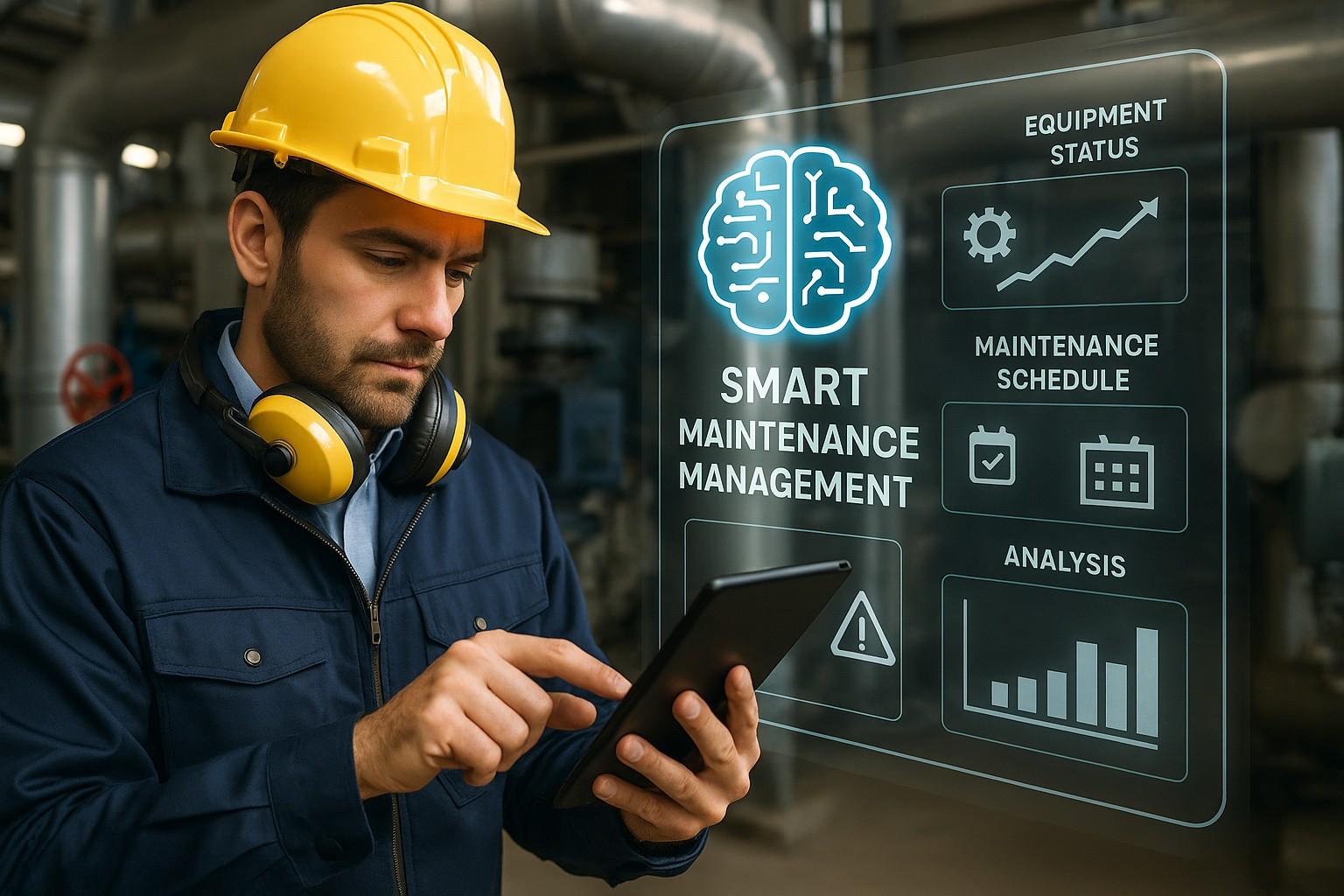
Your operations director walks into the crisis management meeting with catastrophic operational news: "Our main production line experienced three unexpected failures this week costing $890,000 in emergency repairs and lost output, our maintenance team is drowning in 1,400+ work orders with no prioritization system, and we're operating completely blind to equipment health conditions." You review the quarterly maintenance reports—reactive firefighting consuming 70% of resources, zero predictive capabilities, technicians relying on gut instinct rather than data—but realize your facility lacks the artificial intelligence infrastructure needed to transform maintenance from costly reactive chaos into intelligent proactive asset management.
This scenario repeats across manufacturing facilities as operations struggle with unpredictable equipment failures and inefficient maintenance processes devastating productivity and profitability. The average industrial facility loses 20-30% of productive capacity to preventable equipment failures and suboptimal maintenance decisions, yet AI-powered smart maintenance systems can reduce unplanned downtime by 60% while cutting maintenance costs 35-50% through intelligent automation, predictive analytics and machine learning optimization.
Organizations implementing comprehensive AI-driven smart maintenance platforms achieve 50-70% improvements in overall equipment effectiveness (OEE) while reducing emergency repairs by 75-85% compared to traditional manual approaches. The transformation lies in leveraging artificial intelligence technologies—machine learning algorithms, neural networks, natural language processing, and computer vision—that continuously analyze equipment data identifying failure patterns, optimizing maintenance schedules, and automating decision-making enabling proactive intervention preventing costly disruptions while maximizing resource efficiency.
Ready to eliminate $890,000 weekly failures and transform maintenance from reactive firefighting to AI-powered predictive excellence?
Every day without AI-powered smart maintenance costs you thousands in preventable equipment failures, inefficient resource allocation, and competitive disadvantage. The technology exists now to transform outdated manual approaches into intelligent automated systems delivering measurable ROI within 6-12 months through predictive analytics and machine learning optimization.
Understanding AI-Powered Smart Maintenance Revolution
Effective AI-driven maintenance requires understanding the comprehensive technology ecosystem transforming equipment management from manual reactive processes to intelligent predictive systems. Modern AI maintenance extends far beyond simple automation to encompass machine learning algorithms, neural networks, computer vision, and natural language processing that fundamentally revolutionize how organizations predict failures, optimize workflows, and allocate maintenance resources for maximum operational impact.
Traditional maintenance operates on scheduled intervals or failure response using manual inspections and tribal knowledge, resulting in unnecessary service activities, unexpected catastrophic failures, and significant resource waste. AI-powered smart maintenance continuously analyzes equipment conditions through advanced algorithms and sensor data, predicting failures 30-90 days in advance and automatically optimizing maintenance activities, typically reducing total maintenance costs by 35-50% while dramatically improving equipment reliability and operational visibility.
Machine Learning Algorithms
Advanced neural networks analyzing historical failure patterns and real-time sensor data predicting equipment failures with 90-95% accuracy. Enables proactive intervention preventing 75-85% of unexpected breakdowns.
Predictive Analytics Platforms
AI-powered analytics engines processing millions of data points identifying equipment degradation patterns weeks before failures occur. Reduces unplanned downtime 60% through early intervention capabilities.
Computer Vision Systems
Image recognition algorithms detecting visual anomalies, corrosion, and wear patterns invisible to human inspectors. Achieves 85-92% inspection accuracy while reducing inspection time 70%.
Natural Language Processing
AI-driven text analysis extracting insights from maintenance logs, technician notes, and equipment manuals. Automates documentation reducing administrative overhead 50-70% while improving knowledge capture.
Automated Workflow Optimization
Intelligent scheduling algorithms allocating maintenance resources based on equipment criticality, failure probability, and technician skills. Improves workforce efficiency 40-60% through optimized task assignment.
Real-Time Decision Intelligence
AI-powered decision support systems providing maintenance teams instant recommendations based on current conditions and historical patterns. Accelerates decision-making 70% while improving accuracy 85%.
Integration complexity versus standalone AI capabilities significantly impacts smart maintenance transformation effectiveness. Organizations achieving seamless integration between machine learning platforms, IoT sensors, CMMS systems, and operational databases typically realize 2-3x higher reliability improvements than those implementing isolated AI point solutions without comprehensive data orchestration and workflow automation.
Organizational AI readiness represents another critical factor often underestimated in smart maintenance planning. Success rates increase from 35-50% to 85-95% when implementations include comprehensive data governance, algorithm transparency, training programs, and change management initiatives alongside AI technology deployment rather than treating adoption as purely technical system implementation.
Core AI Technologies Transforming Maintenance Operations
Strategic AI technology selection requires understanding specific capabilities, implementation requirements, and operational impact across diverse manufacturing environments. Investment priorities must balance immediate reliability needs with long-term competitive positioning while considering facility-specific constraints, existing infrastructure maturity, and organizational AI adoption readiness levels.
AI maintenance technology categories span from operational technologies improving equipment reliability to enterprise systems enhancing decision-making and resource optimization. Understanding these technologies enables better investment prioritization and phased implementation planning aligned with strategic operational objectives and organizational transformation capabilities.
| AI Technology | Investment Range | Implementation Timeline | Primary Benefits |
|---|---|---|---|
| Machine Learning Platforms | $200,000 - $600,000 | 6-12 months | 90-95% prediction accuracy, 60% downtime reduction, adaptive learning |
| Predictive Analytics Engines | $150,000 - $500,000 | 4-8 months | Failure forecasting, 75% emergency repair reduction, optimized scheduling |
| Computer Vision Systems | $180,000 - $550,000 | 5-10 months | 85% visual inspection accuracy, 70% inspection time reduction, automated defect detection |
| Natural Language Processing | $100,000 - $350,000 | 3-6 months | 50% documentation reduction, knowledge extraction, automated reporting |
| Automated Workflow AI | $120,000 - $400,000 | 4-7 months | 40% efficiency gain, intelligent scheduling, resource optimization |
| Anomaly Detection Systems | $90,000 - $300,000 | 3-5 months | Real-time fault identification, 80% false alarm reduction, early warning capability |
| Digital Twin AI Integration | $250,000 - $800,000 | 8-14 months | Virtual scenario testing, 45% planning improvement, predictive simulation |
| Reinforcement Learning Systems | $180,000 - $500,000 | 6-10 months | Autonomous optimization, 35% performance improvement, adaptive decision-making |
Implementation complexity varies significantly based on existing data infrastructure and algorithm training requirements. Facilities with established IoT sensor networks and historical maintenance data achieve AI deployment 50-70% faster than those requiring extensive data collection and cleansing, typically reducing time-to-value by 6-12 months through accelerated model training and validation cycles.
Data quality considerations significantly impact AI maintenance success rates. Organizations implementing comprehensive data governance achieving 90-95% data accuracy and completeness realize 40-60% better AI model performance compared to implementations lacking systematic data quality management requiring extensive manual intervention and model retraining.
Building Comprehensive AI Maintenance Strategies
Creating effective AI-driven maintenance strategies requires systematic assessment combining current capability evaluation, data infrastructure analysis, and organizational readiness preparation. Generic AI trends provide directional guidance, but successful implementations must reflect specific equipment characteristics, failure mode patterns, and competitive requirements unique to each manufacturing operation.
AI readiness assessment provides essential foundation for transformation planning, identifying critical gaps between current manual processes and AI-enabled capabilities. Understanding baseline data availability, algorithm requirements, and organizational change capacity enables realistic deployment roadmaps and accurate ROI projections securing stakeholder investment support and sustained commitment.
AI Maintenance Implementation Framework
Phased implementation by equipment type and AI capability enables superior risk management and organizational learning incorporation. Rather than attempting facility-wide AI deployments simultaneously, develop staged rollouts beginning with highest-impact predictive maintenance use cases building confidence and demonstrating value before expanding AI coverage across remaining maintenance processes and equipment populations.
AI Platform and Software
30-40% of AI budget allocated for machine learning platforms, predictive analytics software, and cloud computing resources supporting algorithms
Data Infrastructure
25-30% for sensor deployment, data collection systems, and storage infrastructure enabling AI model training and operation
Integration and Development
15-20% for CMMS integration, API development, and custom algorithm configuration connecting AI with existing systems
Model Training and Validation
10-15% for data science resources, algorithm development, and model testing ensuring prediction accuracy and reliability
Training and Change Management
10-15% for workforce development, AI literacy programs, and organizational transformation ensuring adoption success
Continuous Improvement
5-10% reserved for model refinement, capability expansion, and emerging AI technology evaluation initiatives
Algorithm transparency and explainability prove essential for AI maintenance adoption and trust building. Organizations implementing explainable AI frameworks providing clear reasoning for predictions achieve 80-95% user trust and adoption rates compared to 45-60% for black-box implementations lacking transparency creating resistance from maintenance teams questioning AI recommendations.
Vendor partnership strategies significantly influence long-term AI maintenance sustainability. Facilities selecting technology partners offering open architectures, continuous algorithm updates, and comprehensive support services achieve 40-50% better long-term value than those choosing proprietary closed systems limiting future enhancement options and algorithm flexibility.
Measuring and Optimizing AI Maintenance Performance
Strategic AI maintenance performance measurement extends beyond simple downtime reduction to encompass comprehensive operational excellence, prediction accuracy, and competitive advantage advancement. The most successful manufacturing operations implement integrated performance management systems quantifying total AI value including both tangible efficiency gains and intangible strategic benefits through enhanced decision-making and predictive capabilities.
ROI calculation methodologies must capture all AI maintenance value dimensions including direct cost savings from emergency repair elimination, productivity gains from optimized resource allocation, quality improvements from consistent equipment performance, and strategic advantages from predictive intelligence enabling proactive planning. Comprehensive measurement reveals total returns typically 4-6x higher than direct maintenance cost savings alone.
Key AI Maintenance Performance Metrics
- Prediction accuracy rate tracking AI model precision at 90-95% target for established failure modes and equipment types
- Unplanned downtime reduction measuring 60% decreases from baseline performance through predictive intervention capabilities
- Maintenance cost per unit targeting 35-50% reduction through optimized resource allocation and emergency elimination
- Mean time between failures (MTBF) improvement tracking 50-70% increases through AI-optimized preventive maintenance
- Emergency repair frequency measuring 75-85% decrease in reactive maintenance through accurate failure prediction
- Resource utilization efficiency achieving 40-60% productivity gains through intelligent scheduling and task optimization
- Decision-making speed improvement measuring 70% faster response times through automated AI recommendations
- Overall equipment effectiveness (OEE) gains achieving 50-70% improvements through AI-driven optimization
Real-time AI dashboard monitoring and predictive alerts provide continuous visibility enabling proactive intervention. Organizations leveraging comprehensive AI performance visualization achieve 20-30% faster decision-making and 25-35% better resource optimization through instant access to predictive insights, equipment health scores, and automated recommendations supporting rapid intervention and strategic planning.
Continuous algorithm refinement represents critical success factor for sustained AI maintenance value. Facilities implementing systematic model retraining using operational feedback achieve 10-20% annual prediction accuracy improvements while expanding coverage to new failure modes and equipment types, creating compounding reliability benefits over multi-year deployments through adaptive learning capabilities.
2025 AI Maintenance Trends Transforming Operations
- Explainable AI (XAI) providing transparent reasoning for maintenance recommendations increasing technician trust and adoption rates
- Federated learning enabling multi-facility AI model training while preserving data security and intellectual property protection
- Edge AI deployment processing algorithms locally for millisecond response times and offline reliability capabilities
- Generative AI creating maintenance procedures, documentation, and training materials automatically from equipment data
- Autonomous maintenance robots executing AI-recommended repairs without human intervention in hazardous environments
- Quantum machine learning accelerating complex optimization problems solving scheduling challenges in seconds versus hours
Competitive benchmarking against AI-enabled operations provides performance context and improvement targets. Facilities tracking AI maintenance metrics versus industry leaders identify capability gaps and optimization opportunities worth 25-40% performance improvements through algorithm enhancement, use case expansion, and best practice adoption from top-performing AI-driven organizations.
Conclusion
AI-powered smart maintenance management in 2025 represents fundamental transformation imperative enabling predictive reliability and operational excellence through intelligent automation. The most successful facilities achieve 60% unplanned downtime reductions while improving maintenance cost efficiency 35-50% through comprehensive AI strategies combining machine learning algorithms, predictive analytics platforms, and automated workflow optimization that transform reactive firefighting into proactive intelligent asset management.
Understanding AI technology landscape reveals that integrated implementations combining machine learning, computer vision, natural language processing, and automated scheduling deliver 60-80% greater operational value than standalone deployments. Comprehensive strategies must address algorithm development, data infrastructure, system integration, and organizational change management while systematically building AI capabilities for continuous advancement and competitive differentiation.
The core AI technologies presented provide actionable investment pathways for maintenance transformation from machine learning platforms achieving 90-95% prediction accuracy to automated workflow systems improving efficiency 40-60%. Each technology delivers measurable ROI within 3-14 months while creating sustainable competitive advantages through superior equipment reliability, optimized resource allocation, and predictive decision-making capabilities.
Building effective AI strategies requires systematic assessment combining equipment criticality analysis, data infrastructure evaluation, and organizational readiness preparation. Success depends equally on intelligent algorithm selection, comprehensive data governance implementation, and sustained management commitment to capability development and continuous model refinement maintaining prediction accuracy and expanding operational coverage.
Performance measurement excellence through comprehensive KPI tracking captures total AI maintenance value including downtime reduction, cost optimization, prediction accuracy, and strategic decision-making enhancement. Facilities monitoring AI model accuracy (90-95% target), MTBF improvements (50-70% gains), and emergency repair reduction (75-85% decrease) achieve superior outcomes through data-driven optimization and continuous algorithm refinement.
The 2025 competitive environment increasingly rewards organizations demonstrating AI maintenance leadership through superior equipment reliability, predictive capabilities, and operational efficiency. Success requires balancing proven AI technologies delivering immediate downtime reduction with emerging innovations including explainable AI, federated learning, and autonomous maintenance systems positioning operations for sustained competitive advantage and market leadership.
Ready to transform maintenance with AI delivering 60% downtime reduction and 545% ROI through predictive intelligence and automated optimization?
Every month without AI-powered smart maintenance costs you hundreds of thousands in preventable failures, inefficient resource allocation, and competitive disadvantage. The most successful manufacturers have already begun their AI transformation journeys—discover how machine learning, predictive analytics, and intelligent automation can revolutionize your maintenance effectiveness and operational positioning.