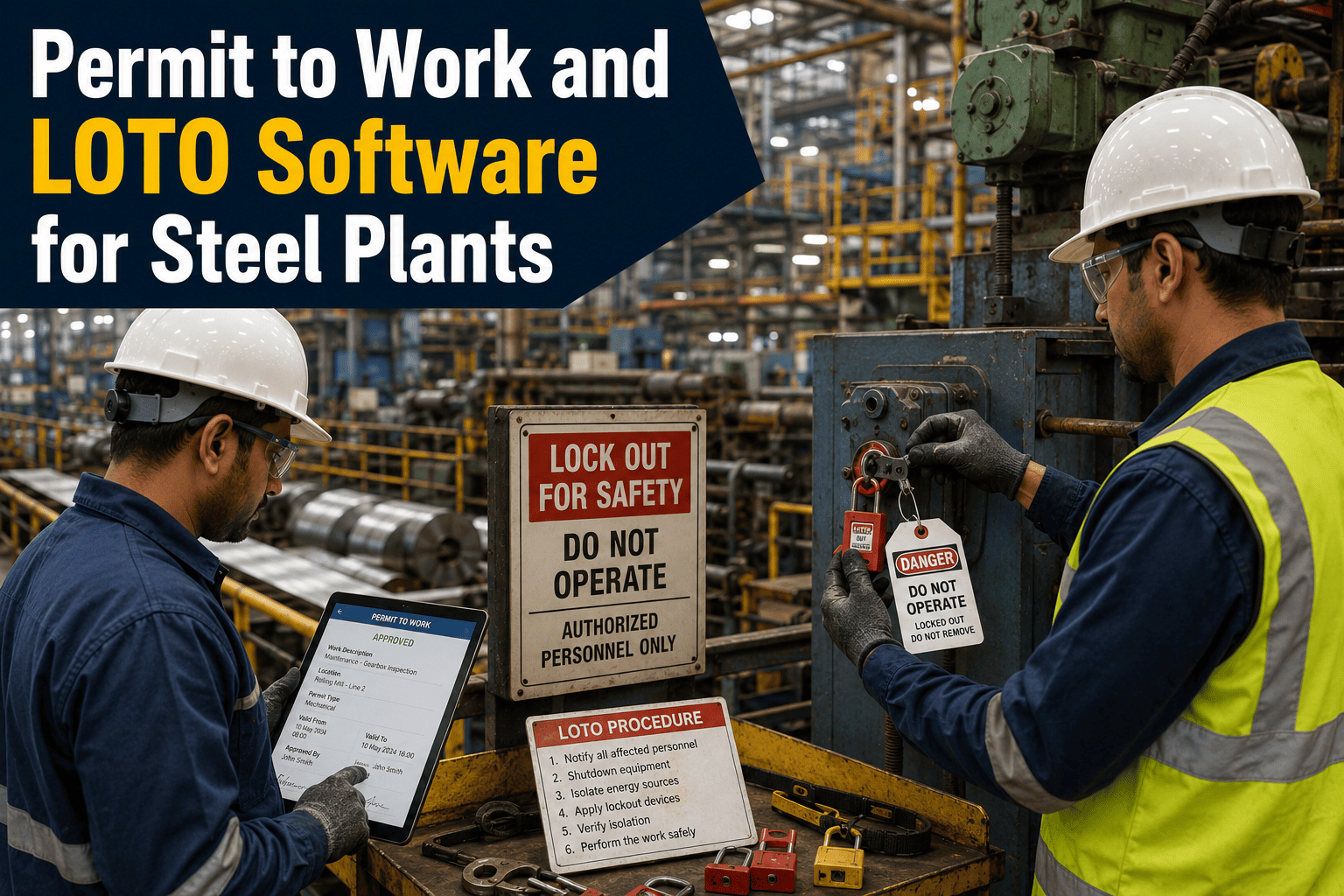
In a steel plant, permit-to-work and lockout tagout procedures are the last line of defense between maintenance technicians and catastrophic injury. OSHA 29 CFR 1910.147 — the Control of Hazardous Energy standard — mandates documented energy isolation procedures for any maintenance on equipment that could unexpectedly start or release energy. Non-compliance carries fines of $15,625 per violation, with willful violations reaching $156,259. But the real cost of inadequate PTW and LOTO programs isn't regulatory — it's the maintenance technician injuries and fatalities that occur when procedures are unclear, incomplete, or bypassed under production pressure. Digital PTW and LOTO software eliminates the procedural gaps that create these risks. Start a free trial to see how Oxmaint delivers this, or book a demo to walk through your specific requirements.
Zero Tolerance for Safety Procedure Failures
See how Oxmaint digitalizes permit-to-work and LOTO compliance in steel plants — from isolation request to safe return to service.
Steel plants using digital PTW and LOTO management report 70% fewer near-miss incidents and audit-ready compliance records at all times.
- Complete LOTO procedure library with isolation point identification
- Real-time plant-wide permit dashboard with conflict detection
- Instant OSHA PSM and ISO 45001 audit-ready record export
Used by operations teams managing 10,000+ assets — live in days, not months
What Is Permit to Work and LOTO Software for Steel Plants?
Digital Safety Workflow Management for Steel Plant Maintenance
Permit-to-work and LOTO software is a digital platform that replaces paper-based safety authorization systems with structured digital workflows covering energy isolation requests, multi-level approval chains, isolation point identification and verification, LOTO device management, work scope definition, and return-to-service sign-off. Every step is timestamped, accountable, and retrievable for safety audits.
The business case for digital PTW and LOTO management goes beyond compliance. Paper-based systems create gaps that cost steel plants in both safety incidents and operational inefficiency. Unclear or missing isolation point data causes technicians to spend 20–40 minutes locating and verifying isolation points before work can begin. Incomplete hazard identification creates residual energy risks. Multi-trade coordination failures result in work scope conflicts on shared equipment. Digital systems eliminate all of these gaps systematically — while creating the audit trail that OSHA PSM and ISO 45001 require. start a free trial to see how Oxmaint structures this for your operations.
Core Capabilities
6 Capabilities That Define Effective Permit to Work and LOTO Software for Steel Plants
01
Digital LOTO Procedure Library
Build structured LOTO procedures for every piece of equipment in the plant — complete isolation point identification, energy type, verification method, and sequential lock application order. Procedures available on mobile at point of work.
02
Multi-Level Approval Workflows
Configure approval chains by permit type, work scope, and equipment classification. High-voltage, confined space, and hot work permits route to appropriate authorization levels with digital sign-off and time limits.
03
Real-Time Permit Dashboard
Plant safety managers see all active permits, pending approvals, and expired permits across the entire facility in real time. Overlap detection flags conflicting isolation requirements on shared equipment.
04
Mobile Isolation Verification
Technicians verify isolation points from mobile, with GPS confirmation and photo evidence of each lockout point applied. Verification records attach directly to the permit and asset record.
05
OSHA PSM Compliance Records
All permit records, LOTO procedures, energy control program documents, and training records maintained in a single system with instant export for OSHA PSM, ISO 45001, and internal audit requirements.
06
Return-to-Service Workflow
Structured return-to-service sequence — removal verification, lock count reconciliation, system re-energization authorization, and operational test confirmation — with full sign-off accountability before equipment is returned to production.
Industry Pain Points
Where PTW and LOTO Programs Fail in Steel Plants
Most operations teams know their programs have gaps — the challenge is closing them before they generate the next costly incident. start a free trial to map the gaps in your current program.
Incomplete Isolation Point Records
Paper LOTO procedures often lack complete isolation point identification — missing valve positions, breaker locations, or secondary energy sources. Technicians improvise verification, creating residual energy risks.
No Real-Time Permit Visibility
Supervisors can't see which permits are currently active across the plant — creating conflicts when maintenance teams on adjacent equipment have overlapping isolation requirements.
Approval Chain Bypassed Under Pressure
Production pressure leads to informal authorization for 'quick' jobs that should require full permit processing. These bypassed procedures represent the majority of serious maintenance incidents.
Paper Records Lost in Audits
When OSHA requests PTW and LOTO records during incident investigation or planned audit, paper-based systems require days of manual searching — with significant risk of incomplete documentation.
Operations teams that digitize permit to work and loto software for steel plants eliminate 40–65% of the avoidable costs that reactive and manual approaches generate.
How Oxmaint Solves It
How Oxmaint Delivers Permit to Work and LOTO Software for Steel Plants
Digital LOTO Procedure Library
Build structured LOTO procedures for every piece of equipment in the plant — complete isolation point identification, energy type, verification method, and sequential lock application order. Procedures available on mobile at point of work.
Multi-Level Approval Workflows
Configure approval chains by permit type, work scope, and equipment classification. High-voltage, confined space, and hot work permits route to appropriate authorization levels with digital sign-off and time limits.
Real-Time Permit Dashboard
Plant safety managers see all active permits, pending approvals, and expired permits across the entire facility in real time. Overlap detection flags conflicting isolation requirements on shared equipment.
Mobile Isolation Verification
Technicians verify isolation points from mobile, with GPS confirmation and photo evidence of each lockout point applied. Verification records attach directly to the permit and asset record.
OSHA PSM Compliance Records
All permit records, LOTO procedures, energy control program documents, and training records maintained in a single system with instant export for OSHA PSM, ISO 45001, and internal audit requirements.
Return-to-Service Workflow
Structured return-to-service sequence — removal verification, lock count reconciliation, system re-energization authorization, and operational test confirmation — with full sign-off accountability before equipment is returned to production.
Paper PTW/LOTO vs Digital Oxmaint System
Paper PTW/LOTO vs Digital Oxmaint System
| Dimension | Paper PTW/LOTO | Digital Oxmaint System |
|---|
| Isolation point completeness | 60–75% — paper procedures often missing secondary sources | 100% — digital procedures require complete isolation verification |
| Permit approval time | 30–90 minutes — physical routing through approval chain | 5–15 minutes — digital approval chain with mobile notifications |
| Active permit visibility | None — supervisors can't see plant-wide permit status | Real-time dashboard — all active permits, conflicts, and expirations visible |
| Near-miss incident rate | Baseline — procedure gaps contribute to 70% of near-misses | 70% reduction — structured digital procedures eliminate gap conditions |
| OSHA audit preparation | 3–5 days — paper records manual compilation | Instant — all records exportable with complete audit trail |
| LOTO procedure currency | Out-of-date — paper revision control unreliable | Current — digital procedures updated with version control and notification |
ROI and Results
What Operations Teams Report After Deployment
Organizations using Oxmaint consistently report measurable improvements within the first 12 months. Start a free trial to see how your metrics could shift.
70%
Fewer Near-Miss Incidents
Steel plants using digital PTW and LOTO vs paper-based systems
15 Min
Average Permit Approval Time
Digital routing vs 30–90 minutes with physical paper approval chain
$156K
Maximum Per Violation Avoided
OSHA willful violation penalty for inadequate LOTO compliance
100%
Audit-Ready Compliance
All PTW and LOTO records instantly exportable for OSHA PSM and ISO 45001
FAQ
Permit to Work and LOTO Software for Steel Plants: Common Questions
Does Oxmaint support OSHA 29 CFR 1910.147 energy control program documentation requirements?
Yes. Oxmaint's PTW and LOTO module is configured to capture all documentation required under OSHA 1910.147 — written energy control procedures, authorized employee training records, periodic inspection records, and equipment-specific LOTO procedures. All records are timestamped and exportable for OSHA compliance documentation. Start a free trial to see how the compliance framework is configured.
Can the system manage multi-trade LOTO where multiple departments work on the same equipment simultaneously?
Yes. Oxmaint supports group lockout procedures with individual department lockout devices, separate verification chains for each trade, and a consolidated lock count management system. The permit dashboard shows all active locks on a piece of equipment simultaneously, preventing premature de-energization when multiple trades are involved. Book a demo to see multi-trade workflows in action.
How does Oxmaint handle emergency situations where normal permit procedures need to be expedited?
Oxmaint supports configured expedited approval paths for emergency maintenance situations — with single-step authorization and mandatory safety checklist completion rather than full multi-level approval chain. All emergency permits are flagged and reviewed in post-incident safety reviews. The system maintains a complete record of all emergency permit usage for safety program improvement analysis.
Does the LOTO module work with confined space entry permit requirements?
Yes. Confined space entry permits have separate templates in Oxmaint with atmospheric testing records, entry attendant assignments, rescue equipment verification, and emergency contact confirmation — in addition to standard energy isolation requirements. All confined space entry documentation links to the asset record and is maintained for OSHA 1910.146 compliance.
Zero Tolerance for Safety Procedure Failures
Safety Compliance Is Not Optional — But It Doesn't Have to Be Complicated
Turn every permit-to-work and LOTO procedure into a structured, accountable, and audit-ready digital record with Oxmaint.
- Complete LOTO procedure library with isolation point identification
- Real-time plant-wide permit dashboard with conflict detection
- Instant OSHA PSM and ISO 45001 audit-ready record export
Used by operations teams managing 10,000+ assets — limited onboarding slots available this quarter