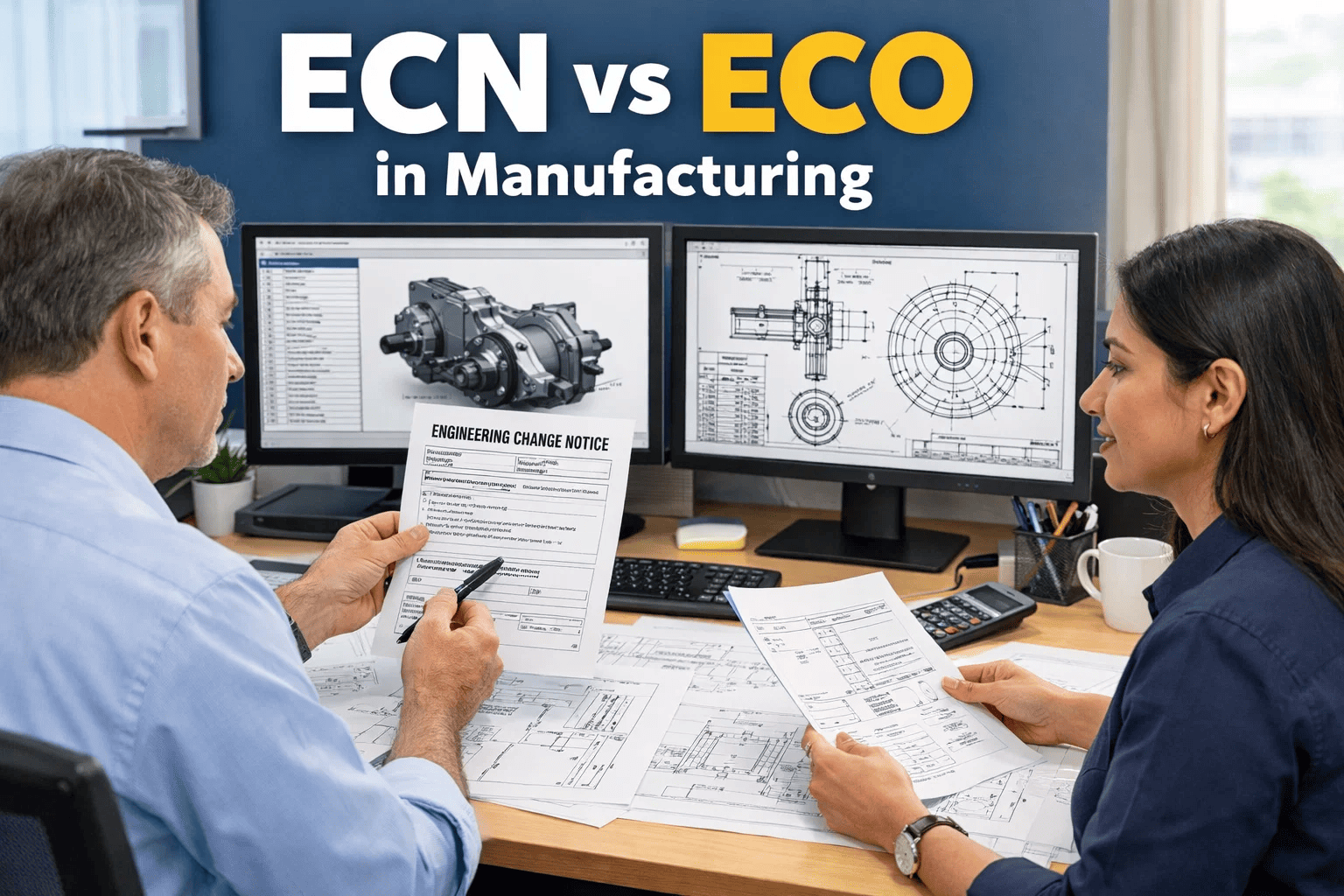
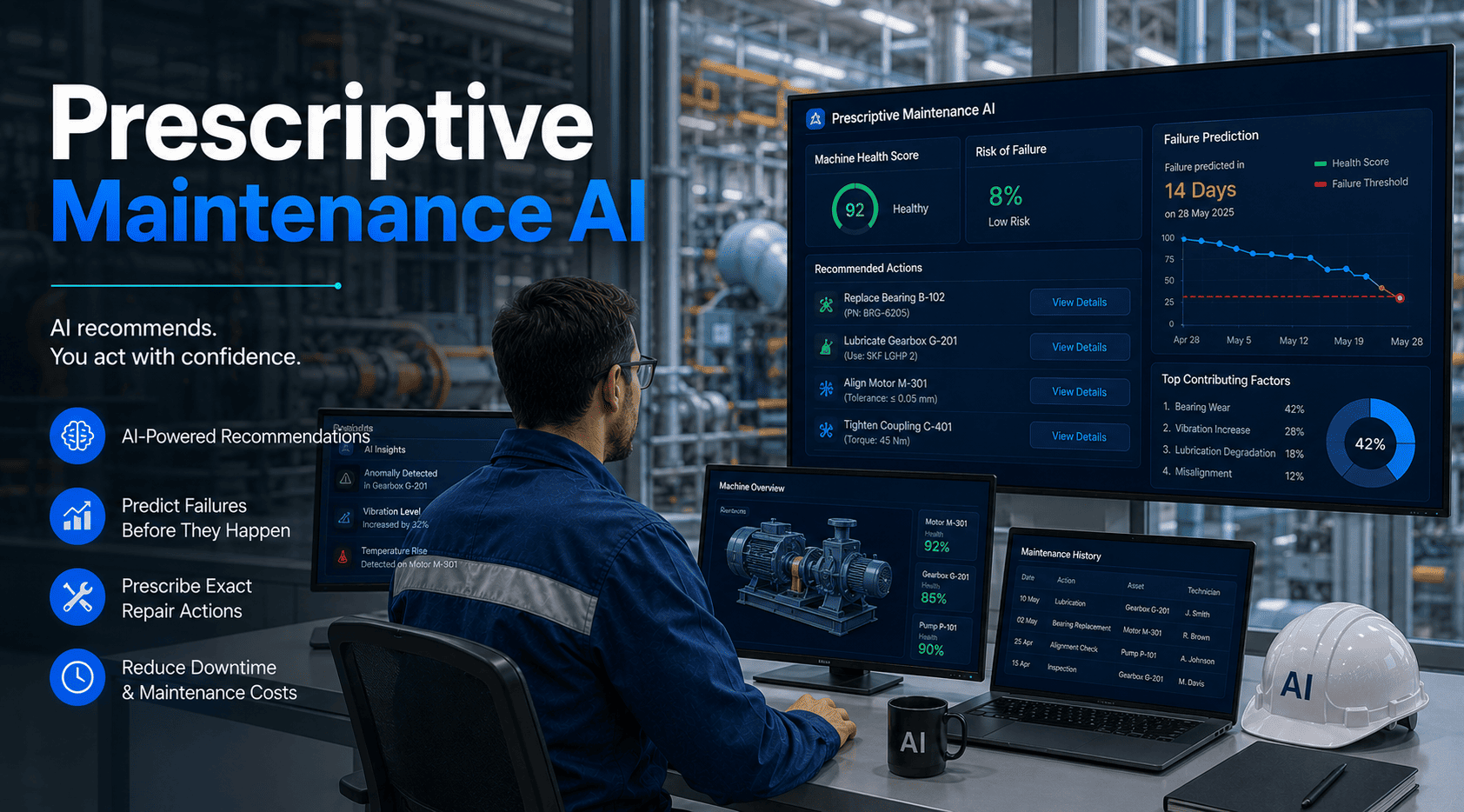
When an automotive supplier received 11,000 engineering change notices in a single quarter after a 2024 EU safety directive revision, the plants that had digital change-control systems processed them in under 24 hours each. The plants still running paper-based workflows? They were drowning — with late-stage rework, outdated revisions on the floor, and material write-offs averaging $2 million per facility. Engineering changes are inevitable in manufacturing. Customer feedback, regulatory updates, and component obsolescence drive 62% of all changes. The difference between a plant that handles them smoothly and one that bleeds money on every revision comes down to how ECNs and ECOs are managed — and whether that process is connected to the maintenance and production systems that execute the changes on the shop floor. Start a free trial for 30 days or book a demo to see how OxMaint connects change control to maintenance execution.
Manufacturing ProcessesECN vs ECOChange Control
ECN vs ECO in Manufacturing: What They Are, How They Differ, and Why Your CMMS Needs Both
Engineering Change Notices and Engineering Change Orders are the backbone of controlled manufacturing change. Understanding the difference — and connecting them to your maintenance system — determines whether changes cost you money or save it.
62%Of engineering changes driven by customer feedback, regulations, or obsolescence
38%Reduction in late-stage rework with cross-functional ECO review processes
$2MAverage material write-offs avoided per plant with PLM-ERP integration
45%Faster routing of minor edits when change triggers are pre-classified
Definitions
ECN vs ECO — The Core Difference
These two terms are often used interchangeably, but they serve different functions in the change management lifecycle. Understanding where each sits in the process is critical to running a compliant, efficient operation.
ECN
Engineering Change Notice
What It Is
A formal notification that a design, material, process, or specification must change — and why. It describes the change and communicates it to all affected departments.
When It's Issued
After the change has been reviewed and approved. The ECN is the broadcast signal that tells engineering, manufacturing, quality, and supply chain: "This change is happening."
Key Function
Communication and documentation. The ECN ensures every stakeholder knows what changed, why, and what they need to do next.
vs
ECO
Engineering Change Order
What It Is
A signed mandate that authorizes the change, allocates resources, lists affected part numbers, and defines the implementation schedule. It's the execution blueprint.
When It's Issued
After the engineering change request (ECR) is approved by the change control board. The ECO is the authorization to spend money, change tooling, and update production.
Key Function
Authorization and execution. The ECO defines who does what, by when, with what resources — and tracks every step to completion.
In short: the ECO authorizes the change. The ECN communicates it. Both must be connected to your maintenance and production systems to prevent outdated revisions from reaching the shop floor. See how OxMaint tracks change-driven maintenance tasks — start free today.
The Lifecycle
The Engineering Change Lifecycle — From Request to Shop Floor
A well-run engineering change process follows six stages. Most breakdowns happen when stages 5 and 6 are disconnected from the maintenance system — meaning changes are approved but never properly executed on the floor.
1
Trigger Identified
Customer complaint, regulatory change, component obsolescence, cost reduction opportunity, or quality issue. 62% of changes originate from external triggers.
2
ECR Created
Engineering Change Request documents the problem, identifies affected parts and assemblies, estimates costs, and lists resources needed. Circulated for cross-functional review.
3
ECO Issued
Once ECR is approved, the ECO is generated — listing all items, assemblies, drawings, SOPs, and manufacturing work instructions being changed. Sent to the Change Control Board (CCB) for authorization.
4
CCB Review & Approval
Design engineering, manufacturing, quality, procurement, and finance review the change. Cross-functional review reduces late-stage rework by 38%. All members must approve before implementation.
5
ECN Distributed
The approved change is formally communicated to all affected departments. The ECN contains final details, effective dates, and specific actions each team must take.
6
Implementation & Verification
Tooling updated. BOMs revised. Work instructions changed. Maintenance tasks generated. This is where CMMS connects — ensuring every equipment modification, calibration, and procedure update is tracked and completed.
Stage 6 is where most plants lose control. Changes are approved in engineering but never translated into maintenance work orders, equipment modifications, or updated inspection procedures. OxMaint bridges that gap — book a demo to see change-driven maintenance workflows in action.
Cross-functional ECO review cuts late-stage rework by 38%.OxMaint ensures that approved changes translate into executed maintenance tasks — tooling updates, calibrations, and procedure changes tracked to completion.
What Triggers Engineering Changes — And Their Maintenance Impact
Every engineering change has a ripple effect on maintenance. When a component is replaced, tooling is updated, or a process is modified, the maintenance team needs updated procedures, recalibrated equipment, and revised PM schedules. Here are the six most common triggers and what they demand from your maintenance system.
Regulatory / Safety
New standards or safety directives require material, design, or process changes. In 2024, a single EU directive generated 11,000+ ECNs across automotive suppliers.
Maintenance: Tooling recalibration, updated safety inspection checklists, revised PPE requirements
Customer Feedback
Field failures, warranty claims, or performance complaints drive design revisions. These changes often require immediate production line modifications.
Maintenance: Equipment retooling, fixture modifications, updated test and inspection procedures
Component Obsolescence
Parts reaching end-of-life force material substitutions. Lead times and availability become critical — especially for medical devices and aerospace components.
Maintenance: Spare parts inventory updates, PM schedule adjustments for new components, technician retraining
Cost Reduction
Material substitutions, process optimizations, or supplier changes aimed at lowering production costs while maintaining quality specifications.
Maintenance: Machine parameter adjustments, new material handling procedures, updated quality check thresholds
Performance Improvement
R&D breakthroughs, lean kaizen events, or competitive pressure drive design enhancements that improve product capability or reliability.
Maintenance: New equipment installation, revised PM schedules, updated work instructions and SOPs
Design Error Correction
Errors discovered during testing, prototyping, or production that require immediate correction to prevent quality escapes or safety risks.
Maintenance: Emergency work orders, equipment lockout/modification, re-inspection of in-process inventory
Every trigger on this list generates maintenance work. Without a CMMS that connects to the change control process, those maintenance tasks fall through the cracks — and outdated revisions stay on the floor. OxMaint ensures every ECO-driven task is generated, assigned, and tracked — start your free trial or book a demo to see the integration.
CMMS Connection
How OxMaint Closes the ECN/ECO-to-Maintenance Gap
The biggest failure point in engineering change management isn't approval — it's execution. Changes get approved in engineering but never reach the technicians who need to modify equipment, update procedures, and verify compliance. OxMaint bridges that gap with four capabilities.
Change-Driven Work Orders
When an ECO requires equipment modification, OxMaint generates the work order — with the specific asset, procedure, parts, and deadline. No manual translation from engineering documents to maintenance tasks.
Revision-Controlled Documentation
SOPs, work instructions, and inspection checklists are version-controlled inside OxMaint. When an ECN updates a procedure, technicians see only the current revision — never an outdated document.
Mobile Verification & Sign-Off
Technicians confirm change implementation on their mobile device — with photo evidence, digital signature, and timestamp. Full audit trail for every ECO-driven modification.
Asset History & Traceability
Every change applied to every asset is logged permanently. Auditors can trace any modification back to the originating ECO, the approving CCB, and the technician who executed it.
FAQs
Frequently Asked Questions
What is the difference between an ECN and an ECO?
An ECO (Engineering Change Order) is the formal authorization to implement a change — it lists affected parts, resources needed, and the implementation schedule. An ECN (Engineering Change Notice) is the formal communication sent after approval, notifying all affected departments of the change details and required actions. In short: the ECO authorizes; the ECN communicates. Try OxMaint free.
Who approves engineering change orders in manufacturing?
ECOs are reviewed and approved by a Change Control Board (CCB) that typically includes representatives from design engineering, manufacturing engineering, quality assurance, procurement, finance, and supply chain. Cross-functional review is critical — it reduces late-stage rework by 38% compared to single-department approval.
How does a CMMS connect to engineering change management?
A CMMS like OxMaint ensures that every ECO-driven equipment modification, calibration, or procedure update is translated into a tracked maintenance work order. Without this connection, changes are approved in engineering but never properly executed on the shop floor — leading to outdated revisions, compliance gaps, and quality escapes. Book a demo.
What are common triggers for engineering changes?
The most common triggers are customer feedback and field failures, regulatory and safety requirement changes, component obsolescence, cost reduction initiatives, performance improvements from R&D, and design error corrections discovered during testing or production. IDC research shows 62% of changes are driven by external factors.
Trusted by Manufacturing Teams in 40+ Countries
Engineering Changes Approved. Maintenance Tasks Executed. Every Time.
OxMaint bridges the gap between engineering change approval and shop-floor execution — ensuring every ECO-driven modification is tracked, verified, and audit-ready.