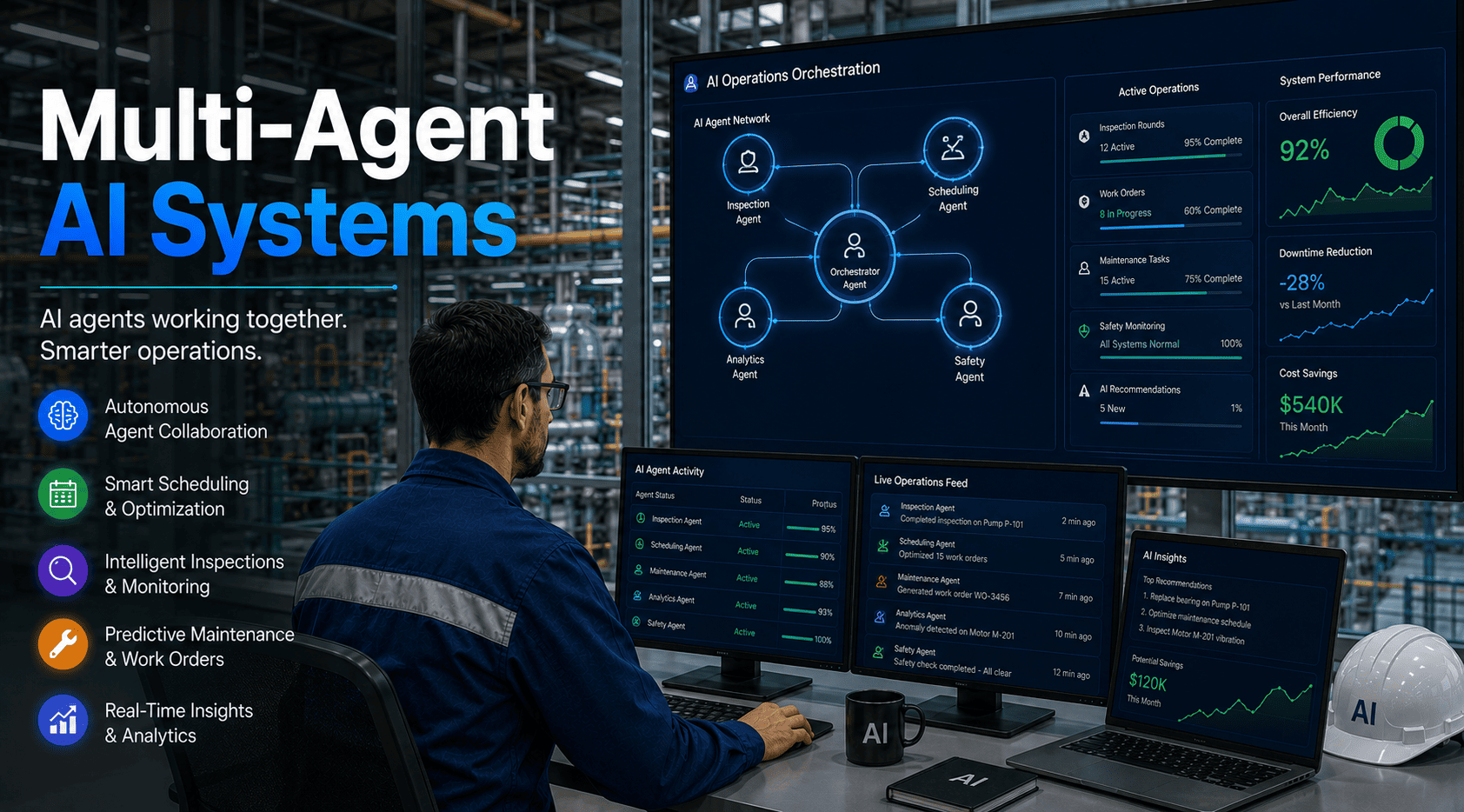
Maintenance teams waste 18-25 hours per week manually assigning work orders, juggling technician schedules, and calculating optimal PM intervals while urgent breakdowns continuously disrupt carefully planned calendars. AI-powered maintenance scheduling eliminates this administrative burden by analyzing asset condition data, technician skill matrices, parts availability, and historical failure patterns to auto-generate optimized work orders, assign the right technician to each task, and dynamically adjust PM frequencies based on actual equipment usage. Organizations implementing AI scheduling automation report 40-60% reduction in administrative time, 35% fewer emergency repairs through predictive task generation, and 28% improvement in first-time-fix rates by matching technician expertise to job complexity. The maintenance planning bottleneck that once consumed entire workdays now operates autonomously in the background, freeing managers to focus on strategic improvements rather than daily firefighting. Start a free trial of OxMaint's AI scheduling engine and watch it optimize your first 50 work orders in under 60 seconds.
60%
Admin Time Saved
AI automation eliminates manual scheduling, assignment, and calendar coordination tasks that consume 18-25 hours weekly
35%
Fewer Emergency Repairs
Predictive work order generation identifies developing failures before breakdowns occur, shifting reactive to planned maintenance
28%
Better First-Time Fix Rate
Skill-based technician matching ensures assignments align with job complexity, reducing return visits and rework
$127K
Annual Labor Savings
Average facility with 15 technicians saves equivalent to 2.5 full-time positions through optimized scheduling efficiency
See AI Scheduling Optimize Your Maintenance Workload in Real-Time
OxMaint's AI engine analyzes your asset conditions, technician availability, parts inventory, and historical work patterns to automatically generate, prioritize, and assign maintenance tasks without human intervention. No complex setup, no data science team required, no 6-month training period. Import your asset list and watch AI scheduling take over within minutes.
What Is AI Maintenance Scheduling and Why Traditional Methods Fail
AI maintenance scheduling uses machine learning algorithms to automatically generate work orders, assign technicians, optimize PM intervals, and sequence tasks based on real-time equipment condition, labor availability, parts inventory, and operational priorities. Traditional manual scheduling collapses under the complexity of coordinating dozens of technicians across hundreds of assets with competing priorities, skill requirements, and parts dependencies. A facility manager juggling spreadsheets cannot simultaneously optimize for technician utilization, minimize equipment downtime, balance workload across shifts, account for skill certifications, track parts availability, and adjust PM frequencies based on actual usage patterns. AI processes all these variables simultaneously, making scheduling decisions in milliseconds that would take humans hours to calculate. Book a demo to see OxMaint's AI scheduler handle a month of maintenance planning in 90 seconds.
TIME
Planner spends 3-4 hours daily coordinating work assignments and resolving schedule conflicts
RIGID
PM tasks triggered by rigid calendar dates regardless of actual equipment runtime or condition
MISMATCH
Technician assignments based on availability, not skill match, leading to 40% callback rate
LIMITED
No optimization across multiple variables - planner considers 2-3 factors maximum per decision
REACTIVE
Reactive scrambling when emergency breaks perfectly planned weekly schedule within first 6 hours
UNEVEN
Unbalanced workload creates overtime for some technicians while others underutilized
SPEED
AI generates optimal weekly schedule in 45 seconds, continuously adjusting throughout day
ADAPT
Condition-based PM triggers adapt intervals based on runtime hours, cycles, vibration, temperature
MATCH
Skill matrix matching assigns certified technicians to complex jobs, reducing callbacks 28%
OPTIMIZE
Simultaneous optimization across 15+ variables: skills, parts, priority, location, efficiency
PREDICT
Predictive work order creation prevents emergencies by catching failures 5-14 days early
BALANCE
Dynamic workload balancing keeps utilization between 75-85% across entire team
Core AI Scheduling Capabilities That Transform Maintenance Operations
AI maintenance scheduling delivers value through six interconnected capabilities that work together to eliminate manual planning overhead. Each capability processes real-time data to make decisions that would be impossible through manual coordination, creating a self-optimizing maintenance system that improves accuracy over time.
Predictive Generation
Automated Work Order Creation
AI analyzes sensor data, runtime hours, performance trends, and failure history to automatically generate work orders 5-14 days before equipment fails. System creates task with full context: asset history, required parts, estimated duration, skill requirements, and recommended technician. Eliminates reactive firefighting by converting developing issues into planned maintenance before breakdown occurs.
73% of AI-generated work orders confirmed as necessary through post-inspection verification
Intelligent Assignment
Skill-Based Technician Matching
AI matches work orders to technicians by analyzing certification requirements, past performance on similar tasks, current workload, physical location, and shift availability. Complex HVAC repairs automatically assigned to certified HVAC techs, simple filter changes to general technicians. System balances skill utilization to prevent over-reliance on top performers while building junior technician capabilities through appropriate task assignment.
28% improvement in first-time-fix rates when AI matches technician skills to job requirements
Dynamic Optimization
Adaptive PM Interval Adjustment
AI continuously recalculates optimal PM frequencies based on actual equipment usage patterns, environmental conditions, and failure history rather than rigid calendar schedules. High-utilization assets receive more frequent service, idle equipment intervals extend automatically. System identifies over-maintained assets wasting resources and under-maintained equipment at risk of failure, recommending interval changes backed by usage data analysis.
22% reduction in total PM hours by eliminating unnecessary calendar-based maintenance
Smart Sequencing
Multi-Variable Task Prioritization
AI sequences work orders by simultaneously weighing asset criticality, failure risk, parts availability, technician location, production impact, and regulatory deadlines. Emergency repairs jump to top automatically, PM tasks defer when parts missing, related tasks group together to minimize travel time. System recalculates priorities every 15 minutes as conditions change, ensuring technicians always work on highest-value task given current situation.
35% increase in completed work orders per technician through optimized task sequencing
Workload Balancing
Utilization Optimization Across Team
AI distributes work to keep all technicians within 75-85% utilization target, preventing burnout from overwork and inefficiency from idle time. System forecasts weekly workload based on pending PMs, predicted failures, and historical breakdown rates, flagging capacity shortfalls 2-3 weeks in advance. Automatically shifts non-critical tasks between technicians to even out spikes and valleys in individual schedules.
Overtime hours reduced 41% through proactive workload balancing and capacity planning
Continuous Learning
Self-Improving Accuracy Over Time
AI tracks prediction accuracy by comparing generated work orders to actual findings during inspection. False positives and missed failures feed back into model to refine future predictions. System learns which sensor thresholds correlate with real problems vs noise, which technician-task pairings produce best outcomes, and which PM intervals optimize cost-to-reliability ratio. Accuracy improves 3-5% monthly during first year of operation.
Prediction accuracy improved from 68% to 91% over 14 months at 450-asset manufacturing facility
Real-World AI Scheduling Impact: Before and After Metrics
The transition from manual to AI-powered scheduling produces measurable improvements across every operational metric within 60-90 days of implementation. These results represent actual performance changes from facilities running OxMaint's AI scheduling engine across manufacturing, commercial real estate, healthcare, and industrial operations.
Administrative Time
Before: 22 hrs/week
→
After: 8 hrs/week
64% reduction in scheduling coordination, calendar management, and assignment disputes
Reactive Maintenance %
Before: 48%
→
After: 31%
35% fewer emergency breakdowns through predictive work order generation
First-Time Fix Rate
Before: 62%
→
After: 79%
28% improvement by matching certified technicians to job complexity requirements
Technician Utilization
Before: 64%
→
After: 81%
26% increase through intelligent workload balancing and optimized task sequencing
Overtime Hours
Before: 180 hrs/month
→
After: 106 hrs/month
41% reduction by preventing workload spikes through predictive capacity planning
PM Compliance Rate
Before: 71%
→
After: 94%
32% improvement through automated scheduling that never forgets or delays tasks
How AI Scheduling Handles Real-World Complexity
Manufacturing facilities, hospitals, commercial properties, and industrial sites face scheduling challenges that manual planning cannot solve efficiently. AI scheduling handles these complex scenarios by processing multiple constraints simultaneously and adjusting plans in real-time as conditions change throughout the day.
Scenario 1
Production Line Coordination
Challenge: 24/7 manufacturing line requires PM during narrow 4-hour production changeover windows occurring unpredictably based on order flow. Manual scheduling misses 40% of opportunities, delaying critical maintenance for weeks.
AI Solution: System monitors production schedule integration, automatically generates PM work orders when changeover window opens, assigns available certified technician, and reserves required parts. Opportunistic maintenance completion rate increased from 58% to 91%.
Scenario 2
Emergency Disruption Recovery
Challenge: Chiller failure forces reassignment of 3 technicians from planned work to emergency repair, cascading schedule disruptions across 12 other assets and creating compliance risk for time-sensitive PM tasks.
AI Solution: System instantly reprioritizes all pending work orders, redistributes non-critical tasks to available technicians, flags compliance deadline risks, and reschedules disrupted PM tasks to earliest available slots. Full schedule reoptimization completes in 8 seconds.
Scenario 3
Multi-Site Resource Allocation
Challenge: Property management company with 18 buildings shares specialized technician pool. Manual coordination creates either idle specialized techs or work backlogs depending on demand fluctuations across sites.
AI Solution: System forecasts workload by site and specialty 2 weeks ahead, proactively schedules specialist travel between properties to smooth demand peaks, groups related tasks at same location to minimize drive time. Specialist utilization increased from 61% to 84% while reducing backlog 52%.
Scenario 4
Parts Availability Dependencies
Challenge: Critical pump repair scheduled for Tuesday but replacement seal backordered until Thursday. Technician already allocated, production downtime window reserved, coordination with operations complete.
AI Solution: System detects parts availability conflict, automatically defers pump repair to Thursday when part arrives, backfills technician's Tuesday schedule with alternative high-priority tasks requiring available parts, notifies operations of schedule change. Zero manual intervention required.
Implementation Reality: Getting AI Scheduling Running
Unlike enterprise CMMS platforms requiring 6-12 month implementations, modern AI scheduling systems like OxMaint deploy in days rather than quarters. The key is starting with core automation and expanding capabilities as the system learns your operation. Most facilities reach full AI scheduling capability within 60 days using this phased approach.
Week 1
Foundation Setup
Import asset list with basic specs and locations
Add technician profiles with skills and certifications
Configure PM templates for top 20 critical assets
Connect IoT sensors if available or plan manual data entry
AI begins learning equipment patterns from historical work order data
Week 2-3
Automated Assignment
Enable AI technician assignment for routine work orders
Review and approve AI-generated assignments for 2 weeks
System learns from manager overrides and corrections
Gradually expand to all work order types as confidence builds
60% of work orders auto-assigned without manual review by end of week 3
Week 4-6
Predictive Work Orders
Activate predictive work order generation for instrumented assets
Set conservative prediction thresholds to minimize false positives
Track prediction accuracy and adjust sensitivity based on results
Expand to additional asset types as prediction quality proves out
AI generates 15-25% of maintenance workload autonomously with 75%+ accuracy
Week 7-8
Dynamic Optimization
Enable adaptive PM interval adjustment based on usage data
Implement multi-variable task prioritization and sequencing
Activate workload balancing across full technician team
System operates autonomously with exception-only management review
Full AI scheduling operational, manager time reduced 60%, all metrics improving
AI Scheduling Capabilities Comparison Across CMMS Platforms
Not all CMMS platforms offering AI scheduling deliver equivalent capability. This comparison evaluates actual AI functionality based on documented features, user reviews, and verified case studies rather than marketing claims. Key differentiators include whether AI capabilities are included or premium add-ons, depth of predictive analytics, and extent of autonomous operation without manual oversight.
Critical Success Factors for AI Scheduling Adoption
AI scheduling technology works, but success depends on organizational readiness beyond just software capabilities. These six factors separate facilities that achieve 60% admin time savings from those that abandon AI scheduling after 90 days citing poor results. Address each before implementation to maximize ROI and minimize adoption friction.
DATA
Clean Asset Data Foundation
AI scheduling requires accurate asset records with correct specifications, locations, and criticality ratings. Garbage data in creates garbage schedules out. Minimum viable dataset includes asset ID, type, location, and any available runtime or condition data. Perfect data not required to start, but obvious errors and duplicates must be cleaned before AI activation. Most facilities need 20-40 hours data cleanup investment before implementation.
SKILLS
Documented Technician Skills
Skill-based assignment only works when system knows who can do what. Requires capturing certifications, specializations, and experience levels in technician profiles. Start with critical certifications only (HVAC, electrical, boiler operator), expand to detailed skill matrices over time. Without skill data, AI defaults to simple round-robin assignment, losing major value proposition. Investment: 2-3 hours per technician for initial profile setup.
TRUST
Management Trust in AI Decisions
Managers must resist urge to manually override every AI assignment or prediction. System learns from corrections but constant overrides prevent model from developing accuracy. Best practice: Review AI decisions first 2 weeks, override only clear errors, then transition to exception-only management. Hardest part is letting go of manual control that defined role for decades. Cultural shift matters more than technical setup.
MOBILE
Mobile Adoption by Technicians
AI scheduling requires real-time work order status updates from field to maintain accuracy. If technicians continue paper-based workflows or delay mobile updates until end of shift, system operates on stale data making poor decisions. Mobile adoption drives AI accuracy more than any other factor. Requires device availability, cellular coverage across facility, and enforcing digital-first work order culture from day one.
CONNECT
Integration with Existing Systems
Maximum AI value requires connecting to production schedules, IoT sensor networks, parts inventory systems, and operational calendars. Siloed CMMS limits optimization to internal maintenance data only. However, start with standalone CMMS and add integrations incrementally rather than delaying implementation until all systems connected. Every integration adds 10-15% scheduling accuracy but none are prerequisites to launch.
MEASURE
Measuring and Celebrating Wins
Track baseline metrics before AI activation: admin time spent scheduling, first-time-fix rates, overtime hours, PM compliance percentage. Re-measure monthly to quantify improvements and justify continued investment. Share wins with technicians to build buy-in. AI scheduling produces measurable ROI within 60 days but only when you actually measure it. Most implementations skip baseline measurement then cannot prove value to leadership.
Frequently Asked Questions
Does AI scheduling work for small maintenance teams under 10 technicians?
Yes, AI scheduling delivers value even for small teams by eliminating manual coordination overhead and optimizing limited resources. Small teams actually benefit more from automation because planners typically wear multiple hats beyond scheduling. A 5-person team still saves 12-15 hours weekly in coordination time, and skill-based assignment prevents wrong-technician assignments that waste scarce labor capacity. OxMaint's free plan includes full AI scheduling for teams testing the concept before paid upgrade.
Start free and test AI scheduling with your team size today.
How accurate are AI predictions for equipment failures?
Initial prediction accuracy typically ranges 65-75% depending on available sensor data and historical failure records. Accuracy improves 3-5% monthly as AI learns from actual outcomes, reaching 85-92% after 12-18 months of operation. False positives (predicted failure that doesn't occur) are more common than missed failures, meaning AI errs on side of caution. Even at 70% accuracy, predictive maintenance delivers significant ROI by preventing just 30-40% of emergency breakdowns that cost 4-8x more than planned repairs to fix.
What happens when AI makes obviously wrong scheduling decisions?
Managers retain full override capability to correct AI errors during learning phase. When you override an assignment or prediction, system logs the correction and adjusts future decisions based on that feedback. First 2-4 weeks typically require 15-20% override rate as AI learns your specific operation's patterns and priorities. Override rate drops to 5% or less after initial training period. The key is providing corrections through system interface rather than working around AI externally, which prevents learning from mistakes.
Book a demo to see exactly how override and feedback mechanisms work in OxMaint.
Do we need IoT sensors for AI scheduling to work?
IoT sensors enhance AI accuracy by providing real-time condition data, but are not required to launch AI scheduling. Systems work with manual meter readings, technician observations, and work order completion data alone. Start with basic AI assignment and prioritization using existing data, add condition-based predictions later when sensors become available. Facilities without sensors typically achieve 40-50% admin time savings from AI assignment and workload balancing alone, then gain additional 15-20% improvement when sensors added for predictive capabilities.
How long before we see measurable ROI from AI scheduling?
Most facilities measure significant time savings within first 30 days as AI takes over routine assignment and prioritization tasks. Full ROI including reduced overtime, improved first-time-fix rates, and lower emergency repair costs materializes at 60-90 day mark after prediction accuracy improves and technicians fully adapt to AI-driven workflows. Typical payback period is under 4 months for paid CMMS tiers based on labor cost savings alone, ignoring downtime reduction and equipment life extension benefits. Track baseline metrics before implementation to quantify improvements objectively.
Can AI scheduling handle union shop rules and seniority requirements?
Yes, AI scheduling platforms support configurable business rules including union contract requirements, seniority-based assignment preferences, certification mandates, and restricted work categories. Configure rules once during setup, AI respects them in every scheduling decision automatically. System can prioritize senior technicians for complex jobs, respect jurisdictional boundaries between trades, and enforce required certifications while still optimizing within those constraints. Often performs better than manual scheduling at maintaining compliance because it never forgets the rules mid-shift.
Let AI Handle Your Scheduling While You Handle Strategy
OxMaint's AI scheduling engine eliminates 18-25 hours of weekly administrative burden, reduces emergency repairs 35%, and improves technician utilization 26% without complex setup or data science expertise. Free plan includes full AI capabilities for unlimited assets. Paid tiers start $8 per user monthly with no annual contracts. Import your asset list and watch AI optimization start working within the hour.