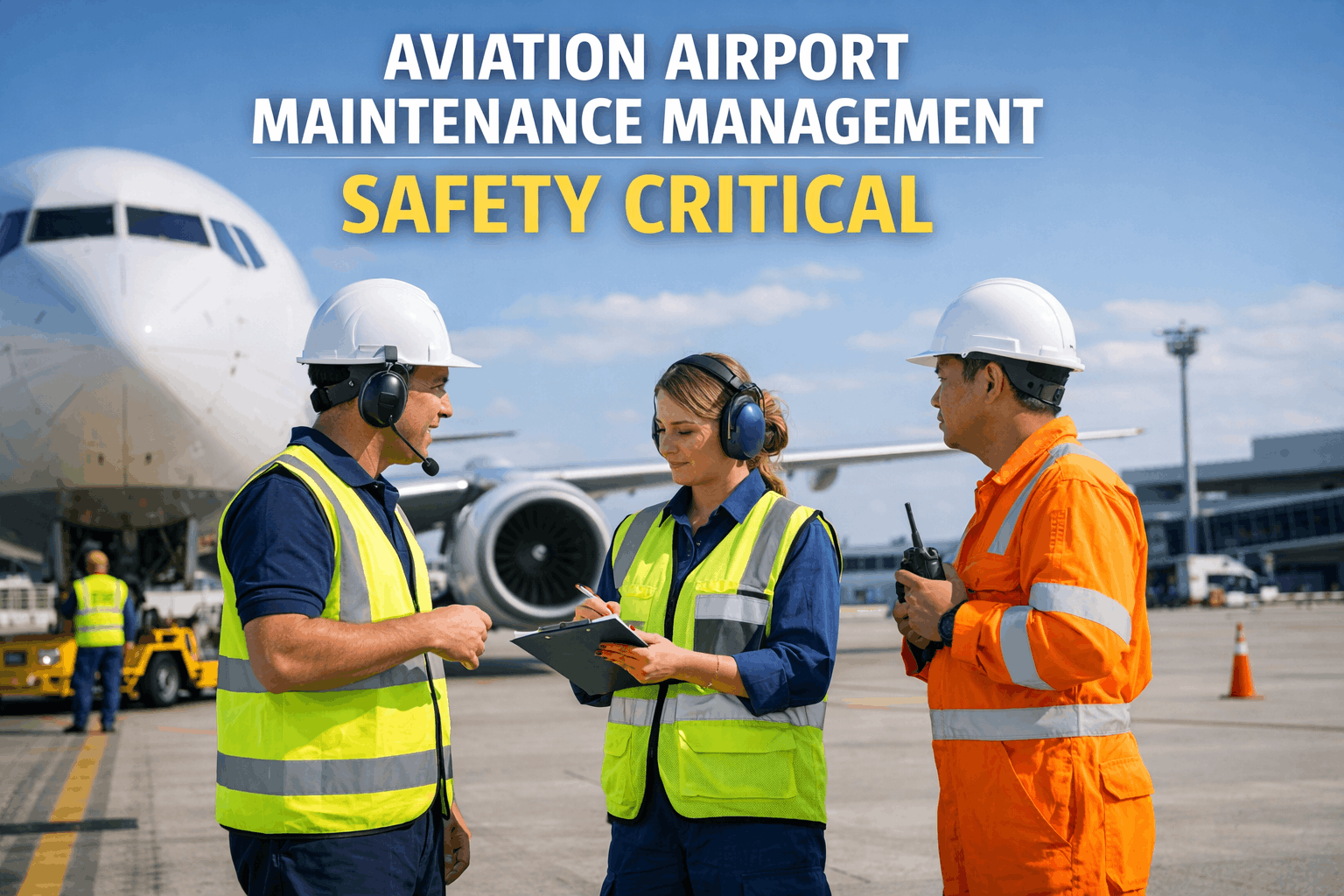
A regional airport's passenger boarding bridge hydraulic system failed during peak morning departures — 7 flights delayed, 2,400 passengers stranded on the apron for 90 minutes, and the airline filed a $340,000 operational disruption claim against the airport authority. Emergency hydraulic repair: $85,000 with a 14-hour bridge closure. The same failure prevented during a planned overnight maintenance window: $6,200 in 3 hours with zero flight impact. The bridge's hydraulic pressure had been trending downward for 31 days. The BMS logged every reading. Nobody connected it to a work order because the airport managed 4,200 assets across terminals, airfield, and ground support equipment using three disconnected systems — a facilities spreadsheet, a GSE vendor log, and a paper-based airfield inspection binder. Airport maintenance is not building maintenance with runways. It is safety-critical infrastructure management where a single equipment failure cascades through airline operations, passenger experience, FAA compliance, and revenue — simultaneously. Schedule a demo to see aviation CMMS with FAA compliance tracking and airfield asset management.
$340K
Disruption Claim
Single boarding bridge failure cost from airline operational disruption claim
4,200+
Managed Assets
Terminals, airfield, GSE, and utilities requiring simultaneous tracking
100%
FAA Audit Ready
Compliance documentation achievable with CMMS-driven maintenance records
31 Days
AI Early Warning
Average advance detection before critical airport equipment failure
Why Airports Are the Most Complex Maintenance Environment
Airport operations combine terminal facilities, airfield infrastructure, ground support equipment, utility systems, and security installations into a 24/7 operating environment where every maintenance action must be coordinated with flight schedules, TSA security zones, FAA Part 139 certification requirements, and airline tenant agreements. No other facility type operates under simultaneous regulatory oversight from FAA, TSA, OSHA, EPA, and local fire authorities — while serving thousands of passengers per hour. Sign up free and see how aviation CMMS manages safety-critical airport infrastructure.
Assets: Runways, taxiways, aprons, airfield lighting (HIRL, MITL, PAPI, approach lights), signage, and markings.
Risk: Pavement FOD causes $4B+ in annual aircraft engine damage industry-wide. A single failed runway edge light triggers NOTAM and potential runway closure.
Compliance: FAA Part 139 requires documented daily airfield inspections, pavement condition indexing, and lighting system maintenance records.
Assets: Baggage tugs, belt loaders, pushback tractors, deicers, fuel trucks, air start units, and ground power units.
Risk: GSE failure during turn delays departure, triggers airline penalty claims, and cascades through gate scheduling. Deicer failure in winter operations can ground an entire bank of flights.
Compliance: OSHA vehicle safety, EPA fuel handling, and airline-specific GSE maintenance standards per ground handling agreements.
Assets: HVAC, passenger boarding bridges, baggage handling systems, elevators/escalators, fire/life safety, and public address systems.
Risk: Boarding bridge failure delays every flight at that gate. Baggage system failure causes mishandled bags and airline compensation claims averaging $50–$200 per bag.
Compliance: NFPA fire code, ADA accessibility, TSA security system maintenance, and local building codes — all simultaneously enforced.
Assets: CCTV systems, access control gates, perimeter fencing, intrusion detection, TSA checkpoint equipment support, and AOA (Air Operations Area) barriers.
Risk: Perimeter breach triggers TSA security incident, potential terminal evacuation, and FAA enforcement action. Access control failure compromises sterile area integrity.
Compliance: TSA Airport Security Program (ASP) requirements, FAA Part 1542 security regulations, and DHS/CISA infrastructure protection standards.
The Airport Failure Impact Matrix
Boarding Bridge Failure
$85K–$340K per incident
Planned PM: $4K–$8K | AI warning: 21–45 days
Baggage System Stoppage
$50K–$200K per hour
Planned repair: $5K–$15K | AI warning: 14–30 days
Runway Light Failure
NOTAM + capacity reduction
Planned lamp swap: $200–$500 | Inspection: daily per Part 139
One Prevented Gate Delay Pays for a Year of CMMS. OxMaint monitors boarding bridges, baggage systems, airfield lighting, and every safety-critical asset — generating predictive work orders so repairs happen during overnight windows, not peak departures.
Start Free Trial
FAA Part 139 and Multi-Agency Compliance
Airports hold FAA Part 139 certification — the license to operate. Losing certification means closing the airport. Every maintenance action on airfield pavement, lighting, safety areas, and snow/ice control must be documented to Part 139 standards. Simultaneously, terminal operations must satisfy TSA, OSHA, NFPA, ADA, and EPA requirements. OxMaint auto-tags every maintenance action with its regulatory domain and generates agency-specific audit reports in one click.
FAA Part 139
Daily airfield inspections, pavement condition reports, lighting maintenance logs, ARFF equipment checks, and wildlife management documentation — all auto-tagged and audit-ready.
TSA Security
Access control system maintenance, perimeter barrier inspections, CCTV system health, and sterile area integrity verification per Airport Security Program requirements.
NFPA / Fire Safety
ARFF vehicle maintenance, terminal fire suppression, jet bridge fire detection, and fuel farm fire protection system inspections per NFPA 415 and 403.
ADA / Accessibility
Elevator and escalator maintenance, accessible restroom fixtures, boarding assistance equipment, and wayfinding signage — documented for ADA compliance audits.
Airfield Inspection and Maintenance Lifecycle
01
Daily Inspection
FAA Part 139 daily airfield inspection via mobile app with GPS-stamped photos, condition codes, and FOD documentation. Findings auto-generate prioritized work orders.
02
Condition Monitoring
Boarding bridge hydraulics, baggage system drives, and HVAC central plant feed continuous data. AI detects degradation weeks before alarms trigger.
03
Flight-Aware Scheduling
PM and corrective work auto-schedule around flight operations — gate maintenance during overnight windows, taxiway work during low-traffic periods, runway work during scheduled closures.
04
Contractor Coordination
Airfield and terminal contractors require badging, escort requirements, and AOA access clearance. CMMS manages contractor work orders with security compliance verification built in.
05
Capital Planning
Asset condition data feeds AIP (Airport Improvement Program) grant applications and PFC (Passenger Facility Charge) project justifications with evidence-based capital requests.
Financial Impact for Airport Operations
Airline disruption claim avoidance from preventing gate and airfield equipment failures
Emergency repair savings from shifting to planned maintenance during overnight windows
Energy and asset life optimization across terminal HVAC, lighting, and vertical transport
AIP grant competitiveness from documented asset condition data for capital requests
60-Day Deployment for Airport Operations
Weeks 1–2
Asset Registry and Compliance Setup
- Import airfield, terminal, GSE, and utility assets with FAA applicability flags
- Configure Part 139 daily inspection templates with mobile photo documentation
- Set up technician and contractor profiles with AOA badging verification
- Load regulatory calendar (FAA, TSA, NFPA, ADA inspection deadlines)
Weeks 3–4
Operations Activation
- Deploy flight-schedule-aware PM scheduling for gates, bridges, and airfield
- Activate mobile work orders with GPS check-in for airfield and terminal crews
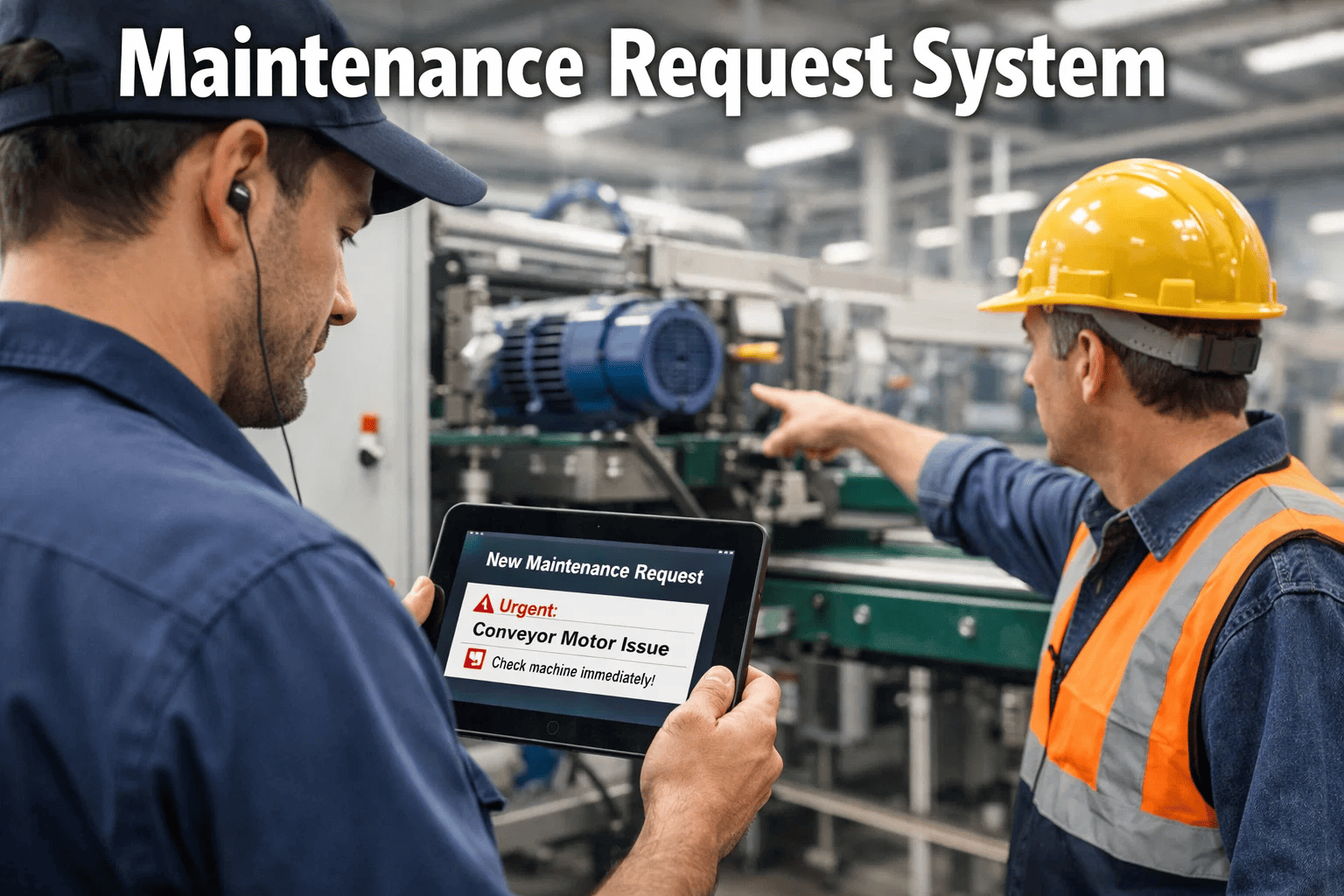
- Enable tenant airline request portal with auto-classification and routing
- Link parts inventory for GSE, lighting, baggage system, and HVAC spares
Weeks 5–8
Intelligence and Capital Planning
- Activate predictive models on boarding bridges, baggage systems, and central plant
- Configure airfield pavement condition tracking for AIP grant documentation
- Deploy airport operations dashboards for airport director and board reporting
- Enable multi-agency compliance reporting (FAA, TSA, OSHA, NFPA, ADA)
By week 8, every airport asset from runway lights to terminal HVAC is on a documented maintenance schedule, Part 139 inspections generate digital records with GPS-stamped photos, and predictive work orders schedule repairs into overnight windows instead of disrupting flight operations. Start your free trial and have your airport asset hierarchy loaded within the first week.
Your Airport Operates 8,760 Hours a Year. Protect Every Flight.
OxMaint gives airport operations teams the FAA compliance tracking, flight-aware scheduling, and predictive analytics to keep every gate, runway, and ground support asset operational — so every departure is on time and every inspection is audit-ready.
Frequently Asked Questions
Can OxMaint handle FAA Part 139 daily airfield inspections?
Yes. Daily airfield inspections are configured as recurring work orders with GPS-stamped photo documentation, standardized condition codes, and automatic NOTAM-triggering alerts for findings that affect runway or taxiway availability. Every inspection generates a permanent, timestamped record that satisfies FAA Part 139 certification requirements — replacing paper inspection logs that are difficult to search, retrieve, and present during FAA audits.
How does the system coordinate maintenance with flight schedules?
The CMMS integrates flight schedule data so maintenance on gates, boarding bridges, and airfield areas auto-schedules around operations. Gate maintenance deploys during overnight windows. Taxiway work schedules during low-traffic periods. Runway maintenance coordinates with scheduled closures. Emergency work orders on active gates trigger automatic airline operations notification.
Does the system manage ground support equipment (GSE) maintenance?
OxMaint tracks the full GSE fleet — tugs, belt loaders, pushback tractors, deicers, fuel trucks, and ground power units — with runtime-based PM scheduling, DOT inspection tracking, and EPA fuel handling compliance. GSE work orders include operator pre-trip inspection checklists and safety certification documentation required by airline ground handling agreements.
Can the CMMS manage multi-agency compliance simultaneously?
Every maintenance action auto-tags with its regulatory domain — FAA Part 139 (airfield), TSA Part 1542 (security), NFPA (fire/life safety), ADA (accessibility), OSHA (workplace safety), and EPA (environmental). Overdue compliance items escalate before deadlines. One-click audit reports generate agency-specific documentation without manual assembly.
Book a demo to see multi-agency compliance configured for airport operations.
What is the realistic ROI for an airport deploying CMMS?
ROI is immediate from the first prevented operational disruption. A single avoided boarding bridge or baggage system failure ($85K–$340K) exceeds years of platform cost. A commercial service airport typically documents $3.7M+ in annual value from disruption avoidance, emergency repair savings, energy optimization, and grant competitiveness.
Start your free trial and calculate your airport's maintenance ROI.