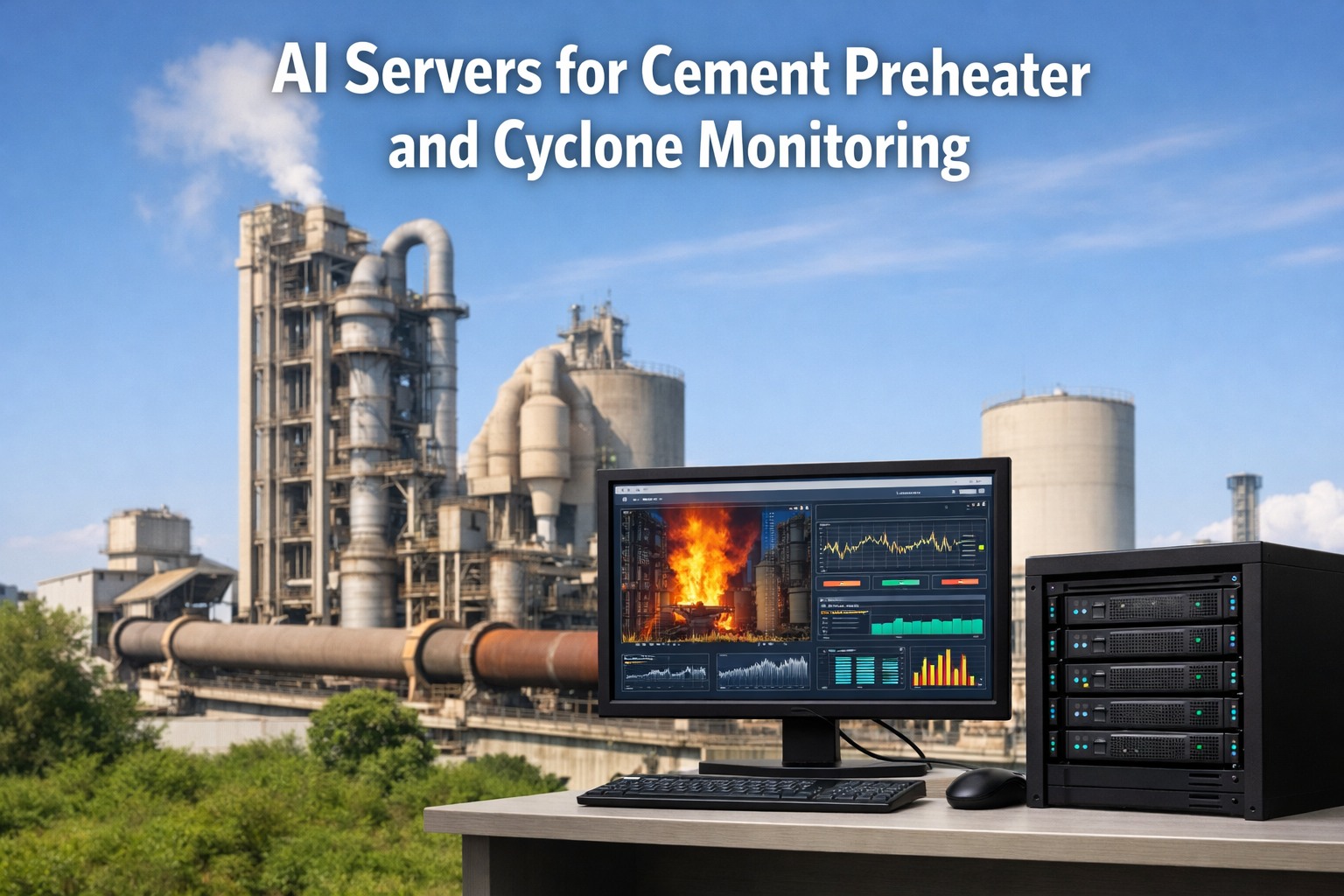
Every 20 minutes, material flow in your preheater can shift without warning. Draft pressures fluctuate. Temperature gradients destabilize. Within 5 minutes, your kiln begins cooling—and the cascade toward shutdown has already begun. The preheater tower isn't just another process stage; it's the 900°C gateway between raw meal and clinker, where alkali compounds condense into wall buildups and blockages form invisibly until they halt production entirely. AI-powered preheater monitoring catches these problems before the first pressure anomaly becomes a $300,000 day.
The Hidden Cost of Preheater Failures
Understanding the financial impact of cyclone blockages
C1320°C
C2480°C
C3620°C
C4750°C
C5900°C
5-Stage Cyclone Preheater
$300KDaily downtime cost for 1 MTPA cement plant
40+Hours of monthly downtime before AI monitoring
5 minTime for kiln to cool after flow disruption
82%Reduction in blockage incidents with AI detection
$200K+Annual savings per facility with predictive monitoring
Why Preheater Blockages Are So Dangerous
The preheater tower operates as a counter-current heat exchanger where raw meal descends through 4-6 cyclone stages while hot kiln exhaust gases rise upward. This elegant thermal efficiency creates a dangerous vulnerability: vaporized compounds from fuel combustion—alkalis, sulfur, and chlorides—condense on cooler cyclone walls, forming buildups that grow invisibly until they obstruct material flow entirely. Cement plants looking to prevent these costly blockages can sign up for OXmaint's free monitoring trial to detect buildups in their earliest stages and transform emergency shutdowns into scheduled maintenance.
The Blockage Cascade: From Buildup to Shutdown
1
Buildup Forms
Alkali compounds condense on cyclone walls at 650-800°C zones, invisible to operators
2
Flow Restricted
Material accumulates behind deposits, draft pressure changes become detectable
3
Collapse Event
Accumulated material suddenly releases, rushing toward kiln in uncontrolled surge
4
Kiln Shutdown
Temperature destabilization forces emergency stop—$300K+ lost per day
How AI Monitoring Transforms Preheater Operations
Traditional cyclone monitoring relies on periodic manual inspections and reactive alarm thresholds—operators learn about problems after material flow has already been compromised. AI-powered monitoring systems continuously analyze temperature profiles, pressure differentials, and material flow patterns across all cyclone stages simultaneously, identifying anomalies that precede blockages by hours or days. Want to see how this works for your plant? Schedule a 30-minute demo with our cement industry specialists to explore real-time preheater analytics tailored to your operation.
AI Detection Capabilities
What AI monitors in your preheater system
20%
Temperature Anomalies
Detects thermal gradients indicating buildup formation before visible on traditional sensors
82%
Pressure Differentials
Monitors cyclone outlet draft changes that signal restricted material flow patterns
Days
Material Flow Patterns
Tracks abnormal flow rates and sudden material surges across all preheater stages
50%
Wall Buildup Detection
Radiometric sensors measure deposit accumulation thickness in real-time
Percentages represent typical improvements achieved with AI monitoring implementation
Prevent Your Next Preheater Shutdown
See how AI monitoring integrates with your existing DCS and SCADA systems to deliver real-time blockage detection and predictive alerts.
Cement plants implementing AI-driven condition monitoring are documenting transformative results: 10-15% fuel reductions, $200,000+ annual savings per facility, and clinker quality improvements that reduce downstream processing costs. When each day of unplanned downtime costs a 1 MTPA facility up to $300,000, preventing even a single blockage-related shutdown can justify an entire year of monitoring investment. Ready to calculate your potential savings? Create your free OXmaint account and connect your first preheater sensors in under 30 minutes.
Advanced process control of the kiln system is a major part of the digital transition in cement manufacturing. Model predictive control systems stabilize preheater, kiln, and cooler operations—resulting in increased production, fewer cyclone blockages, and reduced kiln ring formation. The facilities investing in condition monitoring aren't just avoiding breakdowns; they're fundamentally changing how maintenance operates.
30%
Reduction in safety incidents at Holcim plants after AI implementation
40-60%
Equipment failure rate reduction with predictive maintenance
The path forward is clear for cement plants ready to transform preheater monitoring: install sensors at critical cyclone locations, connect to a CMMS platform that automates response workflows, and begin capturing the data that prevents failures before they happen. Not sure which sensors or integration approach is right for your facility? Schedule a free consultation with our cement plant specialists to discuss your specific preheater configuration and get a customized implementation roadmap. For plants ready to start immediately, sign up for OXmaint today and begin monitoring your first cyclone stage within the hour.
Transform Your Preheater Operations
Join cement plants using OXmaint to connect AI monitoring with maintenance workflows. Real-time blockage detection, predictive alerts, and automated work orders—all integrated with your existing systems.
What causes blockages in cement preheater cyclones?
Blockages form when vaporized compounds from fuel combustion—primarily alkalis, sulfur, and chlorides—condense on cooler cyclone walls as hot kiln gases rise through the preheater tower. These deposits accumulate gradually, eventually restricting material flow downward and gas flow upward. Contributing factors include raw material chemistry, fuel composition, improper air distribution and temperature imbalances. Without continuous monitoring, these buildups grow undetected until they cause sudden material collapses or complete flow obstruction.
How does AI detect preheater problems before traditional sensors?
Traditional sensors provide single-point measurements with fixed alarm thresholds. AI systems analyze patterns across multiple data streams simultaneously—temperature profiles at each cyclone stage, pressure differentials between stages, material flow rates, and historical operating data. Machine learning algorithms identify subtle correlations that precede blockages: slight temperature gradient changes, minor pressure fluctuations, or flow rate variations that human operators and threshold-based alarms cannot detect. This pattern recognition provides days or weeks of advance warning rather than minutes.
What sensors are needed for AI preheater monitoring?
Effective preheater monitoring requires temperature sensors at each cyclone stage (thermocouples or pyrometers rated for 300-900°C), pressure transmitters for cyclone outlet draft monitoring, and optionally radiometric sensors for direct wall buildup measurement. Modern wireless sensor networks using LoRaWAN or similar protocols simplify installation in existing plants. The AI system integrates with your existing DCS/SCADA infrastructure, meaning you can often leverage sensors already collecting data that's currently underutilized.
What ROI can cement plants expect from predictive preheater monitoring?
Most cement plants see positive ROI within 6-12 months. With daily downtime costs reaching $300,000 for a 1 MTPA facility, preventing even one blockage-related shutdown can justify the investment. Plants implementing AI monitoring typically report 30-40% reduction in unplanned downtime, 10-15% fuel savings from optimized kiln stability, and extended equipment life from reduced thermal stress. Additional returns come from improved clinker quality consistency and reduced emergency maintenance labor costs.
How does preheater monitoring integrate with existing CMMS systems?
Modern AI monitoring platforms connect to CMMS systems through standard APIs, OPC-UA protocols, or direct database integration. When the AI detects conditions trending toward failure, it automatically generates work orders specifying which cyclone stage needs attention, what type of intervention is recommended, and the urgency level. This integration eliminates manual data interpretation and ensures maintenance teams receive actionable alerts—not raw sensor data—enabling proactive response before problems escalate.